
Weird Wednesdays: Vampyros Lesbos
This screening was part of the Alamo Drafthouse’s Weird Wednesday series. For upcoming shows, click here.
Spanish director Jess Franco was a fascinating character. Born in Madrid in 1930 under the name Jesús Franco Manera, he was also often credited as Franco Manera. With nearly 200 film credits from 1954 to 2013, his nearly 60-year career is vast, but his work can easily be identified by his penchant for beautiful women (often in states of undress), groovy tunes, and a devotion to exploitation films of all types. While it would take an encyclopedic tome to properly cover his vast career, including such disparate work as hardcore pornography, horror films with names like Christopher Lee and Mark Hamill, and eventually shot-on-video shockers, it is fortunate that our friends at Weird Wednesday recently showcased his most well-known work, 1971’s Vampyros Lesbos.
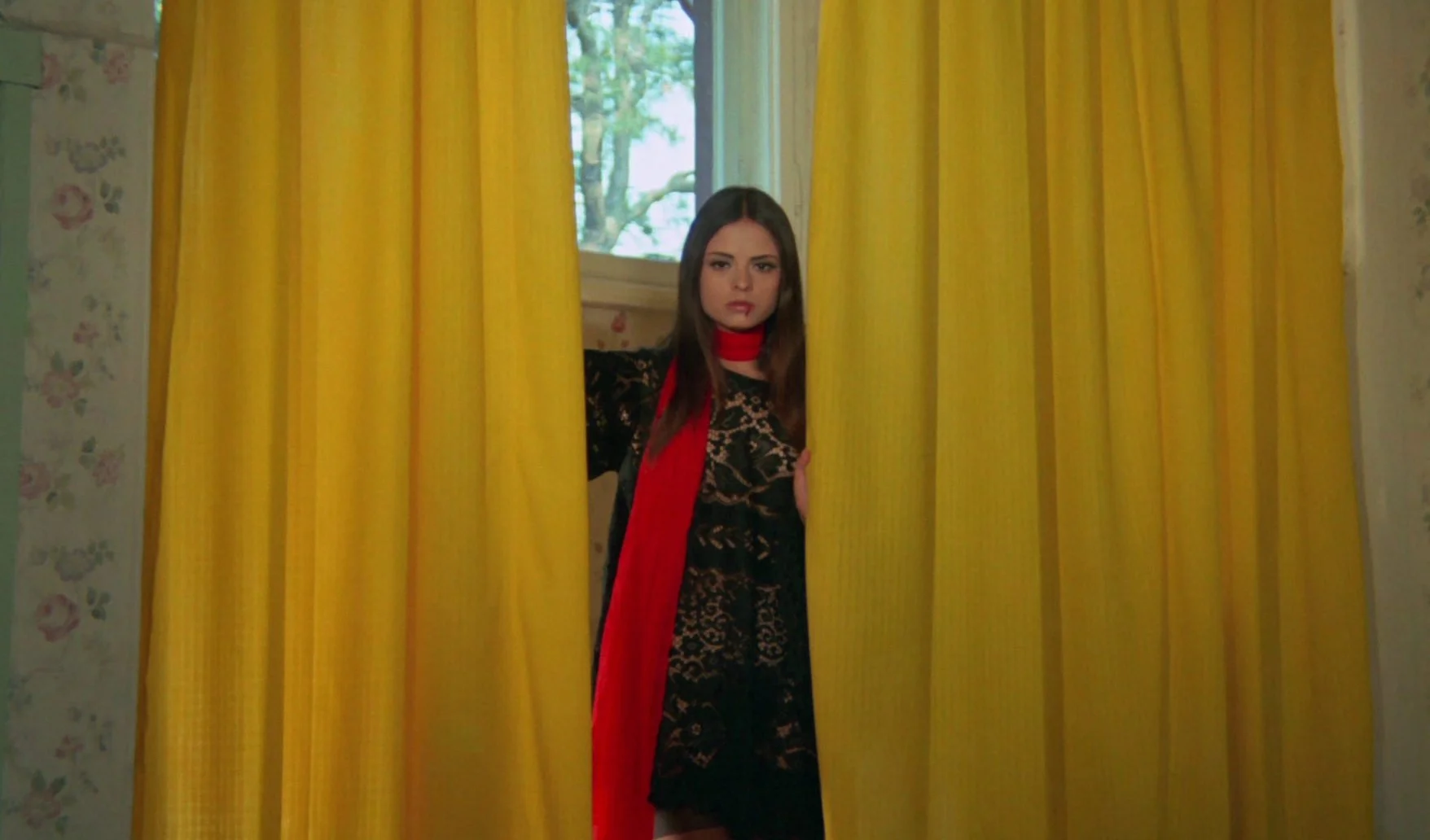
A year prior to Vampyros Lesbos, Franco directed Count Dracula, a decidedly more faithful adaptation of Bram Stoker’s classic novel than most at the time, starring Hammer’s favorite impaler, the legendary Christopher Lee. While seemingly a perfectly fine, if not particularly beloved adaptation of the Stoker novel, Franco clearly hadn’t gotten the Dracula bug out of his system. This is only relevant because, while not directly marketed as such, Vampyros Lesbos is very directly inspired by Dracula, not only in structure, but directly invoking the Count in what can only be described as ‘70s fanfiction, as well as an experiment in narrative looseness.
Linda Westinghouse (Ewa Stroemberg) keeps having dreams about a beautiful, mysterious woman. She finds herself attending a performance where this dream woman turns out to be very real, a bizarre art piece in which, clad in lingerie, she admires herself in a mirror, writhes around on the floor, plays around with an ornate candelabra, and then undresses, putting her clothes on her co-star, a woman essentially acting as a mannequin, frozen in place until they begin to kiss and embrace on the floor. This woman is Countess Nadine Carody (Soledad Miranda, credited as Susann Korda), and as one might expect based on the title, she is a vampire. Linda’s tells her psychiatrist, Dr. Steiner (Paul Müller) about her dream woman becoming real in light of an unsatisfying relationship with her boyfriend Omar (Andrea Montchal, credited as Viktor Feldmann), and the good doctor tells her that maybe it’s time for a new lover. Luckily for Linda, she is a lawyer working in Istanbul (not Constantinople), and her work sends her to Anatolia in Turkey, specifically the Kalidados islands, to help transfer the inheritance of the very Countess who already occupies her mind constantly.
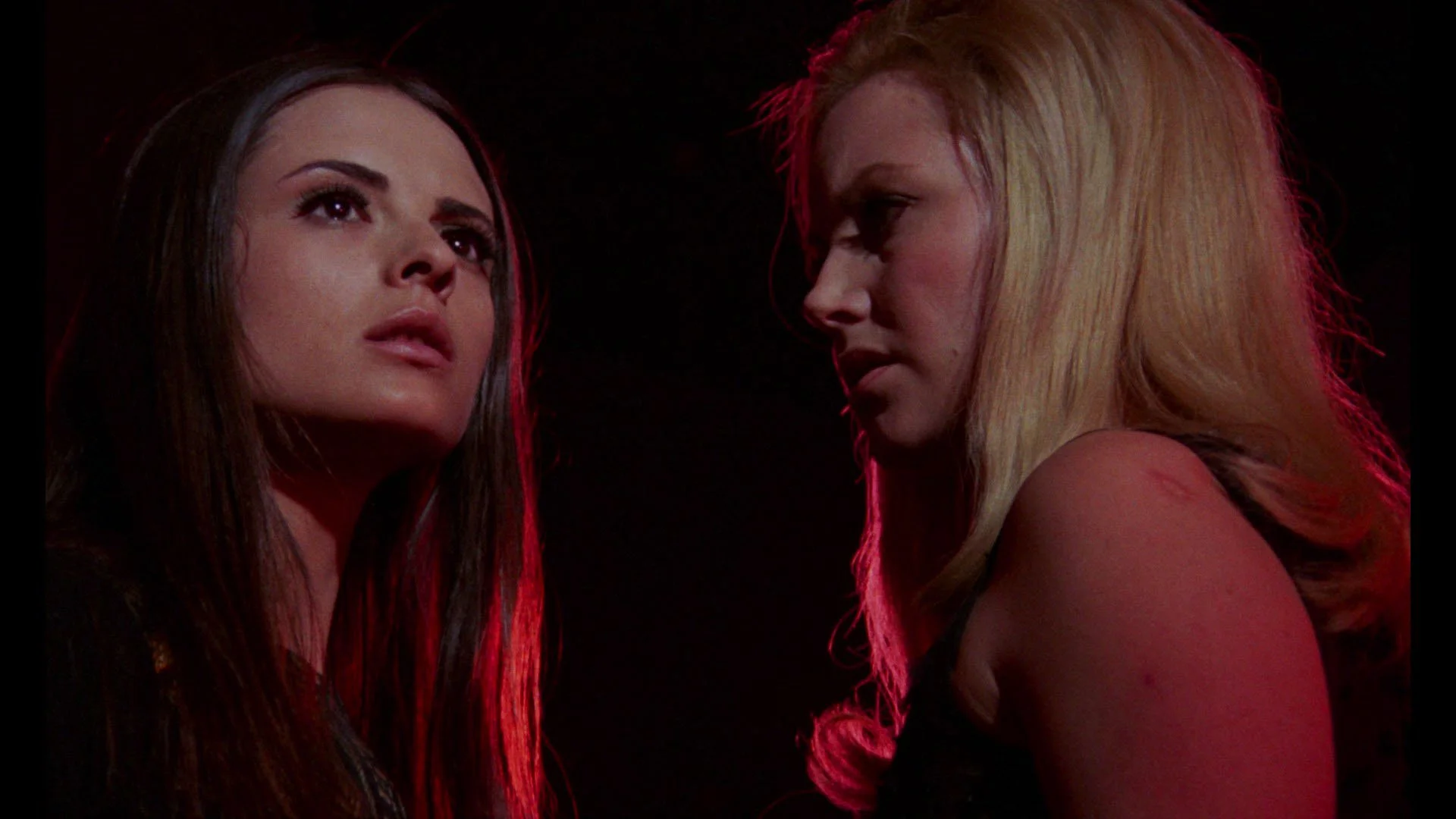
Upon arriving at Anatolia, Linda stops at a hotel to rest from her travels. The hotel’s porter, Memmet (director Franco) warns her to avoid the island, a place of death. Linda chooses not to heed his warnings after finding him torturing a woman in the basement of the hotel, and soon she finds herself at the Countess’ beautiful home. Upon meeting, the two immediately strip down to frolic on the beach (“this is the tan of a Killer, Bella” I couldn’t help but think to myself,) a perfectly normal thing to do with a total stranger whose legal matters are your responsibility. Eventually they talk business, and Nadine casually admits that her inheritance is from Count Dracula, who left everything he had to her, the woman who made his afterlife worth living. Then she pours Linda a glass of “wine,” leading her to feel faint. The countess takes the lawyer to a bedroom to rest, and in short time the title of the film has been fulfilled, as the two have a steamy sexual encounter punctuated by a puncturing of Linda’s neck with Nadine’s fangs.
The classic-literature-savvy among us (or at least those familiar with the framework of the often-retold Dracula tale) will immediately recognize the parallels to Stoker’s novel, with Linda in the role of Jonathan Harker, both being prey for the Countess and facilitating her relocation to Istanbul. After waking from their tryst to find Nadine laying motionless in her swimming pool, Linda faints, awakening at the practice of Dr. Alwin Seward (Dennis Price), who seems to fill both the dual role of the novel’s Dr. Seward while also being something of a Van Helsing, with a twist on his intentions for the Countess worth saving for those interested in seeing the movie. Linda doesn’t remember what happened on the island, but this is not his first patient to visit there. He also has in his care a woman named Agra (Heidrun Kussin), another former guest of the Countess who has been left crazed and obsessed, fixated only on regaining Nadine’s attention.
Countess Carody does not live alone, though. She has a silent, watchful manservant named Morpho (José Martínez Blanco), who she tells all about the fateful day where Vlad himself saved her from the ill intent of a group of soldiers, vampirizing her shortly thereafter. She has nothing remaining but disgust for men, and she recognizes the spell she casts on all who meet her, particularly women, but she knows that somehow Linda is special. Can there be a happily ever after for two beautiful vampire women? Is there a reason Memmet is on the loose, inflicting violence on women? And does any of this make sense by the end?
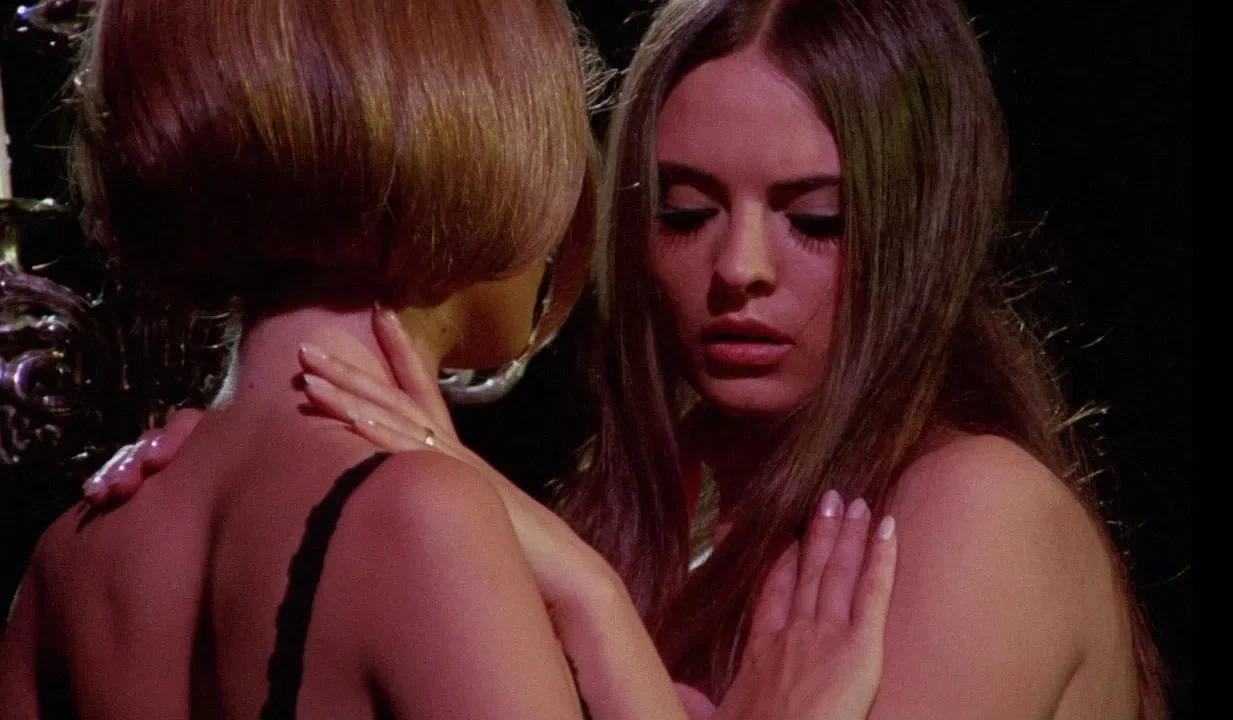
To tell the truth, it makes just enough sense to tie together as a vaguely cohesive narrative, but that’s not why one watches Vampyros Lesbos. It is an experience where logic and reality are afterthoughts, a truly dreamlike film that exists as a delivery method for beautiful women doing strange and exciting things around some lavishly-designed contemporary decor while one of the grooviest psychedelic scores of all time takes things to another dimension.The first of its kind: a lesbian movie that’s all vibes and no batteries, it would make for incredible background play after the heightened madness of something like Beyond the Valley of the Dolls at a very particular type of cool party. While I’m not exactly one for mind-altering substances, I can imagine that those who partake would really enjoy the experience. If nothing else, everyone owes the soundtrack a listen, made famous with a 1995 release under the title Vampyros Lesbos: Sexadelic Dance Party, featuring tracks that had mainstream impact ranging from unsurprising places like Quentin Tarantino’s Jackie Brown to far more unexpected fare, such as a 2004 Levi’s commercial. It is a magnificent score that perfectly encapsulates the movie’s interest in merely creating a groovy trip unlike anything else. This tale of lesbian vampire lust is, at the end of the day, representation in an era not particularly brimming with positive examples of women in love. I do wish that it had an ending as happy as that of Bound, but we’re just lucky to be taken for the ride. If this sounds like a ride you’d like to take (I’ve already taken it again since seeing it on the big screen), then I suggest immediately that you haul yourself to whatever screen can whisk you away to Kalidados. Countess Carody is always waiting to put another under her spell.
If you enjoyed this article, please consider becoming a patron of Hyperreal Film Journal for as low as $3 a month!
Jackie Stargrove is a writer, singer, movie host, and the smallest pillar of the Austin film community.