
Breaking Silence: A Conduit For Criminal Justice Reform
Three years ago, in Missoula, Montana, Leslie Estes walked into the bathroom after a screening of “Breaking Silence”–the 18-minute documentary that follows Leslie’s relationship with her Deaf father, Walker, and their experiences in the criminal justice system–to a woman sobbing profusely. “I'm talking, like, ugly crying, sobbing,” Leslie said to me in a video interview for this feature. Through tears, the woman in the bathroom explained that she’d just watched the film and had never considered Deaf people in prison.
“That was the point, because you don't think about people being in prison.” Leslie said. “[The film has] been really well received everywhere we've gone. But that first showing… I was like, oh, people actually give a damn about this. People are actually interested in what we have to say.”
“Breaking Silence” explores disability, communication access, and family relationships. For Director Amy Bench, these themes were universal, relatable components that transformed this narrative from an introspection on incarceration and reentry to a vérité look at community and transformation.
As Bench told me in an interview, she first met Leslie through Truth Be Told, a nonprofit working to end the cycle of incarceration through reentry programs focused on community building, communication, creativity, and self-care. Walker Estes was originally interviewed only to add context to Leslie’s story. But as an advocate himself, supporting members of the Deaf community as they transition from incarceration to society, Walker’s inspiring history and relationship with his daughter became focal to the film.
“Breaking Silence” begins on the day Leslie completes her parole. Her family is home in Baton Rouge, Louisiana, anticipating her return and proud of her accomplishment–a feat few achieve. Nearly 70% of people released from prison in the U.S. are rearrested within 5 years, with the United States having the highest rate of recidivism in the world.
“My husband and I've been together for about six years, and I think [the day I got off parole was] the only time he's ever bought me flowers,” Leslie said with a laugh. “For me, it was just, okay, I got off parole. That's what normal people are supposed to do. But in the grand scheme of things, and the way recidivism works, that was a milestone.”
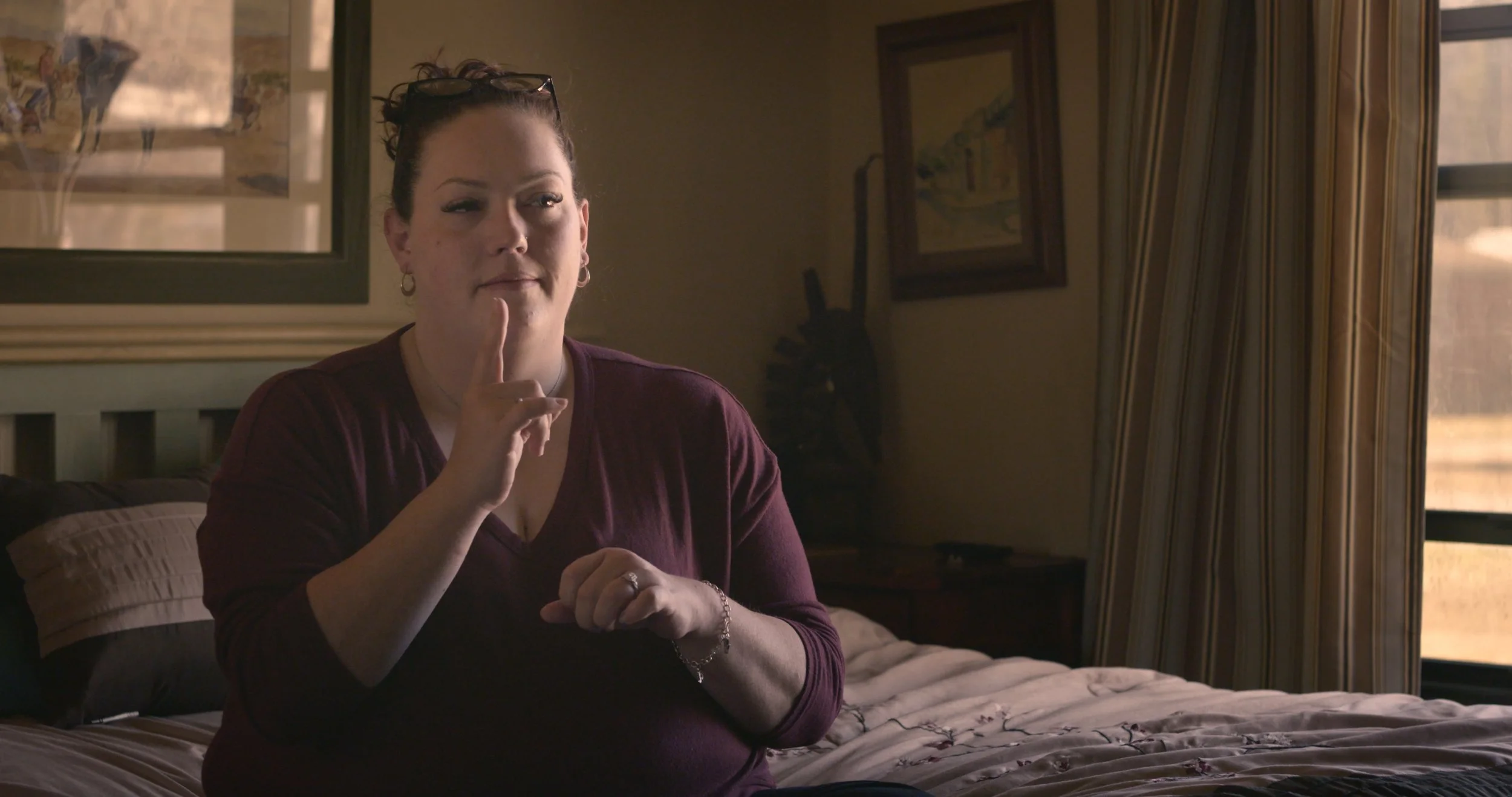
In “Breaking Silence,” Bench uses her subjects as conduits for the audience to better understand the reentry process. Leslie and Walker are people who don’t always see eye-to-eye, who have experienced hardships that manifest in their relationship. There are many ways for audiences to connect with them without having dealt with their realities. Yet, in watching “Breaking Silence,” viewers are forced to confront the reality of Texas’ criminal justice system. They see Walker describe the difficulties of communicating with his daughter during her incarceration, and of not being able to call her.
“I am not a journalist,” Bench said. “Somebody else is better suited to write a story about the criminal justice system or our immigration policies. But I can provide a human lens or point of view through–not necessarily my own point of view, but the point of view of the characters in my films that help humanize those issues.”
This human-centered perspective moved Texas Appleseed’s Criminal Justice Director Dr. Jennifer Carreon, who spoke to me in a video interview for this piece, to support Bench’s efforts to screen this film throughout Austin, Texas. Dr. Carreon has worked in criminal justice reform for over a decade, using data and research to transform policies both at the state and local levels. They first saw the film at the New Orleans Film Festival in 2023.
“One of the things that repeatedly stands out to me about this film is that it is so loud, given how quiet it is,” Dr. Carreon said. More than half the film lacks spoken dialogue, with only the sounds of nature and chairs scraping the floor punctuating the silence as Walker signs. “It is so moving and loud in the sense that how it resonates with you and how it resonates with the audience and how it makes the audience buzz, brings noise to the film.”
Two years later, a partner from the Appleseed network reached out to Dr. Carreon, asking for their help connecting Bench to community partners. They agreed. Storytelling is an integral part in shaping change for Dr. Carreon.
“When you can see the face of someone who has been impacted, when you can hear their story, when you can hear the tremor in their voice, when you can see the anguish in their eyes and see truly, physically, how their experience has impacted them in the way they carry themselves and the way they speak about themselves, I don't think there's any better example or data [or] proof that the policy or the practice in question needs to be changed or needs to be questioned,” they said.
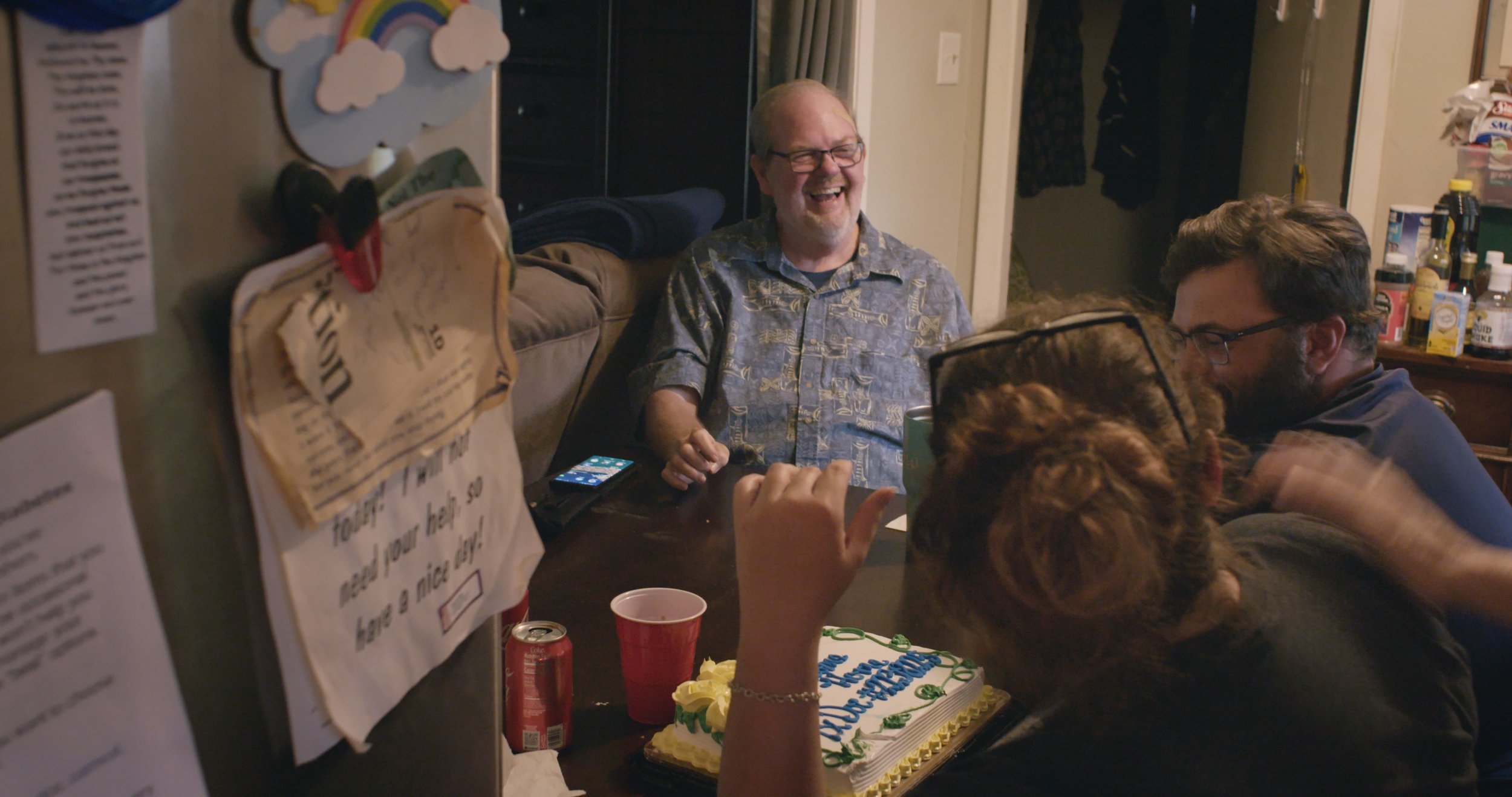
“Breaking Silence”’s run on the film circuit not only exposed audiences to the truth of a flawed system; it also opened up Walker’s life to Leslie, driving her to think differently about her father. In screenings, audiences asked Walker about his experiences growing up Deaf, questions Leslie never knew the answer to herself.
“Doing the film definitely gave me these moments where I was like, ah, yeah, he was just trying to figure it out just like the rest of us,” Leslie said. “They're just people, too, trying to figure out life and trying to figure out how to parent and how to do this and how to do that.”
Leslie and Walker’s evolving relationship will be the focus of Bench’s new film, a Sundance-supported feature currently titled "Walker.” It will chronicle Walker’s life growing up Deaf in a hearing family and his experiences as an activist and parent, continuing the themes of community and family bonds explored in “Breaking Silence.”
“Breaking Silence” starts with Leslie’s daughter and Walker waiting for Leslie to return home and closes with mother and daughter together, on the floor in a tight embrace. Walker signs into the camera about his excitement for the future.
Leslie wants viewers to leave the screening with this energy for a better future. It took years for Leslie to heal her relationship with her dad, to end the cycle of her incarceration. Before she met her husband, her longest relationship was with the state of Texas, she jokingly told me. Walker began his advocacy in his fifties, and now over a decade later is a certified Deaf interpreter in the state of Louisiana.
"It's never too late, and I mean that in every sense of the word,” Leslie said. “It wasn't too late for me to have this life. It wasn't too late for me to pursue my career. It wasn't too late for me to fix the damage that I caused. It's not too late."
If you enjoyed this article, please consider becoming a patron of Hyperreal Film Journal for as low as $3 a month!
Farah Merchant is a digital creative and freelance writer based in Brooklyn, but homegrown in Texas. You can find her at a public library or on Letterboxd at @farahmerch.