
Weird Wednesdays: Who Killed Teddy Bear? Was Ahead of Its Time
This screening was part of the Alamo Drafthouse’s Weird Wednesday series. For upcoming shows, click here.
There is one David Fincher quote that lives in my head rent-free: “I think people are perverts.” He’s straightforward in his delivery here, featured in a making-of feature from The Girl With the Dragon Tattoo DVD, following up his statement with, “That’s the foundation of my career.” I think about this quote a lot, especially when it comes to movies that examine the multiplicities within us so well. Fincher’s films, as well as the works of Brian De Palma, are just a few examples of movies that understand the capacity for the perverse that resides within all of us. The movie Who Killed Teddy Bear?, whose 4K restoration was a recent Weird Wednesday selection, also understands this and offers an unflinching and ultimately bleak investigation of sexual repression.
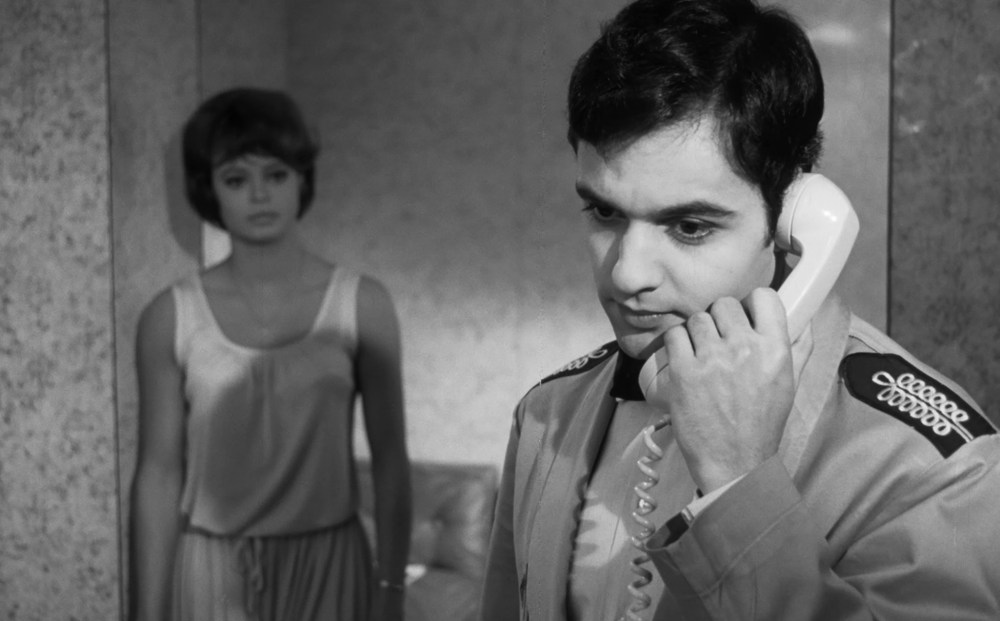
Night-club hostess Norah Dain (Juliet Prowse) keeps getting unsettling phone calls. At the start of the movie, we get to see a harrowing exchange between both sides. Through gauzy camera shots, we see the hands of the perpetrator; one dialing the rotary phone by his bed, the other resting on his brief-clad hip as he speaks, “I know what you look like right now,” he says in between shuddering breaths. “I can see your skin.” The framing of the creep, face just out of frame with everything else, leaves little to the imagination. We eventually learn that this is Lawrence Sherman (Sal Mineo), a waiter at the same nightclub where Norah works. The audience is privy to his identity, watching helplessly as Norah has to hire a detective (Jan Murray) to find out who is causing this harassment. Even the detective, with his outsized interest in the perverse, can’t be ruled out as a suspect in her mind, but we know better.
The tension in Who Killed Teddy Bear? is distilled from the viewer knowing more than the characters in the film. In a move straight from Hitchcock, the information we have about the people at risk heightens the stakes of the whole film and, at the same time, offers us a unique glimpse into the motivations and inner world of our pervert. The performances here are a boon to this, with Mineo playing Lawrence with a mix of desperation and pathological rage at his inability to have a normal sex life. When Lawrence isn’t working at the nightclub with Norah, he’s taking care of Edie (Margot Bennett), his little sister, a 19-year-old with the mind of a nine year old.. Edie suffered a brain injury after seeing her brother have sex with an older woman and falling down the stairs. Lawrence’s guilt over this incident has soured his relationship with his sexuality, creating a repressive hell for himself and everyone else. It’s devastating and patently salacious, but Mineo’s work elevates Lawrence’s situation above the text of the film. Similarly, Prowse does beautifully nuanced work portraying Norah as a woman who just wants to reach some sense of normalcy in her life. Prowse navigates Norah’s juggling act with deft skill, balancing a desire for an end to her harassment with real exhaustion and fear about the resolution of it all.
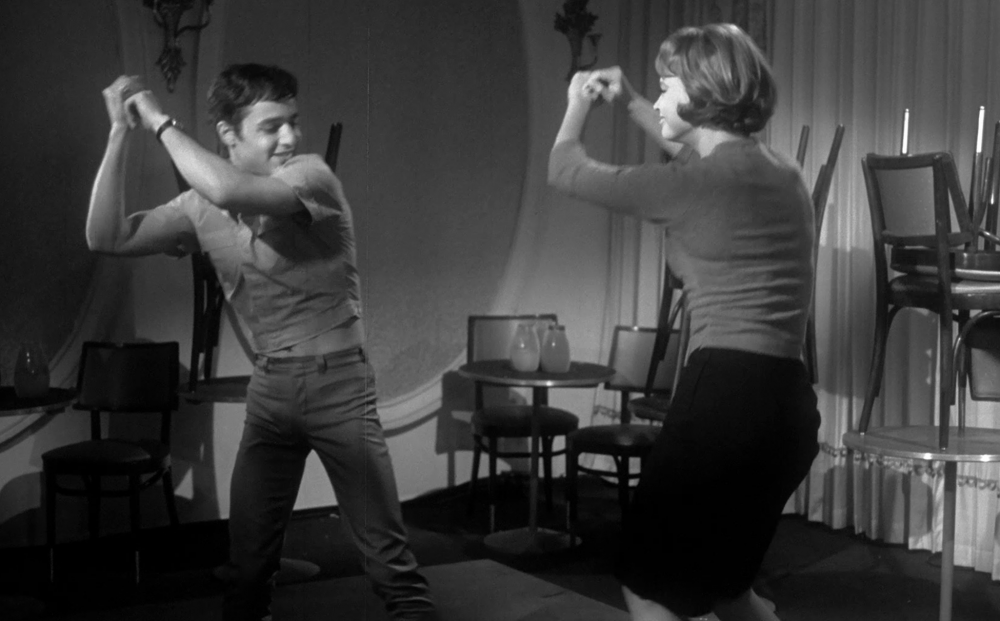
Who Killed Teddy Bear? is a seemingly salacious examination of human perversity, but there is room here for something more nuanced, thanks to performances that elevate the material. While there is certainly a dated homophobia to the film (at least one character is outed as a predatory lesbian), it is an interesting artifact of a transitional time in film history. It sits somewhere between the fearful suppression of sexuality in the 1950s and the sexual revolution of the 1960s, occupying a unique space in the film landscape that many critics weren’t ready for at the time. Leonard Maltin called it “sleazy,” dismissing it for the salaciousness that sits on the surface of the film. I believe there’s more to Teddy Bear than one can get after a first viewing. Indeed, it feels like a key to the more nuanced portrayals of sex on film that were to come with the New American Cinema of the 1970s, taking an early try at examining the bleak realities and complications of human sexuality. The cause of Lawrence’s sexual dysfunction is clear, but it doesn’t justify his actions. He can be a man broken by guilt and a deviant who’s causing harm to others.
In the end, the film works best when it understands how to show us these multiplicities plainly. Teddy Bear doesn’t shy away from the darker paths most movies of the time would steer clear of, but that is what makes it worth revisiting.
If you enjoyed this article, please consider becoming a patron of Hyperreal Film Journal for as low as $3 a month!
Alejandra Martinez is a Tejana archivist, writer, and film lover in Austin, TX. She loves coffee, David Lynch, and tweeting about everything under the sun.
Twitter: @mtzxale.