
Weird Wednesdays: The Strange Color of Your Body's Tears
This screening was part of the Alamo Drafthouse’s Weird Wednesday series. For upcoming shows, click here.
Belgian filmmaking duo Hélène Cattet and Bruno Forzani are a fascinating anomaly in the modern era of cinema, as the idea of “content” and how easily consumed it is often takes precedence over more experimental artistic endeavors. While their newest work, Reflection in a Dead Diamond, has recently finished a limited theatrical run and is now streaming on Shudder, the wonderful programmers at Weird Wednesday took this opportunity to screen their 2013 effort, The Strange Color of Your Body’s Tears, a movie that confused and captivated me upon release, and continues to have the same effect.
In lieu of a traditional narrative, the film is very directly inspired by Italian horror films of the 1970s. Borrowing music from legends like Riz Ortolani and Ennio Morricone while mixing the colorful visuals of Dario Argento with the dreamlike nature of Lucio Fulci, the base concept shares DNA with the tradition of the Giallo, a genre that, for the unfamiliar, is often associated with fascinating camerawork, lurid characters, pounding music, and sadistically violent murders. Usually these murders are portrayed in the first-person view by a black-gloved killer whose identity is unknown, leaving the story to generally revolve around discovering their identity before the protagonist (usually a layman who falls backwards into their own investigation after a murder affects them directly) becomes a victim themselves. Here we follow Dan (Klaus Tange,) a man looking for his missing wife in their apartment, seemingly going from door to door, experiencing the strange and surreal from those who live there while hoping for answers. To be frank, I’m not sure that there are answers, nor that we even know what the question is by the time the credits roll - but that seems to be the point. Movies are often described as having dream logic or otherwise being dreamlike, and this truly feels like a dream. It is beautifully shot, magnificently edited, and even the sound design is dead-on, but vibes substitute for coherent storytelling in a way that may not work for many.
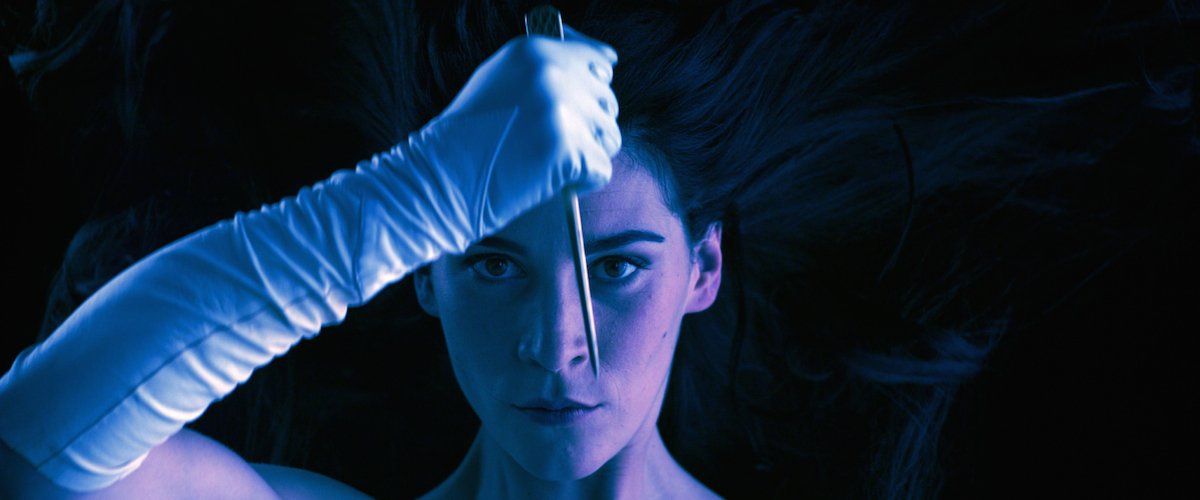
Dan explores this lavish apartment building over 102 minutes, seeing gloved killers slicing people (including Dan himself), or in various states of sexuality, often alternating between the two. The violence, while often graphic, generally appears to be impermanent, possibly imagined. As stated before, everything here feels like it’s being imagined within its own fictional world - an extra degree of removal from reality, as though a character who doesn’t exist is sharing a story with us that doubly does not exist. Does reality matter when things look so good?
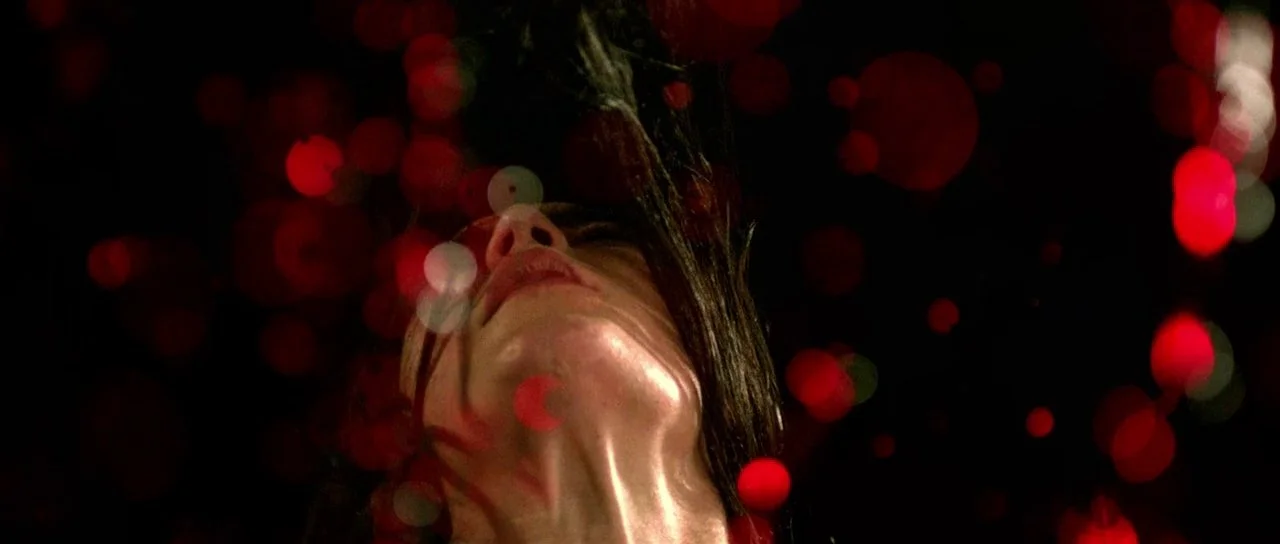
Sometimes a primary color overtakes the screen and alternates with others. At several points, the film cuts to black and white as we watch a woman’s sexual exploits turn into something darker, segments told entirely in still frames and jump cuts as she finds herself pursued. Then Dan’s adventure continues as he explores more, the frame taking on split-screens, blaring 70s music becomes a character, and the impossible happens again and again, leaving the audience to wonder: If everything seems like a metaphor, is any actual metaphor at play? Or, just maybe, a movie comprised of things that seem cool regardless of logic can be enough. Familiar elements combine to take the viewer on a ride unlike anything else, and sometimes that’s more fun than subtext. I say this knowing full well that there are no doubt some deep dissertations on the themes of this movie, but upon this revisit, I have decided that I am more than happy to let The Strange Color of Your Body’s Tears exist as a dark ride that pays tribute to a kind of movie that no longer seems to exist.
It’s worth any fan of Italian exploitation or the surreal and beautiful seeing this to make up their own mind—but while I’m on the topic, I can share some of my favorite modern throwbacks to the era. Many more companion pieces of sorts to the work of Cattet and Forzani exist.
Take, for example, Last Night in Soho: While Edgar Wright’s fascination with Italian Giallo first became apparent in Hot Fuzz, this underappreciated 2021 release takes place in contemporary times as a young woman finds herself reliving events from the Swinging ‘60s, visions that turn from colorful recreations of the era’s vibrant club life to shocking violence at the drop of a hat, leading her to work towards uncovering a murderer’s secrets before the literal ghosts of the past envelop her.
Then there’s The Editor: From the madmen of the filmmaking collective Astron-6 (responsible for the recent Deathstalker reboot and Frankie Freako, among many others), 2014’s more comedic take on the Italian Giallo film is made with exquisite detail, a loving homage that also makes the genre’s dream logic part of the joke. A late-era performance from the recently departed Udo Kier also makes this worth a visit for fans of the German powerhouse.
Consider also Italian Spiderman: From the Australian crew who would go on to make the spy spoof Danger 5, this short first appeared on YouTube in 2007, but the attention to detail is so incredible that if one didn’t know better, you would believe you had stumbled on another in a long tradition of Italian knockoffs of popular international properties, such as Bruno Mattei’s sequels to Terminator and Alien that predated Hollywood’s more legendary attempts. Italian Spiderman lands in outright spoof territory, trading Peter Parker for a shotgun-toting, overweight man with a Kato mask, a fake mustache, and a red shirt with a spider scrawled on it. He’s a hard-living, hard-partying, ass-kicking misogynist who will punch anyone in the face for disrespecting women. He’s a walking contradiction and he fits right in with the ultra-violent cinema of the 1970s, bathed in cigarette smoke and bottles of J&B. At only 37 minutes, it’s a groovy experience that ends before you’re ready to see it go, which is a good place for the aforementioned Danger 5 to pick up the slack.
Of course, these are all modern interpretations of work that influenced a whole generation. For the unfamiliar, the best thing is to start at the source, particularly with the films of Argento and Fulci. The rest of Cattet and Forzani’s career sees Let the Corpses Tan taking their style to a mix of crime and Western, and Reflection in a Dead Diamond taking on the spy thrillers of the ‘60s. With such a brilliantly perfected style, I can’t wait to see what genre the pair will tackle next.
If you enjoyed this article, please consider becoming a patron of Hyperreal Film Journal for as low as $3 a month!
Jackie Stargrove is a writer, singer, movie host, and the smallest pillar of the Austin film community.