
Weird Wednesdays: Ben and Arthur and the Miracle of Genuine Incompetence
This screening was part of the Alamo Drafthouse’s Weird Wednesday series. For upcoming shows, click here.
There is a specific kind of cinematic catastrophe that only happens when a single person decides, against all evidence and counsel, that they are a filmmaker. Not someone who wants to make a film. Not someone who has an idea for a film. Someone who is a filmmaker, fully formed, requiring no external validation, no collaborators with dissenting opinions, and certainly no budget. Sam Mraovich is that person. Ben and Arthur is what happens when nobody tells that person no.
Released in 2002 and distributed by Ariztical Entertainment to approximately nobody, Ben and Arthur is a romantic drama about a gay couple in Los Angeles trying to get legally married at a moment when gay marriage was illegal in every state in the country. That is not a bad premise. On paper it is actually a decent one, with genuine stakes rooted in a real and urgent civil rights struggle. The movie does not use those stakes. The movie does not use anything correctly. What it does instead is generate 85 minutes of footage so consistently, spectacularly miscalibrated that it has earned a permanent place in the bad movie canon alongside films that cost many times more to destroy.
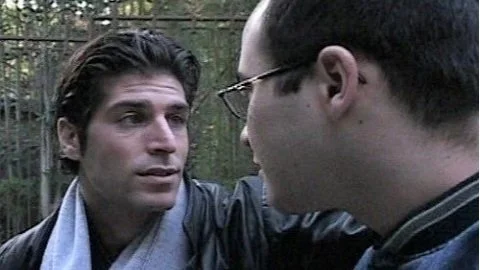
“Look Woody, Forky here is gonna tell ya like it is: WE ARE TRASH!”
To understand what you are looking at with Ben and Arthur, the comparison to The Room is unavoidable, and everyone has already made it. Rotten Tomatoes ranked it #15 on their list of "Films So Bad They're Unmissable," calling it the gay equivalent of Tommy Wiseau's opus. Letterboxd users echo the comparison, one calling it "The Room of LGBT movies." The pop culture review site Insert-Disc went a step further, concluding that The Room was actually better, and that the acting, writing, music, and special effects in Ben and Arthur fall short even by that standard. The comparison is fair but incomplete, because The Room had Tommy Wiseau's money behind it. Whatever that man is and wherever his resources came from, the result had a kind of delirious polish. Ben and Arthur has no such backing. What it has is a handicam, Sam Mraovich's family, and a credit sequence so thoroughly dominated by a single name that one IMDB commenter noted Mraovich is credited 20 times across the opening and closing titles.

“First I prayed you two wouldn’t get married, now I pray for my exit out of this movie quickly!”
He wrote it. He directed it. He produced it. He edited it alongside his 17-year-old brother Chris, listed as "editing supervisor." He scored it. He handled cinematography. He cast it, which explains why his character's boyfriend is played by a chiseled, conventionally attractive actor named Jamie Brett Gabel, who is also the only person in the film who seems to understand what cameras are for. Mraovich even credited himself as 2nd 2nd Assistant Director. At some point during production, the man was holding a camera, directing himself to act, and also functioning as his own assistant's assistant. The miracle is not that the movie is bad. The miracle is that it exists at all.
Mraovich was 24 when he started shooting in July of 2001, working weekends around a day job, placing ads in Backstage West for actors he could pay minimally but promised craft services. He received over 900 headshots. He shot through March of 2002. By his own account, he felt like a chicken running around without a head, aware in postproduction that the material needed significant work and equally aware that he was one man doing eleven jobs simultaneously with no money. "When you don't have a lot of money," he told BuzzFeed in 2014, "you really can't pay people to do certain things that the money people have." That is objectively true. It also does not account for the folding table that appears in nearly every interior set because, as one IMDB reviewer observed, the Mraovich family does not appear to own much furniture.
The film's visual presentation is in a category of its own. Shot on consumer-grade video in the early days of prosumer digital cameras, it looks like exactly what it is: a weekend project assembled by someone who had recently watched a movie for the first time and decided the technical requirements were manageable. Rotten Tomatoes noted that Mraovich might as well have shot the whole thing on a cell phone, and they were being generous, because cell phone footage from 2026 would actually constitute an improvement. The cinematography has no relationship with lighting as a concept. Scenes cut together with no regard for spatial continuity. At one point a character travels by plane from Vermont, and the airplane shown taking off is a FedEx cargo plane.
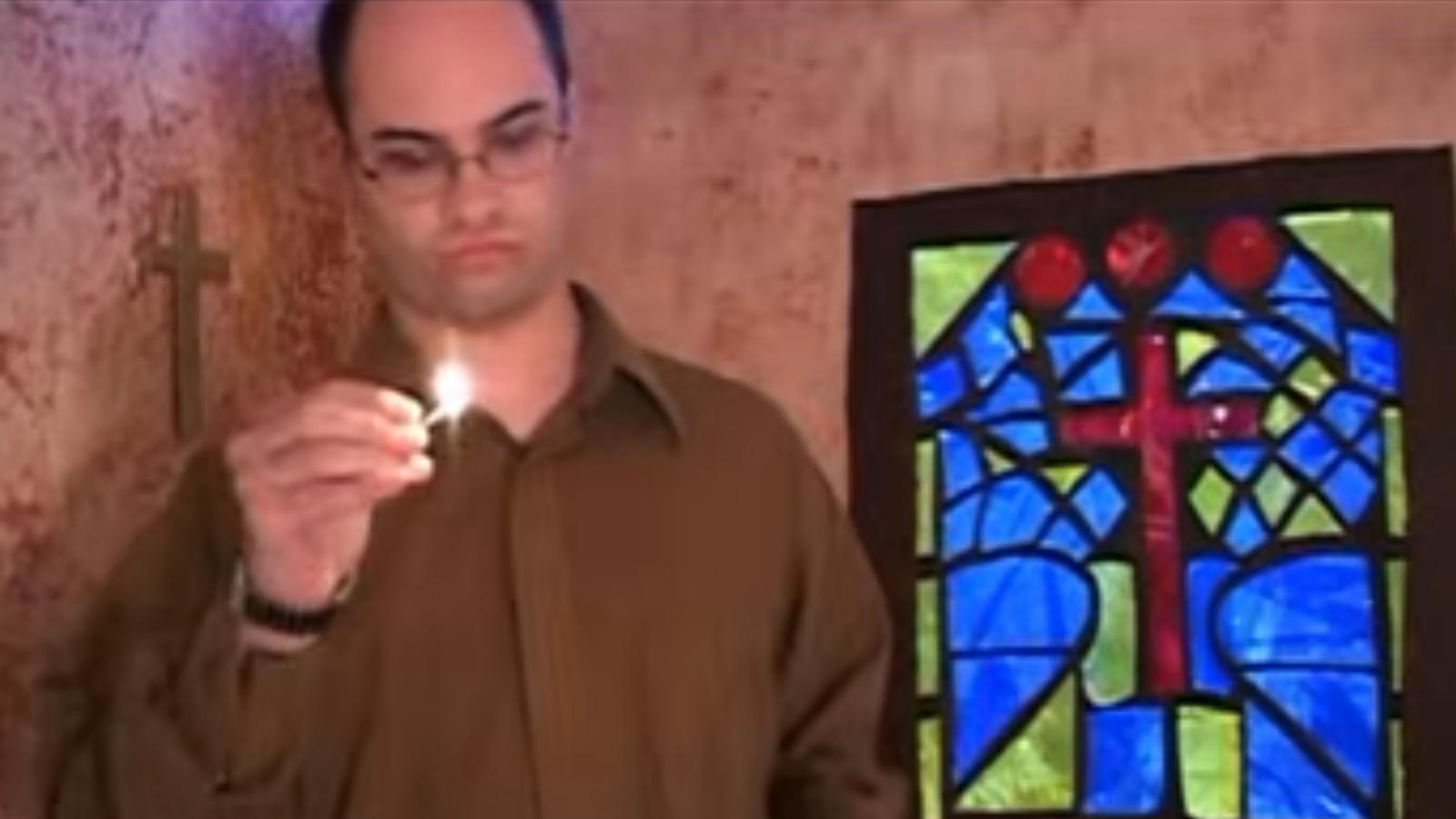
“There can be no evidence of my work or filthy preacher cursin’ up a storm in the house of God.”
Then there is the acting. Mraovich as Arthur has access to one emotional register, which is escalating grievance, and he applies it to every scene regardless of whether the scene calls for it. His performance is not quite naturalistic and not quite theatrical. It occupies a third category that should probably be named after him. The antagonist, Victor, is Arthur's religious fanatic brother, played by Michael Haboush, who is himself openly gay and who performs Victor as so flamboyantly, scenically villainous that the film accidentally argues the opposite of its own thesis. Victor exists to represent homophobic Christian persecution, and he does this while being more obviously, theatrically gay than anyone else onscreen. Mraovich received complaints about this after the film's release and appears to have not had a satisfying answer.
What makes Ben and Arthur genuinely interesting as an object, rather than merely as a punchline, is that it is not actually an irresponsible or cynical piece of work. Mraovich wanted to make a sincere film about gay marriage at a moment when gay marriage was a live and serious political question. The homophobia depicted in the film, for all its operatic absurdity, reflects something real about how gay couples were treated in 2001 and 2002. Victor's willingness to commit murder over his brother's marriage, the cold reception from religious institutions, the legal obstruction at every turn, these elements are not invented from nothing. They are exaggerated versions of documented reality. The film would like to be earnest. It simply lacks every tool required for earnestness to register.
The result is something that aged differently than most bad movies do. The common framework for a bad movie from the early 2000s is that it started out acceptable and curdled with time. Ben and Arthur was never acceptable. One of the standard critical insults, that something "aged like milk," does not apply here, because that implies a period of freshness. This movie arrived as yogurt with fruit in it. Possibly cottage cheese. The question of whether it was the intended kind or the kind you find in the back of the fridge is left as an exercise for the audience.
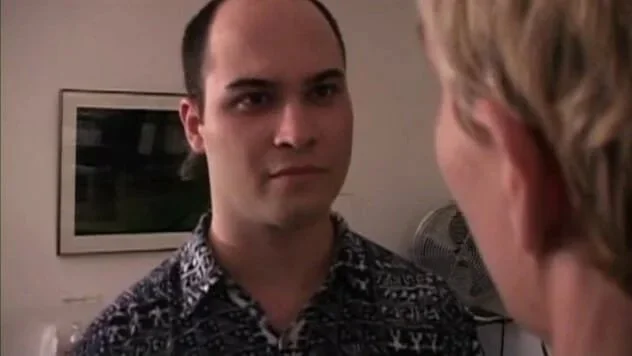
What has changed is the cultural context around the film's subject matter. Watching Ben and Arthur in 2026, more than two decades after gay marriage was legalized nationally, is watching a movie about a war that ended. The desperation in the premise, the stakes that Mraovich clearly wanted to feel urgent, no longer have the same teeth they would have had in a screening room in 2002. What remains is the spectacle. And the spectacle is substantial.
The gay pop culture site Queerty initially called it the worst gay movie ever made, then later retracted the "gay" qualifier and upgraded the designation to worst movie in general. The review site Cinemaqueer suggested it was too bad to even be parodied on Mystery Science Theater 3000, which is not a sentence that gets written very often. Total Film put it on their list of the 66 worst films of all time. One Netflix reviewer wrote: "I rarely get angry at a movie. This is an exception." Another, at IMDB, concluded that Mraovich had achieved the Ed Wood quadruple crown: failure at writing, directing, acting, and casting simultaneously.
Mraovich, for his part, has been consistently unbothered. In his 2014 BuzzFeed interview, he acknowledged the film's flaws while maintaining that he considered it a success. He made something. He finished it. It exists. By the logic of independent filmmaking, where most projects collapse before completion, he is not wrong. Ben and Arthur premiered at the Sunset 5 in West Hollywood, earned $40,000 in box office revenue over roughly a decade of availability, was released on DVD in 2004, briefly appeared on Amazon Prime in 2018, and is currently available in full on YouTube, uploaded there by a Letterboxd user who later discovered they had also, somehow, designed the film's poster.
That poster is, without exaggeration, the best-looking thing associated with the production. It is a genuine fact that the theatrical one-sheet is the peak visual achievement of the Ben and Arthur experience.

This is it. Peak B&A and it’s not in the movie.
Sitting through Ben and Arthur at a Weird Wednesday screening is its own category of transformative. You walk in a more or less ordinary person. You walk out understanding something that cannot be explained in advance about what cinema is capable of, in both directions. The film operates like a stress test. It pushes against the viewer's tolerance for incoherence, for sincerity applied without skill, for the gap between intention and execution stretched so wide you could park something in it. If you make it out the other side with your sanity reasonably intact, you know something about yourself that you did not know before.
Bruce Willis's character in Unbreakable spends the whole film discovering he cannot be hurt. Surviving the Ben and Arthur trainwreck of a production in a theater produces approximately the same revelation, from the opposite direction.
If you enjoyed this article, please consider becoming a patron of Hyperreal Film Journal for as low as $3 a month!
Jesse is a retired Navy veteran and Texas State Alumnus with a Degree in Digital Media Innovation and minor in Theater. In a past life he was a red shirt on the Enterprise doing nuclear power and propulsion plant reactor operations and maintenance. He currently resides in Austin helping to repair physical media players and doing communications work with We Luv Video along with veterans advocacy work as Senior Vice Commander with a local DAV chapter. He has co-hosted The Texas Hemp Show and hosted Lonestar Collective which has won 2 statewide fan favorite awards for best online production in the hemp industry. If he’s not out catching a flick he’s possibly hanging out with his family or playing on guitar with his son.