
Every Man For Himself: Subplots and Side Characters in Marty Supreme (2025) and Sweet Smell Of Success (1957)
“It’s every man for himself where I come from. That’s just how I grew up.” - Marty Mauser
“Every dog will have his day.” - Sidney Falco
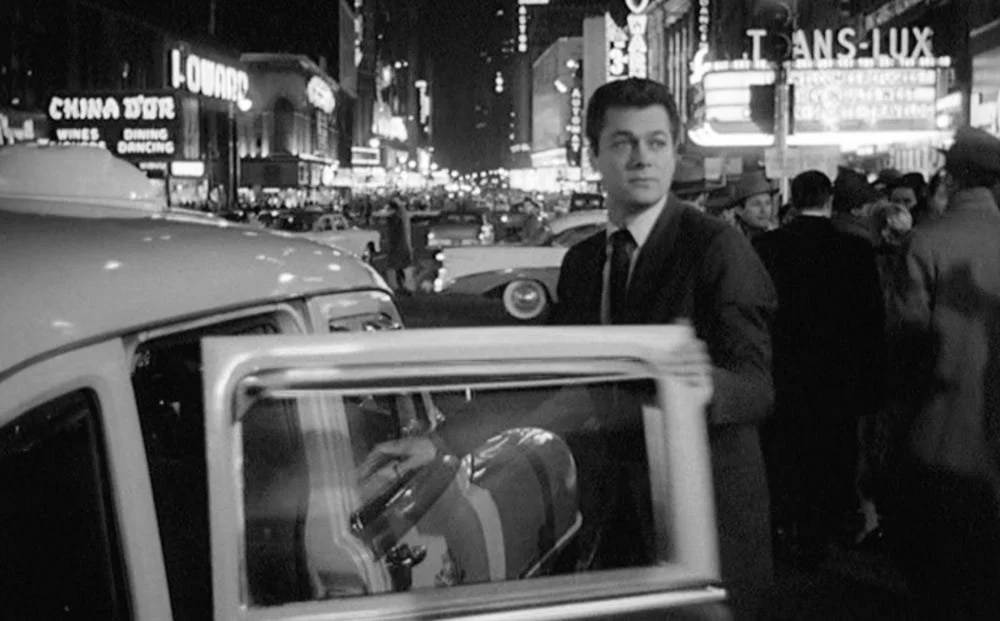
Timothee Chalamet’s creation of Marty Mauser in last year’s Marty Supreme has his clearest forefather in the character Sidney Falco from the 1957 film Sweet Smell Of Success. Set roughly in the same year and place, both films wrestle with what it takes to make it to the top of the heap in a pitiless city. Chalamet’s Marty, first introduced to us in a promotional still sprinting through a crowded street, divided audiences for his almost pathological ambition and shamelessness. The image captures the character perfectly: running both from and towards something, the human figures in his life obscured by motion-blur. The direction of his momentum - becoming a world-famous ping pong champion, is so absurd in its novelty that it makes him endearing.
By contrast, Tony Curtis’s Falco - a sleazy, unscrupulous press agent, is decidedly less sympathetic. Whereas Marty’s antics, both on the court and off, are largely presented for laughs, Sidney’s cynical maneuvers to curry favor with a ruthless gossip magnate played by Burt Lancaster are unambiguously amoral. In the opening night of the film, we see him resort to blackmail and then pimpery in order to plant a slanderous news item in a rival column. “Don’t do anything I wouldn’t do,” he advises the adulterous couple he’s arranged in his office. “That gives you a lot of leeway.” Now try to imagine the actor Tony Curtis on a Chalamet-style marketing campaign for this character. There aren’t enough bright orange ping-pong balls in the world to sell Sidney.
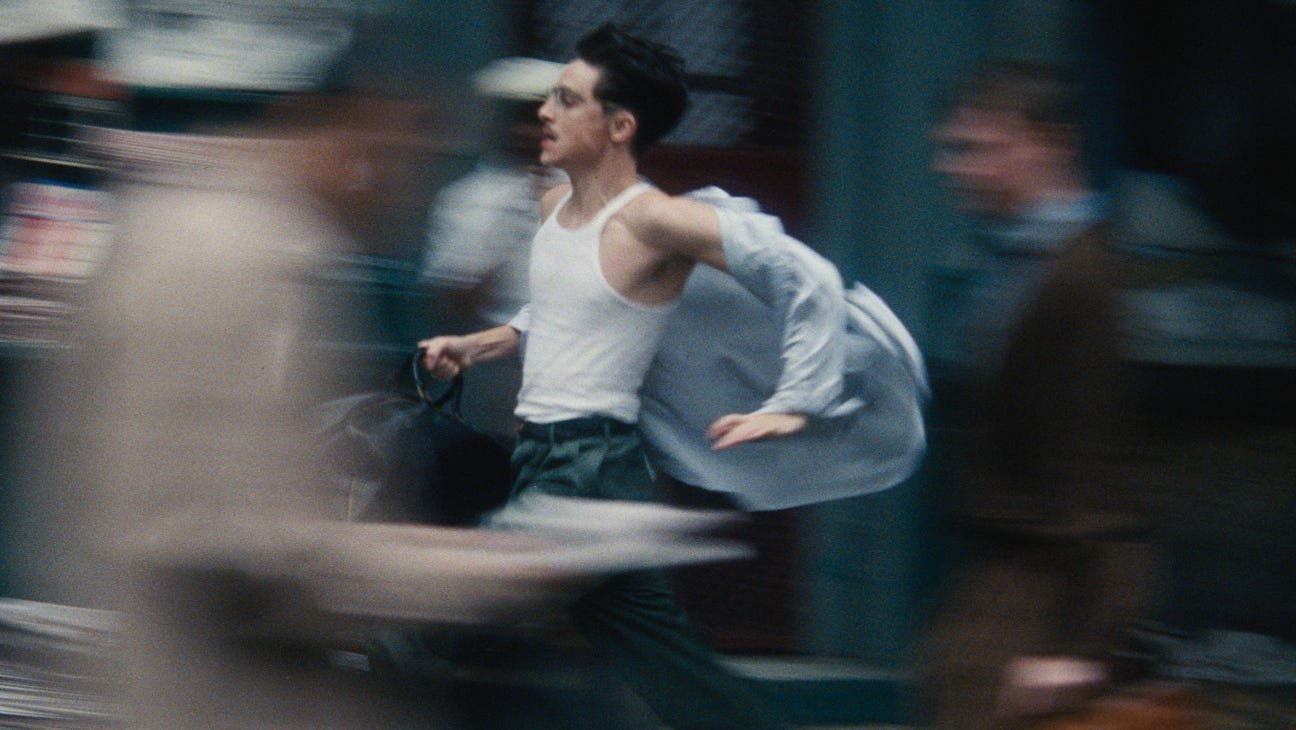
Sidney and Marty have many similarities: they’re always on the move, always short on cash, and always looking to do favors for favors. They both want to get somewhere, and they’re too busy getting to that somewhere that they resent even having to explain to their girlfriends, their secretaries, their families why they’re in such a hurry to get there. It’s a drive that could be looked at in either character through the context of American post-war feeling of limitlessness. Both films are set in Manhattan, but whereas Marty Mauser’s territory is the East Side tenements, Sidney’s is several blocks up, worlds away, in what screenwriter Clifford Odets limits to “that square mile between 42nd and 57th street.” Sidney strides through his New York to a brassy Broadway score, while Marty bounds through alleys and side streets to 80s synth rock.
Despite distance, their confrontations will happen in similar spaces: backstage, in shabby offices, in dressing rooms, in phone booths. What they have most in common is their subservient relationships to unlikeable, powerful men - Marty with Kevin Leary’s fountain pen magnate Milton Rockwell, Sidney with Burt Lancaster’s gossip columnist J.J. Hunsecker. Both Marty and Sidney will have to sell their souls to these men, and cruelly, they will have to take a humiliating beating at their hands.
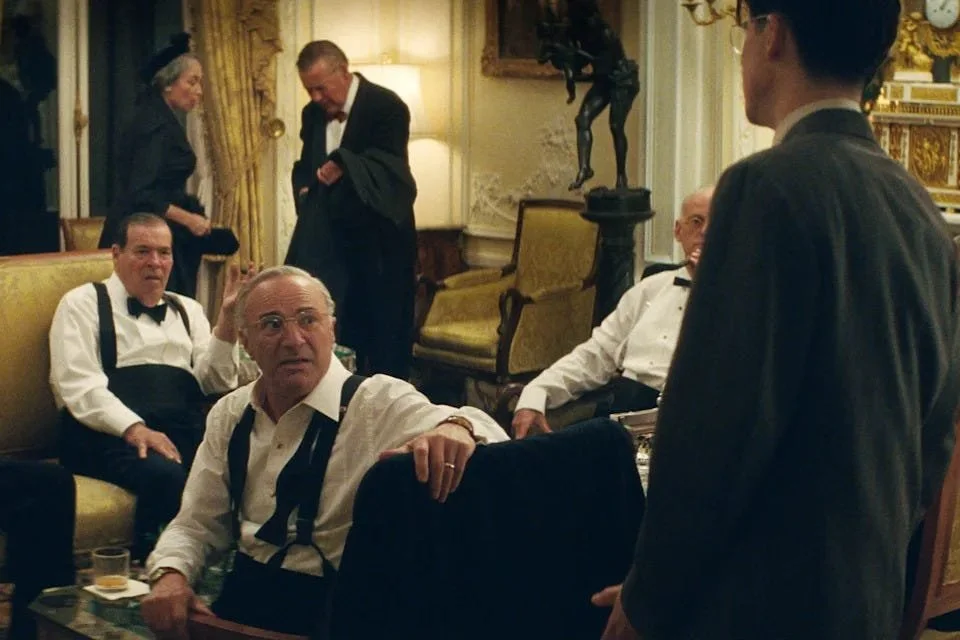
But the success of either movie does not rest solely on Marty or Sidney. Both films make great use of side characters to create a sense of place. The impressive roster of cameos in Marty Supreme is one of its biggest joys, faces that recreate a certain New York: Fran Drescher as Marty’s haggard mother, Abel Ferrara as a violent gangster, David Mamet as a frustrated theater director. But it doesn’t stop there: even Gwenyth Paltrow’s fading movie star seems almost too on-the-nose. As The Big Picture’s Sean Fennessey points out, the reason these cameos work so well is because the film draws on our knowledge of these people outside of the context of the movie.
Though without the celebrity power, Sweet Smell also makes ample use of its faces. Its supporting cast creates a similar gallery of New York archetypes: jazz musician Chico Hamilton playing himself, Sam Levene as his loyal manager and confidante, Barbara Niccols as the platinum-blonde cigarette girl, Emile Meyer as the always-cackling cop in on the take. Importantly, it’s not just their faces that make this nighttime universe work; rather, it’s their backstories that give the film’s action its shape.
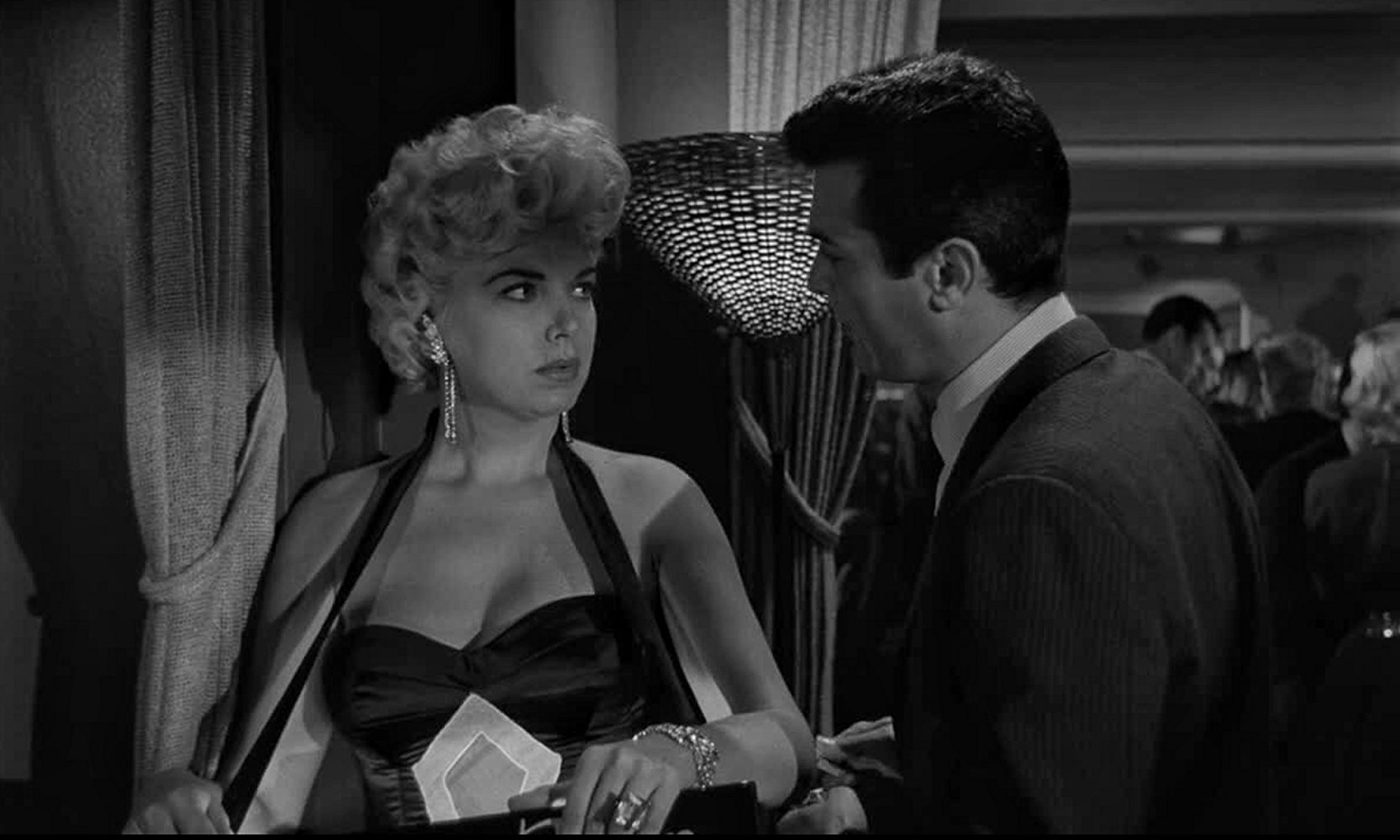
This is a major difference between the films. In an interview with filmmaker Joe Dante, Josh Safdie described his and collaborator Ronald Bronstein’s process of writing as “we didn’t know where we were going,” and the unexpected results are part of the thrill of the movie’s Picaresque joyride - characters emerge unannounced, and situations fall from the ceiling - literally. In scripting Sweet Smell Of Success, however, Clifford Odets used subplots strategically, harnessing the relationships amongst the characters to move the action forward. Crucially, there isn’t a single introduction in the entire film; all of the characters know (or know of) each other before the movie begins. Not only that, they all have history. With dialogue, Odets uses a multi-player approach to scenes where side characters don’t act as foils but as active agents, each coming to the confrontation with a different motive.
The best example of this is the scene where we encounter Lancaster’s J.J. for the first time. Rather than a simple volley between the central characters, Odets arranges the conversation so that Falco and Hunsecker use the side characters - a senator and his mistress, an aspiring singer, and her manager - to score points on each other. Hunsecker’s vicious barbs about Falco’s profession are intended for Sidney, but he directs them at the young singer. “What does a press agent do?” intervenes the senator. Falco, in answering the senator’s question, lobs a sly ball back at Hunsecker.
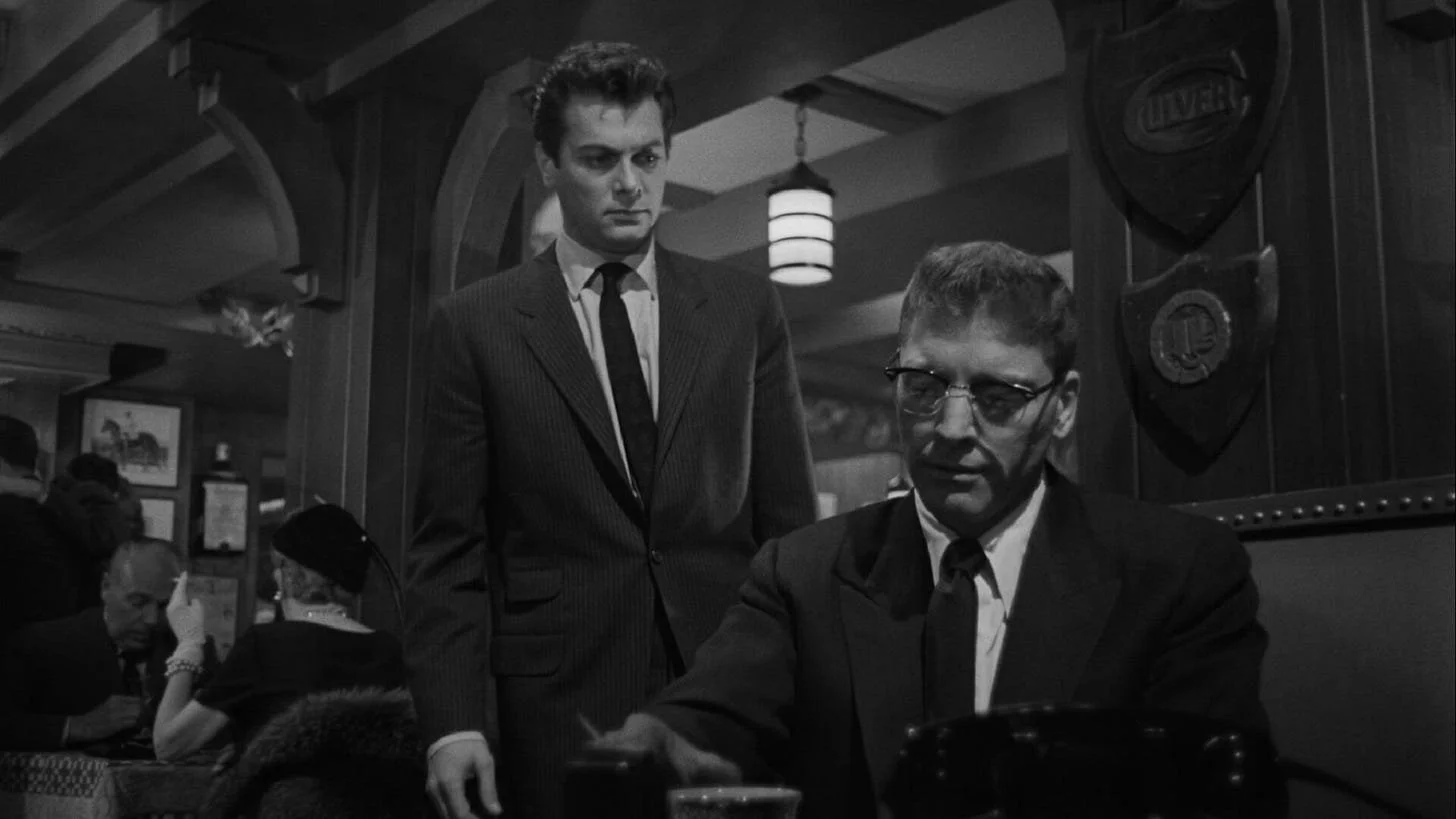
Of course, dialogue is only as good as its blocking: Lancaster and director Alexander Mackendrick fought over the placement of his character in relation to Curtis’s. I’m reminded of the moment in Marty Supreme where Marty, breaking up a stage rehearsal, demonstrates to a flustered David Mamet how an attacker would properly hold a knife to a victim - from behind. Similarly, Lancaster argued that Hunsecker wouldn’t allow his beleaguered henchman Falco to sit next to him. Rather, Falco would pull up a chair and sit behind Hunsecker, leaning into the conversation. Lancaster won, and the staging brilliantly underscores the nature of their relationship.
“I love this dirty town,” Lancaster says wistfully at one point in Sweet Smell Of Success. For me, this line seems to linger over every scene in Marty Supreme, as if whispered to us by Josh Safdie about any one of his frantic characters. In Lancaster’s delivery, he evokes the city itself, its physical unseemliness, and its morality, but he’s also referring to the people of the city. The strength of both films is their ability to convey this human density, the tangled networks that come to define life within its structures. In both films, the real star is the world of the main character, not the main character himself.
Sweet Smell Of Success screened at AFS on June 12th and 14th as part of the Paramount’s Summer Classic Film Series.
If you enjoyed this article, please consider becoming a patron of Hyperreal Film Journal for as low as $3 a month!
Graham is an Austin-based videographer and film-goer. On his Substack, Mad Carlotta, he suggests double features, pairing classics and contemporary releases with lesser-known but thematically-similar films.