
Weird Wednesdays: Hard Target - Woo’ed on the Bayou
This screening was part of the Alamo Drafthouse’s Weird Wednesday series. For upcoming shows, click here.
Action auteur John Woo shot no less than 22 films in Hong Kong between 1974–1992. Following the release of his 1992 magnum opus Hard Boiled, he became the first Asian director invited to helm a major Hollywood film.*
The result, Hard Target (1993), while sometimes dismissed as a middling Jean Claude Van Damme vehicle, has taken its honorable place in Woo’s filmography. This 35mm screening was co-presented by actor/filmmaker Bryan Connolly, who introduced the film as a high point in a loose “hobo-sploitation” genre that started in the U.S. with 1988’s They Live.
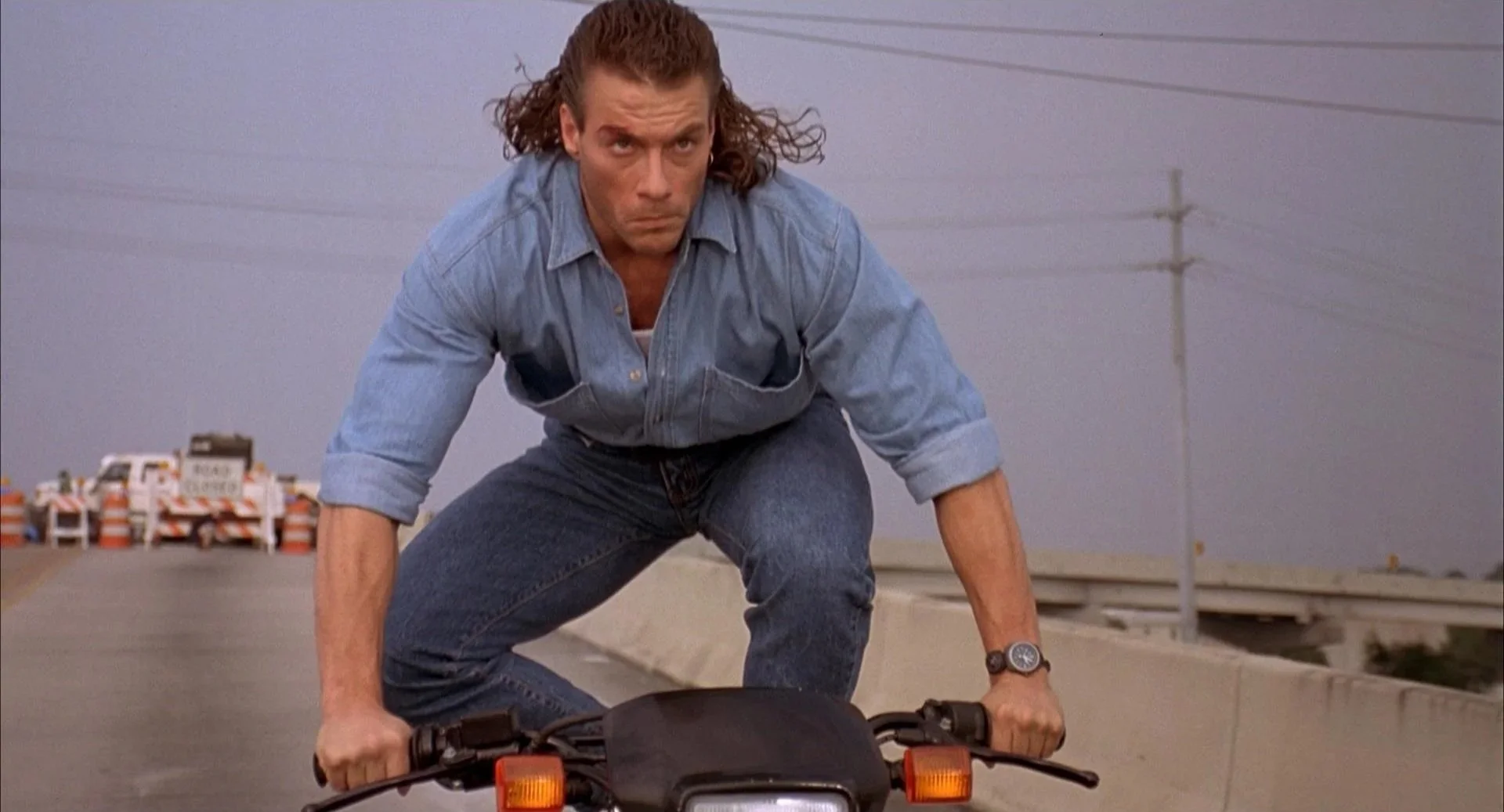
A reinterpretation of the classic short story “The Most Dangerous Game,” Hard Target follows a homeless ex-Marine battling a sinister group hunting humans for sport in New Orleans. Van Damme, at peak mulletted greasiness, plays Chance Boudreaux, a homeless ex-Marine forced to battle the shadowy figures killing indigent Vietnam vets in the streets.
Allegedly, screenwriter Charles Pfarrer, a former Navy SEAL, set the story in New Orleans to explain Van Damme’s accent (nevermind that he’s Belgian). The setting adds to the film’s humid atmosphere. Pfaffer’s script grounds the unhoused Vietnam veteran milieu with empathy, setting up their relationships and responses to the nightmare unfolding in their community. These characters feel discarded after their service, and their bitterness feels real.
Henriksen plays the murder magnate Emil Fouchon. Fond of banging on a grand piano in an ornate music room, Fouchon charges his bloodthirsty clients $500,000 a pop. Just to spice things up, he insists the prey are combat veterans. Lucky for his operation, New Orleans police are on strike, effectively giving the streets over to the human hunters.
But their latest prey, dispatched in the first scene, wasn’t completely alone in the world. The stiff’s daughter Natasha (Yancy Butler) shows up looking for him, with some means at her disposal. She runs into Boudreaux when he dispatches a gang of muggers with a flurry of roundhouse kicks. Unable to ship out as a merchant mariner, he reluctantly accepts her offer to help track down her father. “What kind of name is Chance?” she asks him. “Well…my mom took one.”
The film’s executive producer, Sam Raimi, proved an invaluable resource for Woo’s Hollywood bow. Raimi vets on the film included screenwriter Pfarrer, who had previously written Darkman, and editor Rob Murawski, a longtime collaborator who just edited Raimi’s latest Send Help. Universal asked Raimi to be on set every day in case there were issues, but he said he did nothing to help, later remarking, “Woo at 70% is like most American directors at 100%.”
While certain POV shots of crossbow bolts hurtling through the air feel Raimi-coded, Hard Target is indisputably a John Woo film. The film’s sense of space, the make-or-break for complex action set pieces, is a marvel, with some scenes shot using six cameras at a time. The climax, set in a warehouse crammed with Mardi Gras floats and papier-mache oddities, feels like a dry-run for his biggest U.S. film, Face/Off.
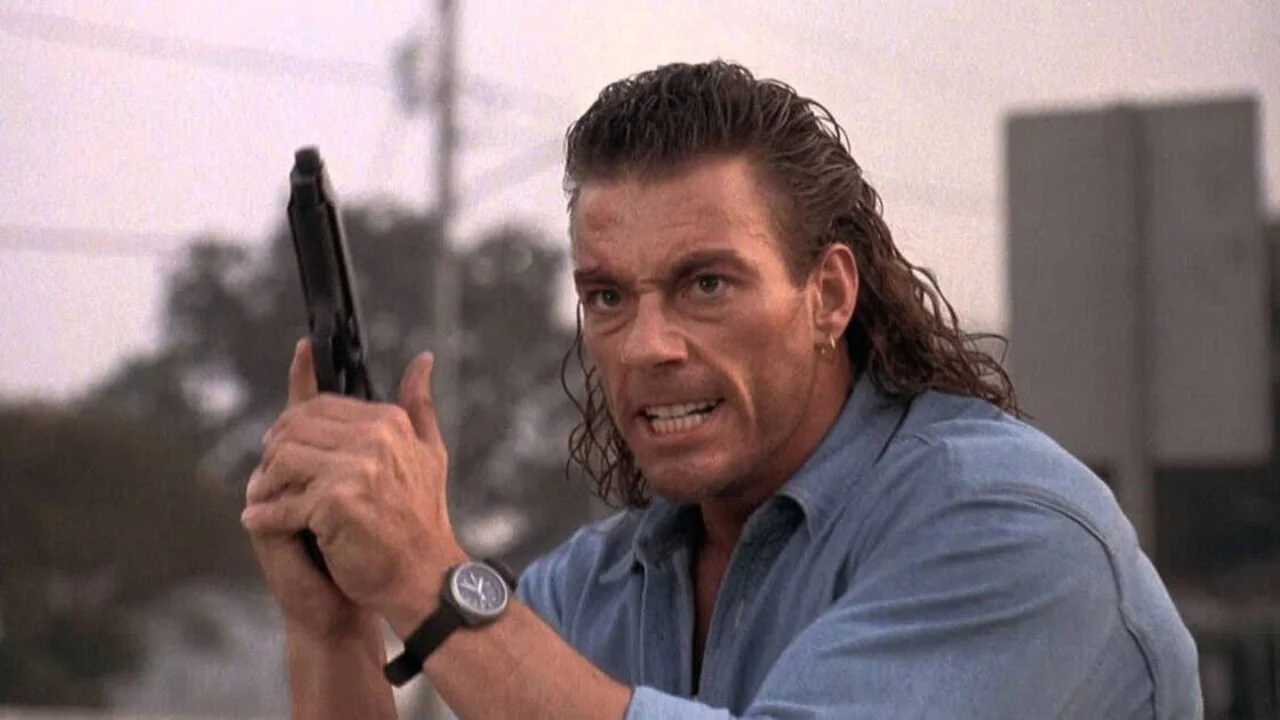
Notwithstanding the glut of hard-R action epics during this era, Universal execs were not ready for Woo’s explosive bullet ballets. He was forced to tone down a serious amount of bloodshed for the U.S. release; the “unrated” international version has since been released on Blu-ray. Remarkably, Woo did manage to squeeze in some of his more eccentric trademark flourishes–yes, at one point a flock of doves appears out of nowhere.
Apart from the chases and shootouts, every character has their moment to shine. The outstanding supporting cast includes Kasi Lemmons as a cop who tries to help, and B-movie king Arnold Vosloo as Fourchon’s right hand heavy. Wilford Brimley steals the entire third act as Chance’s rascally swamp-dwelling Uncle Douvee.
In retrospect, Hard Target represents a key evolution of early 1990s action cinema, introducing hardwired Hong Kong genre tropes to a new audience. The film’s success opened the door for other Hong Kong filmmakers such as Tsui Hark and Stanley Tong to try their luck in Tinseltown. Woo’s 23rd film is the kind with more stunt people than speaking roles in the credits, and that’s (almost always) a beautiful thing.
*Chinese-Americans were still present in the industry–see for example James Wong Howe, born Wong Tung Jim, a revered cinematographer from Hollywood’s golden age.
If you enjoyed this article, please consider becoming a patron of Hyperreal Film Journal for as low as $3 a month!
Matthew K. Seidel is a writer and musician living in Austin since 2004. The above selfie was taken in an otherwise empty screening of Heat at 10:30 in the morning. You can find him on Letterboxd @tropesmoker.