
Tuner: Perfect pitch on safecracking escapades
Risk-taking is at the heart of the crime genre. Whether we are following a novice finding it necessary to join the criminal underworld or a hardened pro whose methods—and their acceptance of this life—have become clinical, the criminal’s relationship with risk is where the drama unfolds and we learn about what someone is willing to lose to get what they want. In Tuner, the narrative feature debut of co-writer/director Daniel Roher, Roher puts the risk-taking in the hands of the filmmakers in attempting to make the romantic plot the focus of the film, with the criminal storyline taking a backseat. The result means smaller stakes and smaller consequences than a contemporary crime film would be expected to deliver, but a more interesting focus on the heart behind the choices that take people out of their comfort zones to chase their dreams.
Tuner follows Niki White, played by Leo Woodall, a piano tuner whose perfect pitch and hyperacusis, an extreme sensitivity to loud noises, makes him an incredible student to tuner Harry Horowitz, played by Dustin Hoffman. A former child prodigy, losing his ability to play after the hyperacusis diagnosis, Niki focuses on his work and nothing else, trying to ignore the career trajectory that has been taken from him. Niki’s expertise at tuning and his background in music attracts the interest of music composition student Ruthie, played by Havana Rose Liu, pursuing a once-in-a-lifetime fellowship with a star composer. Following the hospitalization of Harry and the burgeoning romance with Ruthie, Niki finds himself in a place where he wants to support his mentor and pursue this new relationship, but without the financial means to do either. In two moments of happenstance, the opportunity to make more money lands at his feet: his perfect pitch and his hyperacusis make him a natural safe cracker.
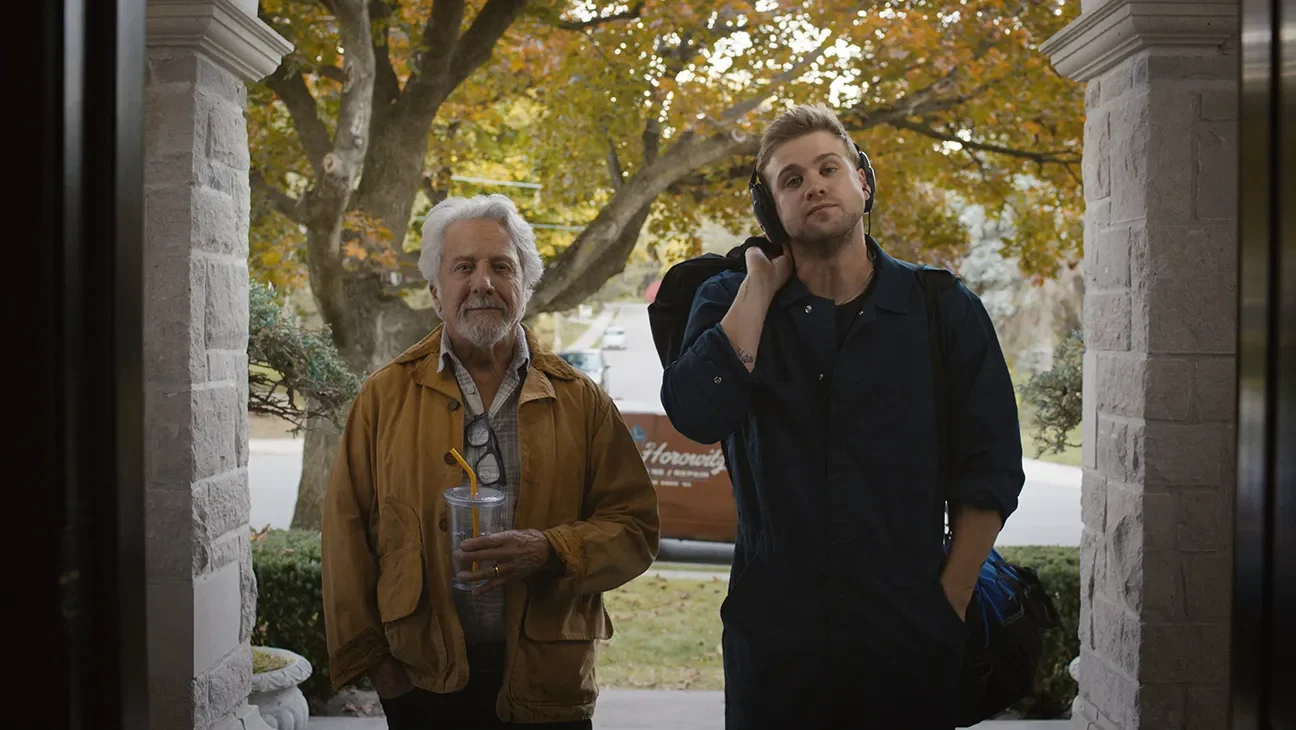
What follows is not the typical crime drama where the attraction of the criminal lifestyle ruins a person’s life as they chase the high of money beyond their wildest dreams. The film keeps Niki’s involvement with the safecrackers to a realistic low priority in his life, emerging as a nuisance more than a new social circle. Niki is a frustratingly-self-aware worker bee, moving from job to job in an effort to, as he puts it, “find harmony within the chaos.” The actual safecracking sequences are well done, putting us in Niki’s hyper-focused headspace while using simple visual effects and clever sound design to increase the tension, but Niki and the film regard them as unimportant to his character’s arc, to the frustration of the safecrackers. They help him pay the bills of Harry rather quickly and give him some financial support when dating Ruthie, but they are not the focus of Tuner.
The heart of the film is in the burgeoning relationship between Niki and Ruthie, fleshing out both characters rather than playing it as an undercooked b-plot love interest. Their relationship to their work define them as human beings, with Ruthie's ruthless pursuit towards success mirroring Niki’s focus on getting through the day. The former still has a passion and a dream worth chasing while the latter has seen how dreams can crumble outside the realm of your control. They share a social awkwardness that can only come from hours spent alone in a rehearsal room, bonding over their shared love of music and their physical attraction to each other. Where the film draws viewers in most effectively is when their core beliefs butt heads, creating tense interactions that are not easily cast away to make room for more safecracking sequences. Both Ruthie and Niki have their proverbial blinders on to the world around them, focusing on their goals, but their relationship slowly opens the blinders, in ways they deem both positive and negative. The romance is complicated, as these two become lovers and antagonists towards their status quo. Because of this, moments that could be played with more resolution are given a touch of ambiguity and a suggestion that things are still off, giving audiences more to chew on. It’s a romance disguised as a crime thriller, but self-aware enough that it can’t abandon the safecracking at any point.
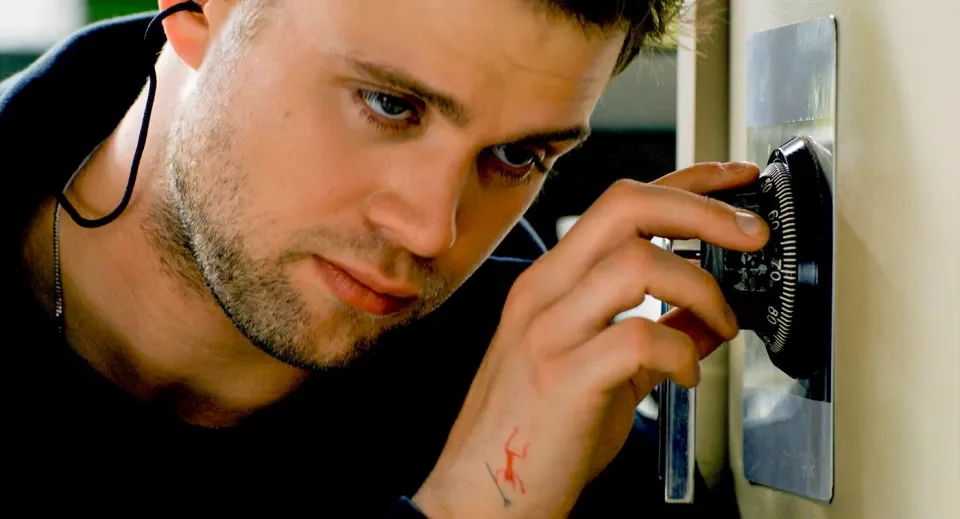
Unfortunately, Tuner’s main struggle is working within the genre and balancing the crime elements and the romantic elements. There is an inherent silliness to the crime scenes and its corresponding characters, in a world where the vengeful boss realizes that an airhorn is a more effective threat for Niki than a gun, that bleeds over when the two sides inevitably cross over. In the film’s final act, a romantic coincidence becomes the connective tissue between Ruthie and his safecracking as Niki seeks to resolve the latter to save the former. The result: a scene that should play as incredibly tense and results in Niki’s life being changed forever, but comes across as kind of funny and, as a result, more of a relief that this part of the story is over. Tuner is filled with interesting individual crime sequences, but they don’t build up in a satisfactory way until the very end and even undercut their seriousness when Niki refuses to exploit his time with them for anything more than the last minute MacGuffin, a ring that pairs with a ring he gave Ruthie earlier in the film. Keeping the crime side of Niki’s life to a plot minimum works to accentuate the more thoughtful moments and ideas in the film, but it makes returning to those sections drag and tonally offputting.
Even as the film moves in and out of safecracking escapades, Tuner knows where its strength is and always returns to Niki and Ruthie. In the final scene of the film, Niki, having suffered a fate that could’ve cemented his fear of opening himself up to new experiences and relationships, finds that he still desires to reconnect with Ruthie, who has not forgiven him at that point after a devastating argument. In this moment, we watch Niki reach into the past he has tried to run from and, within it, express to Ruthie his frustration, his sadness, and his desire for forgiveness. The film doesn’t let Ruthie respond, but one cannot help but be moved by this expression of love. This final scene cements Tuner as a thoughtful film that confidently moves against the expectations of genre, risking tedium and boredom to those expecting a bigger thriller, to tell a more interesting story.
If you enjoyed this article, please consider becoming a patron of Hyperreal Film Journal for as low as $3 a month!
This is Dylan Samuel. If you see him, say “hello.”