
The Death of Robin Hood Review: A Bleak End to a Bad Guy
Was Robin Hood a good guy? Common wisdom is yes, he was a good guy who robbed from the rich and gave to the poor. That’s his whole popular lore. In Michael Sanroski’s new movie, The Death of Robin Hood, he presents a different version of this storied hero. In his take on the tale, he tells the story of Robin Hood as a violent, unrepentant criminal; as someone who murdered innocent people without remorse and only looked out for himself. In The Death of Robin Hood, Sarnoski constructs a striking, bleakly cynical story where a bad guy never really gets the comeuppance he deserves. He mostly gets to do whatever bad thing he wants and then chooses the way he goes out. Spoiler alert: Robin Hood dies in this movie. So, does this dour revisionist history of a beloved folk hero deserve to be told? Is Robin Hood worth talking about if he is removed from his bravery, selflessness, and generosity? Probably not, but the movie may hold more weight with someone more familiar with the many tales of Robin Hood. Sarnoski’s version is a loose adaptation of the 17th century ballad Robin Hood's Death. There has always been more to the guy than just giving to the poor. Still, when it was over, I couldn’t help but feel that maybe this particular folk tale is better lost to time.
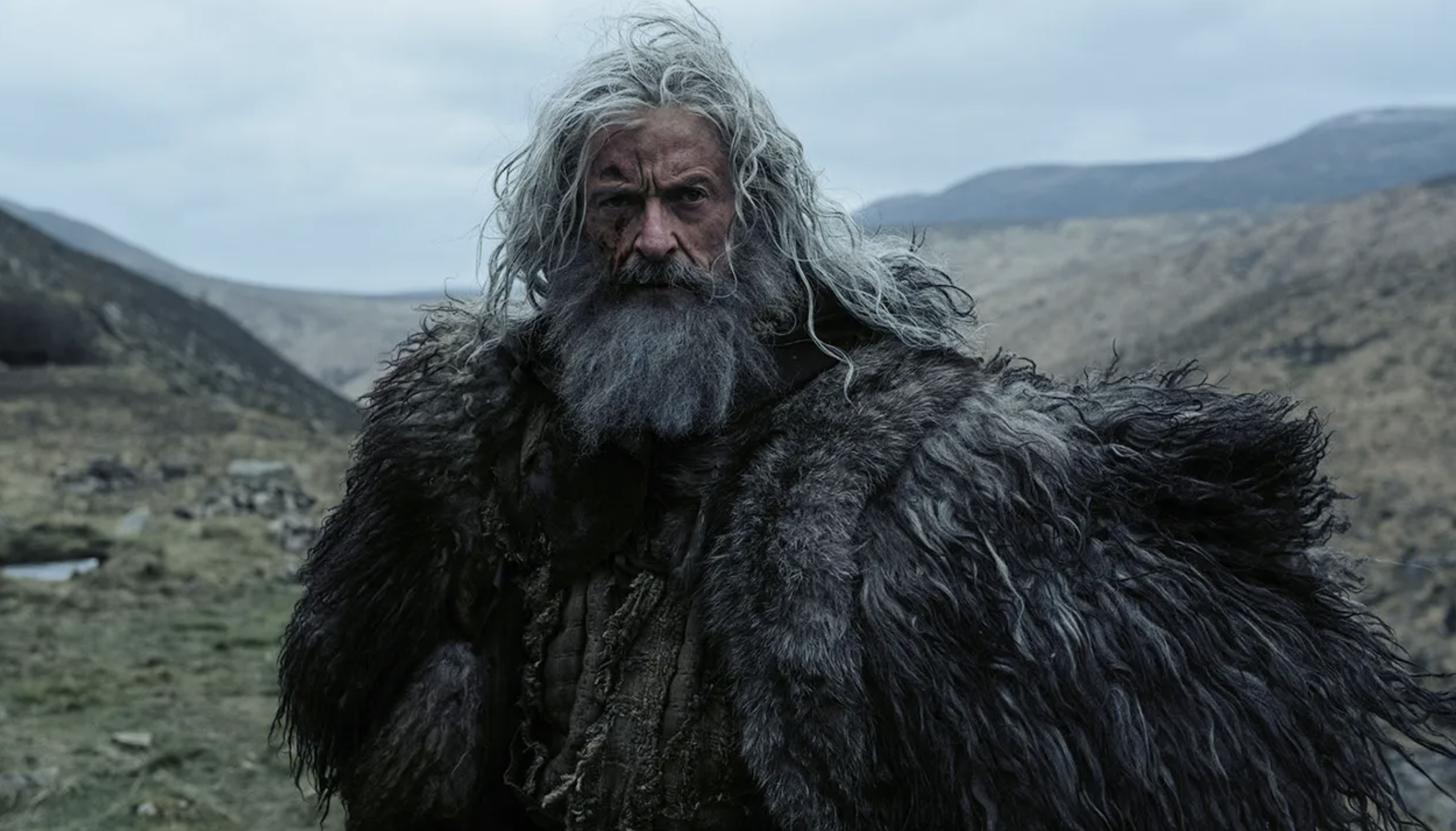
The film opens on the dark, brutal countryside of 13th century England. A young girl is fighting for her life as she traverses a harsh landscape alone that threatens to be her gravesite. She soon runs into Robin Hood (a grizzly Hugh Jackman), who tells her that the Robin Hood she thinks she knows doesn’t exist, and that actually he’s a violent man who kills without conscience. The girl leaves him, but returns later at night to try to kill and rob Robin Hood in his sleep. Unfortunately for her, he rouses, stabs her in the neck, and tells her she should have been more careful. This is the Robin Hood of Sarnoski’s movie. He’s an unlikeable, violent, and mean old man whose only interest is his own survival. There is no stealing from the rich and giving to the poor in this movie. This is a Robin Hood who kills children.
Sarnoski continues his Robin Hood character assassination when he meets up with his old friend, Little John (a nearly unrecognizable Bill Skarsgård). Together the two plan some violent revenge on some nearby villagers that have done Little John wrong. As an aside, it would really help if these kinds of period-piece movies could have subtitles. Yes, everyone’s speaking English, but the thick Old English accents and loudly whipping wind make large sections of dialogue nearly impossible to understand. So, after some inscrutable words between Robin Hood and his buddy, they tear into a nearby village and murder nearly everyone there, regardless of if they’re man, woman, child, or unborn baby. Sarnoski is really making sure his audience gets that this Robin Hood is a really bad and very lethal dude. We’re not supposed to like him at all.
After the fight in the village, Robin Hood is left badly wounded and near death. Little John takes him to a nearby priory to be nursed back to health. The prioress in charge is Sister Brigid (Jodie Comer) and she agrees to take the injured man in. If there is a redemption arc for our despicable antihero it happens here. Under the guidance of Sister Brigid and the local leper (Murray Bartlett), Robin Hood begins to heal not only his body, but also his tortured heart. He teaches a little girl how to string a bow. He helps the children trap rabbits for supper. He even learns to appreciate the trees! It’s not exactly huge progress, but for a man who only a few scenes earlier was stabbing a pregnant woman in the stomach, it’s a big shift.
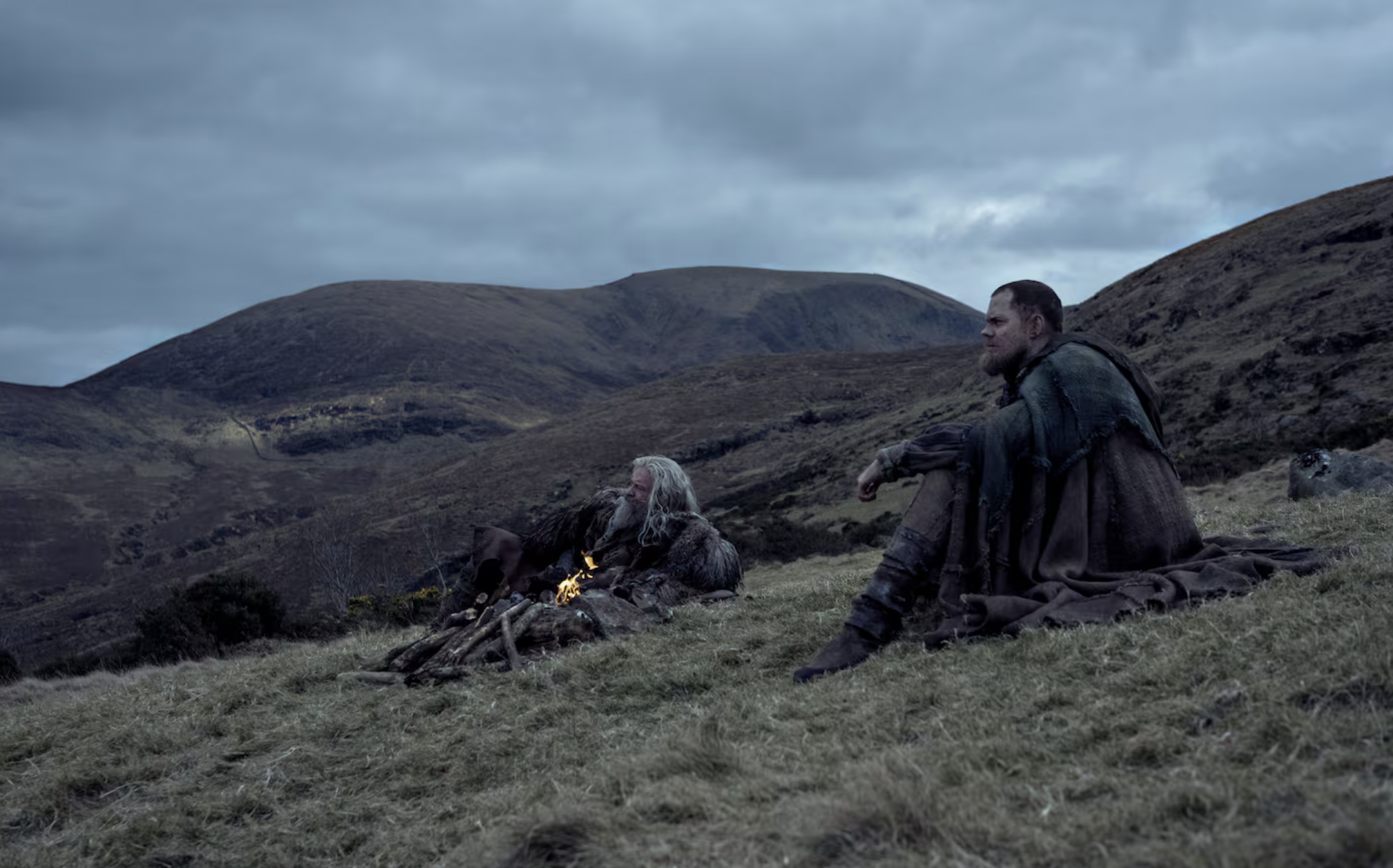
Still, since we all know the title of the movie, we know it can’t all be trees and rabbits forever for our guy. Death is waiting. Robin Hood sort of faces his past and attempts to make right with someone he has previously wronged, but it’s pretty anticlimatic and not at all satisfying. He makes a half apology and then decides to end his own life in a quiet, painless way. Something his victims were never granted. A movie that began with extreme violence barely goes out on a whimper. The viewer is left with an emptiness that wishes we could have gotten more from that dark, sad slog through the English moors.
The Death of Robin Hood marks a significant tonal shift for Michael Sarnoski. His two previous films are some of my favorite movies in the past five years, Pig and A Quiet Place: Day One. Both of those had similar dark settings, but were ultimately hopeful movies about people who dug deep to make the best out of bad situations. Robin Hood almost seems to be a cynical reaction to the acclaim received by those two movies. It’s as if Sarnoski was so put off by the success of Quiet Place that he decided to make a movie that is nearly impossible to enjoy. If his intention was to challenge his audience to the point of total aversion, he definitely succeeded – even if the reason he decided to do that is unclear. I am not really sure who the audience is for this movie. Outside of hardcore fans/scholars of Robin Hood, there doesn’t really seem to be a lot of demographics that would enjoy this movie. It gives audiences an unlikeable guy in a bad situation who never really gets what he deserves. What’s the message here? Bad men get to do shitty things for a long time without consequences? Okay, sure. I know that. We all know that, and we didn’t need The Death of Robin Hood to remind us of it for the 1000th time.
If you enjoyed this article, please consider becoming a patron of Hyperreal Film Journal for as low as $3 a month!
Hannah Dubbe lives with her cat in Austin, TX. When she’s not watching movies, she’s running. Movies change lives.