
Good Times, Bad Times: To Sleep with Anger
The L.A. Rebellion film movement refers to African-American graduate filmmakers who studied at UCLA from the late 1960s through the 1990s. Their cinematic output is a stirring examination of black experience, influenced by the social unrest of those times. Austin Film Society is screening films that are recognized as part of this movement including Charles Burnett’s To Sleep with Anger (1990), which reveals a close-knit black community whose inner tension is heightened by the unexpected arrival of a friend from the past.
The film is set in the urban community of South Central Los Angeles with families and neighbors knowing one another for multiple generations, maintaining ties through a migration from the Deep South. It’s a community that worships together in the Baptist tradition but still retains some belief in African-American mysticism. For instance, when family patriarch Gideon (Paul Butler) falls ill, his Lamaze-educating wife Suzie (Mary Alice) places herbs at his bedridden feet in the hopes of healing him. These charms are discovered by their bemused pastor who attempts to lead the choir in a prayer when they come to visit.
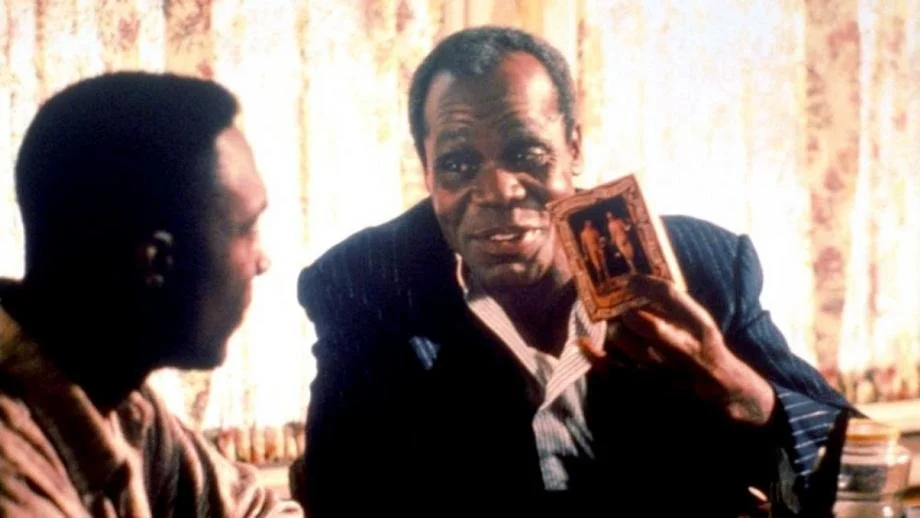
The most superstitious character is Harry (Danny Glover), a visiting friend who appears at Gideon’s and Suzie’s doorstep after several disconnected decades. He immediately fears the bad luck that might ensue when Gideon and Suzie’s grandson Sunny (DeVaughn Nixon) accidentally sweeps his feet with a broom. The scene anticipates the slow intensifying of the community’s emotions, where annoyances become resentments which become arguments that become fights, threatening the community’s peaceful existence.
Within this family lies the resentment that Gideon and Suzie’s son Samuel (Richard Brooks) is never a helpful participant in his family’s needs, even when asked. He is commonly called “Baby Brother” by his family members, requiring their help instead. Samuel dreams of a more exciting life, often leaving his responsibilities to his parents, including the raising of his son Sunny. Even though the film is an ensemble piece, Samuel is the one soul who is most tempted by fun wildness that Harry brings—offers of card game trickery, true-brewed corn liquor, adulterous affairs with women, and a possible return to the South where all of these delights are readily available. Harry is a devilish friend of the family, who tempts all that he meets to their worst, most destructive impulses.
To Sleep with Anger has a wonderful music score, conducted by Stephen James Taylor. The soundtrack features gospel and blues, with characters enjoying both in the comfort of completely different social environments such as church and home parties. The narrative is framed by music, as a child trumpeter struggles to play his instrument at the beginning of the film, only to finally learn how to blow his horn by its conclusion. The trumpeter’s progression as a musician matches the family’s struggle to remain united, learning to play through their own missed notes.
The film functions so well because its family’s fragility is a metaphor for civilization’s volatility. A physical struggle involving a prominently-featured pocketknife shows how relations can literally be cut apart. When such a family altercation results in a trip to the hospital, older-and-more responsible sibling Junior (Carl Lumbly) questions a nurse as to why there are so many patients, only to be told that “it’s [another] Friday night.” Appropriately, all wounds are mended at the hospital and eventually heal.
Though critically-acclaimed upon its release, winning accolades from Independent Spirit Awards, National Society of Film Critics Awards, and Special Jury Recognition from Sundance Film Festival, To Sleep with Anger did not succeed with its box office returns. Yet its cultural significance has lasted: the film was selected for preservation in the National Film Registry by the Library of Congress in 2017, and received a remastered release by the Criterion Collection in 2019.
In times of recent social unrest, films from the L.A.Rebellion movement provide a reflection on how other American regions in other times creatively react to such intensity. Anger will always interrupt a peaceful environment. Instead, communities that break bread rise together and communities that reconcile will endure.
If you enjoyed this article, please consider becoming a patron of Hyperreal Film Journal for as low as $3 a month!
Paul Feinstein is an arts professional who has produced content in different mediums including film screenings, live music, radio, and theater. He is a native Austinite.