
Weird Wednesdays: The 4th Man
This screening was part of the Alamo Drafthouse’s Weird Wednesday series. For upcoming shows, click here.
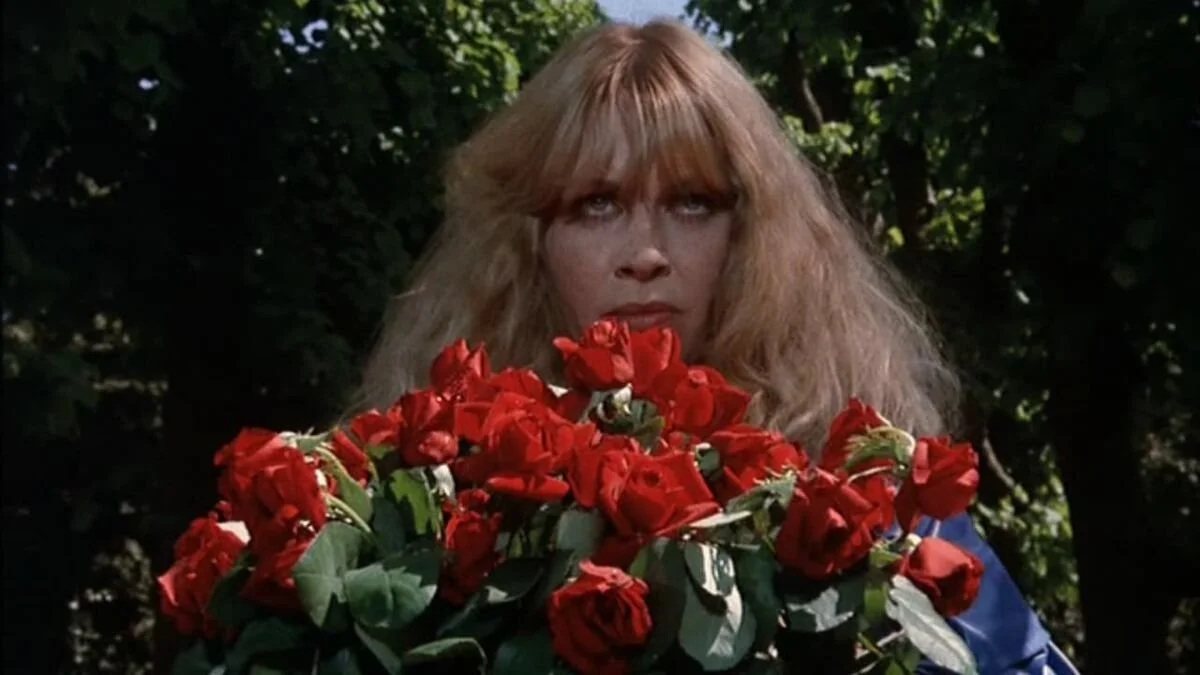
Exsanguinated cows next to a bouquet of roses. A man’s eye, dangling from a gored socket. Spiders spinning webs for prey. The Virgin Mary and the Cross. A gun—or is it a key?
Such are the deliciously overblown motifs making up erotic thriller The Fourth Man (1983), the last Dutch film made by Paul Verhoeven before he embarked on a 15-year Hollywood career. Verhoeven would later cannibalize the loose outlines of this plot into Basic Instinct. Here, working from a script from Gerard Soeteman adapting a novel of the same name, he practices a complete lack of thematic subtlety to great effect. There’s Catholic guilt writ large, the metaphor of a black widow literalized, and an unreliable narrator in the form of a protagonist who states early on: “I lie the truth, until I no longer know whether something did or did not happen.”
That from Gerard Reve (Jeroen Krabbé), a triple-threat bisexual Catholic alcoholic struggling to write his next great novel. En route to a book talk hosted by a small city’s literary society, Gerard tries and fails to pick up a beautiful young man and watches forlornly as the man’s train departs. When he reaches his destination, Gerard falls in with Christine (Renée Soutendijk), the literary society’s svelte and elfin secretary whose very wealthy husband died and left her a fortune. Tempted more by her money than Christine herself, Gerard promises not to leave after spending the night with her, and finds himself beguiled both by his missed connection from the train station and the web of mystery around Christine.
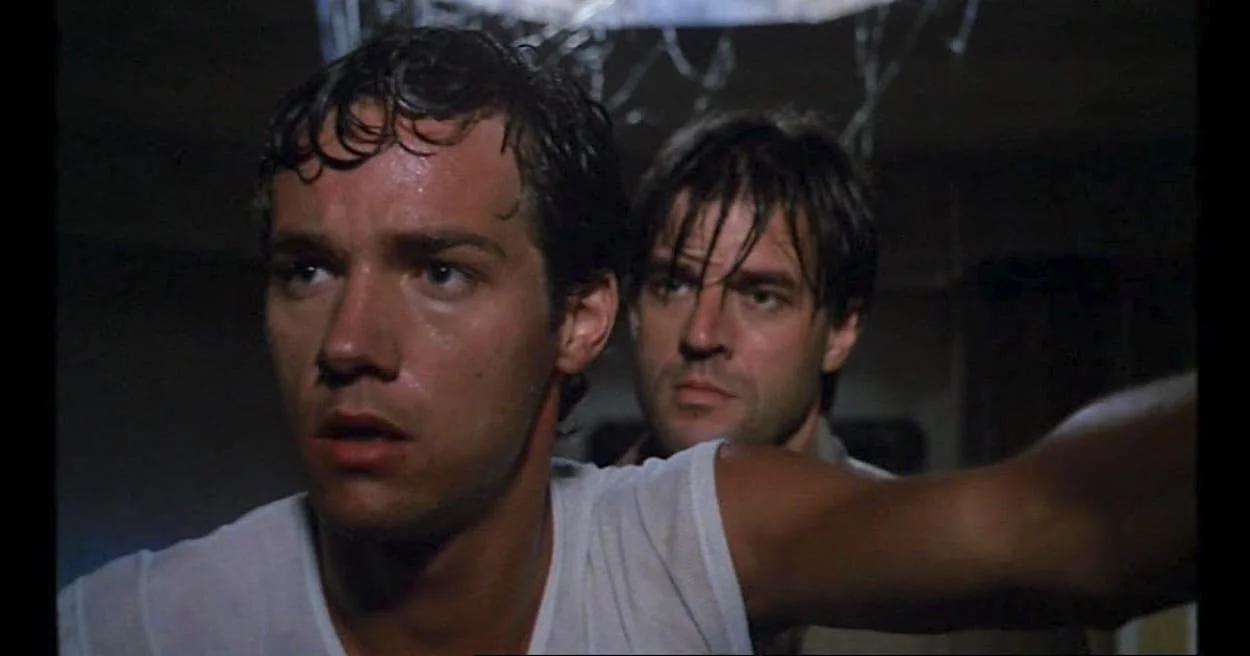
There’s no time wasted in establishing Gerard’s overactive imagination and unreliability. In the opening scene, Gerard awakens hungover and shaking, giving up on an attempt at a morning shave to instead pour himself a glass of wine. His lover, practicing the violin by the window, calls him an alcoholic—and Gerard responds by strangling him to death with a lacy black bra. Yet in the next moment, Gerard enters the same room dressed and composed, taking leave of his lover who is alive and well and once more playing the violin.
This blurring of reality and delusion becomes more pronounced as Gerard leaves town and enters Christine’s life. On the train, he gazes at a photograph of a hotel hanging above the seat across from him. He dozes off and has the first of many ominous dreams in the movie, awakening to see the photograph covered in blood. Really, it’s just tomato juice from a can that broke in the overhead luggage compartment. Later, at the book talk, Christine shows him the hotel that the social club has booked for him. It’s the very same hotel he saw on the train. He accepts Christine’s offer to stay with her instead.
Maybe it’s fate, maybe it’s coincidence; The Fourth Man refuses to show its hand. At Christine’s house, Gerard discovers a letter and photograph from her other lover, Herman (Thom Hoffman). Who else would it be but the man from the train station? Gerard is overwhelmed by desire and concocts a madcap plan to get Herman to Christine’s house and into his bed.
There’s a sense that the movie is itself laughing at Gerard, who is ultimately something of a total loser. He tries to filch magazines from the newspaper stand because he’s too broke to buy one; he charms the audience at his book reading but fails to write a single word of his new novel; he’s blatantly using Christine, first for her money and later to meet Herman. Gerard clearly considers himself as irresistible and erudite, and Verhoeven pokes fun at this self-image by showing him more as a histrionic clown. And whether Gerard is grabbing the cocktail Christine’s made him after demurring that he’s not much of a drinker or lasciviously kissing the photograph he finds of Herman, Krabbé plays the character with an excellent physical comedy. Meanwhile, Soutendijk is more one-note as Christine’s icy Hitchcock blonde. There’s not much substance to her femme fatale character, and aside from a handful of moments where Christine expresses vulnerability to Gerard, she remains a cool and composed enigma—leaving it a mystery as to whether she’s hiding something, like Gerard begins to suspect, or simply closed off.
Gerard’s overdramatic nature is paired with elaborately overdone symbolism as the omens around him become more and more pronounced. On the train, he finds a poster of Delilah cutting Samson’s hair. Those same scissors return to snip off his penis in a nightmare he has after sleeping with Christine, and later as Christine herself cuts his hair in her salon. The salon, inherited from her husband, is named Sphinx, yet broken bulbs in the large neon sign out front mean Gerard reads it as spin—Dutch for spider, another nod to the black widow metaphor. And when Gerard first steps off the train on his arrival in Amsterdam, he’s startled to see a coffin being wheeled by with his name written on the banner around it. “That’s me!” he says. The banner is unfolded to show it is not in fact his name.
It’s hard to take Gerard or these overt symbols seriously, but the movie’s tongue-in-cheek note and sense of absurdity make that the point, not a detraction. And while Verohoeven deploys his imagery with a heavy hand, there’s no lack of style. The lurid colors of bright red blood and aqua water and the campy set designs bring to mind giallo, further referenced in the movie’s themes of paranoia, sex, and violence. Verhoeven also fills the film with Catholic imagery and biblical parallels. There’s a reproduction of the pieta on Gerard’s bedside table at home; when he daydreams about Herman, it’s while he’s caressing the statue of a crucified Jesus in a local church, picturing his would-be lover as Christ himself. Verhoeven, a self-professed student of religion and the occult, mixes the two with an ironic dismissal of what’s holy and sacred. As Gerard says: “Being Catholic means having imagination.”
By the end of the movie, Gerard finds himself caught even more tightly in a web, and it’s still unclear whether we’ve spent nearly two hours in the mind of a madman or a plot of truly biblical proportions. This ambiguity defines the movie and saves it from a cheap conclusion. Verhoeven trusts us to take in an onslaught of religious parallels and florid symbolism and come to our own conclusions on what it all means—if anything.
If you enjoyed this article, please consider becoming a patron of Hyperreal Film Journal for as low as $3 a month!
Alix is the editor-in-chief for Hyperreal Film Journal. You can find her on Letterboxd and IG at @alixfm.