
Garrel/Garrel: White Light Lays Above
Part two of a two-part review covering this Essential Cinema program at Austin Film Society.
CORRECTION: In our previous installment, we neglected to mention the artist Nico was born Christa Päffgen. We will continue to use her stage name in our discussion of the films.

Our previous review covered the early days of Philippe Garrel’s cinematic infatuation with his partner Nico. From the epic scope of The Inner Scar (1972) to the post-revolutionary pathos of The Crystal Cradle (1976), the French auteur’s gaze drew ponderous depths of emotion from his German muse.
The later works in this program cover the extremes of Garrel’s already deeply personal and idiosyncratic work. The diaristic, process-dependent curiosity Un Ange Passe gives way to the script-bound melodrama I Can No Longer Hear the Guitar, which is dedicated to Nico’s memory after her tragic death in 1988, from cerebral hemorrhage following a bicycle accident.
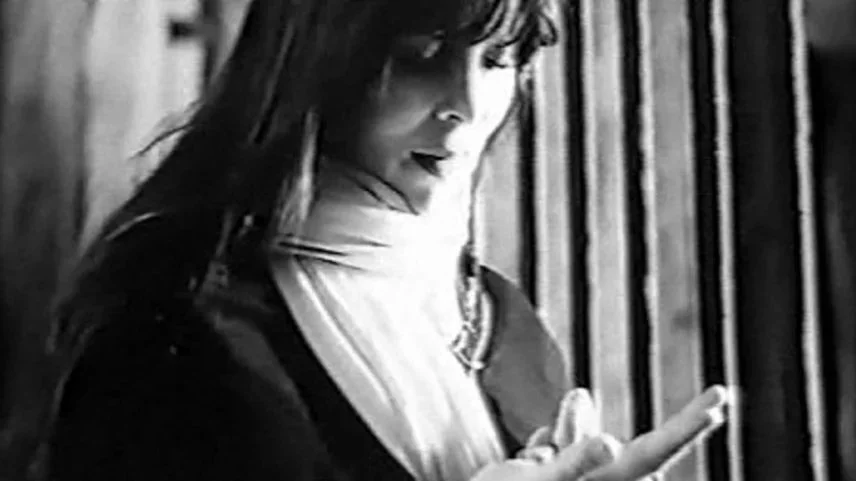
Les Bleu Des Origines (1979)
The screening of Un Ange Passe was preceded by this restoration featuring 12 minutes of a longer 52 minute silent film. Per programmer Jazmyne Moreno, Garrel and Nico dove deep into drugs to fuel their artistic practice at this time, foreshadowing the lifestyle depicted in I Can No Longer Hear the Guitar.
Les Bleu Des Origines presents a mix of candid imagery, such as a flyer for Nico live at a rock club posted in the street, with mythical low angle shots of her and other characters dwarfed by ancient immense architecture. The anti-narrative feels like it’s been chopped into strange isolated slices of behavior - a slap, sweaty nightmares, a single perfect tear rolling down Nico’s cheek as she ponders eternity on a park bench, all intensified by the dead silent soundtrack.
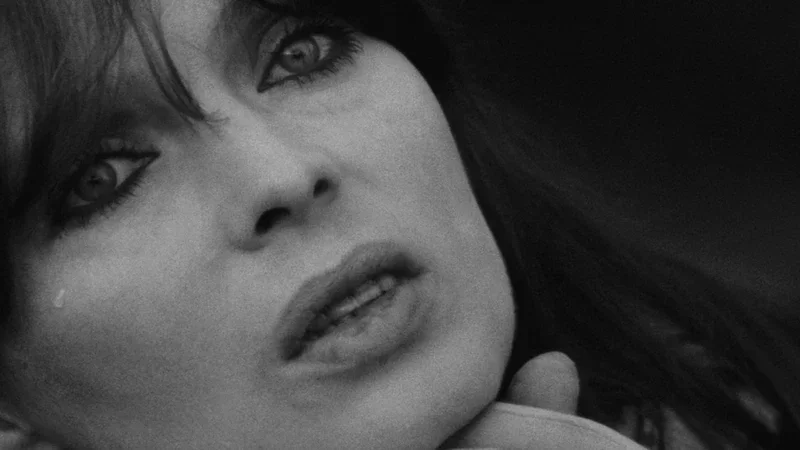
Un Ange Passe (1975)
This somewhat formless work feels like the peak of Garrel’s intellectual, interrogatory mode of filmmaking. Yet it also feels very human in its process-oriented incompleteness and the vulnerability captured from its characters, who often appear stranded in front of the camera.
The film opens and closes with luminous black and white footage of Nico performing her desolate harmonium dirges live, in frigid-looking conditions, plumes of breath emanating as she sings. Her face and aura consume the screen in these moments.
However, most of the film involves other characters discussing philosophy and psychoanalysis in various locations–in a forest, at a house party, on the side of the road somewhere. These vignettes often drift into confused silence as the camera’s subjects look offscreen for guidance or to express irritation. Garrel even leaves in a fourth-wall-breaking diss by one of his dandy friends: “We'll have to add music or else the audience will be bored sick!"
The most hapless of the filmmaker’s subjects is his father, the celebrated actor Maurice Garrel, who nonetheless gets one of the best lines while discussing French existentialist Albert Camus versus Humphrey Bogart: “Camus may have wanted to be Bogart, but Bogart wouldn’t have wanted to be Camus.”
The film closes with Nico’s voice, in words that seem to express the resolution of their relationship: “I am the extension of your eye. Your eye does not see me past the time between.”
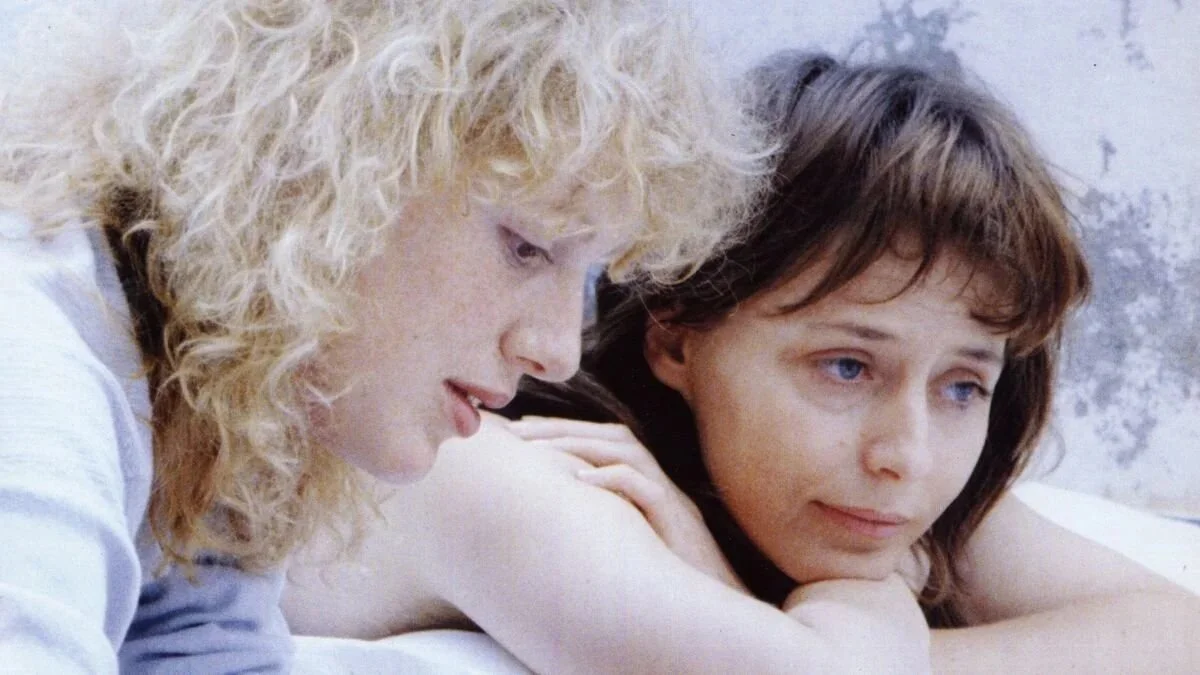
I Can No Longer Hear the Guitar (1991)
Unlike the previous films in this program, I Can No Longer Hear the Guitar was made from a narrative script, by Garrel co-written with Marc Cholodenko and Jean-François Goyet. Conceived after Nico’s passing, the semi-autobiographical film is an act of mourning, dedicated to her memory in the wake of a tragic bicycle accident in Ibiza.
This film, which won the Silver Lion at the 48th Venice International Film Festival, feels like a eulogy not only for a partner, but for time gone by, a period of one’s life that can’t be retrieved. In keeping with the rest of the program, …Guitar was presented on a luminous 35mm print aged with the silvery patina of 30+ year old celluloid.
Dutch actress Johanna ter Steege plays Marianne, the Nico figure here, embodying the musician’s fierce independence and volatility. Ter Steege is known for another role as an object of male frustration in The Vanishing (1988), but gets much more character to work with here.
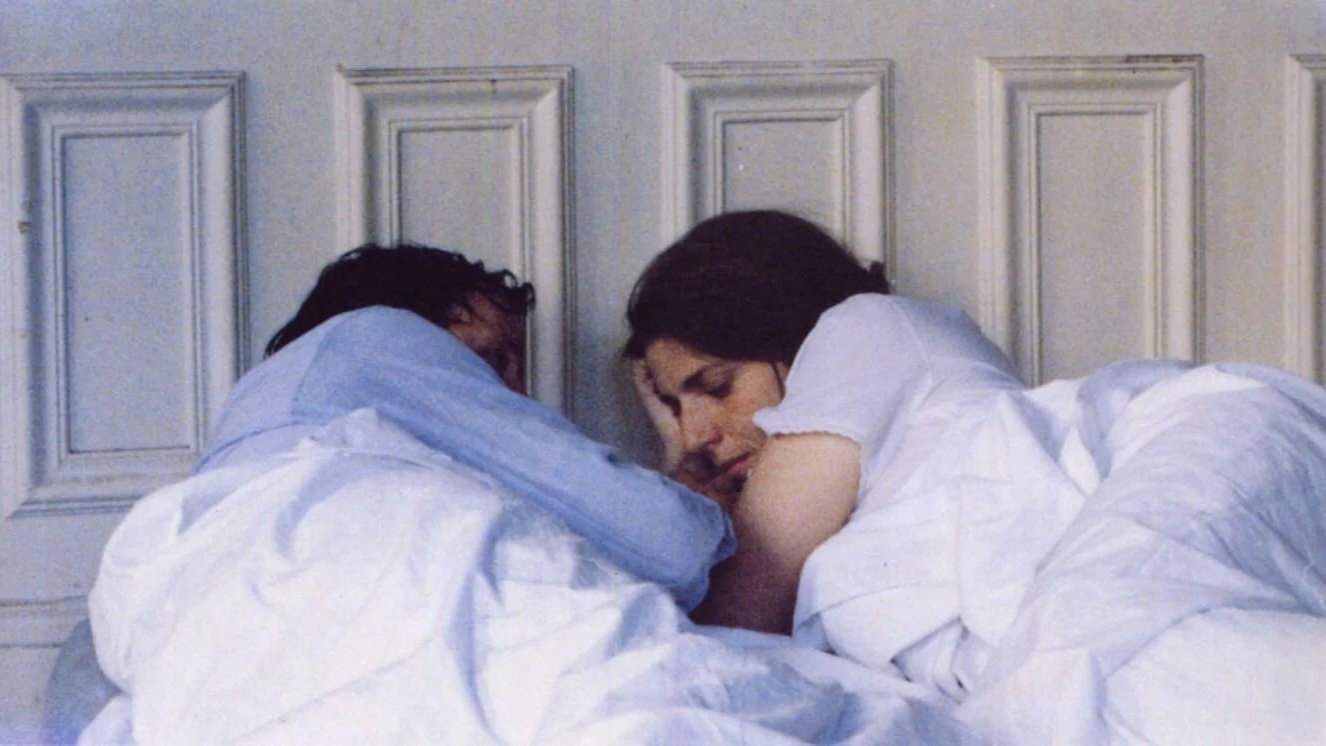
Benoît Régent plays Gerard, the Garrel surrogate, in a performance of wide-eyed perplexity–at his own desires and the actions of others. Even in the beginning of the film, he appears to be evading responsibility. “Want to make us a baby?” he asks Marianne as they lounge in bed, essentially offering her an unpaid job with a lifetime commitment.
Neither of these characters create any art onscreen, or appear to have jobs, or do much of anything. What they do is talk, mostly about the nature of love and relationships. Marianne gives the L-word short shrift: “You can love spaghetti very much.” Gerard seems the more romantic-minded of the two, but doesn’t appear willing to offer more than sentiment.
The narrative lurches in odd time jumps that seem to purposely elide overt drama in favor of strangely intimate moments, such as Gerard kissing Marianne on the toilet while she loudly relieves herself. Many scenes end in slow fades to black, without resolution. The introduction of a jazzy score by Faton Kahen feels slightly off after enduring so much dire silence throughout this program. But the brief flutters of music add a bit of life to the incredibly drab mise en scene and elliptical editing, particularly when heroin enters the picture.
Garrel takes a particularly pitiless view of Gerard, who can be read as the filmmaker’s stand-in. In an increasingly self-lacerating self-portrait, the protagonist slouches toward a future he doesn’t want, unable to choose between directionless freedom and oppressive responsibility. In the space between being right and being real, Garrel comes firmly down on the side of real.
If you enjoyed this article, please consider becoming a patron of Hyperreal Film Journal for as low as $3 a month!
Matthew K. Seidel is a writer and musician living in Austin since 2004. The above selfie was taken in an otherwise empty screening of Heat at 10:30 in the morning. You can find him on Letterboxd @tropesmoker.