
The Voice of Hind Rajab Review
The Voice of Hind Rajab joins a growing collection of contemporary films about the genocide in Gaza and the horrific treatment of Palestinians in their home by the occupying Israeli forces. In the current age of online media, these films exist in the context of a nearly endless stream of videos and photos documenting the atrocities, in the form of boots-on-the-ground journalism, pro-Palestinian or pro-Israeli propganda, and tragic phone-dictated testimonies. Where the film stands out in the global coverage of the ongoing tragedy is that it is a docudrama: a narrative reenactment of the day surrounding the murder of five-year-old Palestinian Hind Rajab and her family by Israeli soldiers.
Given the amount of accessible coverage of the film’s subject, I was unsure of the benefits of dramatizing something so recent and thoroughly explored. Hind’s death remains a significant, heartbreaking event in the history of the genocide, particularily because of how much real-time audio and visual media was shared at the time it occurred and how that accessibility left a permanent memory in those who witnessed it virtually. However, The Voice of Hind Rajab utilizes this documented material extremely well and tells the story in a form unique to narrative cinema. In doing so, the film sings the praises of the hopefulness in humanity during a time of crushing hopelessness.
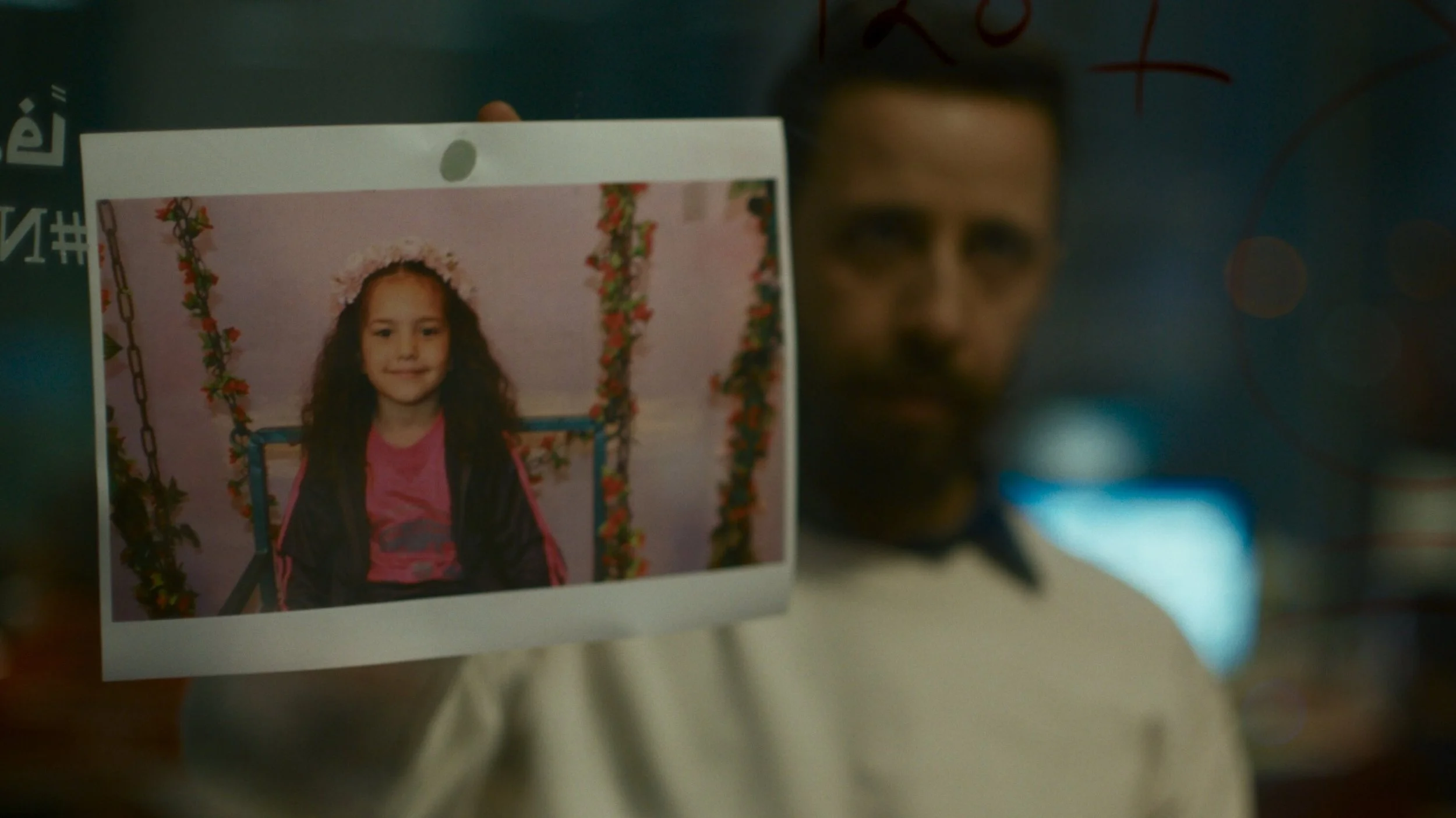
The film follows a day at the headquarters of the Red Crescent Society, a humanitarian organization that attempts to aid Palestinians in need, as they field a call from Hind Rajab–who is in a car filled with her family that was just murdered by troops near their home in Gaza City. Two call center volunteers, Omar (Motaz Malhees) and Rana (Saja Kilani), comfort the child on the phone as they obtain information and relay it to Madhi (Amer Hlehel), their supervisor, so they can send an ambulance to pick the child up. However, in seeking approval for a non-Israeli vehicle to move through the occupied area, the Red Crescent is up against mountains of red tape put up by the Israeli Ministry of Defense. The film delivers the day’s events almost in real-time, as the actors portraying the call center employees interact with and react to the actual phone call that Hind made to save herself.
As a viewer, I found the narrative simple in its delivery and complex in its humanity. The story juxtaposes the emotional depths of the phone call that the Red Crescent staff is consumed by with the extremely bureaucratic actions that drive the story beat by beat. The act of calling different departments, filling out forms, overseeing deliveries, arguing about these steps, and waiting for responses dominate the onscreen lives of these characters. All the while, pragmatic actions are influenced by emotionally overwhelming telecommunications: Hind’s desperate voice crying for help, as well as the hindering responses of bureaucrats in the Israeli military. The justifiably impatient volunteer rescue workers waiting for the greenlight feel desperation that comes from dealing with forces outside of their direct control, with Omar urging Madhi to break protocol and send their ambulance and Madhi keeping a solemn oath to never lose another rescue worker because of operational negligence. These factors ramp up the tension throughout the film as hours go by without anything related to Hind’s rescue coming to fruition. This day, of which the audience members likely know the conclusion, is a horrific situation to witness.
It is in this framing of Hind’s killing as a hyperlocal, soul-crushing event where the geographical separation from the suffering only amplifies it, that the film connects best with the audience. Most audience members’ relationship with the genocide in Gaza overlaps with that of the call center employees’ in a specific way: through their phones. Cellular and internet communication of the horrors committed by the Israeli military can lead to one being equal parts incredibly informed and depressingly hopeless. What can the average person do to help the Palestinian people? The film illustrates an answer to this question: anything you can in coordination with anyone that is willing to help.
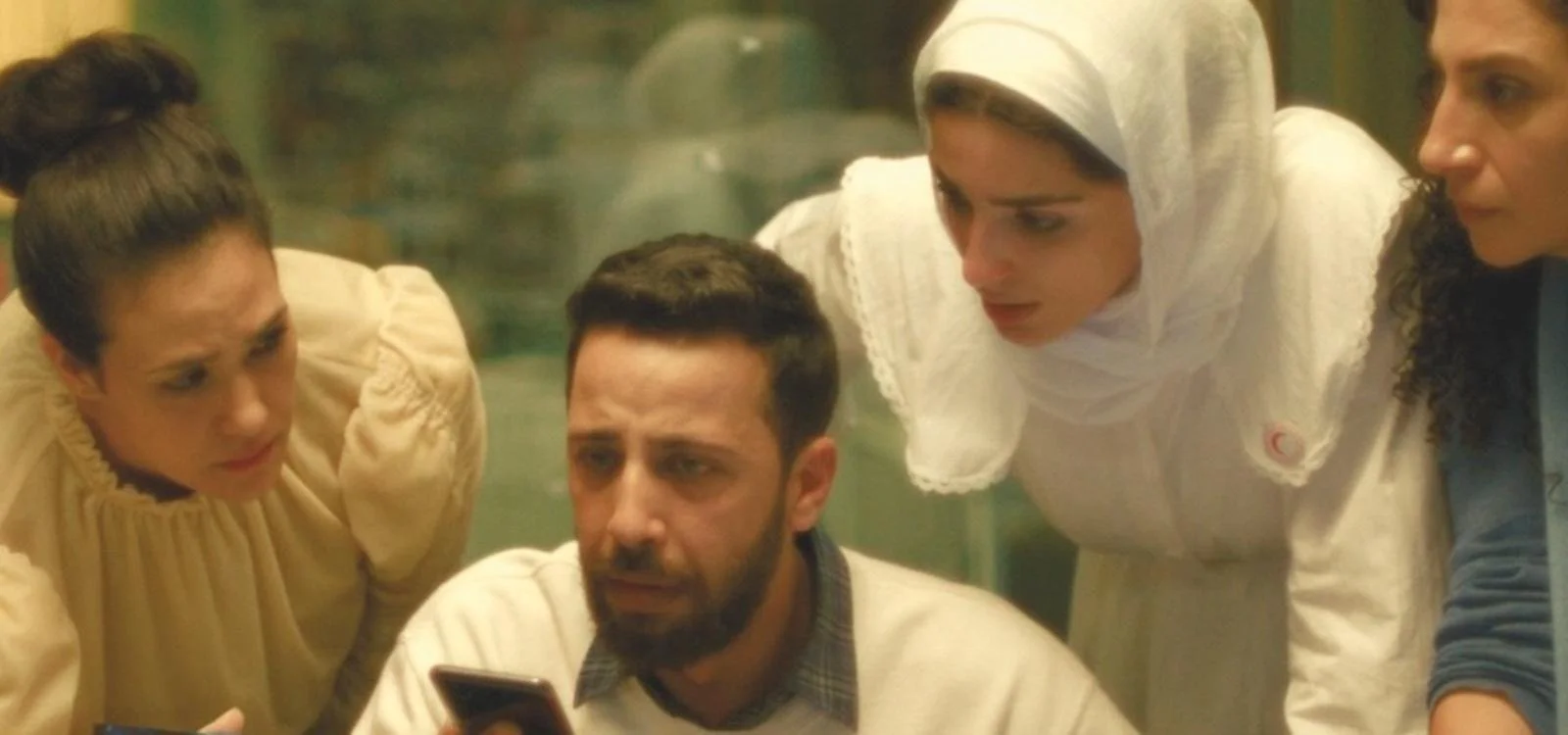
Omar hates the methodical process by which a phone call becomes an ambulance sent to save someone. This approval process, in conjunction with a Ministry of Defense that is systematically murdering his people, causes him to lose his temper repeatedly with his co-workers, his supervisor, and anyone on the phone who isn’t Hind or the rescue workers. Regardless, he works within the system because it is the thing that has saved people without risking the lives–as far as the Red Crescent can control–of the rescue workers in the field. With every call, the volunteers sacrifice their safety, their time, and their comfort to try and save someone. This effort, despite Hind’s death, is the film’s message of hope. Focusing on people staring at devices, the film provides the international audience with characters that look and feel like them: people trying to connect and help where they can in spite of the seeming impossibility.
Toward the end of the film, when all hope appears to be lost, the film leaves its strictly documentarian view of the struggles at the call center to focus on Nisreen (Clara Khoury), another supervisor who has helped the staff sporadically throughout the film. Realizing that Omar and Rana are emotionally and psychologically spent, she takes over the phone call with Hind and asks her to picture the sea and playing on the beach. Here, the film creates a montage of ethereal images of the waters along the Gaza coastline as Nisreen guides Hind through a profoundly beautiful prayer. It is the film’s sole example of obvious artistic license, as this moment is the only scene that leaves the call center and considers the interior lives of the characters directly. The scene draws the line between documentary and docudrama firmly, emphasizing a need to meditate on the spiritual or the unknowable when engaging with the topic of genocide.
The moments that follow this sequence include the heartbreaking reality of the day’s events and an interview with Hind’s mother, who was at home with her son when her family was killed. Hind’s mother talks of Hind’s love of the beach in Gaza and how it was her happy place. While the film doesn’t confirm whether the scene with Nisreen was informed by this interview, or whether it was pure happenstance that Nisreen asked Hind to conjure her own happy place before her passing, the film’s willingness to create a place for the necessity of spiritual connection to each other and our reality, no matter how horrific, shows the power of dramatized narrative in exploring the beauty and horror of life.
Watching The Voice of Hind Rajab means listening to the actual voice of Hind Rajab. The voice on the phone that the actors engage with throughout the film is the actual recording the Palestinian Red Crescent Society had of their day spent talking with her. There is an awareness of both the dramatization and the documentation colliding with each other in the film, and the end result is almost unexplainable. The viewer may find themself remembering the first time they heard the name Hind Rajab and the snippets of the phone call recording published online, while also rooting for the film’s rescue vehicle to reach her in hopes that, this time, she will be saved. The film is not afraid to explore both the cold reality of the genocide in Gaza and the spiritual, non-reality of narrative cinema. In fact, it is in the creation of hope within the hopeless, both in the text of the film and the experience of watching it, that director Kaouther Ben Hania has made a magnificent work.
Editor’s note: You can see The Voice of Hind Rajab at Hyperreal Film Club on March 10, 2026. Find tickets at https://hyperrealfilm.club/events.
If you enjoyed this article, please consider becoming a patron of Hyperreal Film Journal for as low as $3 a month!
This is Dylan Samuel. If you see him, say “hello.”