
SXSW ‘26: Creativity Thrives in Restriction: An Interview with Director Eric Jackowitz
In advance of its 2026 World Premiere at SXSW, Hyperreal Film Journal staff writer Ziah Grace sat down with writer/director Eric Jackowitz to talk about his giallo parody The Seeing Eye Dog Who Saw Too Much. The conversation ranged from how to make a parody feel loving, the benefits of approaching film from another art form, the dangers of unlimited options, and much more.
This interview has been lightly condensed and edited for clarity.
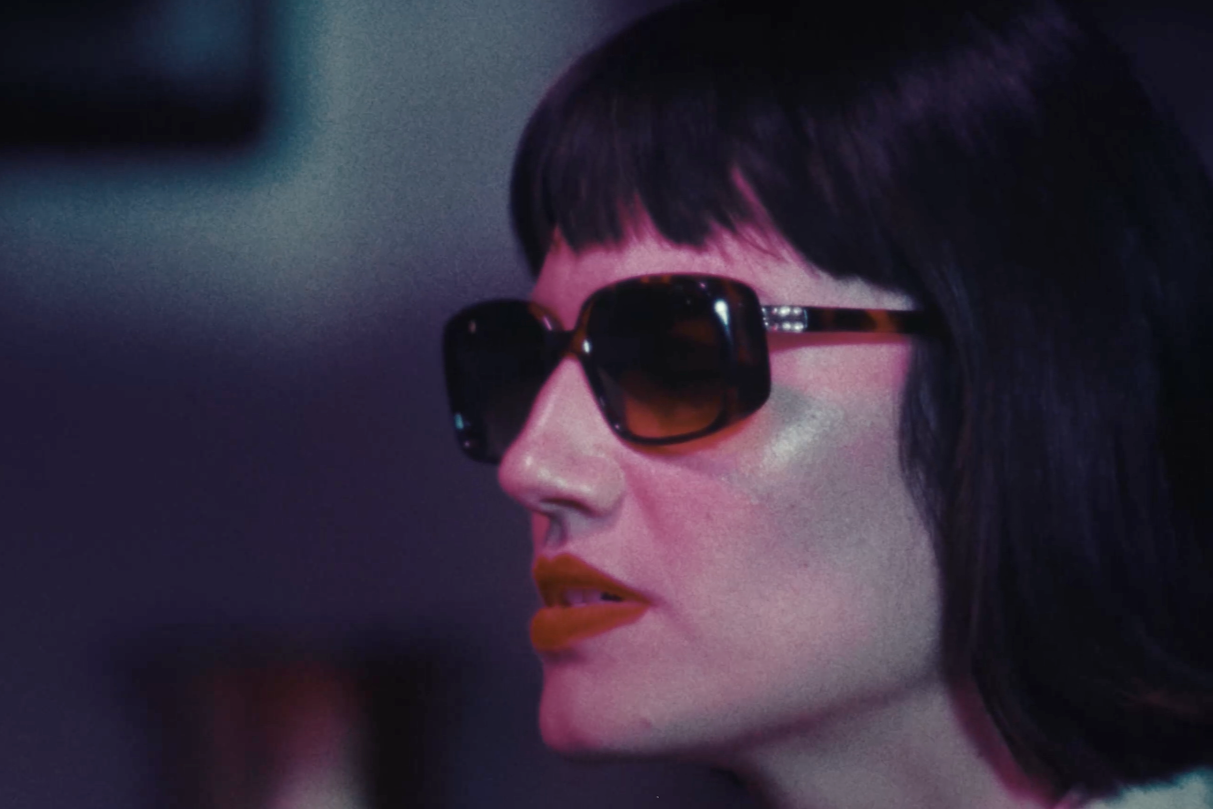
I feel like a lot of parody films almost end up parodying the parodies of the parodies. What I loved about your film is how accurate it felt to the genre and to the movies it's parodying. I can really tell that you're a fan. Can you name some of your favorite giallo deep cuts that you like?
Well, I, I would say my short is an amalgamation of every single Dario Argento giallo because he's my favorite, even though the Lucio Fulci ones are amazing. Sergio Martino’s are amazing. There's hundreds of these movies, but the ones that really caught my eye were the Mario Bava ones and the Argento ones. So my short is a mix of Opera, Deep Red, Tenebrae, Four Flies on Gray Velvet, and then Bay of Blood from Mario Bava. Oh, and Hatchet for the Honeymoon.
What’s funny is that I watched Seeing Eye Dog with somebody, and I didn't tell them that it was a short film that was released this year, or that it was an American production. And it was really a blast, because she couldn't tell. She just fully thought it was like a 1970s giallo. It was really fun for me to watch it through her eyes, and be like, “Yeah, wow, you really nailed the visuals and the just slightly-off dubbing. You don't go too broad with it. Where was the line you were trying to hit in terms of the comedy and how exact a homage you could make it?
I find that the giallo films are funny on their own. Dario Argento, specifically, is a very funny guy. A lot of these movies are very tongue in cheek. So there's like, funny for funny sake, and then there's funny where it's not meant to be funny, but ends up that way. For instance, the dubbing in all these movies is crazy, and that's because they didn't run sound on any of these movies because of the censor board. And so it was all over. You have Italian actors, Spanish actors, American actors, all saying gibberish past each other and then overdubbing whatever language it happened to be released in. So to me, I didn't want to make that a joke, because it was already funny. So I'm like, let's just do what they did. So we did not run sound when we recorded, and I had everyone come over to my recording studio and overdub themselves. And so there were definitely more laughs that came with that. But there was definitely a ceiling that I was trying to hit where if it's too goofy and too winky, then it stops being funny.
How did you kind of keep it sustainable as a 20-minute short with limited budget while still making it seem like a lost giallo film from the ‘70s?
My mission statement for the movie was to just condense a giallo as far as it could go. So I mapped out the five or six beats that a giallo has to hit in order for it to be a giallo. For reference, a giallo has to be an Agatha Christie-style murder mystery where a black-leather-gloved killer is killing all of the most beautiful women in Rome, and an unlikely detective, such as a musician or a writer, has to solve the murder using a piece of cockamamie technology that does not exist. Like a fly or a raven witnesses the murder at an opera. And then on the big performance at an opera, a crow comes in and pecks the killer's eyes out, and voila.
So if I only hit those beats, what would normally take up an hour and a half could be around 15 minutes.
And you nailed what I think is the most important part, which is a villain that is impossible to guess.
Oh yeah, it's all red herrings, like anyone could do it. Sometimes it's the person you thought was the detective and what I loved about the giallos is that a lot of the killers were women. You assume it's a guy, but anybody could wear black leather gloves and a Giorgio Armani trench coat and kill you.
Can you tell me a bit about the musical score? Because it's such a good almost-Goblin (the band that famously composed the score for Suspiria and Deep Red) riff.
Well, I'm a musician first, and so I teamed up with my buddy Franky Foxx who has an all-analog music studio in Los Angeles. Thanks to my background as a drummer and a music producer, I have access to all of my friends who are incredible session musicians and who own incredible recording studios. So I basically assembled a goblin style band called Fantasma Nero and tried to come up with the score as if we were a band that had the assignment to write a score for a movie. We recorded everything to tape in an old analog studio. We did it to picture, we recorded a real harpsichord, it was a blast. We really went hard to try and do it the way that they would have done it. It was almost like an exercise in limiting yourself for creative success.
Was there something you learned in that process that made you reconsider how you felt about the genre and about those movies as they were made?
I think creativity thrives in restriction. Back then, not only were there no computers, there were no cell phones. You had film. You couldn't shoot digitally. We did shoot on digital, but the fun part was we still had practical effects, so we only had one or two takes to do all the kills. So we did shoot digitally, but we only had a few takes of everything. I think that it gave me a newfound respect for the limitations that there were at the time. There's too many options with digital, and you can just run a million takes until the cows come home. It's the same thing with music, when you only had 30 minutes of two inch tape to record to. Now you can record on Pro Tools and on the computer, and you get a million takes of whatever you want. And the moment, that magical moment, that feeling, that thing that you're meant to capture in a recording, is gone.
Can you talk a little bit about how you match the filmic style with digital? Because it’s a really good imitation of film, especially with the vibrancy of the colors.
And, yeah, that is done by Jacob Butler, who I met through my pal Trapper Piatt, who's in the movie. Butler has colored other shorts but he's mainly a colorist for bands like La Lom and Vulfpeck. I knew him through the music world, and I hadn't seen any narrative stuff he had ever done, but I was like, “Okay, this guy's style makes it look like film in the way that it actually looks like film.”
Because I feel like that's sort of a white whale of modern filmmaking. Everyone's trying to make it look like film, and no one does. He's the only guy that I've seen that can do that.
It sounds like almost all of your collaborators came from music. What do you think is the advantage of coming to film from a musical perspective?
I am coming at it from the perspective of a fan of movies. I didn't go to film school—I just love movies. And I also find that a lot of creative disciplines are interchangeable. I'm sure if you spent 10 years learning how to paint or learning how to paint or learning how to play drums or learning how to produce music or do anything creatively, there are principles that are interchangeable and actually work in different ways that can't be taught. Film school teaches you one way to go about it. But you get a David Lynch who went to art school. And it's the same thing with music: The Rolling Stones, Pink Floyd, all these people are art school people who see visuals with their sound. Coming at it from a different perspective is only a benefit.

What are the next steps you're looking to take in terms of film?
I want to make the feature version of this short.I want to film it in Italy. I want to cast all my friends, pull an Adam Sandler: What if we all went to Italy for two weeks and ate pasta and killed each other on screen and made this really fun thing. Then, have that make its money back, have the horror fans really appreciate it, and get this Black Dynamite cult sort of status, and then do a five to $10 million dollar movie that's less of a throwback. I find that a lot of directors get their start that way, like Ti West or even Rob Zombie.
How do you conceive of writing the longer version when you've shot the best parts of every giallo?
Well, I've already written it. I'm not gonna say it was easy to write, but there's so much more meat on the bone. The maestro is murdered, but then there's a new maestro. Maybe the new maestro killed the old maestro, and is trying to break up the orchestra. And so this new maestro is a real psychopath, and no one in the orchestra is getting the music right. So you know what? We got to have a sleepover in the theater. And now it's like Suspiria, and all the lights are red. There's endless inspiration.
One of my favorite details is that the in Italian (Cane Guida Assassino) just does not translate to The Seeing Eye Dog Who Saw Too Much, which is very in keeping with Italian giallo naming convention.
And he didn't see too much at all. He actually saw just enough, right? But the title is so important to getting the tone. Bay of Blood, for instance, was also called Twitch of the Death Nerve which is the coolest title for a movie ever. I wanted to make the title long and clunky and memorable. Like, What Have You Done to Solange? Or Your Vice is a Locked Room and
Only I Have the Key.
My other favorite detail is the colander [the dog wears in the film]. I feel like the colander is such a hallmark of old school, ingenious filmmaking on a budget. Most people just have a colander in their house they can play around with as a prop.
My girlfriend designed that in our apartment the night before the shoot, but what’s funny is she glued on a bunch of twinkly lights to make it look like an EKG machine, and I forgot to turn them on. So, she was watching the footage, going, like, “Why aren't the lights on?” But it's even better that they didn't even turn on. It just all works together.
If you enjoyed this article, please consider becoming a patron of Hyperreal Film Journal for as low as $3 a month!
Ziah is the founder and former editor-in-chief of the Hyperreal Film Journal. He can usually be found at Austin Film Society or biking around town.