
Sentimental Value and the Death of Art, Culture, and Cinema
About an hour into Joachim Trier’s Oscar-nominated 2025 film Sentimental Value, American actress Rachel Kemp played by Elle Fanning poses for a camera in front of a Netflix step-and-repeat, and it is in this moment we see that bright red logo that the film begins to feel like a horror movie. Netflix is the only company to provide funding to Stellan Skarsgård’s character Gustav’s first directorial attempt in 15 years, despite his obvious hesitations and recognition of the creative limits the streaming giant will provide. When asked if the film will have a theatrical run, he scoffs at the question as if it is a given. A straight-to-streaming film isn’t art, especially not to Gustav, but in an era where David Lynch died without getting the funding to produce a feature film in 20+ years after funding 2006’s Inland Empire himself, filmmakers know that they have to take what they can get. Other iconic directors have suffered similar fates due to the shifting landscape and decline of art in favor of studio IP — John Waters was set to direct the adaptation of his book Liarmouth, his first film in 20+ years, but the project again fell through due to a lack of funding. Spike Lee famously (or infamously) sought contributions from fans totaling $1.25M from a Kickstarter campaign in 2013 to fund the under-the-radar film Da Sweet Blood of Jesus.
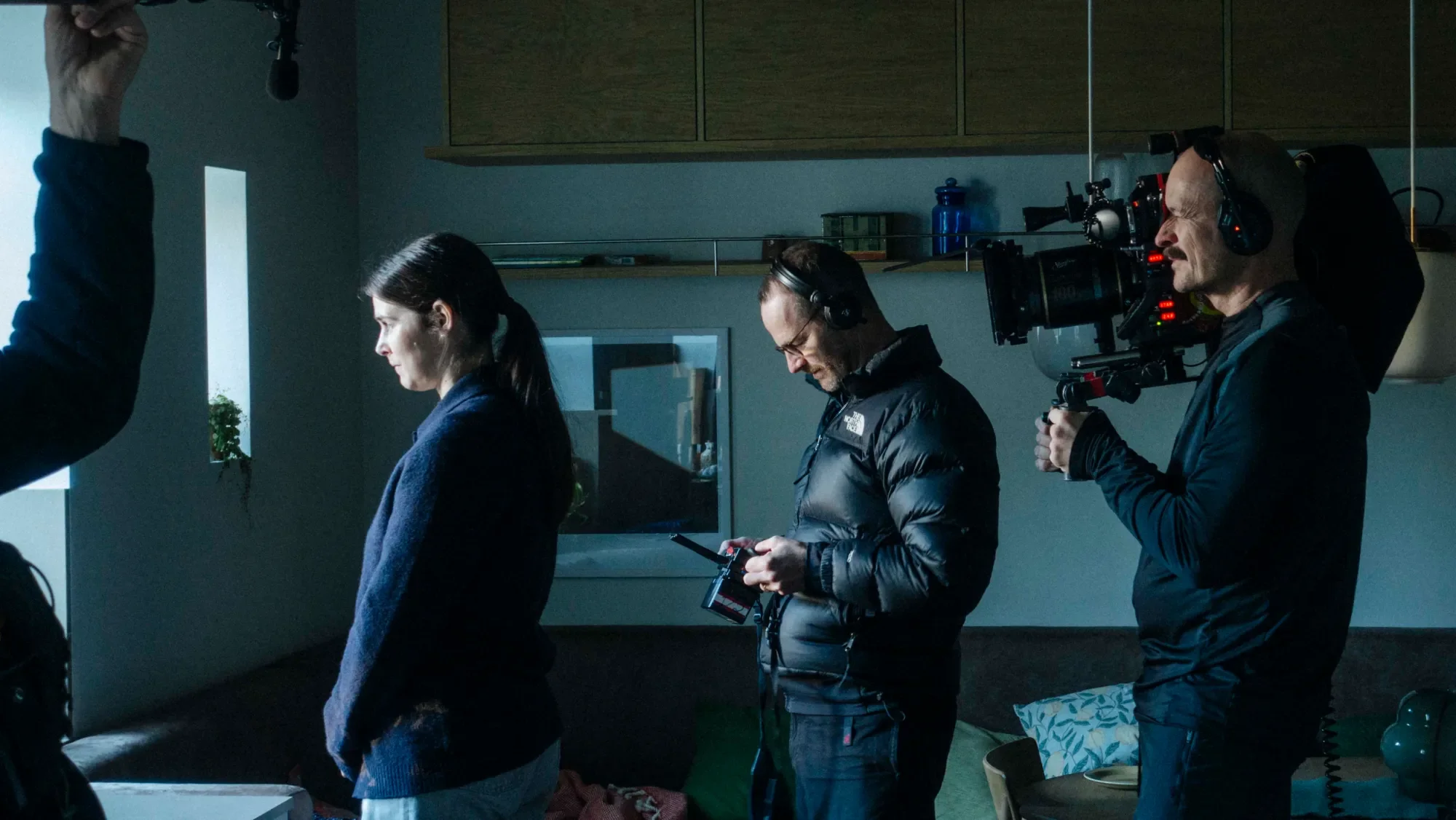
Sentimental Value, apart from the heartwrenching family dynamics of grief and trauma on display, reads like a love letter to cinema — but by the time the credits roll, we realize it’s actually a eulogy. Gustav serves as a stand-in of sorts for an older version of Trier, who at just 51 is clearly reckoning with his desire for Hollywood success while still staying true to his Scandinavian roots. Casting American, English-speaking Elle Fanning in the film and turning it into a half-English language film, mirroring the in-universe film directed by Gustav after his daughter Nora turns down the role, makes the film’s Oscar nomination for Best Picture and three other Academy Awards feel like an accomplishment to be sure, but also a snub at his less “Hollywood” films like The Worst Person in the World which only had two Oscar nominations (notably, not Best Picture) and no wins. Both Trier and Gustav mourn the loss of art, of cinema, of anything with sentimental value. Nothing is made to be cherished anymore — slop put out by streamers is made to be consumed via “second screen viewing” until the next product comes down the assembly line. It’s neither the medium nor the message. It’s the background noise. Overexplanatory dialogue, predictable storytelling, and algorithm-based suggestions ensure the fleeting nature of these money-printing original programs. They’re not meant to be rewatched, or shown to future generations (a la the scene in which the misguided Gustav gifts his 10-year-old grandson a DVD copy of The Piano Teacher), or to ever be thought about again.
In a scene that feels equally like horror fodder, the beautiful yet haunted Scandinavian-style home that serves as the center of generational family trauma for the Borg family — where Gustav hoped to shoot the film — has been sold and replaced with sad millennial gray decor. Beautiful vintage IKEA pieces that have presumably been in the family for generations have been replaced by Amazon storefront chairs that won’t even last through Q4. Pops of color must go in favor of homogeneous Pinterest front page harsh whites. Though the home had served as a pressure cooker incubating the trauma of the deaths of both Gustav’s mother and great-grandmother, along with a host of other tragedies and grief, the sale of the family home (demons and all) is another death in itself. The loss of the physical, whether it’s space or media, is one of great devastation to Trier. The final gut punch comes when the home is revealed to be a sound stage, now a simulacrum of its former self. As soon as the scene is over and he yells cut, the production crew comes in to tear down this set to move to the next scene. In a capitalist hellscape world where nothing is sentimental, nothing has real value except profit and productivity.
If you enjoyed this article, please consider becoming a patron of Hyperreal Film Journal for as low as $3 a month!
Syd is a Texas native currently living in ATX. As a Film School Graduate™, she is the certified authority on all things film. She loves queer films, cheesy rom-coms, and movies focused on weird little guys. She often struggles with the age-old conundrum of whether to write a one-liner or an in-depth review on Letterboxd. You can find her on there @sydellis.