
Pillion Reveals the Tenderness of Pain
The first moments of Harry Lighton’s feature debut, Pillion, keep the audience in the dark: before an image fills the screen, we hear the revving of a powerful engine. The rumble transitions into Betty Curtis’s Italian version of “Chariot” as a motorcycle helmet appears, a car’s taillights reflected in the visor. The song’s promise, “Se verrai con me/sul mio carro tra le nuvole… Tu vivrai con me/in un'isola fantastica,” (translation: If you come with me on my chariot in the clouds… you will live with me in a fantasy island), acts as an epigraph for the central tension of the film: idealistic fantasies that are less than achievable in practice. The motorcyclist passes the car, which holds Colin (Harry Melling), a backseat passenger in the vehicle and in his own life, already a pillion before he ever touches a bike. This is the first time that Colin has laid eyes on the driver, Ray (Alexander Skarsgård), but it will hardly be the last.
Colin and Ray’s relationship has the velocity and volatility of a motorcycle joyride, beginning with a first encounter at the pub, where Ray seems to test Colin’s subservience. Their first date takes place in an alleyway, where that subservience is further explored. Colin is eager to please Ray, so much so that he enters into their arrangement without asking for anything in return—not even communication. While a BDSM dynamic may be niche, most people can relate to the thrilling freefall of a new relationship, especially one that fulfills desires previously undiscovered. So much of the film’s success is due to its verity, which could not have been achieved without the work of an intimacy coordinator.
Lighton’s script (adapted from the 2020 novel Box Hill) is ripe with honesty, but Melling and Skarsgård’s performances had an additional source of guidance in Robbie Taylor Hunt. With input from a kink specialist, Taylor Hunt (whose previous intimacy coordination credits include Red, White, and Royal Blue, 28 Years Later, and Pearl) created an avenue for communication and planning, both of which are crucial to (responsibly) executing intimate scenes. The film centers around a BDSM relationship; these, too, require communication in order to play them out responsibly.
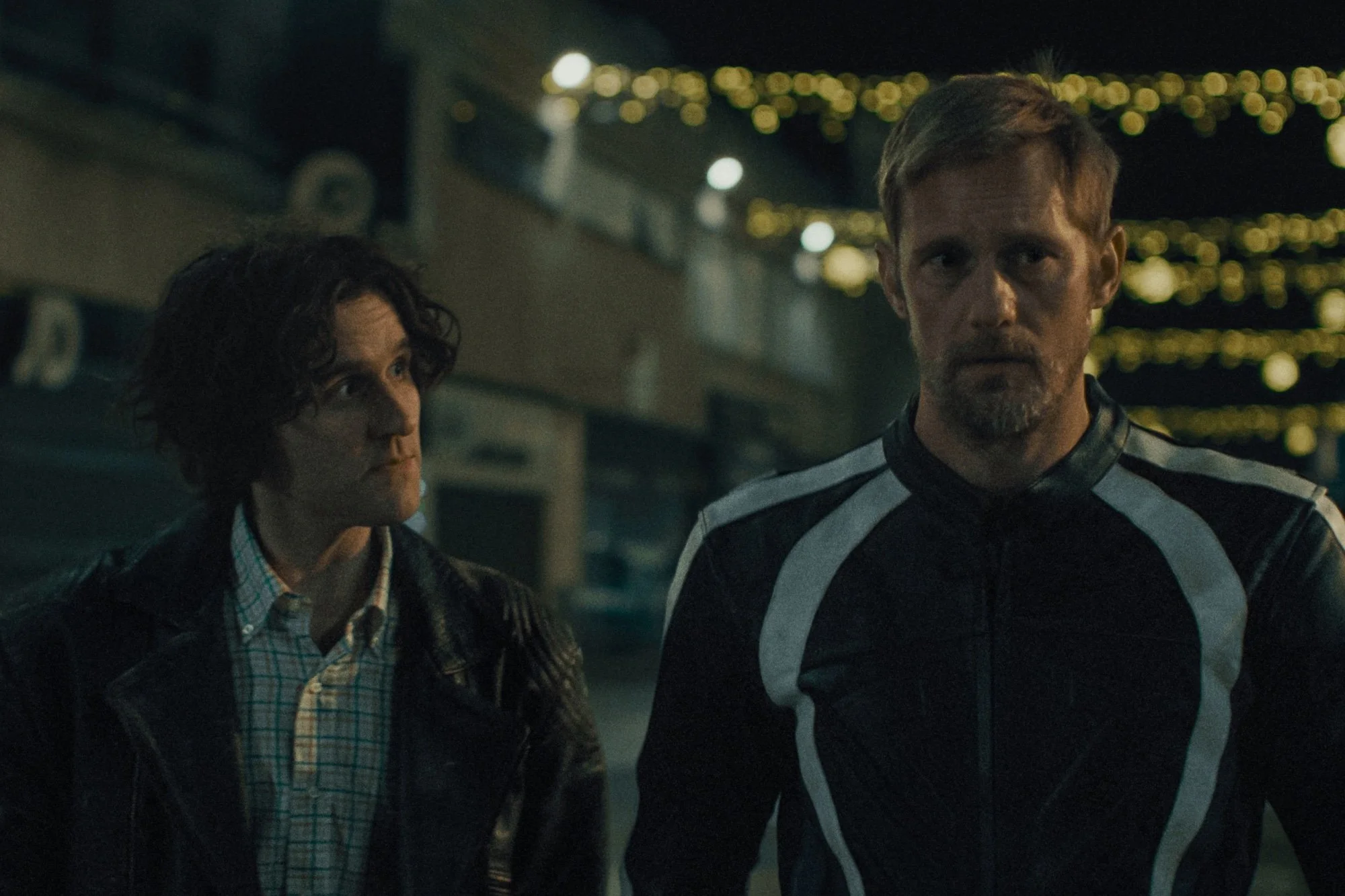
Some critics of the film take issue with Ray’s treatment of Colin, and others with the film’s treatment of BDSM; I believe that both of these criticisms lie in misunderstanding. The former is coming from people who disapprove of the dynamic without understanding that “it’s not for [them] to like,” as Ray tells Colin’s mother. The latter, folks who are in the BDSM/kink community, may understand the ideal dynamic between a dom and sub, but seem to miss the story’s nuance. As an intimacy coordinator myself, I was thrilled to talk with Taylor Hunt about how he, Lighton, and the cast collaborated to imbue the film with authenticity, rather than the sanitized or sensationalized depictions of BDSM that prevail in mainstream media.
Regarding the criticism that Ray is not the ideal dom, Taylor Hunt agreed, explaining that preparations with the actors included the disclaimer that “you’re not always portraying the perfect representation of something; sometimes the characters are not doing things ideally within the context.” Along with Taylor Hunt, the film’s intimacy also was guided by real-life members of the kink community, such as some of the members of the U.K.’s Gay Bikers Motorcycle Club (which is not strictly a kink club, but of course, like in the film, there is crossover). In fact, many of the film’s bikers are members of the GBMCC; viewers with concerns about representation can rest assured that much thought went into demonstrating the many forms that these relationships can take. One of the film’s pivotal scenes—a camping trip orgy—is meant to illustrate exactly this point: that the community is not a monolith. Another sub balks at one of Ray’s rules, saying he “couldn’t put up with that.” This seems to be the first time Colin realizes that being a sub doesn’t require a loss of agency.
Ray’s lack of guidance is the main driver of conflict in the film. His cool demeanor is part of the attraction, but any healthy relationship requires the participants to drop the mask (sometimes literally) and have a conversation around boundaries and expectations. The same is true for filming intimate scenes. In the decade post-Me Too, the industry has begun to embrace the role of the intimacy coordinator, though not without pushback; some oldheads, like Michael Douglas, believe that the guidance of a trained professional “feels like executives taking control away from filmmakers,” or that the presence of an intimacy coordinator is an impediment to creativity.
But as Taylor Hunt and I have both experienced, the opposite is more often true, with structure providing liberation for performers. “I’ve seen it play out again and again,” Taylor Hunt told me, explaining that a lack of communication creates a barrier to committed performance. “You’re less likely to get the actors to go to those places where they are able to be brave and push themselves.”
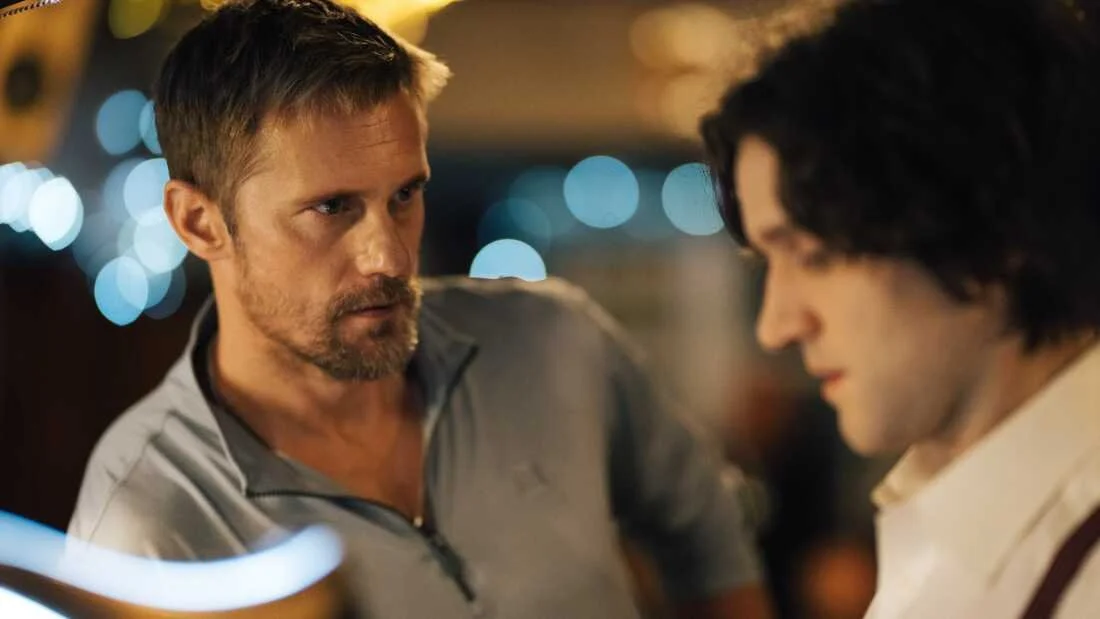
Beyond the mental and emotional factors, there’s a logistical necessity to intimacy coordination. In our interview, Taylor Hunt compared the work to that of stunts: “With a fight scene, if you were to actually just ‘go for it,’ it might feel great and risky and violent and raw, but […] it’s not selling to the camera.” Still, there’s a balance between choreography and improvisation. On one of my own sets, an actor told me that just my presence made her feel more comfortable with experimentation because she and I had previously discussed her boundaries. “There has to be that ability [for actors] to find it emotionally, while having some sense of framework, some beats of choreography,” Taylor said, continuing, “So it will look good and it won’t be a wasted take.”
And trust me, Pillion looks great. Colin and Ray may not verbalize much, but their physicality says it all: the way that Colin, when riding pillion, caresses Ray’s torso, running his hands over the leather jacket in what is probably the only context that allows such tenderness. Ray, for his part, may be a sadist, but he’s not sadistic: we see the way he shifts when he senses Colin is in physical pain, and one of the most emotionally charged images of the film is the last one we get of Ray’s still, silent face.
The BDSM element allows the audience a visualization of what it looks like to discover a new side of yourself, to grapple with one’s agency, to mitigate one’s “aptitude for devotion” alongside self-respect. Melling, who most audiences will primarily recognize as Dudley Dursley in the Harry Potter films, plays Colin with tenderness and empathy; while the character is often awkward or unsure of himself, it never feels like a caricature. Skarsgård will always be believable as a stoic hottie, but this role shaded that archetype with gradation; we see the internal struggle Ray has between care for Colin and the rigidity of his own desires. The supporting characters are also all excellent, including the aforementioned GBMCC members, as well as Lesley Sharp and Douglas Hodge as Colin’s parents; Colin’s relationship with them (his mother in particular) provides some of the film’s biggest emotional turns. One of the most refreshing aspects of the film’s world-building is that queerness is a fact of the film, not a source of conflict.
Yes, Pillion heavily features sex, but this is no cheap gonzo flick; this is a triumph of a film, in particular as a feature debut. Audiences expecting titillation will find it, but also find themselves in tears. Thanks largely in part to Taylor Hunt’s intimacy work, this is a film that uses sexuality to tell a story about identity, responsibility, and yes, love. And leather. For filmmakers, I hope Pillion’s success is an indicator that progress in the industry can only lead us to make more authentic, provocative, and beautiful work.
Writer, guilty pleasure enthusiast, karaoke zealot. @kathkathkath for pictures of flowers.