
Weird Wednesdays: Riverbend
This screening was part of the Alamo Drafthouse’s Weird Wednesday series. For upcoming shows, click here.
Weird Wednesday recently presented a restored film that its director, Sam Firstenberg, described as “proof miracles do happen.” In a pre-recorded message, Firstenberg recounted the near disappearance of his action flick Riverbend (1989) after prints and VHS copies were lost to the ages. This DCP screening was the result of a 6K restoration by Reelblack Renaissance; a blu-ray release drops June 19.
Set in the titular Georgia small town in 1966, Riverbend follows three black Vietnam vets escaping a trumped-up court martial. Their hideout with a woman, recently widowed by the town’s racist sheriff, becomes a siege. We later learn the soldiers, led by Major Quinton (Steve James), are accused of failing to carry out orders that, when carried out anyway, resulted in U.S. troops getting napalmed. They become fall guys for a friendly fire incident they tried to stop.
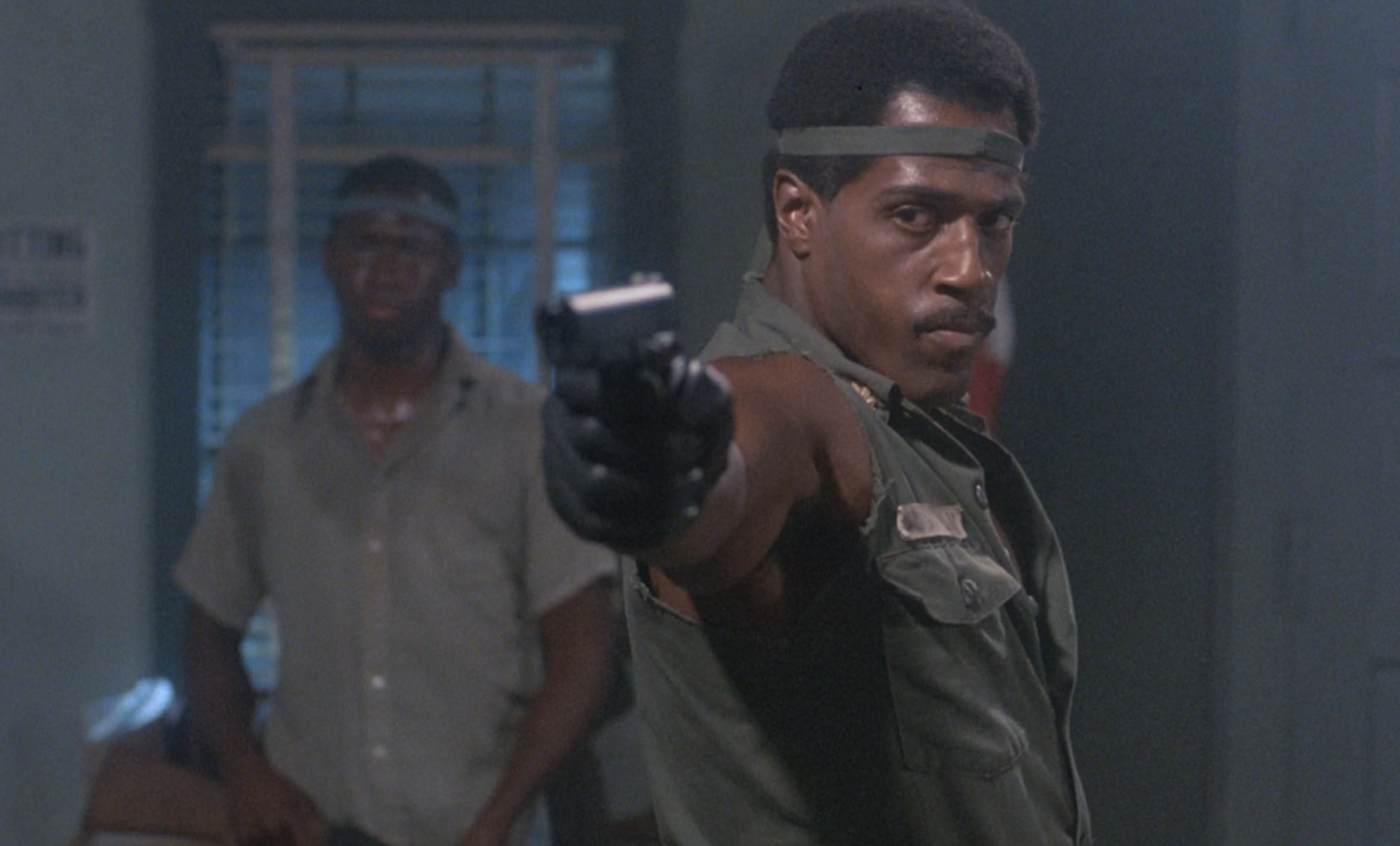
Firstenberg and star Steve James were both veterans of the Cannon Films schlock factory, having worked together on four previous films. They know how to approach this low-budget exploitation material and pitch it to the cheap seats: loud, fast, bare-chested and sweaty. While independently produced, Riverbend is reminiscent of Cannon’s signature cartoonish genre-busting with its strange brew of blaxploitation, hicksploitation, and Vietnamsploitation.
Steve James was a real B-movie badass, possessing an intimidating physique, leading man looks, and a memorably deep voice. He imbues the Major’s cardboard-light action hero character with two-fisted gravitas. This was his only leading role, and sadly one of his last; he passed away a few years later from pancreatic cancer, only 41 years old. The film’s most inspired bit of casting is Margaret Avery, a Best Supporting Actress nominee for The Color Purple (1985), as the widow Major Quinton puts his smooth moves on between militant training montages and shootouts. Despite the underwritten romance storyline, Avery embodies the film’s moral center.
This kind of film in 1989 was a good decade past its prime. In its grimy reflection of civil rights and Vietnam angst, Riverbend feels linked to the peak drive-in era of the 1970s. While some elements feel dated, particularly the funky synth rock soundtrack, the film’s heady themes of police violence and resistance still hit with righteous fury. The incredibly racist Sheriff Jake, played with tobacco-spittin’ gusto by veteran character actor Tony Frank, shoots a black man in the back in broad daylight, setting off the revolt. The white elites use intimidation to discourage their freedom of assembly, even in church. In response, the church choir sings a militant hymn: “I am on the battlefield for my Lord.”
Michael J. Dennis, the Youtuber behind the film’s restoration, deserves kudos for doggedly pursuing the film’s rescue. Initially cobbling together a poor quality print with VHS versions of missing scenes for a “grindhouse restoration” in 2021, Dennis eventually tracked down a copy of the original camera negative, resulting in this definitive edition.
Despite its oddball ending and workmanlike production, Riverbend is a noteworthy blend of drive-in shoot ‘em up and radical historical revisionism. The action scenes are crudely effective, and the entire cast (including a small army of supporting players) leaves everything up on the screen. Even in a world as messed up as this one, sometimes miracles do happen.
If you enjoyed this article, please consider becoming a patron of Hyperreal Film Journal for as low as $3 a month!
Matthew K. Seidel is a writer and musician living in Austin since 2004. The above selfie was taken in an otherwise empty screening of Heat at 10:30 in the morning. You can find him on Letterboxd @tropesmoker.