
Sundance '26: Public Access
It’s hard to imagine a time before the internet made all of our silliest impulses and creative pursuits public knowledge. Finding your own group of folks who shared your specific brand of weirdness was a tougher pursuit then, but sometimes, all it took was turning on your TV. In Sundance documentary Public Access, from filmmaker David Shadrack Smith, we learn about the history of New York City’s Manhattan Cable Television.
A place for folks who wouldn’t normally get any airtime in the early 1970s through the end of the 1990s, Manhattan Cable Television was home to a number of groundbreaking shows. Through archival footage and audio interviews with the pioneers of the public access TV movement, we learn about shows like The Emerald City, a landmark LGBTQ+ show that covered a variety of topics central to queer life, and which became an indispensable source of knowledge during the HIV/AIDs crisis. We hear from Pat Ivers and Emily Armstrong, who documented New York City’s thriving underground punk scene and brought shows into people’s homes with MCT. There were also absurdist talk shows like TV Party, where you could tune in and see messages piped in from Jean-Michel Basquiat, or watch Debbie Harry hang out for half an hour.

Throughout Public Access, the use of archival footage never feels stale or trite, unlike in other documentaries that adopt a similar style. Here, we get clips that also serve as snapshots of a time and place, letting us marinate in the sensibilities of a show like the contentious, interactive Grube Tube, where host Steve Gruberg would field calls from all sorts of viewers and answer them live on air. This is emblematic of the chaos and creative freedom that Public Access is preserving and presenting for us.
Thanks to the assured and propulsive editing of Geoff Gruetzmacher, the snapshots we get of Manhattan Cable Television give us a taste of what it must have been like to channel surf and stumble across one of the many shows that are highlighted. Sections go past quickly, easily transitioning from one topic or era into the next. One minute we’re watching punks accost callers, the next moment, homemade puppets, and the next a luscious frame of thighs fills up the screen. It can be a hard feat to pull off, like when the documentary begins to cover the risque shenanigans of producer Al Goldstein, the publisher of vintage porn magazine Screw. We watch as Goldstein gets litigious in the name of “free speech,” and although his aims seem to be more financially motivated than anything, his fight for freedom of expression in a public medium was a boon for many of the other folks creating shows for MCT.
At first blush, it would be easy for a documentary like this to slip into total nostalgia, and there are moments where it does – but there’s also a willingness to look at the thornier parts of what public access television meant for those who were successful at it. Comedian Jake Fogelnest, for instance, is an example of what happened to people who were thrust from public access success into mainstream stardom. His show, Squirt TV, was shot out of his bedroom and catapulted him into public life, but at a cost. There’s something moving about watching the teenage Fogelnest perform for us in center-frame, while the adult Fogelnest reflects on the heroin addiction that was spawned from the pressures of fame at an early age. This section of the film is especially poignant because it raises a few interesting questions: When does creative expression become performance? What happens when the performance has to be adjusted for a wider audience?
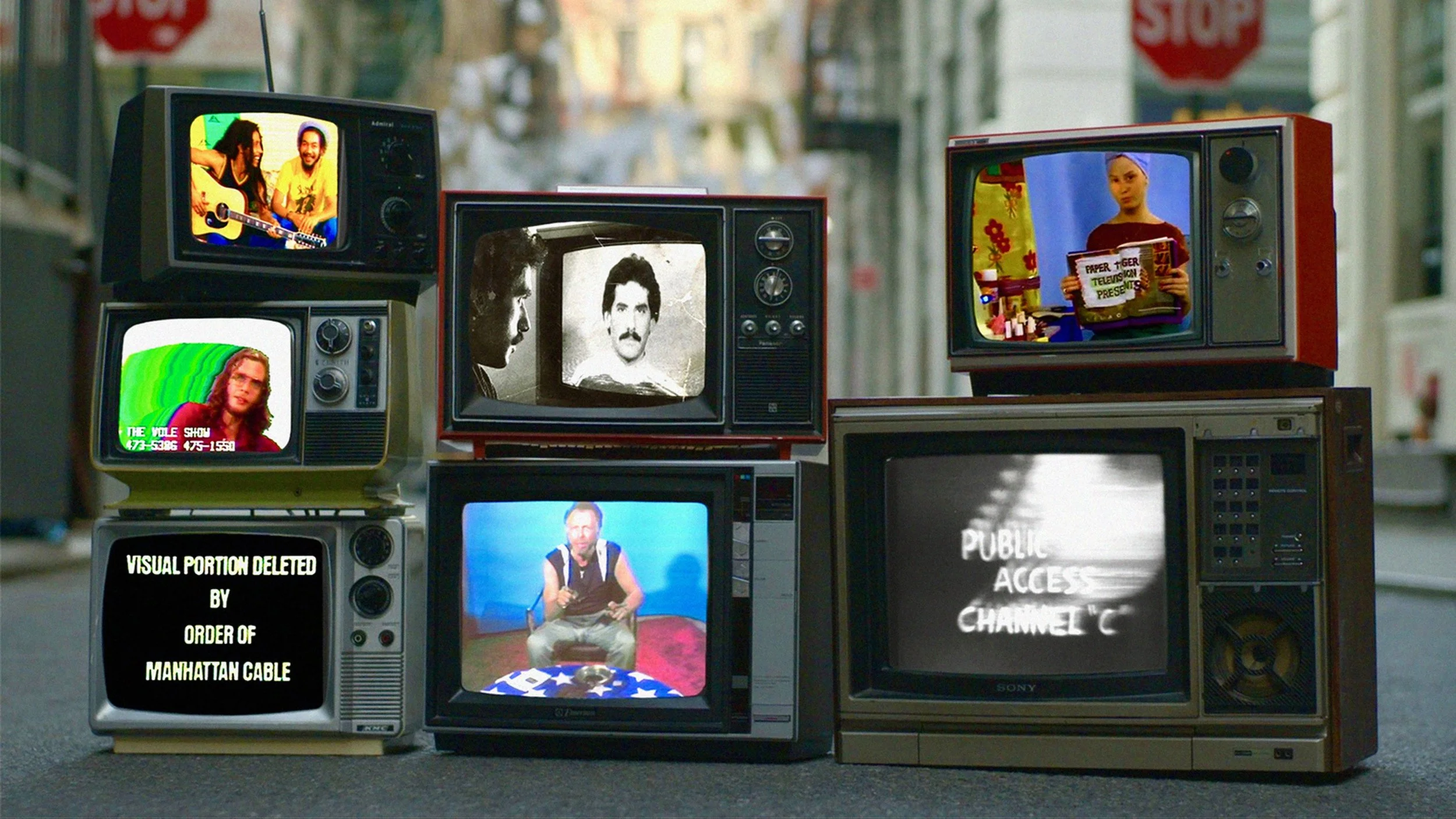
Ultimately, Public Access packs its 107-minute runtime with a lifetime’s worth of knowledge about the history and legacy of MCT with joy and panache. What could have been a simple clip show blossoms into an archival history lesson thanks to the insightful interviews and colorful segments Shadrack and company tease out of MCT’s archives. The result is a beautiful, DIY kaleidoscope of what creativity and free expression in public looked like before the internet, an era that the documentary smartly avoids aside from an ominous dial-up tone that plays towards the end. While there are still pockets of creative free expression that echo the sensibilities of public access television, it’s unlikely we’ll ever get anything similar again. For now, we have records like Public Access that can let us live in that era, even if it’s only for an hour and change.
If you enjoyed this article, please consider becoming a patron of Hyperreal Film Journal for as low as $3 a month!
Alejandra Martinez is a Tejana archivist, writer, and film lover in Austin, TX. She loves coffee, David Lynch, and tweeting about everything under the sun.
Twitter: @mtzxale.