
The Giant is Awakened: Passing Through
Passing Through (1977) was director Larry Clark’s thesis picture when he graduated from UCLA’s film program. Though it is a landmark independent movie that is recognized as part of the “L.A. Rebellion” movement, movies directed by African-American filmmakers that reflected the social and racial unrest from the 1960s through the 1990s, it has never been available for home video release or streaming on any current platform. Thus, it remains a rare film that can only be seen in a theatrical environment, much to Clark’s wishes. Passing Through was recently screened at Austin Film Society as part of its “L.A. Rebellion” series.
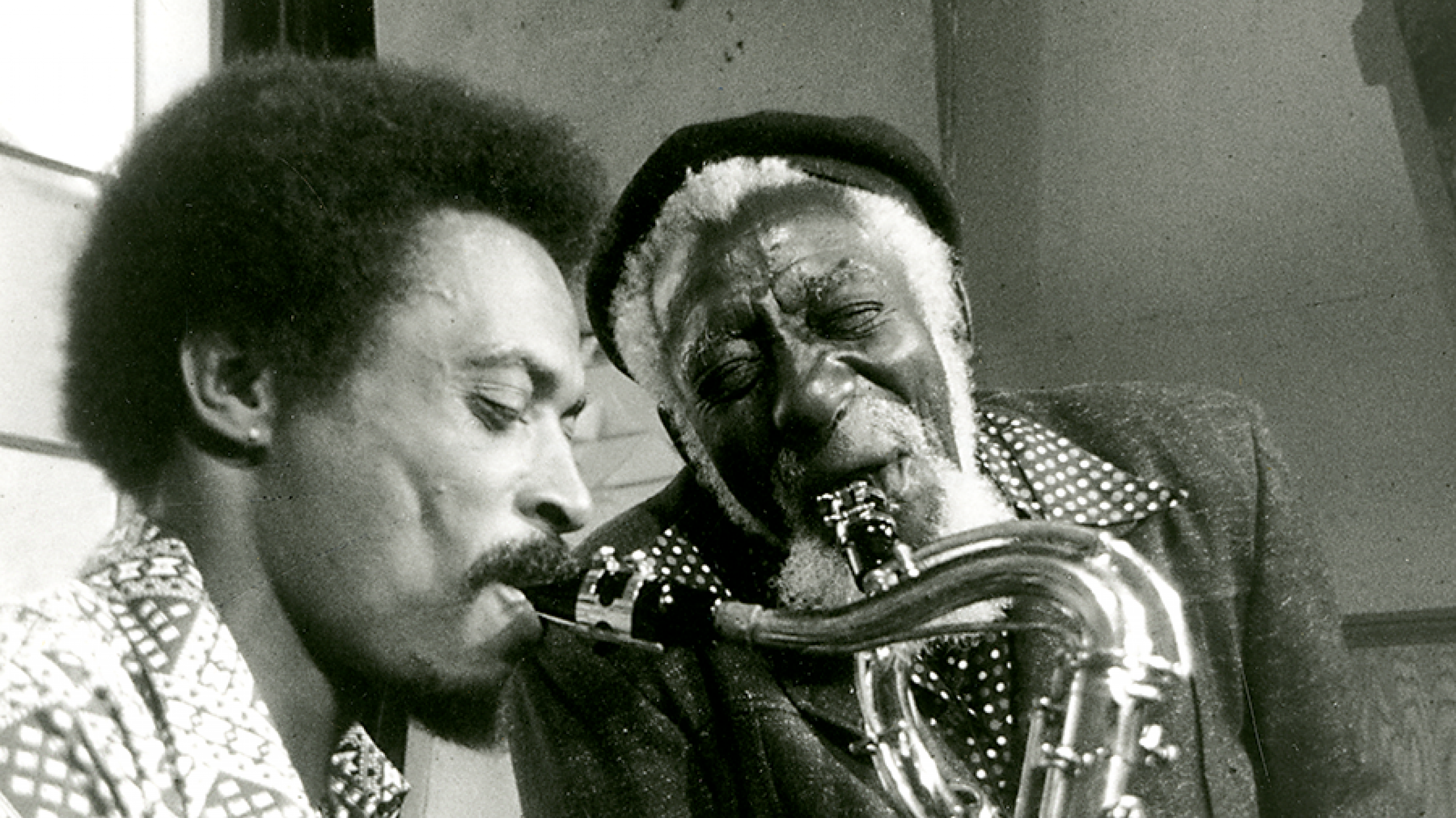
The film features live music from jazz pianist Horace Tapscott, who leads the Pan Afrikan Peoples Arkestra, as well as seminal recordings from legendary saxophonists including Charlie Parker, John Coltrane, Eric Dolphy, and Bennie Maupin. Clark is the nephew of famed pianist Sonny Clark, whose life ended early due to heart failure after years of drug abuse. Hence, the director has a personal affection for Passing Through’s jazz soundtrack.
Much of the jazz recordings come from groundbreaking 1960s albums, in the style of “avant-garde jazz” or “free jazz”. Thus, the freedom the music possesses matches the liberty Eddie Warmack (Nathaniel Taylor) seeks as he attempts to record his music away from the control of the mafia. Warmack, imprisoned for killing a gangster who had blinded one of his fellow bandmates, is disgusted with the manner that white society profits off of black artistry. Passing Through is a ‘jazzploitation’ flick in which violence is met with violence in this music community, emphasized by the blaring sounds of a saxophone.
The cinematography is often stunning, especially in the capturing of live music. The movie opens with a close-up shot of Horace Tapscott’s hands playing the piano, saturated in red light. As his bandmates soon join the music, creating a frenzy of sound, other shots overlay the original film capture, now tinted also in blue. This lengthy introduction emphasizes those intermixing colors to stress the riotous timbre of the music, how true revolutionary sound is created.
Other excellent shots appear throughout the film including Warmack playing his saxophone underneath a boardwalk, him leaving a building while the camera filming above moves up in coordination in an elevator, and a near-270° sweep around a musicians’ meeting as they discuss creating their own record label. One of the film’s camera operators is Charles Burnett, who would later direct To Sleep with Anger (1990), a film that is also recognized as part of the “L.A. Rebellion” movement. The excellent cinematography is impressive considering that Passing Through was filmed on a budget of $13,000.
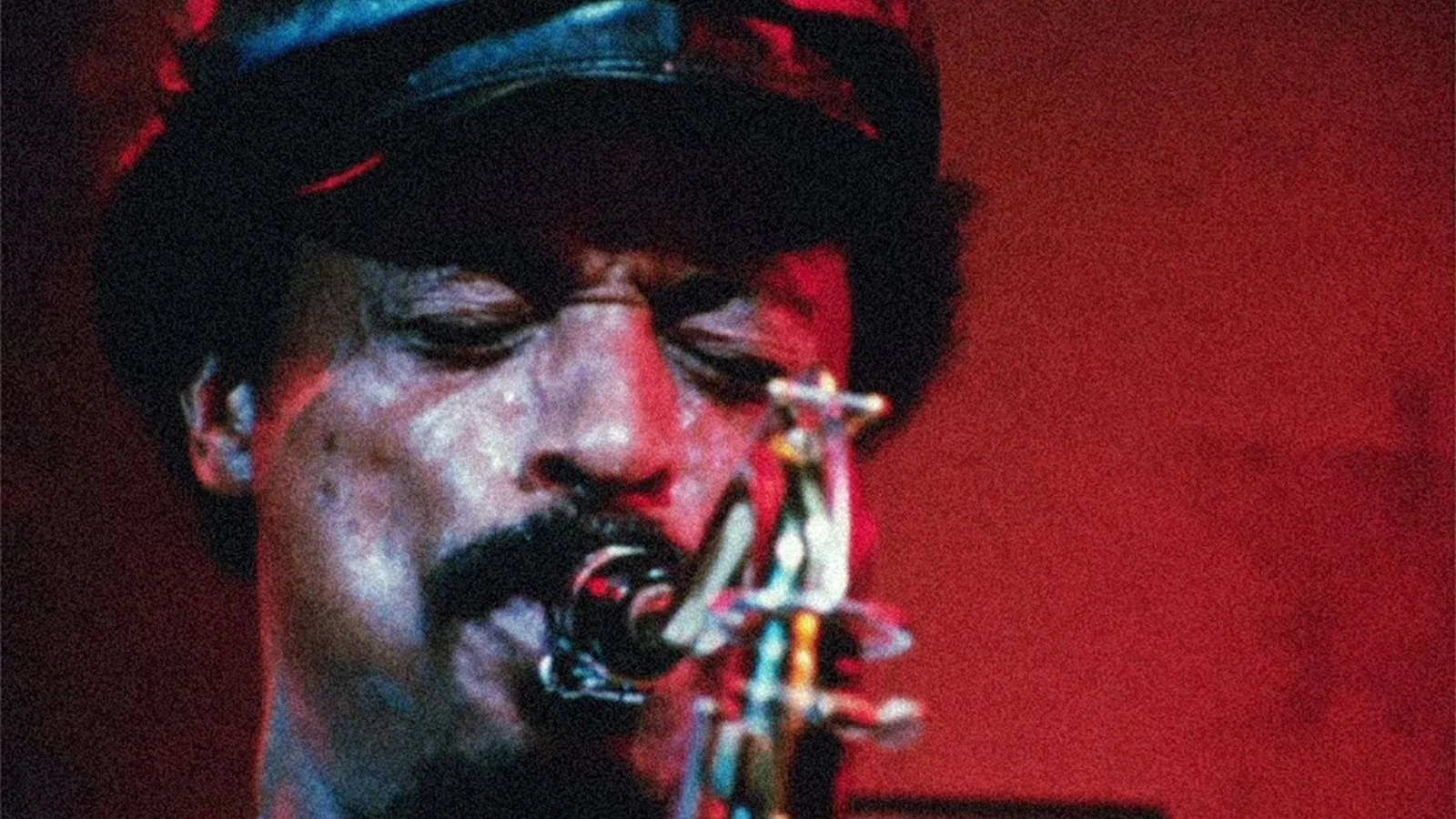
Its script is an ambitious mess. Warmack appears in underdeveloped scenes that include dalliances with female acquaintances, flashback scenes with his mentor Poppa Harris (Clarence Muse), mafia encounters, and seeking predictions from a tarot card reader. Most of the cast are willing but non-professional actors. However, the narrative is deepened by the inclusion of historical footage of police brutality, reflecting that its era births Warmack’s righteous anger. The film is effective in emphasizing the union that exists between music and the soul is a liberating force of true freedom.
Larry Clark went on to become a Professor of Cinema at San Francisco State University. In 2023, Passing Through was included in the National Film Registry. Also assisting this production was filmmaker Julia Dash in its sound department, prior to her own graduation from UCLA. Dash’s Daughters of the Dust (1991) is also recognized as part of the “L.A. Rebellion” movement. Thus, Passing Through has not passed on unrecognized despite its rarity. It represents a dynamic example of black artists creatively reacting to times of civil unrest, and inspiring other filmmakers to continue telling such stories in later periods. Like the character Eddie Warmack, true artists respond with creativity out of conflict.
If you enjoyed this article, please consider becoming a patron of Hyperreal Film Journal for as low as $3 a month!
Paul Feinstein is an arts professional who has produced content in different mediums including film screenings, live music, radio, and theater. He is a native Austinite.