
Obsession: The Horror of the Male Gaze
There was no buzzier film this spring than Obsession, the sophomore horror flick written, directed and edited by 26-year-old Curry Barker. Comparisons have been drawn between Barker and filmmakers Danny and Michael Philippou: much like the Philippou brothers, Barker got his start in the comedy-horror YouTube scene before moving into feature filmmaking and experiencing near-instantaneous success. Unfortunately, the similarities also extend to a style that prioritizes cheap thrills over a coherent storyline.
Obsession is at least light on its feet as it brings the audience into its world, opening on protagonist Bear (Michael Johnston, best known for his two-year stint on Teen Wolf) seemingly confessing his longstanding crush on former childhood friend and current coworker Nikki (Inde Navarrette). Turns out the woman he’s talking to is a diner waitress serving as a stand-in for Nikki during a nervous trial-run of the confession. Bear’s friend Ian (Cooper Tomlinson) deems his speech too weird and too cringey, but consoles Bear by saying he has nothing but time—a statement immediately contradicted that night, when Bear finds his cat dead and gets a call from Nikki saying she’s quitting their job at the music store.

Enter: the magic. On a whim, Bear buys a “One Wish Willow”—a retro-looking toy that supposedly grants wishes. After his real attempt at asking Nikki out goes poorly, Bear wishes that she would “love him more than anything in the world.” The metaphorical monkey paw curls.
What ensues is a hodge-podge horror story with a streak of meanspiritedness. Nikki and Bear start dating, but something’s off. After his wish, the funny and kindhearted Nikki he fell in love with transforms into a volatile version of herself. She speaks oddly and moves erratically, wakes up screaming in the middle of the night, and switches between gooey infatuation to unsettling anger at a moment’s notice.
Navarrette delivers a first-rate performance of Nikki’s pod-person antics and gradually increasing instability; whether her actions are played for comic effect or jump scares, she communicates genuine pathos that makes the audience understand the true terror of what’s happening to her. Unfortunately, Barker’s overreliance on repeated cheap gags and every scare you’ve seen before—shadowy figure in the corner of the room at night, check; someone at the car window, check—undercut the tension Navarrette brings to the film. Added to this lack of originality is a forgettable point-of-view in his direction. Most scenes are so poorly lit as to make the characters’ faces unreadable. There’s also a YouTube-esque editing style that may have been meant to complement the disorienting terror of the movie, but instead emphasizes the disjointedness of the plot.
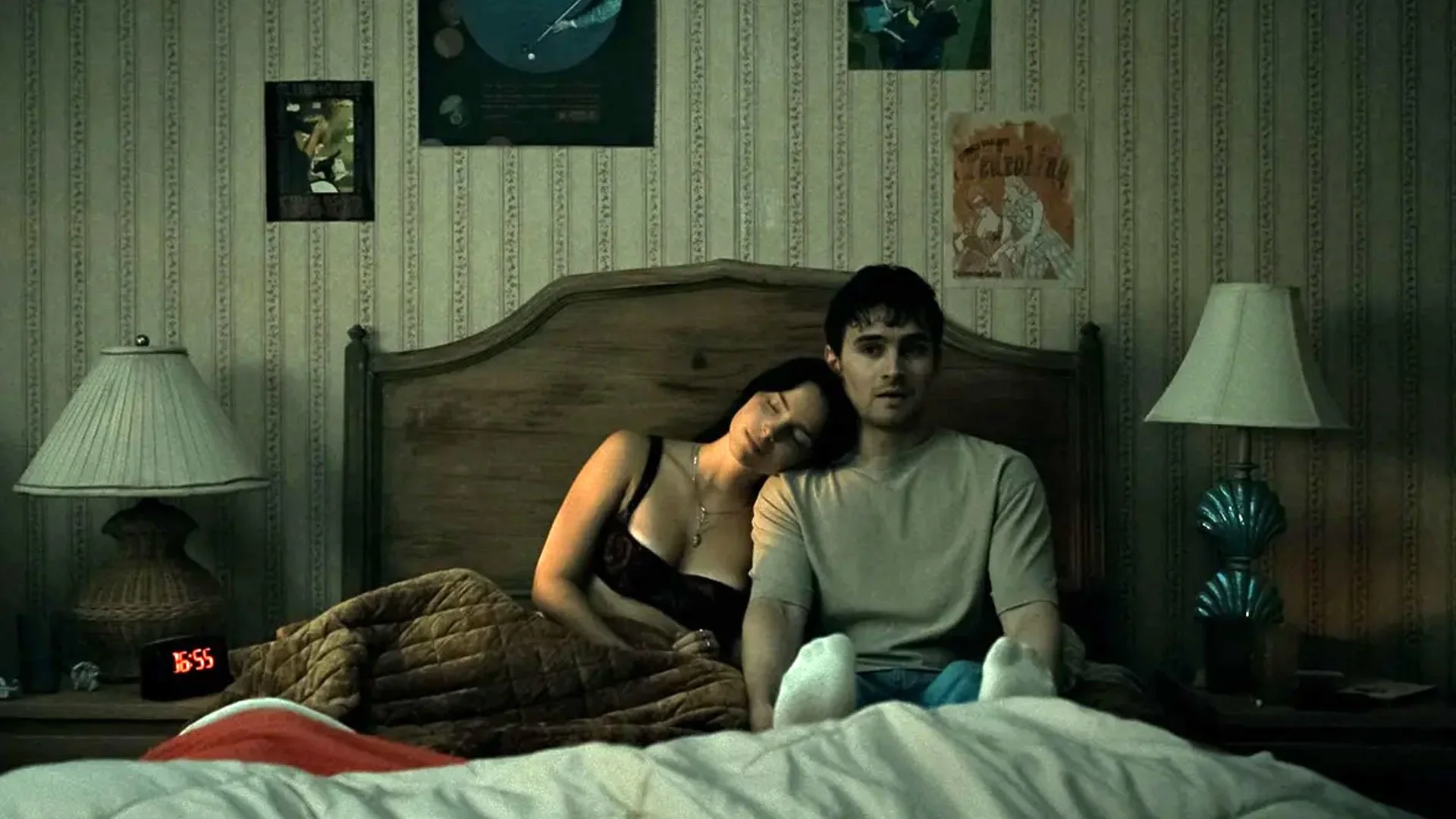
As for Bear, Barker hints at exploring interesting themes with his perception of and reaction to Nikki. Bear is a clear-cut sad-sack loser of a character, a guy with no aspirations outside of dating the girl he idealizes (he doesn’t seem to know much about Nikki outside of her niceness, a point flippantly underscored in a scene where she gives a homeless man $20). At first, post-wish Nikki just seems to have become jealous and high-strung, and Bear tries to gently redirect her into acting more normally, like a parent corralling a misbehaving toddler. When dead animals and threats of self-harm start showing up, he reverts to self protection—appeasing her to avoid escalation before checking out from the situation entirely. At no point does he grapple with how thoroughly he’s fucked with Nikki’s life, instead remaining mired in self-pity. In one telling scene, the real Nikki speaks to Bear while the malevolent entity inside her is sleeping. She begs Bear to kill her; Bear’s response is to ask her, “Why is it so crazy to think you would be dating me?!” It’s a perfectly scripted scene that indicates some of the fascinating threads to explore here about the male gaze, gender dynamics and Nikki’s loss of autonomy and personhood. But Barker abandons each of these in favor of barreling toward the movie’s deeply misanthropic ending.
To give credit where credit’s due, Obsession offers a more existential terror by pulling no punches and giving no grace to its characters. But a predictable plot and messy construction can’t save the movie from itself.
If you enjoyed this article, please consider becoming a patron of Hyperreal Film Journal for as low as $3 a month!
Alix is the editor-in-chief for Hyperreal Film Journal. You can find her on Letterboxd and IG at @alixfm.