
Mid-20th Century Cities in Film
For as long as people have been making movies, there have been movies centered around life in cities. The city landscape provides a unique backdrop to explore human experiences, and metropolitan films of the 1970s and 1980s reflected a significant shift in how society thought of city life. Whereas the cinematic city of the 1940s and 1950s was potentially dangerous but ultimately rewarding and magical, the cinematic city of the ‘70s and ‘80s was tainted, a gross mutation of life showing a morally gray image of humanity.
Midnight Cowboy (1969) and Night of the Juggler (1980) are just two that used broad strokes to capture the decay of the city. The cinematography of both captures crumbling buildings, angry people, empty streets—all a reaction to and a documentation of larger societal forces at work.
Other films like Invasion of the Body Snatchers (1978) and The Conversation (1974) especially show this trend. Cities were no longer just settings, but characters in their own right, and began playing much more significant roles in the lives of characters. Showcasing the rise in urban decay by depicting drug use, poverty, and crime, metropolitan films from these decades served as a way for audiences to cope with and understand the changes taking place in modern cities and as an expression of the darkest effects of living in them.
Changing Portrayals of Cities During the 20th Century
The way 70s and 80s films explored cities differed notably from films of the early 20th century. Many early Hollywood films about large cities, mainly New York and Los Angeles, specifically Hollywood, often presented the city as a magical place to make one’s dreams come true. A Star is Born (1937), Miracle on 34th Street (1947), and Singin’ in the Rain (1952) are just a few movies that, while containing dramatic moments, are ultimately positive or hopeful portrayals of city life. And though crime was an anchor point for film noir plots in the ‘40s and ‘50s, the way noir portrays crime differs dramatically from the city movies that came later. Criminals in noir films are rarely hard on their luck, instead looking to crime as a way to easily get ahead. The Killing (1957), for example, follows a career criminal, a corrupt cop, and a crooked racetrack teller; Double Indemnity (1944) features an insurance salesman and unfaithful wife plotting murder to redeem a life insurance policy. In noir, criminality is a contagious moral failing or something a person is born with, not a response to societal pressures and poverty as we see in films of the ‘70s and ‘80s.
Starting in the 1960s with films like Breakfast at Tiffany’s (1961) and West Side Story (1961) metropolitan movies began showing a more complicated side of city life. Now, an escort could be sympathetic, a gang war tragic; criminality was no longer a moral failing but a response to overwhelming societal pressures. By the ‘70s and ‘80s, these city-centric stories became explorations of the darkest aspects of society. Practically exploitative in nature, these films were brought about by changes in urban culture that persist into the present day. During these two decades, major cities in the United States began experiencing a precipitous decline in manufacturing jobs; the start of the war on drugs; “white flight” to suburbs and the resulting influx of poverty-stricken residents to inner cities; and a rise in violent crimes.
Social Issues in 70s and 80s Cities
In the Rust Belt, heavy industry and energy production began migrating to other countries at lower costs. Economist Matthew E. Kahn notes in his article “The Silver Lining of Rust Belt Manufacturing Decline” that manufacturing employment declined by 32% from 1969 to 1996. Once-thriving industrial cities like Detroit, Cleveland, Cincinnati, Pittsburgh, and St. Louis saw their populations drop by as much as 60% of what they were during their peak years in the ‘50s and ‘60s. And while “white flight” largely began in the ‘50s and ‘60s during the Civil Rights movement, its effects didn’t manifest until the late ‘60s and early ‘70s. Starting with government aided racial segregation in the ‘40s with low-cost mortgages through the GI Bill (given mainly to white families), as well as the discriminatory practice of redlining, white families began fleeing in droves to segregated suburban neighborhoods. This loss of population was later hastened by the Federal-Aid Highway Act of 1956 which allowed even easier access to these all white suburbs. The result was, combined with the loss of population due to fewer manufacturing jobs, severe urban decay, with violent crime, murder, rape, robbery, assault, burglary, and theft all increasing from 1960 to 1989.
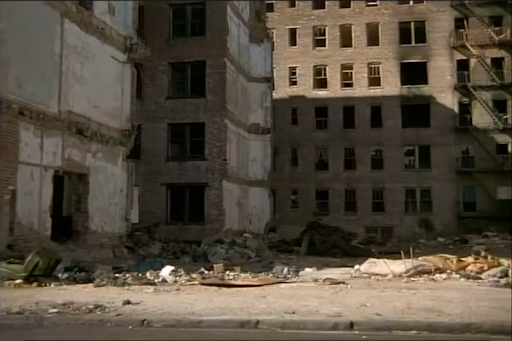
Further exacerbating social and urban decay was a rise in drug use and the advent of war on drugs, and while drug abuse rose across the country, it was notably worse in large cities. An index created by economists Roland Fryer, Steven Levitt, and Kevin Murphy showed that in cities with populations over 350,000 the usage of crack cocaine was twice as high as in cities with populations under 350,000—with especially high usage in urban areas and a disproportionate effect on Black families in the inner city. During this same time, the homicide rate more than doubled for young Black men. Already reeling from the rise in drug use, inner city neighborhoods were decimated by this increase in deaths and incarceration rates even though, according to the Leadership Conference of Civil and Human Rights, there is no statistically significant correlation between drug imprisonment rates and the rate of drug use across most states since 1980.
Metropolitan Films of the 70s and 80s
And so, with a bevy of social issues to choose from, filmmakers started documenting the decay of cities, portraying them as living, shifting entities. Night of the Juggler (1980), for example, follows a former cop hunting down a man who has kidnapped his daughter, because the kidnapper mistakenly believes she is the daughter of a real estate developer whom he blames for the deterioration of his childhood neighborhood. Though the film is largely about this hunt, it is at its core a portrait of New York City in 1980. The film opens with an extended chase scene through the streets of the city, capturing shouting passersby, crowded and filthy roadways, and decaying industrial infrastructure. Many scenes are shot on location in abandoned buildings in the South Bronx, capturing piles of trash and rubble alongside desolate city squares, and the catalyst of the film’s events is ultimately this desolation.
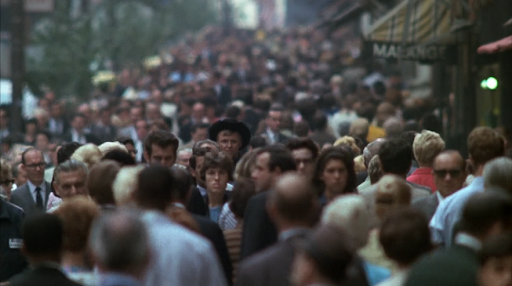
The kidnapper, Gus Soltic, has seen his city crumble and become a dangerous, unlivable place due to both the decisions of the ultra wealthy and other outside forces like the rise in drug use and the drop in population. In one particularly striking scene, a drunken homeless man accosts the kidnapped child before Soltic shows up and dispatches him. The homeless man appears from the darkness, seeming to literally spawn from the city itself. The buildings and landscape of rubble produce both feelings of alienation and isolation, as well as literally producing the physical manifestation of this decay when its human victims appear. The city warps those who live in it: Soltic has become a psychopath bent on misguided revenge, the homeless man and gangs are trapped in their environs and become a danger to those around them, and the local police officers are corrupt.
Aside from portraying urban decay, a main feature of metropolitan movies of the ‘70s and ‘80s is their depiction of isolation. Midnight Cowboy, Invasion of the Body Snatchers, The Conversation, and Night of the Juggler all depict characters who are extremely isolated from society, specifically because the cities they live in are so crowded. The people in these films are constantly surrounded by strangers who do not care about them, and they struggle to find connections in the sea of people. The social and class stratification of cities means that the characters in these films, often poor or members of minority groups, are separated from connection with higher class individuals. They simultaneously find it difficult to make connections with others in similar situations because poverty and isolation naturally foment paranoia toward other outsiders.
Joe and Ratso in Midnight Cowboy initially distrust each other due to past experiences with the crowded masses before realizing they need each other to survive the desperate situation thrust upon them by the city. Matthew and Elizabeth in Invasion of the Body Snatchers are isolated from others while also being metaphorically eaten by the city and its inhabitants. Because they are marked as an “other,” they must be assimilated. They initially don’t fit into this new way of life and stand out because of it. It is as if the city is designed to strip away their individuality through isolation until they too are duplicated and join the ranks of the emotionally disconnected masses that isolate new strangers in a self-perpetuating cycle.
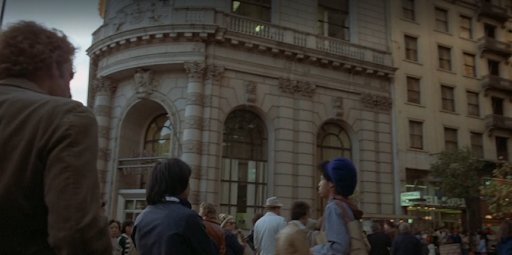
In all of these films, it is the cities themselves that isolate their inhabitants. Interactions with others color the experiences of the main characters, but it is living in tiny spaces alongside bland architecture and refuse and decay that has the most significant impact on their mental states. Ratso and Joe, for example, live in squalor in an abandoned building with no heat; because they are almost constantly focused on surviving another day, they are continually stressed and agitated and cannot fit in or build lasting emotional connections. In The Conversation, though Harry is surrounded by people, whether in city squares or security expos, he is emotionally isolated and paranoid. He feels guilt over his job, so he rejects any bid for connection from the people that naturally work their way into his life. He initially tries to get close to one of them before lashing out at the whole group because he is afraid of being truly known. He even goes as far to say that he is not responsible for what happens to those around him as a way to cope with the way he exploits his fellow citizens. This antisocial behavior is a direct result of living in the city: constantly being sequestered in his apartment or workspace and only dealing with other security experts normalizes this paranoid and keeps him away from the people he is spying on, and consequently he cares less about infiltrating their lives because he barely views them as real people.
The overall view of the metropolis in ‘70s and ‘80s films can best be described, then, as pessimistic at best and actively anti-social at worst. The accumulation of decay and the breakdown of societal norms and meaningful interactions and relationships, along with the rise in crime and drug use in these settings, inspired filmmakers to paint cities no longer as places of excess and moral misgivings, but instead as the manifestation of deeply broken systems in society. Cautionary tales gave way to morally gray sleaze-fests that strove to depict city life as it had become, and cities in film became characters in their own right. Filmmakers began to portray cities as an active and harmful force in human life instead of simply a backdrop for the human experience, and brought about a more nuanced reaction to the new problems of society in the ‘70s and ‘80s. By showing crime and drug use as a normal or even expected reaction to the absurdity of city life and urban decay, filmmakers both raised awareness to the social issues of the time and helped sway public opinion on society’s castoffs.
If you enjoyed this article, please consider becoming a patron of Hyperreal Film Journal for as low as $3 a month!


Aaryn Stafford is a proofreader for the state legislature and aspiring writer and publisher. He enjoys all genres but particularly enjoys horror, anxiety inducing thrillers (think Dog Day Afternoon), and sports documentaries. Aaryn lives in south Austin with his two cats, Mabel and Biscuit.