
Michael: The King of Slop
We live in cynical, fragmented times. The effervescent pop monoculture that dominated the 1980s feels positively exotic today, while still recognizable enough to resonate with youngsters who weren’t around the first time. For those not quite sold on this summer’s He-Man reboot, Michael offers a real-life superhero origin story in eyeball-busting IMAX.
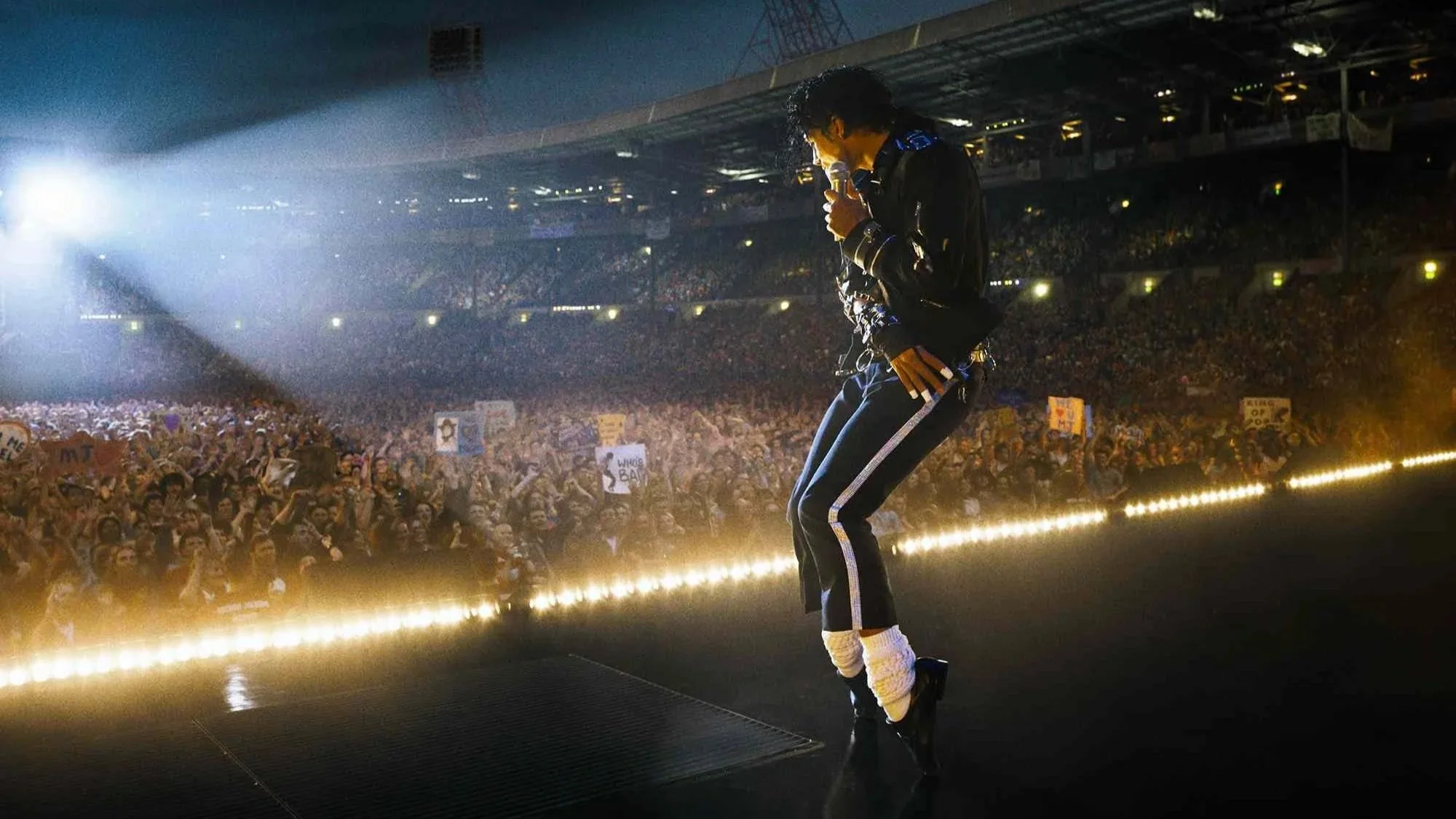
Michael Jackson’s later years were a woeful example of fame’s dark side, yet his artistry endures. Today his legacy is less a music catalog than a media fiefdom that has earned billions since his death in 2009. The opportunity to work with the artist’s estate on a big-budget musical biopic has attracted a super A-list creative team including Training Day director Antoine Fuqua and Gladiator screenwriter John Logan.
The star attraction of course is Jaafar Jackson, son of the real Michael’s brother Jermaine, as the young adult MJ. To be clear, nephew shines in a role some would say is impossible to pull off. As a media product, Michael follows an obvious agenda: to reintroduce a simplified, sanitized version of the artist’s mythos to a new generation unaware of, or indifferent to, the weird stuff. Focusing on the early years to his mid-1980s peak, the film delivers toe-tapping entertainment and an improbably streamlined story.
The story begins in Gary, Indiana, with family patriarch Joseph Jackson literally whipping his five sons into shape to become musical moneymakers. Juliano Krue Valdi embodies young Michael’s infectious energy and gift for connecting with audiences. The film builds up considerable steam as the ten year old prodigy alchemizes influences from James Brown to Gene Kelly while struggling against his father’s relentless perfectionism.
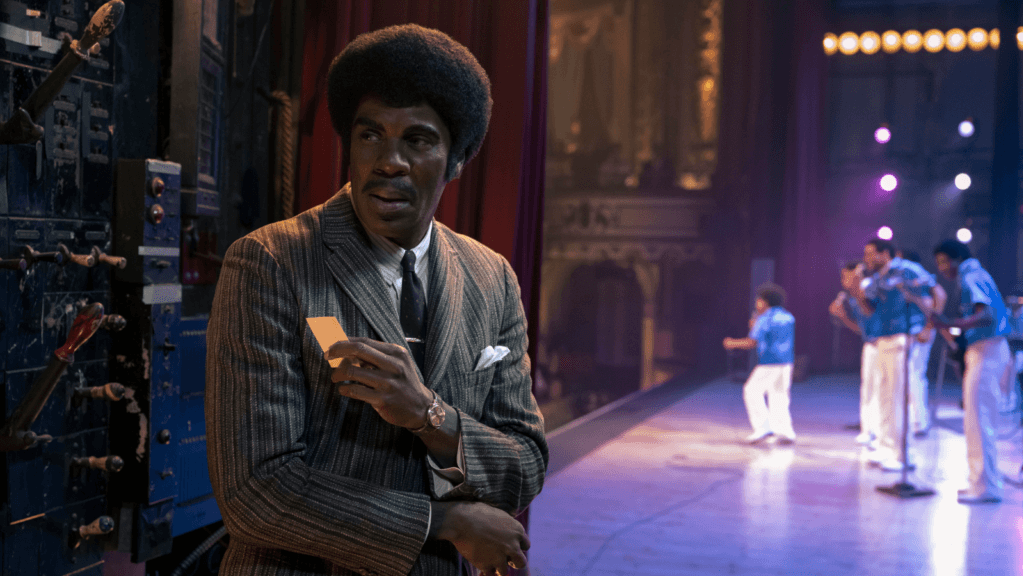
Joe Jackson is a convenient archetypal villain, literally set up as the Captain Hook to Michael’s Peter Pan per one of Michael’s favorite picture books. While Colman Domingo chews the scenery effectively, the character as written is one long, boring, note. Likewise, Jackson’s mother (Nia Long) is a protective figure with no agency, and his brothers linger in the background, more bandmates than family.
Once Jaafar Jackson appears as the heir to the 1980s pop throne, the film flattens into near-hagiography. The film briefly touches on other sensitive topics: the artist’s early struggle with the pigment-affecting disease vitiligo, his nose job, a struggle with pain meds in the wake of his infamous Pepsi commercial pyro accident. But Logan’s screenplay feels hampered by a mandate to avoid anything potentially damaging to the icon’s aura of innocence. Michael’s accumulation of exotic pets and uncanny connection with kids are rendered as an uncomplicated reaction to a childhood stolen by the music industry grind. The film is also oddly asexual. From his first solo album to the height of his fame, Michael doesn’t go on a date, have a first kiss or even look at a woman except for the sea of them swooning in the stadium crowds. The currents of dark sexuality in songs like “Billie Jean” and “Human Nature” hit awkwardly given that this film’s version of MJ mostly hangs out with zoo animals, kids in hospital wards, and his mom.
The film is likewise scant on Michael’s creative partnerships, depicting him as a lone genius who only needs helpers to make the deals and press the record button. The movie’s real heroes are the (invariably white) record executives Michael enlists to emancipate himself from his father’s control. His business bro John Branca (a mulleted Miles Teller) gets more screentime than Motown head Berry Gordy and producer legend Quincy Jones combined. Surely this has nothing to do with the fact that the real John Branca co-produced this movie. Given the sheer eventfulness of these years, an unfortunate amount of screentime occurs in record company offices resembling the Christmas Adventurer’s Club.
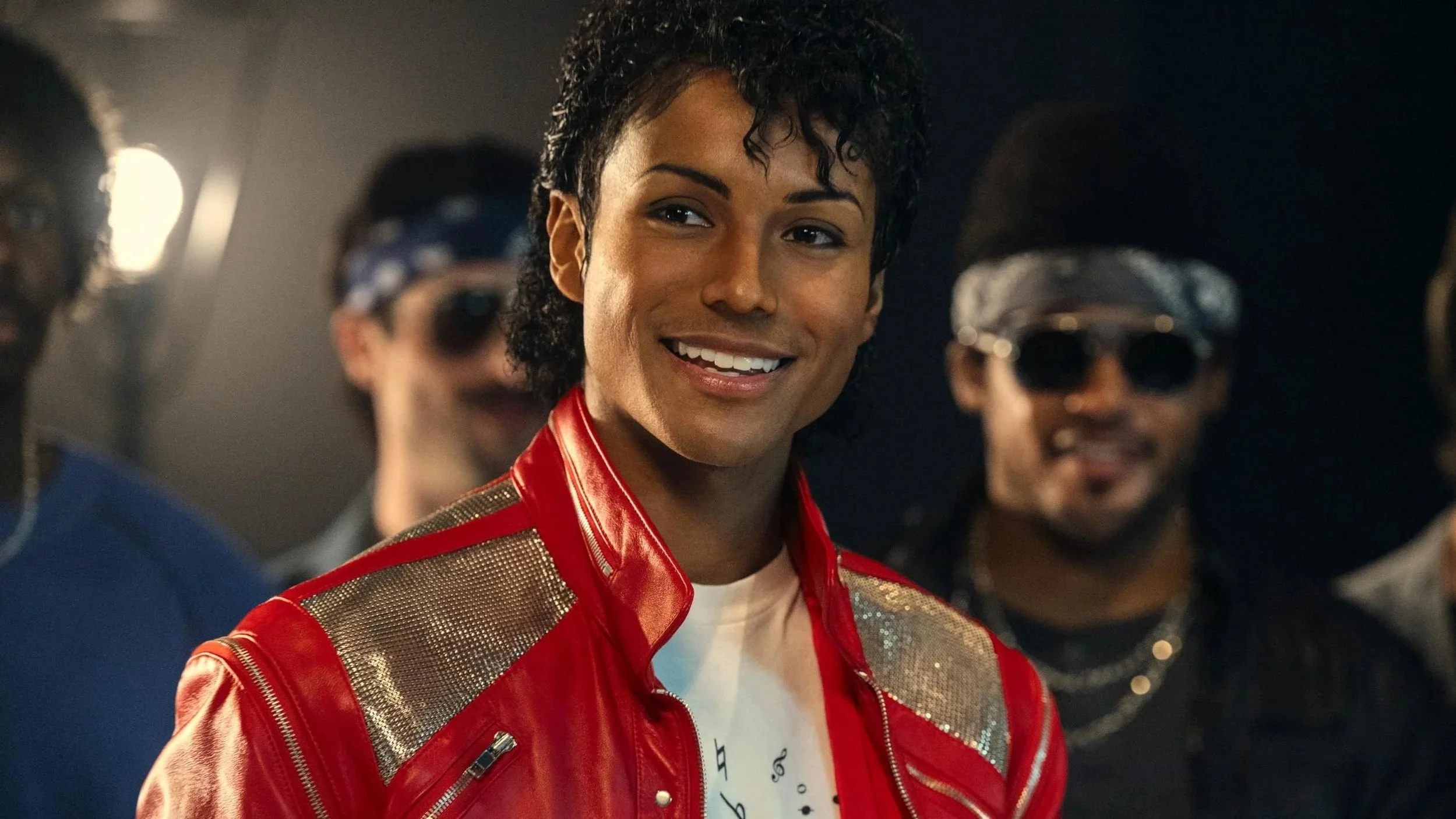
Having dabbled in a range of Hollywood genres, director Fuqua rises to the occasion for his first musical, effectively recreating moments still prevalent in the post-modern media landscape. He takes full advantage of the IMAX screen in eerie shots that isolate the young Jacksons amid the indifferent media machinery of soundstages and TV cameras. He also wisely lets the performance scenes run long, including a fantastic “Thriller” video shoot set piece. Jaafar Jackson nails MJ’s lithe physicality while effectively portraying his loneliness at the center of the world’s attention.
The creators of this film truly want you to believe in Michael Jackson – again, or for the first time. Many aren’t satisfied with this take on the story, but the discourse around the film and its divisive subject hasn’t affected its initial box office, which has been explosive. A friend put it to me, humorously but with real passion: “They took away my enjoyment of R. Kelly’s music, they won’t do it to MJ!” To be clear, R. Kelly took away everyone’s enjoyment of his music all by himself; the accusations against Michael Jackson, while putrid, never resulted in charges, and people will continue to argue their merits.
In protecting the artist’s memory so fiercely from “Wacko Jacko” negative energy, the filmmakers fail to create a believable human portrait. But this is surely a feature, not a bug. While frustratingly reliant on broad strokes and the lingering afterburn of nostalgia, Michael’s high-energy wholesomeness is hard to dislike. Even in the Teddy Perkins era, the world misses unifying cultural heroes; if you aren’t sold on that, you can (all together now) “beat iiiit–”
If you enjoyed this article, please consider becoming a patron of Hyperreal Film Journal for as low as $3 a month!
Matthew K. Seidel is a writer and musician living in Austin since 2004. The above selfie was taken in an otherwise empty screening of Heat at 10:30 in the morning. You can find him on Letterboxd @tropesmoker.