
AFS Preview Lancelot du Lac: Seeing the Forest For the Trees
Robert Bresson’s take on the Arthurian legend screens Sunday April 19 as part of AFS’ Paper Cuts series.
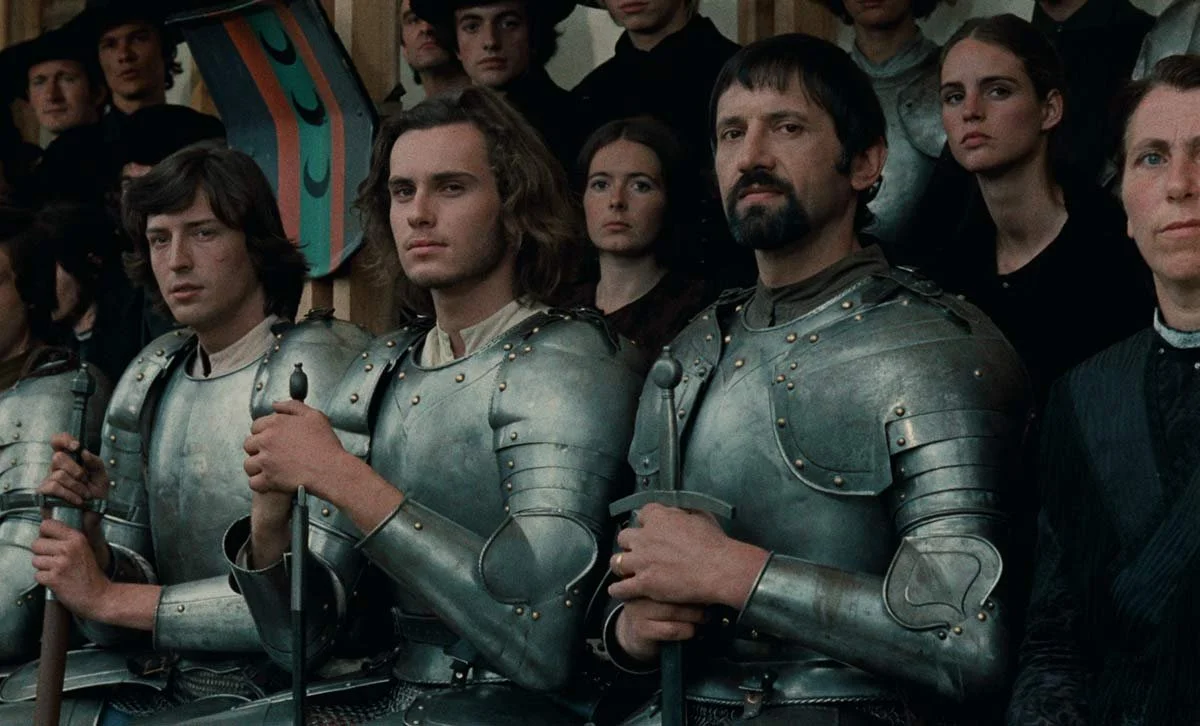
In Paul Schrader’s 1972 book Transcendental Style in Film, the soon-to-be filmmaker discusses “the paradox of the spiritual within the physical.” One of the book’s main subjects, French auteur Robert Bresson, later explained it this way: “When I see a tree, I see that God exists. I try to catch and to convey the idea that we have a soul and that the soul is in contact with God.“
Today, religion can seem impossibly embroiled in political identity, but Bresson’s films portray a Christianity-informed outlook that feels otherworldly, almost nihilistic, of a cold God removed from his creation’s suffering. Bresson was not a hermetic monk–he also claimed to have been “filled…with wonder” by the Roger Moore Bond epic For Your Eyes Only (1981). But his final three films have been described as “descents into Hell.”
The first of those three final descents, Lancelot du Lac (1974), is a revisionary take on the myth of King Arthur and the Knights of the Round Table. It begins and ends with grueling warfare in a dark, damp wood, heroic knights reduced to clanking piles of armor-clad corpses. By far Bresson’s most violent film, Lancelot features bloodspurts to rival the flesh wound scene in Monty Python and the Holy Grail, released the following year.
Sound fun? Hear me out. The modern world is full of such all-encompassing stimulation that watching Bresson in a movie theater may provide a transportive kick. With their rigorous lack of emotional catharsis and intentionally flat acting, Bresson’s films can seem comical or confusing today. But their focus on the otherworldly POV is unlike anything else in movies.
An opening scroll informs us King Arthur’s knights have returned from their quest. Having failed to secure the Holy Grail, jealousy and conspiracy have infected their ranks. Lancelot tries to reconcile his loyalty to the King with his love for Queen Guinevere, while the troublemaker Mordred attempts to out Lancelot’s affair. "Have we provoked God?" Arthur asks as paranoia and unrest engulf his kingdom. Bitterness and division cloud the knights’ preparations for a jousting tournament against the nearby town of Escalot, intended to reclaim the knights’ mojo.
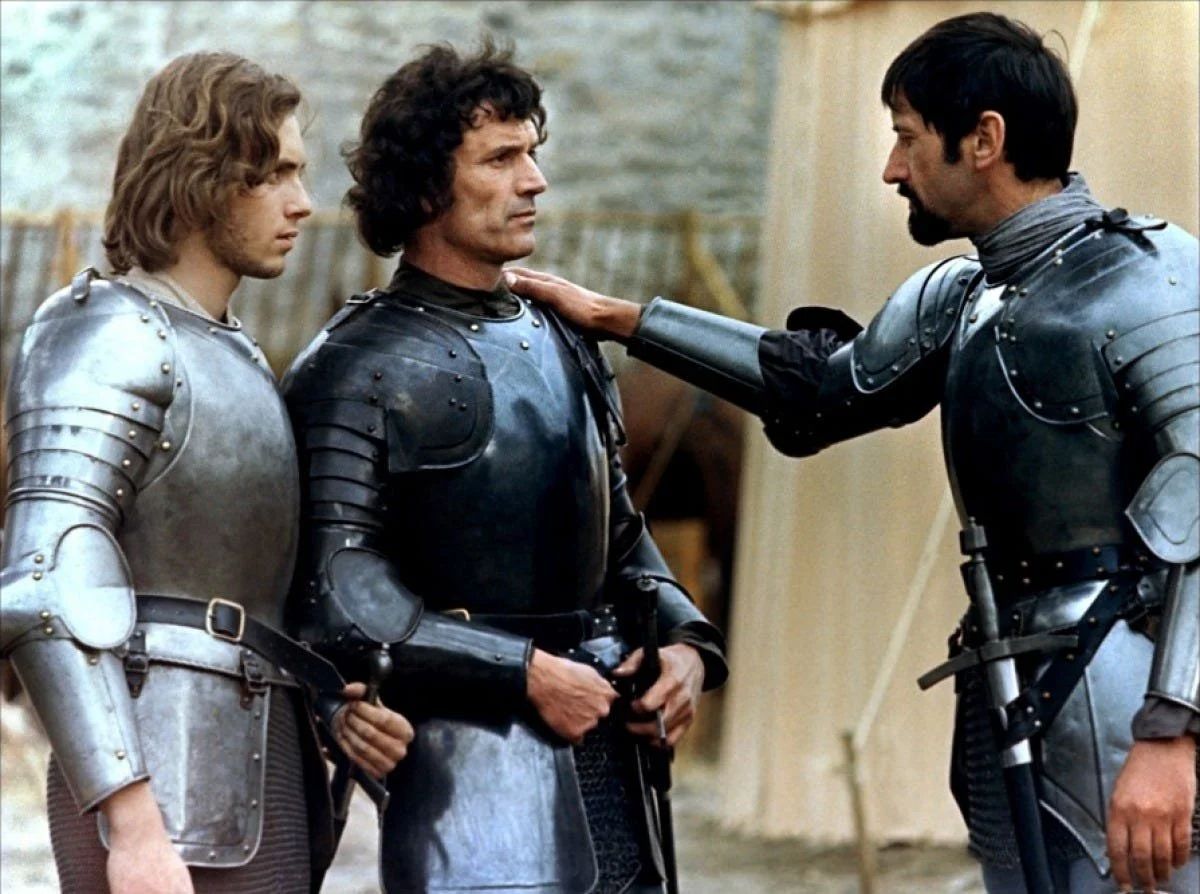
In his films, Bresson focuses his camera on objects, animals, and environmental elements as much as, if not more than, his human characters. The uniformly flat affect of his non-professional actors, in accordance with Bresson’s preference for “human models” over theatrical externality, often approaches pantomime and can seem unintentionally humorous at first. Exerting maximum control over the visual content within the frame, Bresson orchestrates his narratives into abstract mosaics of shape and movement.
This cubist approach is most evident in Lancelot’s climactic jousting tournament. As the event proceeds, Bresson regularly cuts to an unknown armor-clad figure who is decapitated by the top of the screen. He seems a figure of some prominence, but his identity remains purposely obscured by the shot’s composition. The joust itself is painfully kinetic, the sticks shattering to splinters and bodies crunching to the ground inside their armor shells. The greatest special effect in movies is the filmmaker's point of view, and sequences like these hold an intense mystery that lingers like a dream.
Bresson’s relentless focus on the edges of the action reduces the human tragedy to a cosmic joke. These characters seem trapped in an invisible world where the only logical response to conflict is to fight. But what do the horses think of Lancelot’s betrayal, his pride? What can the forest do but absorb the heroes’ spilled blood? In this regard, Bresson’s style is completely locked in to achieving that special quality of transport beyond realism–pure cinema.
If you enjoyed this article, please consider becoming a patron of Hyperreal Film Journal for as low as $3 a month!
Matthew K. Seidel is a writer and musician living in Austin since 2004. The above selfie was taken in an otherwise empty screening of Heat at 10:30 in the morning. You can find him on Letterboxd @tropesmoker.