
Mother Mary Review
Within the first third of Mother Mary, many questions are asked by the constantly inquisitive Sam Anselm, played by Michaela Coel. Among these countless questions is one that could be aimed at the writer and director of Mother Mary, David Lowery:
“Can you stop time?”
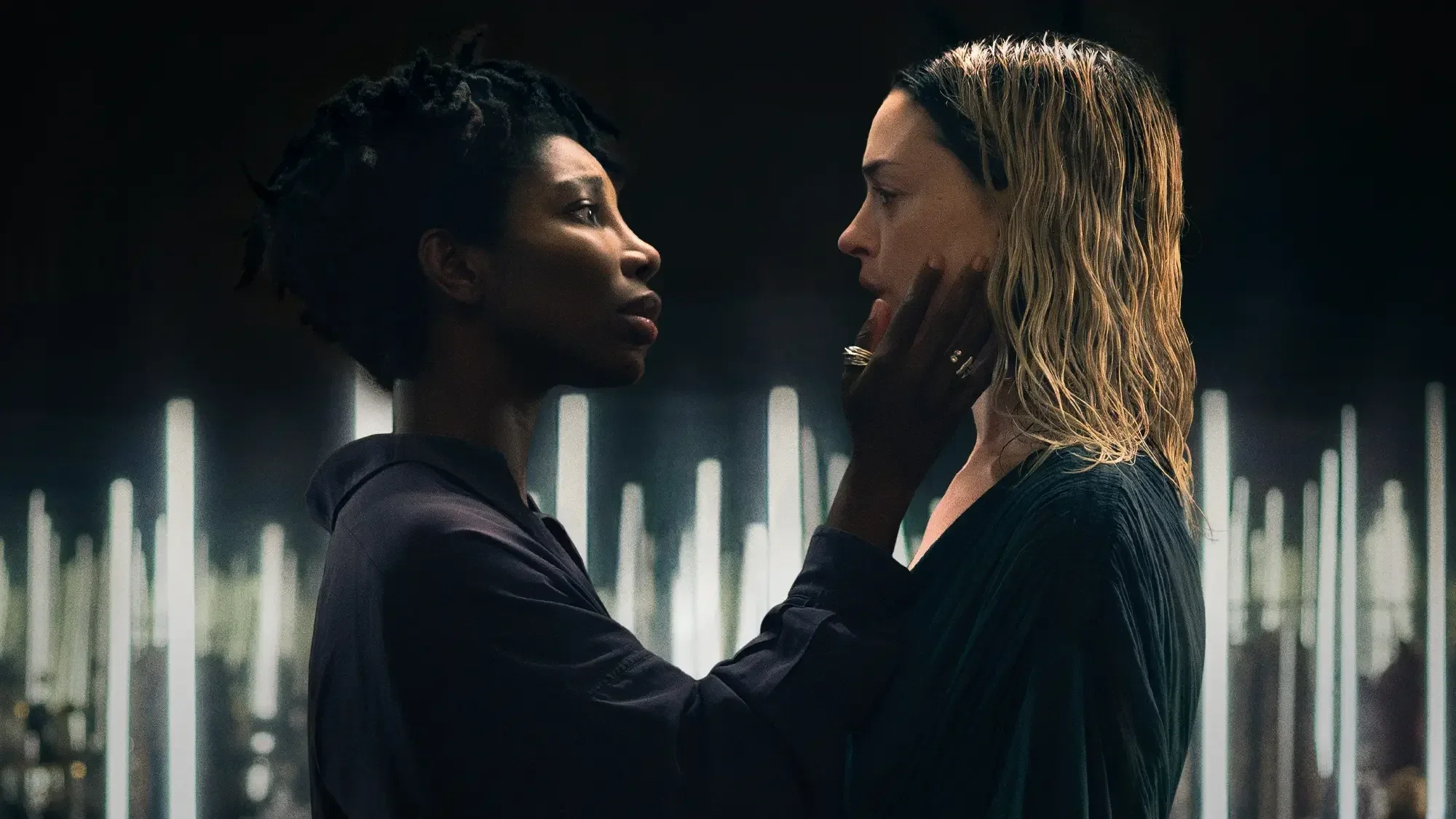
The unceasing march of time appears to be one of Lowery’s greatest preoccupations as a filmmaker. His last theatrically released film, The Green Knight (2021), had two standout sequences in which its main character, the Arthurian Knight-to-be Gawain, imagines futures in which so much time passes that he either rots as a skeleton or lives long enough to be a failed father and king. Another earlier film of David Lowery’s, A Ghost Story, is entirely about a specter watching time stretching so far into a future that’s forgotten him that time loops back on itself to a past he was never alive for.
Comprehending time and its relentless passage is at the center of Mother Mary as well, but Lowery’s interest in spiritual forces that exist outside of time’s reach, and the rituals we use to reach them, play just as big of a role this time around. The results of combining all of these influences into a tale of dueling artists has a mixed quality in terms of reaching for a more profound understanding of its characters. But when you have two absolutely phenomenal performances at the center of a film this gorgeous in both its visuals and soundscape, it’s hard to complain too much about that mixed quality.
The titular Mother Mary (Anne Hathaway), a pop star with a decade-plus career, is preparing for a major performance. The performance is a comeback of sorts, after an incident she does not wish to speak of even though it was witnessed by thousands of people at an arena show. However, she abandons her increasingly worried team of managers to seek out a new dress for her performance. Specifically, she shows up on the doorstep of fashion designer Sam Anselm (Micahaela Coel) for help. It’s beyond a desperate move, as Sam was Mary’s costume designer and artistic partner until a bitter split ten years ago. Sam constantly needles Mary about what’s driven her to beg so much for a new dress, much to Mary’s aggravation. Sam and Mary’s escalating confrontations about what each wants from their collaboration reveals anunbelievable possibility: that Sam’s anger at their separation has unleashed a supernatural entity that haunts Mary.
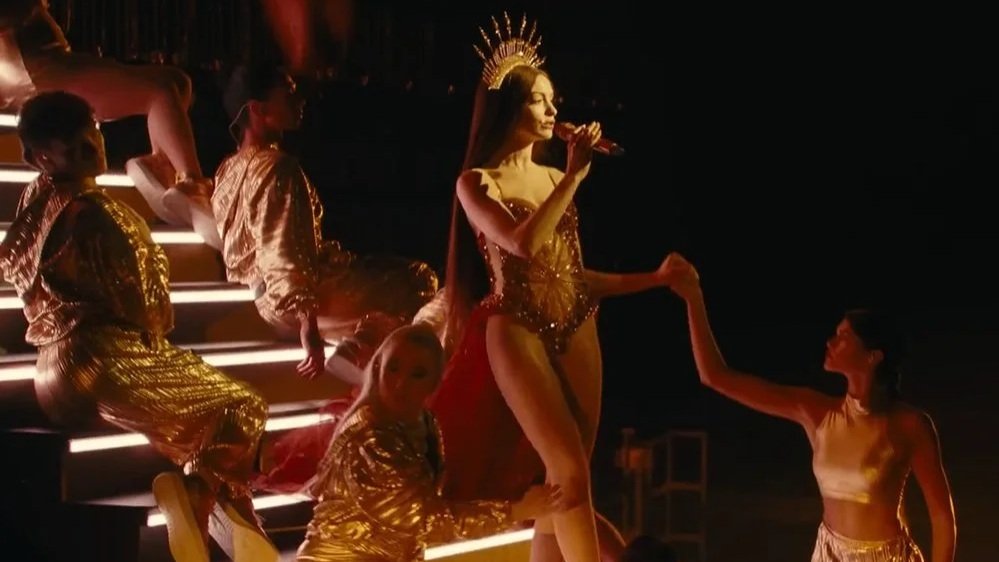
The biggest problem facing Mother Mary is how blunt its supernatural elements are as a metaphor; Mother Mary is as literal of an interpretation of the artistic process being used as an exorcism as any filmmaker has rendered. Before these supernatural elements make themselves known, the first half of the film is more grounded, which makes sequences with eerie visuals seem more terrifying by contrast. In the first half, Anne Hathaway demonstrates dance choreography for her show that is halfway between a carefully planned routine and the notorious subway freakout by Isabelle Adjani’s character in Andrzej Zulawski’s Possession. The Possession homage is a highlight of Mother Mary’s first half, but it feels more obvious as a horror-movie reference once the supernatural elements kick in later.
Of course, there is a way to interpret all of the supernatural elements as collective neurosis. Sam tells a ghost story of her own that she acknowledges might be the result of her brain interpreting information as it pleases. The ghost that haunts Mary is obviously representative of all kinds of feelings that weigh her character down, which is not a concept exclusive to this film. However, it does feel as if Mother Mary wishes to have more transcendent ambitions about what ghosts even are and how they function. The problem is that the ghost at the center of Mother Mary’s story doesn’t feel unknowable or beyond comprehension.
In a less accomplished work, this sort of bluntness would seriously de-fang a film. Thankfully, Anne Hathaway and Michaela Coel’s performances are so masterful that it elevates the entire film past these problems. Mother Mary is so focused on these two performers that it would be relatively easy to rewrite this entire film into a two-person theatrical performance for a live audience. While other notable performers in the film include Hunter Schafer and FKA Twigs, each of their appearances border on a cameo.
This is Hathaway and Coel’s film to shine, and the grounded first half where they engage in verbal cat and mouse is a staggering showcase for each of them. Coel gets the more showy of the two roles, dripping her dialogue in a cadence and tone that has equal measures of love and venom. Hathaway is far more restrained, but the aforementioned Possession homage and the more supernatural second half allow her to show the torture that’s brimming under her skin at every moment. Hathaway is also at the center of Lowery’s showstopping sequence that shows the literal crawl of time as a series of ascending and descending staircases as Mary moves from performance to performance, night after night. It is one of many visually stunning pieces of the film, though this time-obsessed sequence stands out for the dreamy space in which it takes place.
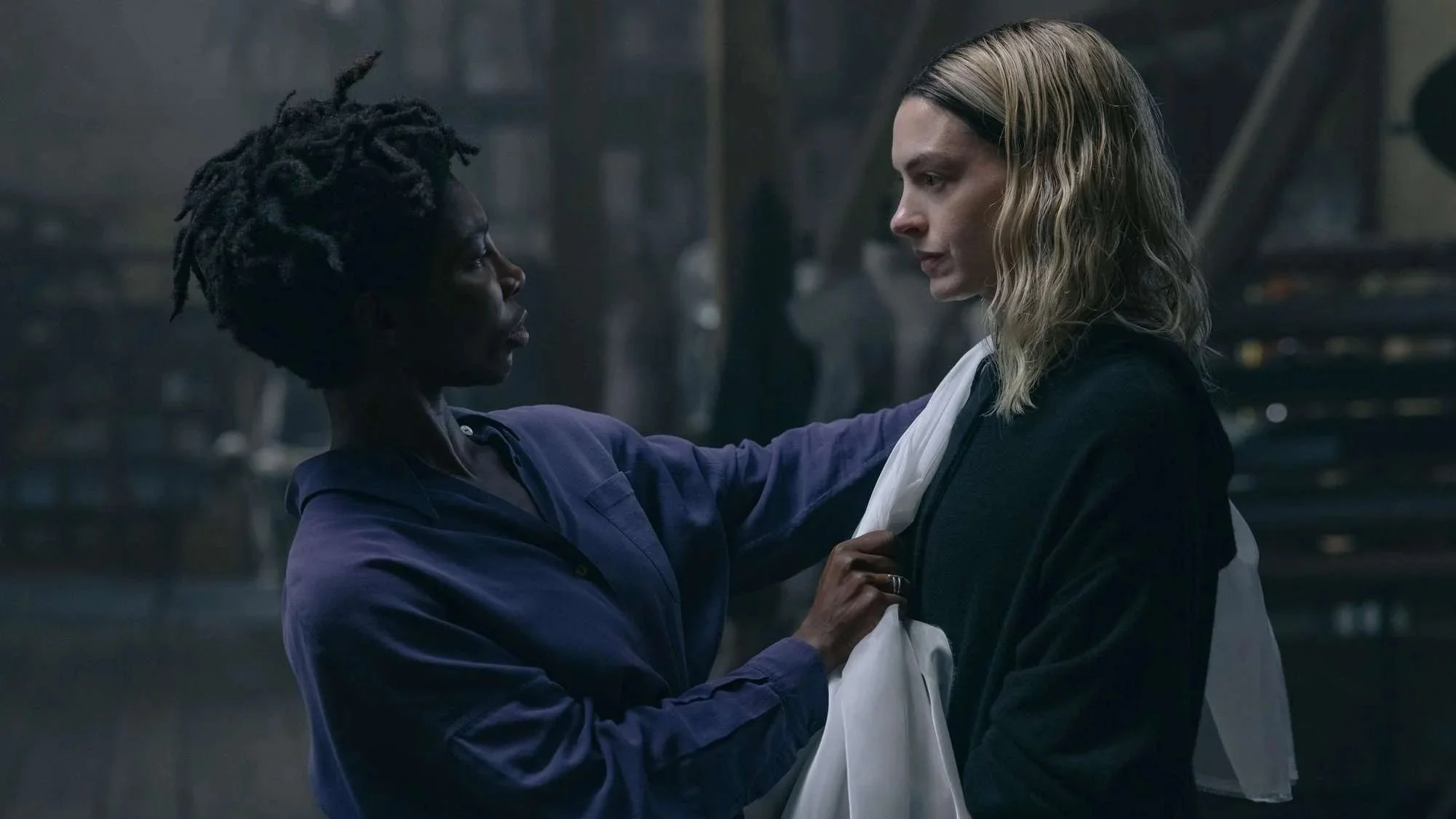
The visuals of the film also take the edge off of the supernatural elements feeling a bit underbaked. How Mother Mary goes about showing its ghost is a beautiful combination of visual effects disciplines, mostly by superimposing flowing red fabric against black backdrops. The ghost takes other abstract forms as well, but always red in color. It will come as no shock that since the film is about a pop star, there are some beautiful concert sequences scattered throughout with intricate dance choreography. This is, confusingly, where Lowery struggles the most with his visuals. As stunning as the concert staging is, there is some clumsy editing where capturing the dance choreography is concerned in the concerts.
That clumsiness is counterbalanced, mostly, by the music itself. There are original songs for the film from FKA Twigs, Jack Antanoff, and Charli XCX, and while none of their contributions to the soundtrack are lackluster, it’s hard not to wish that they were a bit more memorable. The original songs are outdone completely by the original score from composer Daniel Hart, a frequent collaborator of David Lowery’s. There is a bitter irony that the best concert sequence in the film isn’t focused on Mother Mary’s music at all, but Mary disassociating as Hart’s score takes over completely.
There is a wonderful ambition at the heart of Mother Mary. Watching David Lowery synthesize so many elements and concepts across his filmography into an intense dialogue between two people allows him to explore his ideas more directly than ever before. In a Q and A after Mother Mary’s first screening in Austin,Texas, Lowery revealed that the film began as an imagined dialogue while he was in the midst of making the Disney+ film Peter Pan & Wendy, wondering who he was as an artist and what his identity had become over time. Mother Mary feels intensely personal, but in the same Q and A, Lowery also said he wasn’t sure what the film itself means, and that it may take him 10 years or more of his own time to figure that out.
The messiness inherent to this process of exploring his own feelings reflects deeply on the final film. It is not entirely clear what Mother Mary wants to say beyond the obvious, but at least this is a story told by a filmmaker with incredible skill on almost all technical fronts imaginable with fully committed performers. Mother Mary may be messy, but it is far from incoherent or lacking confidence in its phenomenal vision and how Hathaway and Coel bring it to life. This demands to be seen in a theater and discussed afterwards, especially for fans of David Lowery’s work.
If you enjoyed this article, please consider becoming a patron of Hyperreal Film Journal for as low as $3 a month!
Jacob is a writer based in Austin, TX who loves giving infamous movies a chance, for better or worse. You can find him on Letterboxd at @Jacob_Ethington and on Instagram at @midwest_bummer.