
SXSW '26: Amazing Live Sea Monkeys
A big time company with lawyers on retainer wages a flagrantly illegal (and immoral) campaign against a relatively small-time entrepreneur who just wants ownership over her own product. It’s a classic David & Goliath story, and a narrative that always makes for a great documentary. What makes Amazing Live Sea Monkeys, which had its World Premiere at SXSW 2026, so special, however, is how that easy narrative is only the entry point of a much weirder story.
The film starts by introducing Yolanda, the widow and de facto owner of Sea Monkeys. For those unaware, Sea Monkeys were an ultra-popular product found in the ad pages of most comic books in the 1950s and ‘60s. Right alongside Charles Atlas ads that promised to “make a man out of you” and X-Ray specs that dubiously promised to let wearers see through women’s clothes for only a couple of dollars, Sea Monkeys offered kids the opportunity for pet ownership at a far lower barrier of entry than a dog, cat, or even a fish might cost.
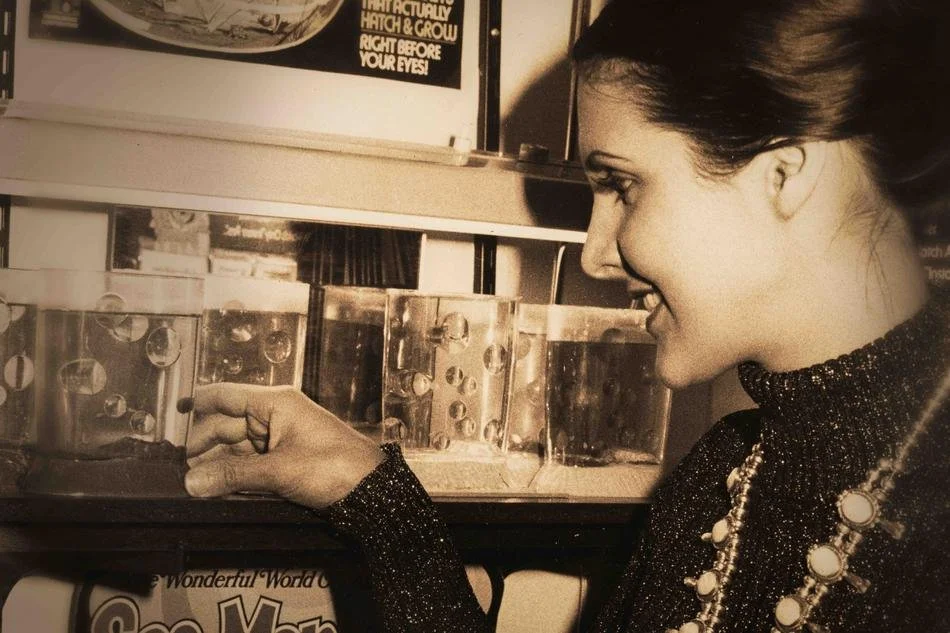
Cartoony illustrations showed fat, humanoid creatures, strange hybrids of E.T. and mermaids. The reality was far more mundane; Sea monkeys are brine shrimp, engineered to live longer than the standard couple of days the species is known for. But, as is the case with most things, imagery and narrative are everything—those colorful illustrations did a lot of heavy lifting and “Sea Monkeys” is inarguably a more enticing name than “brine shrimp.”
The inventor of sea monkeys was Yolanda’s husband, a man named Harold von Braunhut, who died in 2003 before filming on Amazing Live Sea Monkeys began. Nonetheless, his presence haunts the film like the ghosts of horror comics that once offered Sea Monkey advertisements within their pages. His personality and his actions and the effects he had on the people in his life, both positively and negatively, seem impossible to easily coalesce, even more so when he’s not around to speak on his own behalf.
Yolanda, meanwhile, lives in a quasi-nature preserve, gate festooned with Sea Monkey designs, with a long road down into the forest leading to a picturesque home straight out of The Secret Garden or Little Women. She spends her time feeding the local wildlife (racoons and birds feature prominently) while trying to keep the lights on with the sales of Sea Monkey packets. That’s a task made exponentially harder after Big Time Toys (yes, really) cut Yolanda out of their sales of her product, arguing that their original deal was with her late husband and that the proprietary formula that makes a brine shrimp’s lifespan long enough for a child to care isn’t all that necessary to the brand’s longevity.
As the doc begins, Yolanda lives like Snow White in her castle, doted on by wildlife and her younger electrician boyfriend. Half the time, the lights are off due to nonpayment, and her meals are modest and seemingly cheaper than the bird feed and apples she buys for the local wildlife. As the doc continues, we learn more about her departed husband with interstitial animation imitating the pulp comics that were once so integral to the success of Sea Monkeys. Harold von Braunhut was an enigma, at turns a hustler, a genius, a borderline superhero whose parental abandonment and genetic predisposition to broken bones couldn’t stop a brilliant mind, and a borderline supervillain whose rage at his own circumstances led to shockingly hateful and baffling acts. The doc keeps the specifics of those acts a mystery until a second act twist, so I won’t spoil it, but it’s enough to say that his life was more than meets the eye.
Yolanda too is much more complicated a person than she seems at first glance. Through interviews with von Braunhut’s business partners and staff, they emphasize that she utilized her beauty and modeling background to make the business successful by charming investors and fellow businessmen. If von Braunhut had the idea and the will to sell it, Yolanda had the social savvy to know how to make it palatable to people not invested, emotionally or financially. First as his literal magician’s assistant and later as a savvy marketer and scientist in her own right, Yolanda undeniably earns her status in the grand narrative of Sea Monkeys, which is especially helpful when contrasted with von Braunhut’s nearly-schizophrenic actions.
As he’s quoted in the film, “imagery is everything,” and Amazing Live Sea Monkeys, and Yolanda, have to reckon with a man unable to explain any of his life. He is praised and criticized in equal measure, friends struggle to make sense of his hateful views and kind actions, and Yolanda’s fight to take back ownership of his (and her) life’s work becomes a needed exploration and acceptance of the man she spent most of her life with.
It remains an extraordinarily compelling documentary about one of the pieces of detritus of American culture. A product available to anyone who could work into a pet store, given new life by canny genetic engineering and even cannier-marketing, the value of which is dubious except to the animal lover who chooses to fight for her own value. It’s America writ large, epitomized in small, plastic packets.
If you enjoyed this article, please consider becoming a patron of Hyperreal Film Journal for as low as $3 a month!
Ziah is the founder and former editor-in-chief of the Hyperreal Film Journal. He can usually be found at Austin Film Society or biking around town.