
Kontinental ‘25 Review: A Radu Jude Film for People Who Don’t Like Radu Jude Films
Romanian filmmaker Radu Jude is not the type of filmmaker that should have become a critical darling. He makes edgy, experimental, and often even crude films that frequently spit in the face of those watching them. (Just look at his most acclaimed film, Do Not Expect Too Much From the End of the World, which essentially dared critics to like it with its cameo by the infamously anti-critic filmmaker Uwe Boll.) Yet, he has found himself in a situation where he is one of cinema’s newest and most unlikely international auteurs.
Jude’s latest, Kontinental ‘25, follows Orsolya, a bailiff in Transylvania who is tasked with evicting a homeless man from the cellar he has been squatting in. However, when the man commits suicide, it sends her into a moral conundrum and existential spiral that causes her to question her own ethics.
Immediately, viewers will probably pick up on the fact that this film is far more depressing than the rest of Jude’s work. All of his films have a sense of black humor to them, but Kontinental ‘25 does not have the dick jokes or Snapchat filters that had audiences rolling with laughter in his past few films. It is a much more straightforward, serious endeavor for the director than the work he has been doing for much of the past decade.

And while Kontinental ‘25 is only an hour and forty-nine minutes long, it is just as punishing as the rest of Jude’s work. Even the most dedicated of cinephiles don’t watch Jude’s films because they are particularly enjoyable, but they are consistently intellectually stimulating in their explorations of some of the most hard-hitting issues that face Jude’s homeland, along with the world at large.
In Kontinental ‘25, Jude sets his sights on the social issues of homelessness, poverty, and gentrification. (For those of us who live in Hyperreal’s home base of Austin, Texas, these are issues that hit close to home, considering our local and state government’s often problematic approaches to “solving” the crisis.) Even if one satire is not enough for the entire conversation, the film does ask some of the pressing questions, such as “Who (or what) is culpable for this crisis?” and “Who shapes the narrative of these victims?” Jude does not offer any solutions to this problem, as there frankly are none.
Beyond that, Kontinental ‘25 offers a crash course in all the other political topics that Jude has addressed in his other films. It has a dash of cancel culture (which he explored in more depth in Bad Luck Banging or Loony Porn), a sprinkle of performative activism (Do Not Expect Too Much From the End of the World), and of course, all the anti-capitalist anger fans are used to from him — all wrapped up into one nice package.
The most effective messaging in Jude’s film comes from how he connects the modern-day issue of gentrification to the longer-term issue of colonialism — something that Jude has long explored in his work. What makes this really impressive, though, is how successfully Jude manages to connect historical instances of colonialism, like the Romanians taking Transylvania or the Soviets later occupying Romania, to more timely topics such as what is happening right now in Gaza and Ukraine. It is in this way that Jude’s typical brilliance shines through in Kontinental ‘25.
However, that doesn’t mean that all the commentary in Jude’s latest film is a home run. Most frustrating is the fact that he seems to have a somewhat regressive view of suicide and mental health. It really only acknowledges the death that serves as the film’s inciting incident as an act of violence against others. It doesn’t really ask the right questions about what brought this character to that point beyond broadly pointing the finger at capitalism.
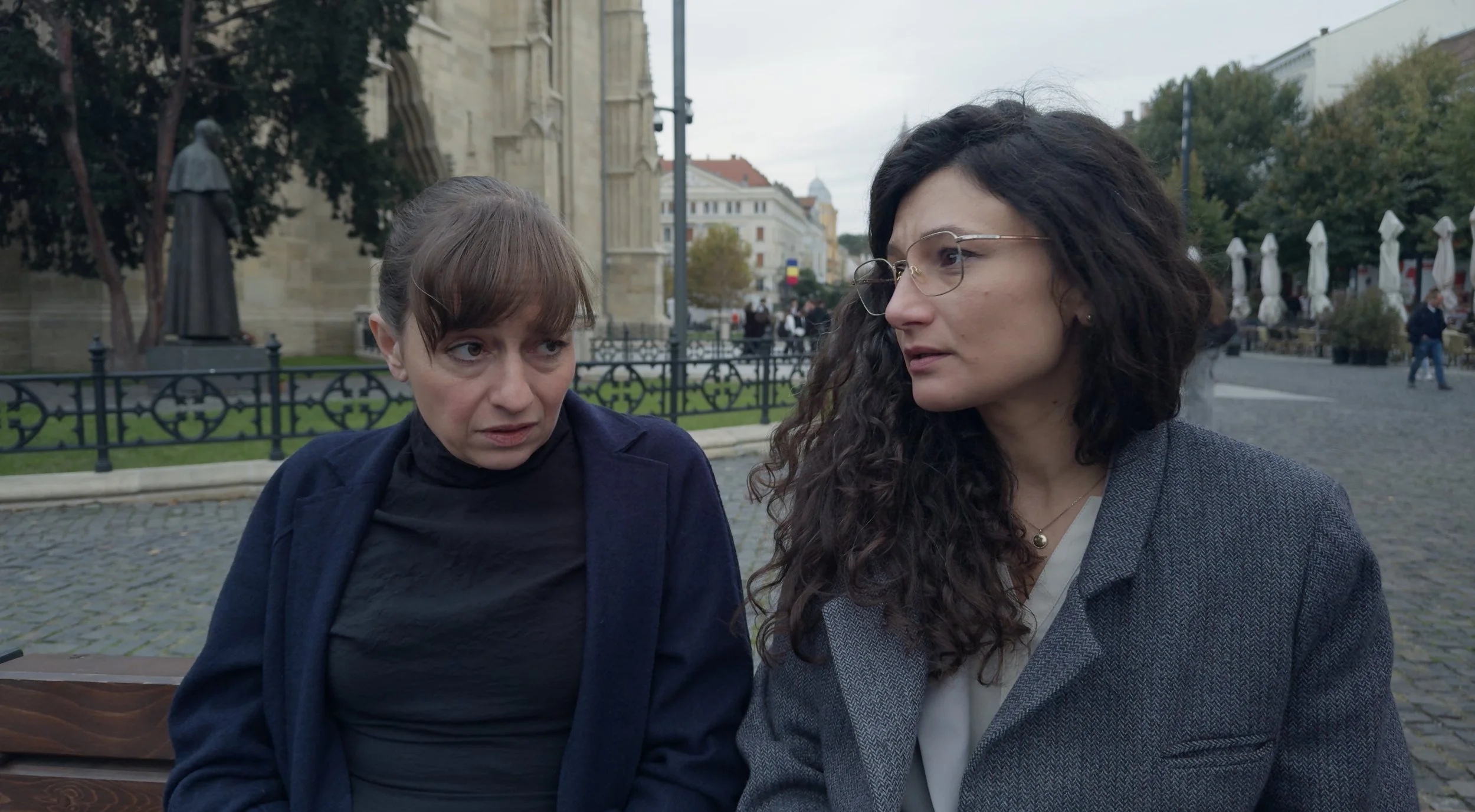
Still, Jude’s character work is as nuanced and interesting as ever. The film might have been more politically effective had it offered a stronger condemnation of its characters’ superficiality, but for what it is, it is rather intriguing. Jude loves to explore unlikeable characters, but the protagonist of Kontinental ‘25 is not unlikeable — she’s actually quite sympathetic, but suffers from a near-crippling level of self-doubt that fuels the film’s external and internal conflict.
Eszter Tompa’s performance in the lead role has rightfully been showered with praise on the festival circuit, as she brings a great deal of nuance to the role. This is certainly a very challenging role, as she spends most of the runtime talking — about herself, at that. And while there is certainly a world in which this character quickly becomes annoying, Tompa brings a deep and relatable sadness to the role that keeps that from ever happening.
The supporting cast does leave a bit to be desired, though. It is a massive missed opportunity not to surround Tompa with a bunch of exaggeratedly comedic side characters. Some of these, like Adonis Tanta, who plays a bike courier with a peculiar knack for opera singing, do offer some welcome comedic moments, but it feels like most of the supporting characters are mere devices for the protagonist to air her grievances.
What is missing most from Kontinental ‘25 is Jude’s typical stylistic quirks. Of course, his other film from last year, Dracula, took that to the extreme with AI-generated imagery. However, Kontinental ‘25 lacks even the essayistic qualities characteristic of his work in films like Bad Luck Banging or Loony Porn and Do Not Expect Too Much From the End of the World.
Although Jude’s films always look a bit garish, it is generally very deliberate and with a cinematic purpose. It is difficult to find that purpose in Kontinental ‘25. Cinematographer Marius Panduru shoots the film on iPhone, and while this seems to be an exercise in minimalism, it’s frustrating from a director whose best quality is typically his exuberance.
Ultimately, Kontinental ‘25 feels like a Radu Jude film for people who can’t stomach the idea of a Radu Jude film. If a flamboyant, obtuse, three-hour-long political diatribe sounds like too much for you, the 109-minute Kontinental ‘25 may be a compelling amuse-bouche for the director’s style. However, for those who are already familiar with the Romanian iconoclast’s repertoire, it will only leave them desiring the full course.
If you enjoyed this article, please consider becoming a patron of Hyperreal Film Journal for as low as $3 a month!
Sean is a film critic, filmmaker, and life-long cinephile. For as long as he can remember, he has always loved film, but he credits the film Pan's Labyrinth as having started his love of film as art. Sean enjoys watching many types of films, although some personal favorite genres include music documentaries, heist movies, and experimental horror.