
Review: First They Came for My College
In the battle against fascist ideology, there are several battlegrounds. If filmmaker Patrick Bresnan’s documentary First They Came for My College has anything to say about it, the first battleground is the classroom. With a straightforward yet effective approach to its important subject matter, First They Came for My College is an incredibly emotional documentary, even if it struggles to connect that emotion to the bigger picture.
The film examines the hostile takeover of New College of Florida, a once-esteemed honors college that Republican Governor Ron DeSantis targeted as part of a campaign for conservative “educational reform,” replacing the board of trustees with politically-aligned appointees wanting to push an agenda against academic freedom.
Perhaps the wisest decision that the filmmakers made with First They Came for My College is focusing on the students. There are a lot of angles that could have been taken to this story—the purely political argument, the faculty members who lost their jobs—but this documentary focuses on the people who are affected most: the students whose education was meddled in by politicians.
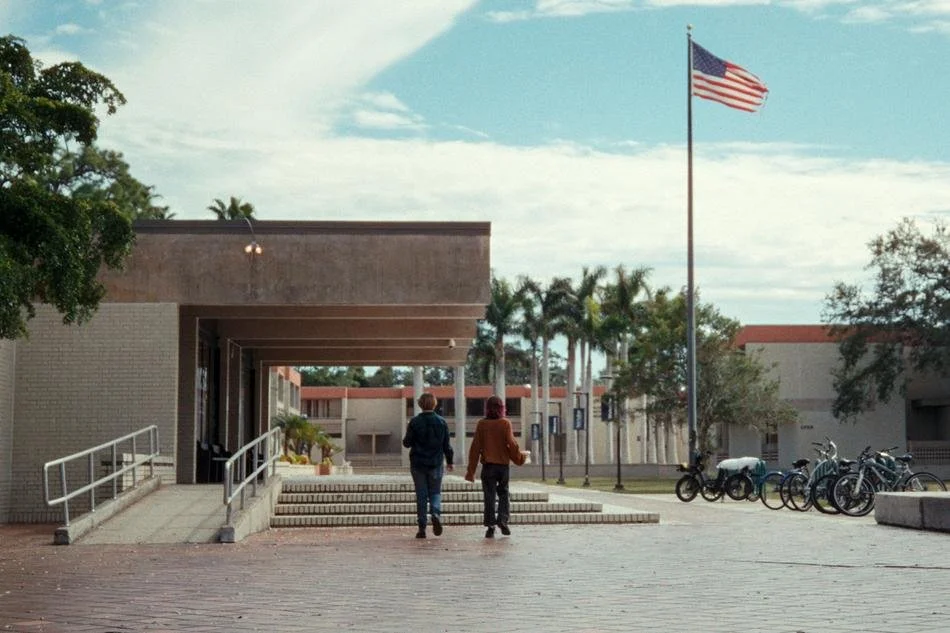
Of course, this lends the film a clear emotional heft, particularly for those who have some sort of connection to these students, whether they are from Florida or are involved in the educational system. It is heartbreaking to see these students watch as the institution they enrolled in under the promise of one thing is eroded into something else. And while it is inspiring to see many of them stand up and fight for what they believe in, the futility of their efforts adds another layer of devastation.
One of the more impressive aspects of First They Came for My College is its willingness to show both sides without villainizing its participants. Of course, conservative trustees like Christopher Rufo and university president Richard Corcoran are not presented in a positive light, nor are they active participants—only appearing in footage of board meetings. That being said, the documentary does give a voice to the other side by including the story of one of the conservative student “plants,” invited to the college by DeSantis. Seeing this perspective gives a completely different insight into the mindset that went into these decisions.
Yet where First They Came for My College comes up short is in giving viewers who aren’t students, academics or Floridians a reason for this story to feel urgent. As someone who works in higher education and is originally from Florida, this documentary is obviously very relevant to my interests and experiences. However, for a majority of viewers, it could prove challenging to connect this particular incident with the big-picture political problems it implies.
Admittedly, a big limitation of this is caused by director Patrick Bresnan’s steadfast commitment to the vérité style. Bresnan is so intent on allowing the audience to come to their own conclusions that the film feels somewhat aimless at times. Although there are certainly a few powerful moments between students, it feels like we are constantly waiting for the politically incisive parts to come from public comments at board meetings, or being a fly on the wall to conversations between faculty and students.
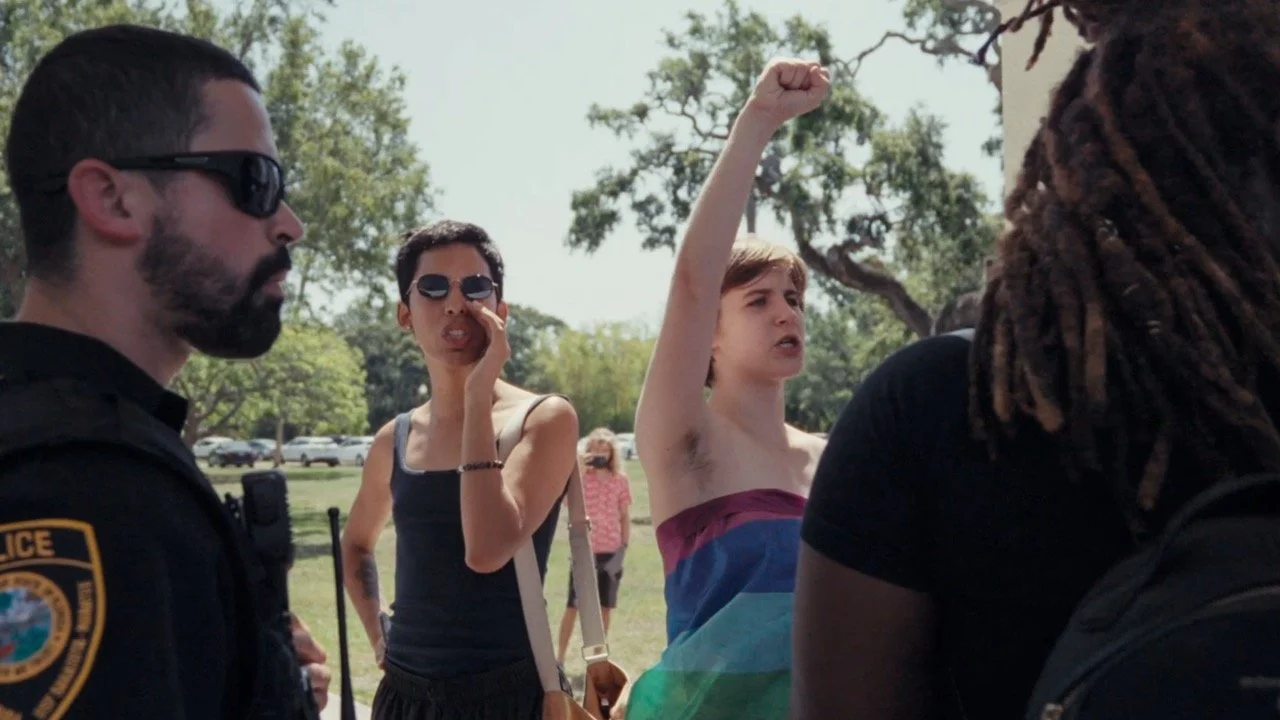
First They Came for My College is the type of documentary that would have benefitted from a bit more shaping in the production process, not just in the editing room. To their credit, Bresnan and writers Ivete Lucas and Leah Marino do a good job of constructing a compelling narrative out of the footage they have captured. Still, there are several points that feel like missed opportunities and could have resulted in some thought-provoking moments had the filmmakers been willing to poke the bear and not be just passive observers.
A few sequences in the film have the abstract quality one might expect of Bresnan from his background as a visual artist, albeit not to the same extent as Pahokee. One of the big standouts in this regard is a scene in which a group of New College students perform The Rocky Horror Picture Show with a shadow cast, which Bresnan turns into an unexpected emotional climax for the film with his gorgeous cinematography.
But otherwise, First They Came for My College is mostly straightforward from a stylistic standpoint. It is the type of observational vérité documentary that knows what it is showing is far more important than how it shows it, and as a result, it is generally unflashy, with a focus on emotional close-ups rather than evocative or atmospheric filmmaking.
Yet despite these shortcomings, First They Came for My College is still worth watching, if for no other reason than as an example of how fascism is slowly taking over every aspect of our lives. They say that awareness is the first step towards change, and while this documentary may not be enough to create change on its own, it could be that first step.
If you enjoyed this article, please consider becoming a patron of Hyperreal Film Journal for as low as $3 a month!
Sean is a film critic, filmmaker, and life-long cinephile. For as long as he can remember, he has always loved film, but he credits the film Pan's Labyrinth as having started his love of film as art. Sean enjoys watching many types of films, although some personal favorite genres include music documentaries, heist movies, and experimental horror.