
AFF '25: Jay Kelly
Movie stardom is a strange, fascinating phenomenon, and that’s just from the outside looking in. To be a movie star is, arguably, to construct another version of yourself, a persona who’ll give interviews and become the face of luxury goods, who will win critical praise and awards and weather drubbings. The star persona and the actor are both inexorably linked and distinct from each other. Depending on how an actor’s career goes, it might even become an open question whether the actor or the star is the one in the driver’s seat, so to speak. With Austin Film Festival Selection Jay Kelly, writer/director Noah Baumbach, co-writer Emily Mortimer and lead George Clooney set out to dig into what happens when a star looks back on his career and his life and is alarmed to find that the former has long overshadowed the latter.
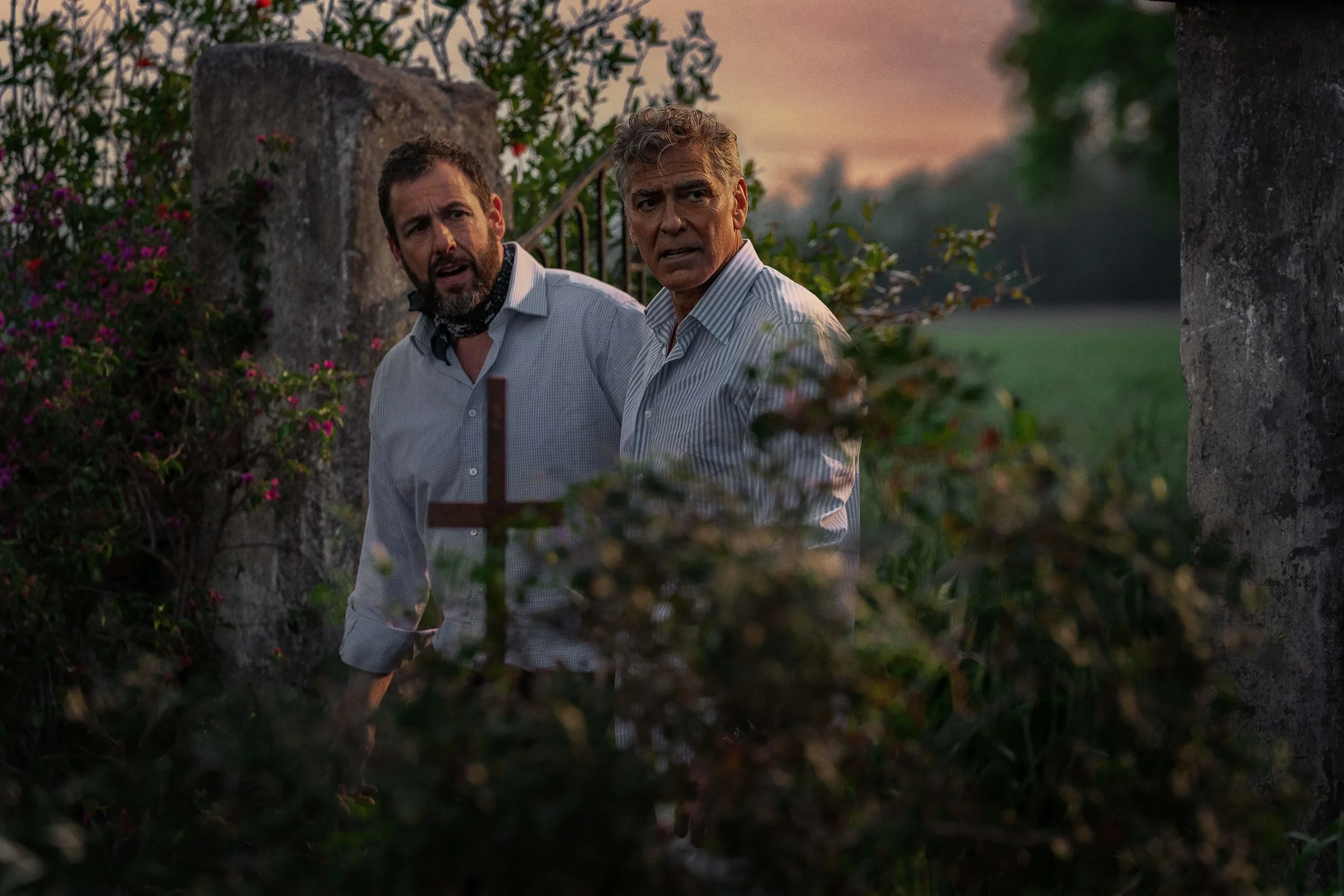
Jay Kelly (Clooney) isn’t George Clooney. Yes, like Clooney, Kelly is an enormously successful, and fabulously handsome movie star with a long and mostly esteemed career. But Clooney grew up with acting and performance in his family and had been acting for 16 years before he broke out on the TV series ER. While he’s most famous as an actor, he’s also a longtime director and screenwriter, and outside of film, he’s a dedicated philanthropist and activist. Kelly, meanwhile, was the first of his family to act, and rocketed to superstardom after legendary director Peter Schneider (Jim Broadbent) cast him as the lead of a tremendously successful film. He’s worked consistently since then, and while time has dimmed some of his shine, he’s still a capital-M, capital-S movie star thanks in large part to his agent/best friend Ron Sukenick (Adam Sandler). And unlike Clooney, acting has been Kelly’s sole career and focus for decades.
Jay Kelly is at a crossroads. His latest film has wrapped. His younger daughter, Daisy (Grace Edwards, Asteroid City) has decided to spend her last summer before college traveling through Europe with her friends. His older daughter, Jessica (Riley Keough) has made peace with being all but estranged from him. A chance encounter with an old friend from his acting class days (Billy Crudup) at Peter’s funeral leaves Jay with a black eye and a dark night of the soul. Suddenly, the life he’s lived seems terribly lonely. All the masterworks and box office smashes in the world cannot make up for the fact that he’d last spoken to Peter months before his death, or that he and his dad (Stacy Keach) will never tear down the wall they’ve built between each other, or that Jessica has long accepted that he will never be in her life the way he should have been, or that Daisy’s would rather see off her adolescence and welcome her adulthood with her friends rather than her dad. Driven by a slow-motion identity crisis, Jay decides to follow Daisy to Europe, under the guise of accepting a career tribute in Tuscany, in the hope that maybe he can make things right. Thus, he gathers his entourage (chief among them Sandler’s Ron and Laura Dern’s publicist Liz) and embarks on what he hopes will be a transformative journey. And indeed, Jay’s quest is transformative, just not in the way he was hoping it would be.
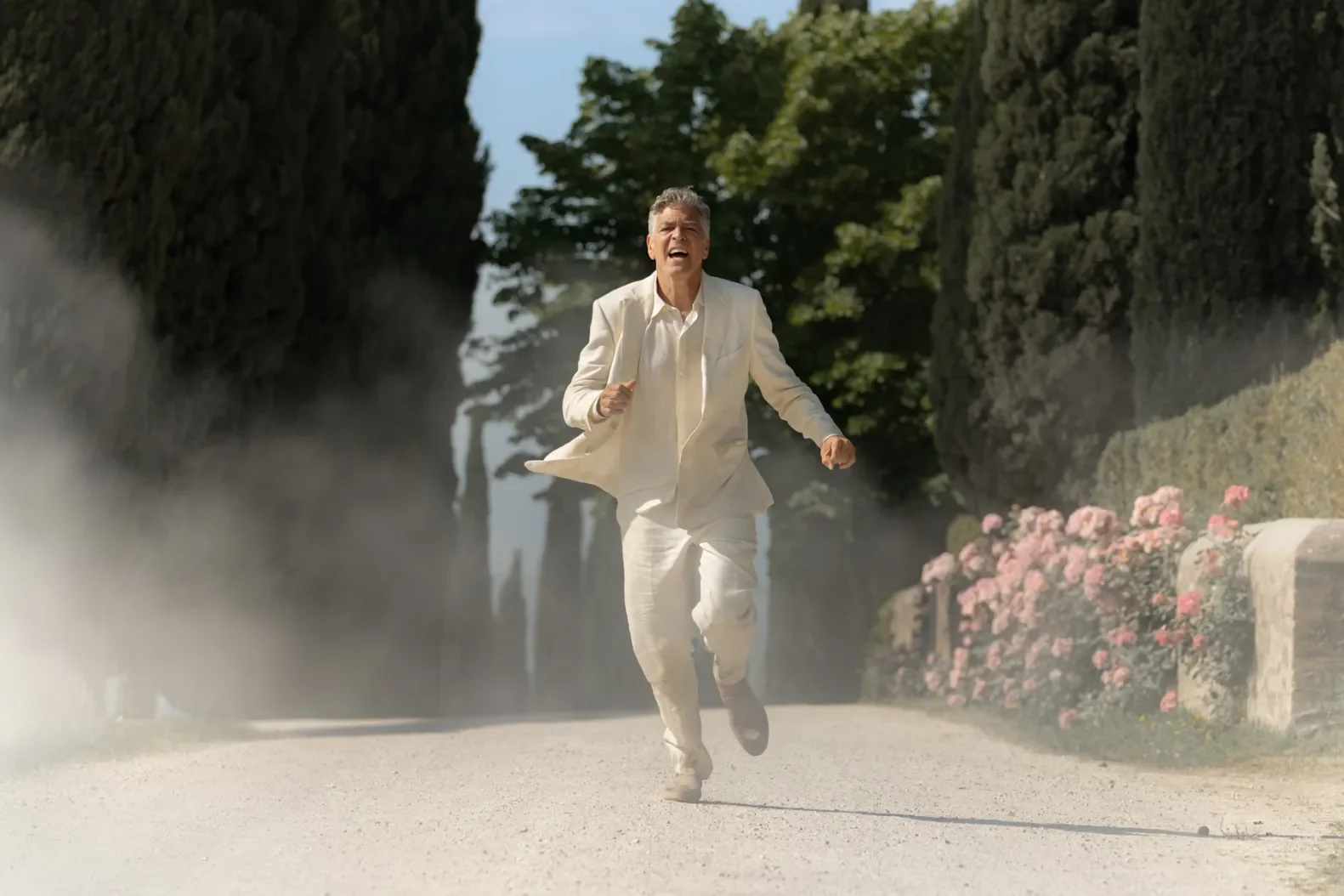
With Jay Kelly Baumbach and his creative collaborators have crafted a gentle, biting character study that, for all its many virtues, ends up more admirable than successful. This is down to Jay Kelly, the character. Specifically, it’s down to Jay’s fundamental hollowness. He’s driven by fear: the fear that the work he’s devoted his life to does not mean anything, the fear that his drive to be a capital letters Movie Star has cost him time and relationships that he cannot recover, the fear that there just is not much to him as a person. His movie star poise keeps him from collapsing into a cataclysmic meltdown, but the slow, leaking dread he lives with instead might be even more toxic in the long run.
Here’s the thing: Jay’s not completely right in his self-diagnosis, but he’s more right than wrong. He’s not a molted shell of a person, but he does lack emotional intelligence. His self-awareness never reaches the point where he’s able to move past asking himself “Do I like myself? Am I content with how I have lived?” and start working to make changes. Consequently, Jay’s character arc stalls for a significant chunk of the film. While its conclusion is strong in isolation, it does not click seamlessly with what’s come before. Clooney’s a terrific scene partner to Jay Kelly’s downright stupendous ensemble, but Jay’s emptiness leaves him without much to work with on his own. Jay Kelly is the core focus of Jay Kelly, but there just is not much to focus on, and the result is a picture that feels at times like it’s going around in circles.
Paradoxically, even as Jay’s emptiness stymies Jay Kelly overall, it’s a key part of why the picture’s best element works so well. Jay’s comparative lack of depth as a character, coupled with the impact he has had on his industry and the people in his life, gives the ensemble a fascinating core to play off of. Sandler, Clooney’s most frequent scene partner in Jay Kelly, goes warm and gentle as Ron. He’s a true believer in his friend’s career and the impact he’s made who has to confront the difference in how he and Jay perceive their relationship, and the fact that being Jay’s champion has had costs, including the end of a major romantic relationship with Dern’s Liz. It’s excellent, lovable work on his part.
Dern, like many of Jay Kelly’s ensemble, uses her comparatively limited screentime to do terrific acting. She and Sandler build a wonderful, complex chemistry as two one-time lovers whose romantic love ended long ago and whose platonic love is complicated by their different perceptions of their work for Jay. They’ve accepted their romance’s end and both found happiness with other partners, but realizing just how close they once were and what might have been had things played out differently still hurts, even as the realization leads to welcome closure.
Keough’s turn as Jessica is another highlight, all the more so for mostly appearing as a voice during her longest scene. She loves Jay, and despite their estrangement she has not cut him out of her life. She has, however, made peace with the fact that her father will never be the dad she desperately wanted and with the fact that Jay is not self-aware enough to understand how and why he let her down. When he does reach out, Jessica already knows that the call will be more about him than about him making things up to her. She works with what she’s got. It’s a strong, understated turn from Keough, one that lingers.
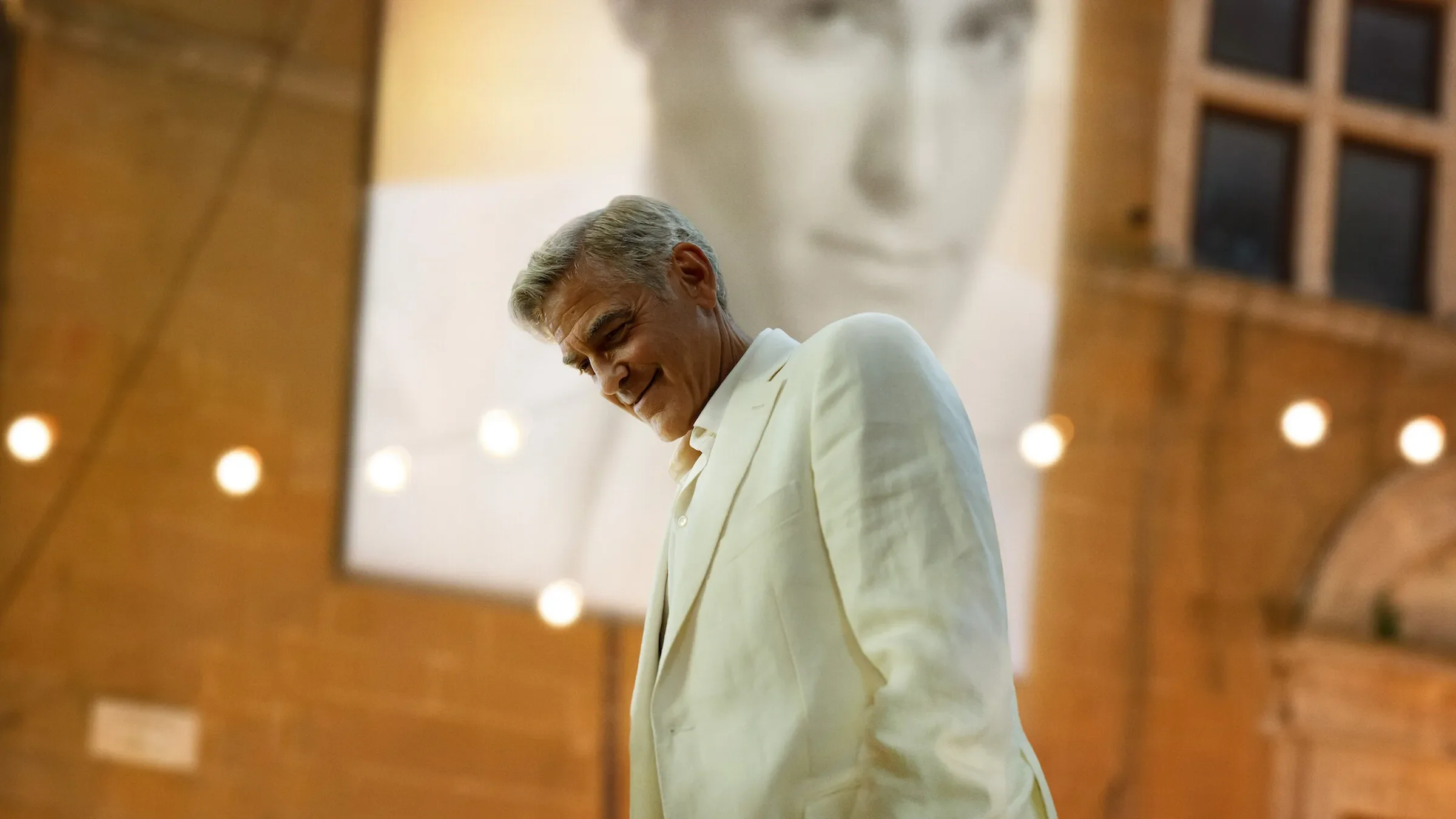
Jay Kelly looks sumptuous, thanks to DP Linus Sundgren and production designer Mark Tildesley. Mortimer and Baumbach’s script features a host of marvelous two-handers, which the cast perform with care and skill. Jay-Kelly-the-character’s writing is frustrating and negatively impacts both Clooney’s performance and the success of Jay-Kelly-the-film’s narrative. Simultaneously, the hollowness that stymies Jay’s arc leads directly to the film’s best scenes. They’re excellent pieces of dramatic composition, well worth seeing, but the film as a whole does not quite cohere. There’s a lot to respect, but ultimately it’s less than the sum of its parts.
If you enjoyed this article, please consider becoming a patron of Hyperreal Film Journal for as low as $3 a month!
Justin Harrison is an essayist and critic based in Austin, Texas. He moved there for school and aims to stay for as long as he can afford it. Depending on the day you ask him, his favorite film is either Army of Shadows, Bring Me the Head of Alfredo Garcia, The Brothers Bloom, Green Room, or something else entirely. He’s a sucker for crime stories. His work, which includes film criticism, comics criticism, and some recent work on video games, can be found HERE.