
Girls Like Girls: A universally relatable tale of young sapphic love
Hayley Kiyoko’s directorial debut, Girls Like Girls, has had quite the storied path to the big screen. The 2015 song of the same name was written as an anthem for girls stealing other girls from boys as a form of counter-programming for all the heteronormative songs about guys stealing girls from other guys. The music video (co-directed by Kiyoko) told a short but effective story of young girls falling in love, and it became a sensation that took on a life of its own. In 2023, Kiyoko released a novel based on the song, and in 2026 it reaches what is likely its final form in a feature-length film, a month after the release of Boots Riley’s riotous I Love Boosters, a title I only mention because it’s clearly a good season for movies based on songs.
The movie drops the viewer into the Summer of 2006 (the same summer your dear critic graduated high school), as 17-year-old Coley (Maya da Costa) rides her bicycle around rural Oregon, recently relocated to live with her estranged musician father Curtis (Zach Braff) in the wake of her mother’s untimely passing. Like most teenagers on the cusp of adulthood, she is uncomfortable and looking to connect with people her age during her last Summer as a minor. At a local diner, she makes friends with a group of kids her age, a few boys and a few girls, but is instantly taken by Sonya (Myra Molloy), a charming, free-spirited girl who has a flirtatious personality despite seemingly having a boyfriend. After the group steals away to a local body of water, the day seems to be spoiled by Sonya’s boyfriend, who dunks Coley in against her will. Sonya gives chase as Coley takes off, writing her AOL Instant Messenger (AIM for those in the know) screen name on Coley’s arm.
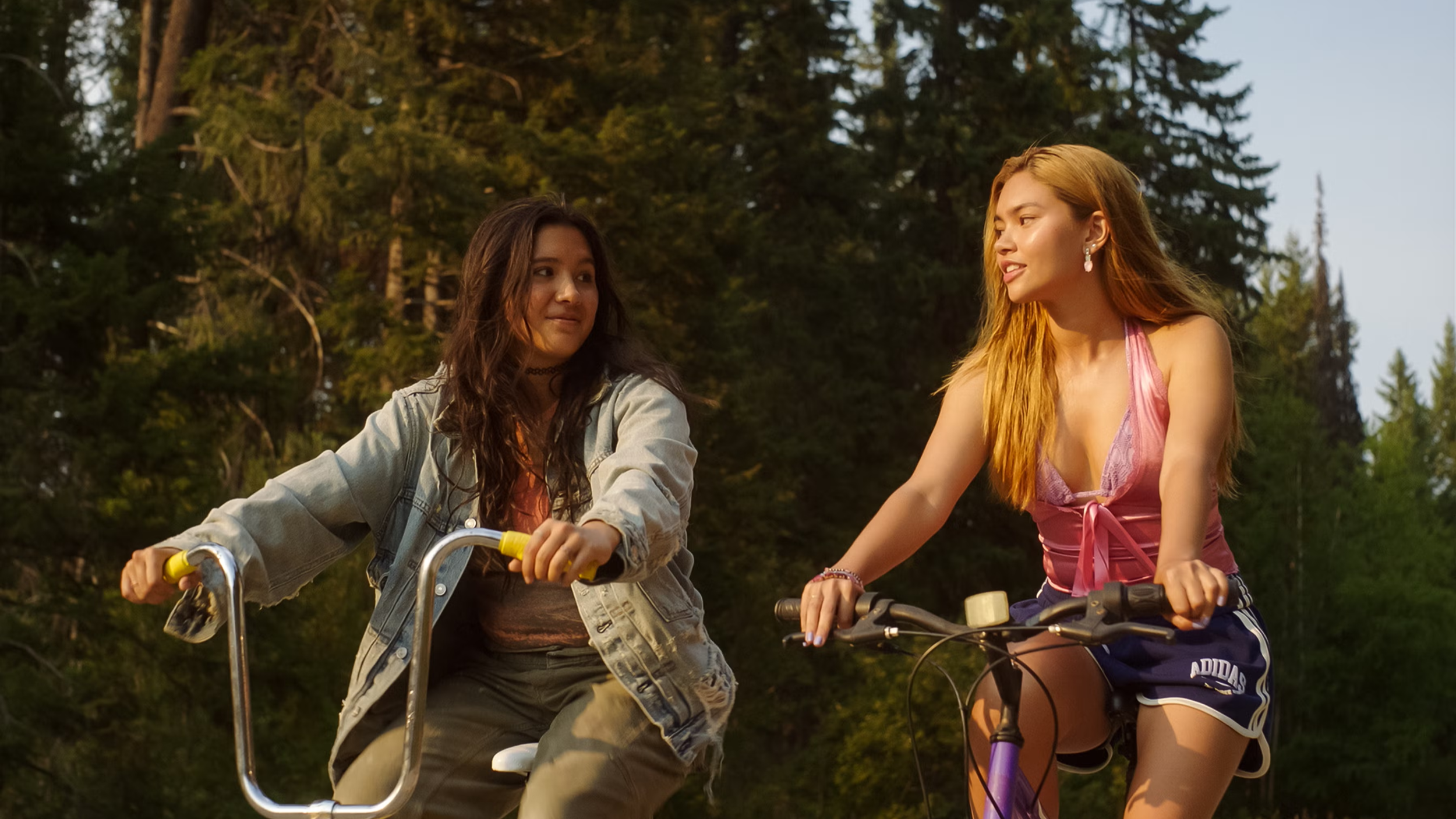
Anyone who came of age around 2006 knows the feeling of falling in love on AIM. The way the heart races when the sound of an opening door announces that the person you’ve been waiting all day to talk to is home and on their computer. The way it sinks when that door slams shut and you have to wait for what seems like forever for them to log back in. A time just before smartphones and constant interconnectivity, as SMS messages were just coming into their own culturally.
Coley lives as a cinematic representation of this point in time, excitedly rushing to her computer to message Sonya every time she hears that door creak. As we get to know Coley, learn that her mother’s death didn’t appear to be self-inflicted, but at the same time it seems like something she could have prevented, and that’s all we need to know. It’s also made quite clear that while she was easy to love, she also wasn’t the easiest to coexist with, neither for Coley or Curtis. It is implied that Sonya may have a stereotypically harsh dance mom, leading her to what is implied bulimia and generally partying a little too hard to cope with the burden she has before she finds herself sent to a dance camp for part of the Summer. Whether they’re present or gone forever, having a mother is tough for these girls.
Then one day, it happens. They start kissing, the kind of kissing that a teenager both never thinks will finally happen and hopes will never end. Sonya even says she loves Coley, in a very roundabout but obvious way. But societal expectations being what they are, their love remains secret. She still has her boyfriend and she doesn’t act any differently around their friends. After all, what would people think? What would her mom think? To Sonya, it’s just not worth the stress. It’s easier to keep getting trashed at parties, being flaky, and playing aloof. After all, she’ll be going to camp any day now, why not just have fun and ride it out until that deadline?
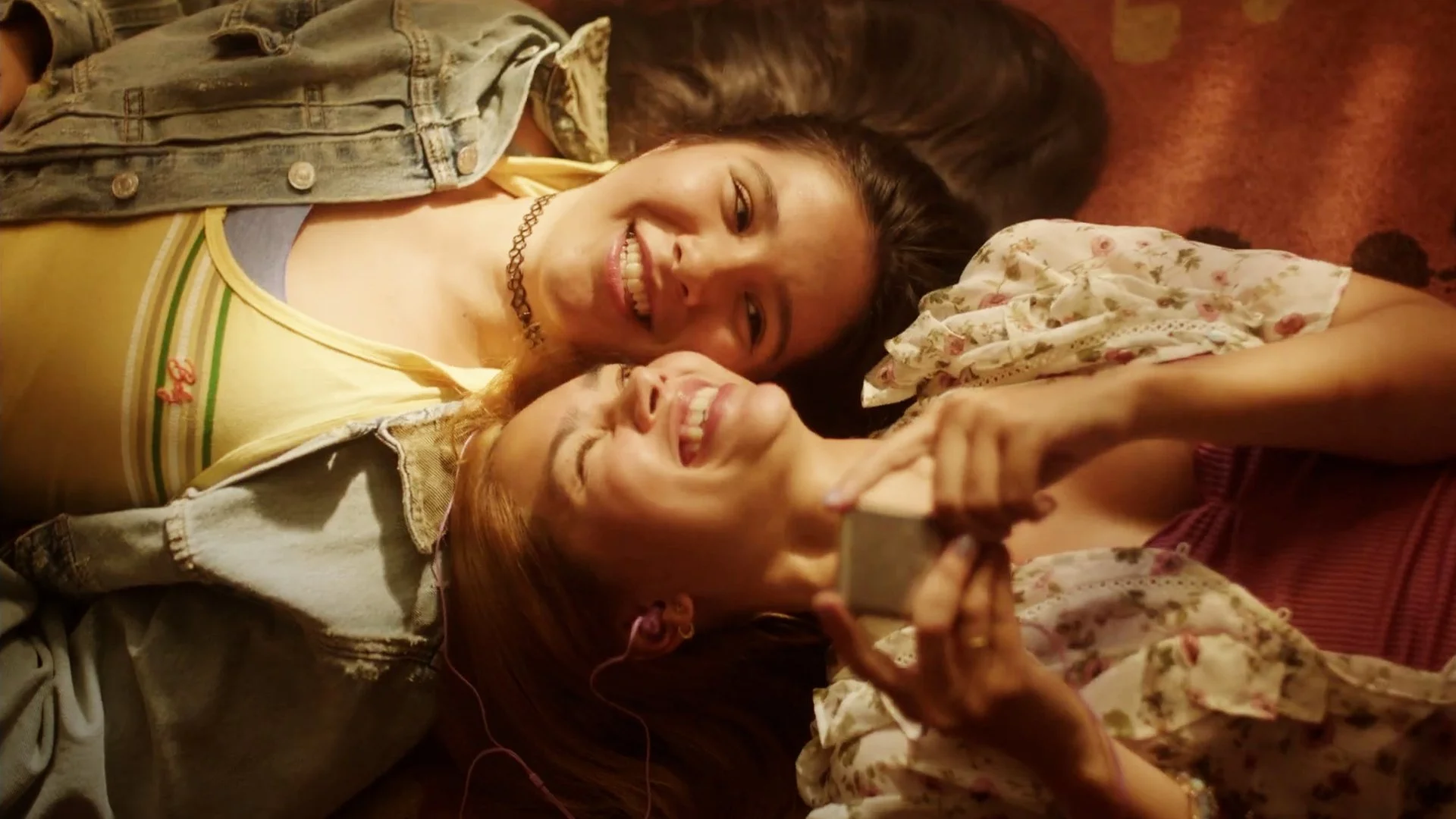
Coley knows she deserves better though. Clearly not having any trouble with her identity (likely a reflection of Kiyoko herself, who says she knew she was a lesbian by the time she was in 6th grade), her dilemma comes from a lifetime of feeling abandoned. Her mother died, her father has only become a factor in her life out of necessity, on the eve of her adulthood, and her first shot at love in this lonely new town has turned into heartbreak.
Everything seems primed for disaster, but then the unexpected happens. Zach Braff becomes the emotional core of this tale of young sapphic love, the rare believable representation of a man who had everything he ever wanted (it’s implied that he was some kind of rock star) and now only wants to do right by his daughter by any means necessary. They bond over her mother as he makes it clear that while he’s the only parent she has left, he’s not going to let her go through things alone, whether it’s a struggle to which he relates or something he can’t possibly fathom. He’s kind, he’s believable, and not once in the story does he waver from this path. It’s a nice course-correction for the guy who directed one of the ultimate Manic Pixie Dreamgirl movies (Garden State).
While it may be considered spoiler territory to some, it is worth noting that, despite all the awkward sadness of queer teenage romance, Girls Like Girls has a happy ending. It isn’t phony, it isn’t unrealistic, and it feels well-earned both by the movie and for an audience where even the most respected cinematic portrayals of gay romance (see: Brokeback Mountain) end in tragedy, a cinematic stereotype so commonly overused that the term “bury your gays” was invented. A happy ending shouldn’t be a surprise, but in the wake of the misery of a show like Euphoria, it can sure feel like one. Teenagers fall in love every day. It’s how it happens that matters. It is also worth noting that audiences will not get the full impact of this ending without staying through the end credits, a beautiful moment that hits harder than any Nick Fury cameo ever could.
The framework of a coming-of-age story is as simple and relatable as it is hard to execute successfully. Everyone is born into a society with expectations and difficulties that are universal, but the individual elements are what shape us. Hayley Kiyoko knows that not everyone watching the movie was a teenage lesbian, but we all were teenagers at one point. We all fought puberty. We all dealt with a world that didn’t understand us in some way. We all longed for someone who wasn’t receptive. And if we were lucky, at some point during those years we got to fall in love for the first time. It’s rarely permanent and it’s usually messy, but that love is one of the most important parts of life, a thing for which nobody should be attacked or persecuted. Sometimes, boys like girls. Sometimes, boys like boys. And sometimes, girls like girls. I like girls, and I like Girls Like Girls. Anyone looking for a heartwarming celebration of queer, youthful romance for Pride should get to a theater to see it as soon as possible, because you’ll like Girls Like Girls like I do.
If you enjoyed this article, please consider becoming a patron of Hyperreal Film Journal for as low as $3 a month!
Jackie Stargrove is a writer, singer, movie host, and the smallest pillar of the Austin film community.