
AFS Program: The Maiku Hama Trilogy, Part II
Note: Austin Film Society presented the Maiku Hama Trilogy in May. We reviewed the first film, The Most Terrible Time In My Life, in the first installment of this series.
Pulp fiction godfather Mickey Spillane debuted his hard-nosed private eye character Mike Hammer in the 1947 novel I, The Jury. Hammer swiftly made it to the big screen, most memorably embodied by Ralph Meeker as an atomic age bruiser in 1954’s Kiss Me Deadly.
In the mid-1990s, Japanese filmmaker Kaizo Hayashi took a crack at the Hammer character in a trilogy of offbeat crime capers. Hepburnized as Maiku Hama, he’s played by Masatoshi Nagase, known at the time for his role in Jim Jarmusch’s Mystery Train (1989). Nagase’s Hama is a bit of a dork and much less proactively violent than Kiss Me Deadly’s all-American chauvinist bully, but he collects a comparable amount of serious injury during the proceedings.
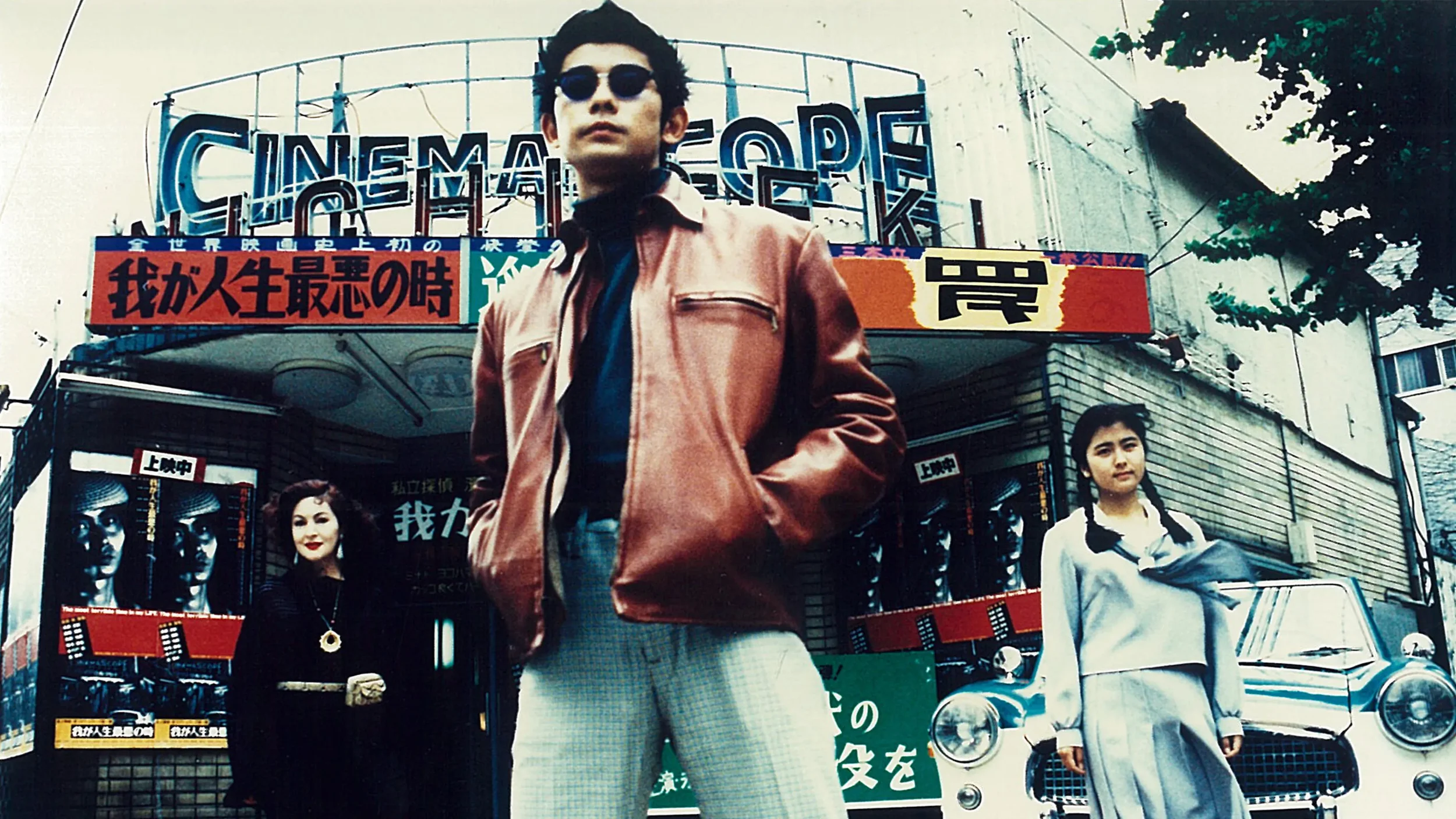
The Stairway to the Distant Past
“Movies sure do well during bad times,” notes the Nichigeki Theater ticket lady at the opening of Kaizo Hayashi’s second outing. The Stairway to the Distant Past (1995) opens with a pleasantly repeated joke from the first film, in which Maiku’s potential client argues with said ticket lady. Whether you’re there for the movie or the private eye upstairs, you gotta buy a ticket.
Maiku’s business is in bad shape; his car has been repo’d and he’s reduced to a lowly dog catcher, running around with a net like a cartoon character. His previous nemesis, gangster Kanno, is now a politician, running for Yokohama city council. “Politics is for making money,” he sneers at his sadistic henchman, played by cult weirdo king Shinya Tsukamoto.
This is a riverfront movie, the setting functioning as a gangland smuggling and escape route, a corrupt locus of wealth and power, and a metaphor for things hidden, clandestine. As Maiku gets involved in a search for the mysterious “White Man” (so named for the color of his trademark suit), he’s forced to reencounter painful truths about his past.
It’s also a big cherry blossom season movie, the floating pink-white buds hinting at themes of impermanence and fleeting beauty. As in The Most Terrible Time in My Life, Hayashi melds the fun caper vibes (including a dynamite jet ski chase) with deep, almost Lynchian atmosphere. As Maiku discovers the literal stairway of the title, a reckoning of Japan’s World War II history surfaces in a surreal hallucination of occupying US soldiers, to mysterious and haunting effect.
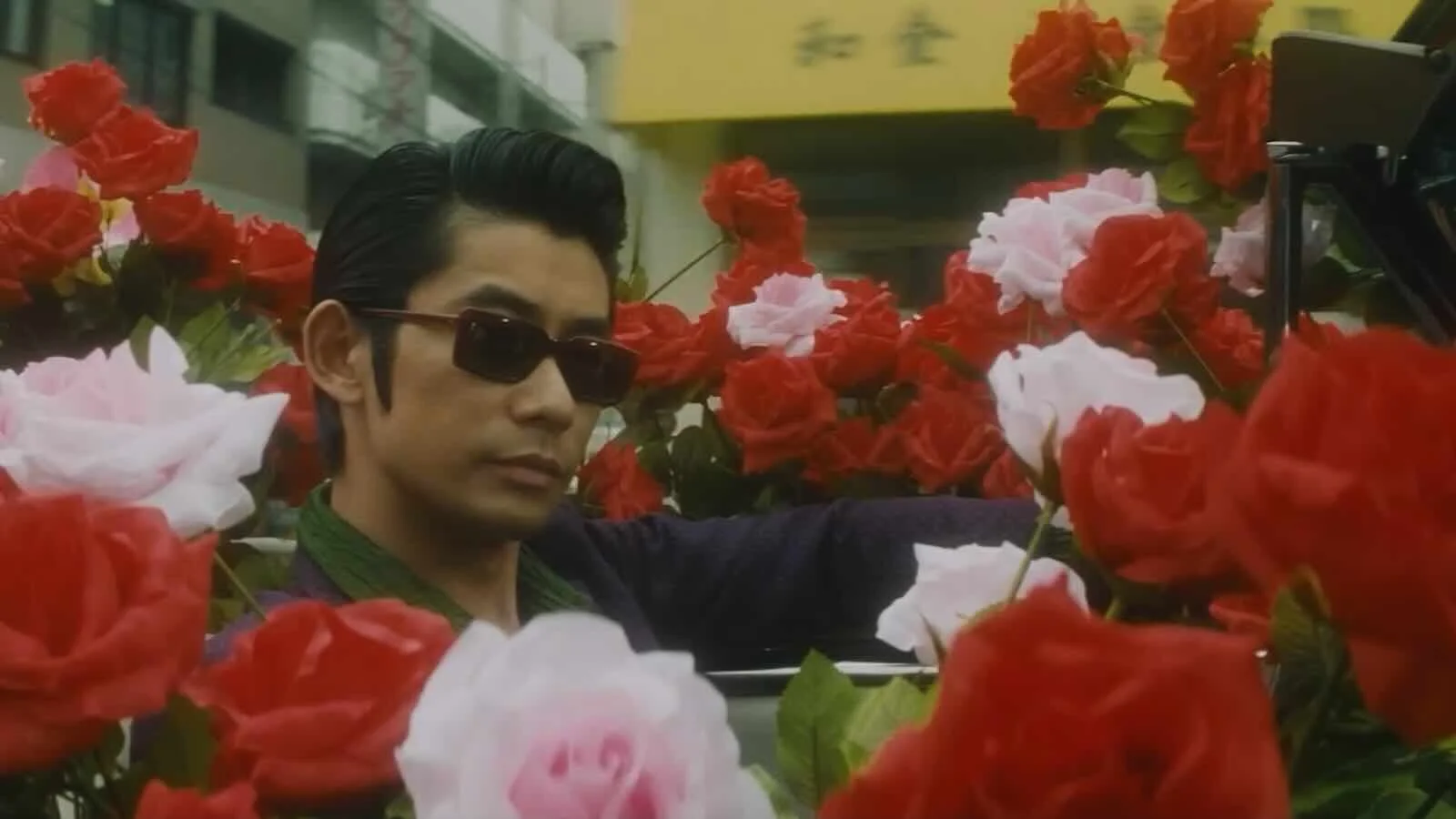
The Trap
Introduced in the titles as “Kaizo Hayashi Last Film” (it’s not), The Trap (1996) opens with the Nichigeki Theater ticket lady pouring over a newspaper. A third murder has been discovered in Yokohama; they’ve all been young women in nice dresses and makeup, their bodies arranged neatly in public spaces, poisoned.
But Maiku is riding high—“The economy is bad, but my business is booming!” he grins, addressing the camera. His little sister and ward Akane has been accepted to a good college. He’s gotten his car back, and grins from behind the wheel through a flower shop’s worth of roses. Maiku is in love!
Naturally the setup is there to be shattered. Maiku’s girlfriend Yuriko is very kawaii, mute (but not deaf) and a church-going Christian. Will she and/or little sis be targeted by the killer? Will Maiku be framed for the killings? The film begins to resemble an old school giallo with its creepy leather masked bad guy, serial killer on the loose, and problematic mentally disabled character who could be victim or villain. The atmospherics are off the chart, but the film suffers from a more overtly confusing plot and slack editing.
The Christianity theme–particularly the self-sacrifice to save others bit–ripples through this strange story. “Trying to save people is a trap,” one dodgy character says, and the film plays with the question the way a cat plays with a mouse. In keeping with previous installments, it’s also full of silly gags, like Maiku’s mentor, the meta character Joe Shishido, dispensing advice from behind one-eyeflap-up sunglasses.
The Trap might be the least essential of the trilogy, its delve into dark psychosexual weirdness a bit of a letdown after the memory-dream emotional depths of Stairway. But it is an effective final big screen outing for Hayashi’s unique vision. If you want even more, check out the 2002 TV series The Private Detective Mike starring Nagase as you know who.
If you enjoyed this article, please consider becoming a patron of Hyperreal Film Journal for as low as $3 a month!
Matthew K. Seidel is a writer and musician living in Austin since 2004. The above selfie was taken in an otherwise empty screening of Heat at 10:30 in the morning. You can find him on Letterboxd @tropesmoker.