
Father Mother Sister Brother: A World of Family Relations
There is a non-eventfulness in family visits that is rarely the central narrative of a film. If we are watching family members get together, it is usually in the context of the “family reunion,” in which a powder keg of drama, comedy, or horror usually explodes. However, the complexity of being around your family, what we choose to share and what we choose to hide, is the rich foundation for all sorts of melodramatic possibilities. In Father Mother Sister Brother, the first film from Jim Jarmusch in over six years, Jarmusch explores this world of, as Tom Waits puts it, “family relations” and how the secrets we keep to ourselves have the power to shape an entire family’s identity as much so as the things we reveal.
Jarmusch structures the anthology film as a triptych: three stories that never connect narratively or geographically. In the first story, “Father,” Jeff and Emily, played by Adam Driver and Mayim Bialik, visit Father, played by Tom Waits, who prepares for their arrival by hiding evidence of his wealth. Jeff and Emily are unaware of the source, or in some ways the existence, of his wealth, so they bring a care package and their company for a little while until Father’s strangeness encourages them to head back home. In the second story, “Mother,” Timothea and Lilith, played by Cate Blanchett and Vicky Krieps, attend their Annual Afternoon Tea with Mother, played by Charlotte Rampling, and attempt the minimum amount of catching up during their only trip to see their mother all year. The third story, “Sister Brother,” follows twins Skye and Billy, played by Indya Moore and Luka Sabbat, as they meet up to see their deceased parents’ home and belongings before they are sold off.
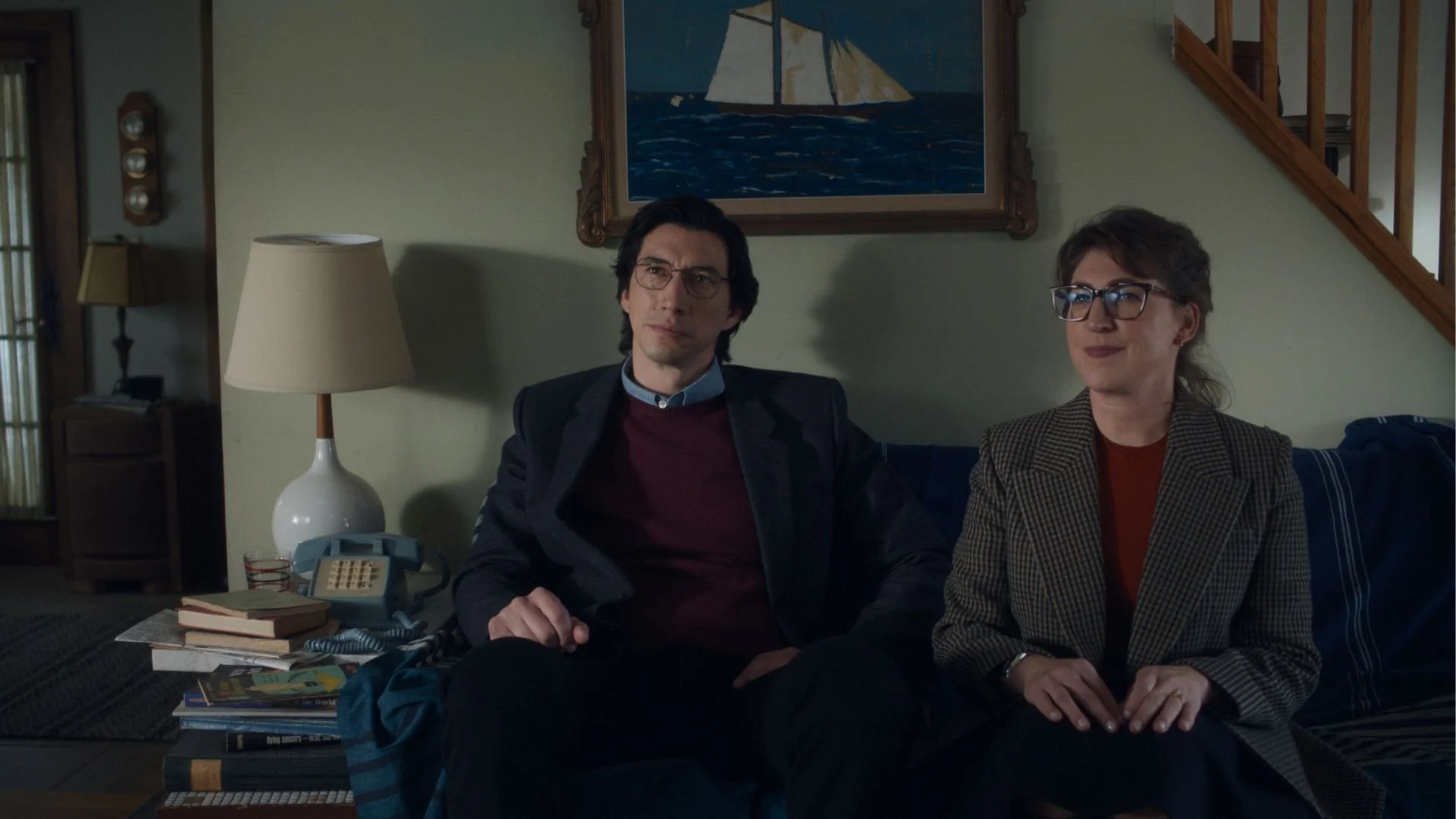
Where these stories find connection and meaning with each other is in Jarmusch’s poetic sensibilities, connecting motifs, behaviors, and objects rather than plot lines.
In Father Mother Sister Brother, secrets about the personal lives of certain characters, the lack of forthright admission or the inaccessibility of the secret itself, become central to the stories. In Father, Tom Waits’s undisclosed wealth, a reality he chooses to hide actively from his family, creates a rift in connection between him and his children. While Jeff chooses to continue supporting him, Emily shares privately with Jeff that she stopped offering him cash under the suspicion that he wasn’t telling the truth about its use. In Mother, Lilith’s financial struggles, and possibly her romantic partner as well, are not topics of honest discussion as she pretends to be in a good place money-wise, until she needs her mom to call her an Uber home. Like Jeff and Emily in the previous story, Lilith confides somewhat with Timothea, but not as much in the presence of Mother, leading to an incredibly awkward Afternoon Tea without any resolution of the inherent tension. In Sister Brother, while Skye and Billy hide nothing from each other, secrets still permeate their time together in the form of the objects from their deceased parents’ estate. Looking through pictures, old documents, and valuable items, Skye and Billy discover things about their parents’ lives that they never revealed during their time on Earth. These secrets, manifested as a massive storage filled with their parents belongings, represents the wealth of things they might find out, or might never know, about who their parents were.
Jarmusch uses two primary character traits throughout the film to connect the stories and their secrets. The presence of a quote shared between the stories, a meandering story hiding a secret that ends with the saying “and Bob’s your uncle” puts forward the idea that the way these three separate families are more similar than different, despite their geographical and socioeconomic origins. While played with a certain comedic tone, this common idiom about obvious knowledge sticks out in a film filled with hidden knowledge. The ownership of a Rolex watch is used to identify the character hiding something from the others. Father’s Rolex, that he suggests is a fake, accidentally reveals a wellspring of financial well-being that he is desperate to hide from his kids. Lilith’s Rolex, which is probably a fake based on her lie, is the status symbol of her alleged wealth that she flaunts at the Afternoon Tea table. In Sister Brother, while searching through their parent’s stuff, Billy uncovers a Rolex from their dad’s collection, another thing their parents wouldn’t share with their children for reasons unknown.
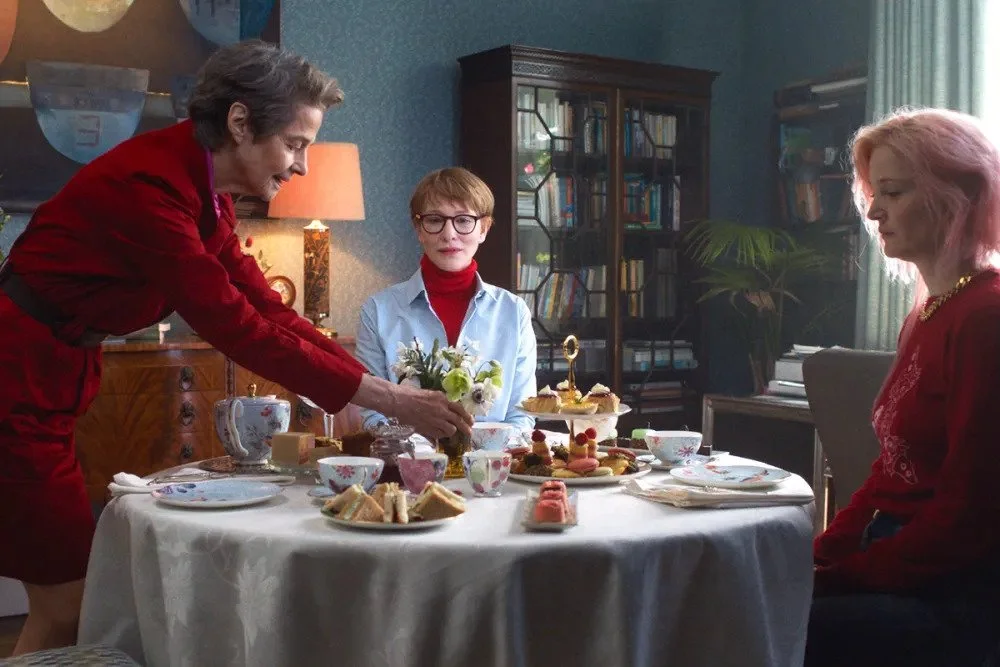
Connecting these stories through seemingly mundane things like the ownership of objects and the knowing of idioms is where the playfulness of Jarmusch resonates in this particular film. While his other films tend to have wilder premises, more captivating motifs, and a wider variety of interesting characters from all around the sociocultural strata, his reserved approach here captivates in the absence of drama. He reorients the classic “explosive family reunion” by flipping it on its head, presenting characters that are just as worried about not revealing their own secrets as they are about not being too prodding about each other’s perceived alternate lives. Mother in the second chapter has an entire career as a romantic novelist that she refuses to share with her children, implying that these stories might be connected to her own love life and the lack of a partner featured in that story. Father from the first story suffered from a recent public psychological episode during his wife’s funeral, but he insists that he is fine, despite this episode being the reason for his perceived financial problems. Both sets of siblings in the first two stories share more between each other in private, but they also have their own unspoken disconnect that can only be implied in Jarmusch’s direction: tragic glances, not responding to direct questions, and the felt relational distance when reconnecting. The only truly open relationship in the film is between the twins, but that’s because the loss of their parents has given them an unfiltered emotional line to connect through and their own sense of biological sameness (comments about their shared twin existence come up throughout their story).
The result of this obsession with the implied and unspoken is that Jim Jarmusch’s return to feature filmmaking arrives with, not a bang, but a lit fuse. Returning to the anthology format, Jarmusch uses the shortness of these episodes to communicate the few ideas he wants to focus on without feeling drawn too thin over a feature length. An expert of the short-and-sweet episode, he risks boring the audience with the slow droning anxiety of “family relations” and obvious repetitions, but all in the search of something deeper that the audience can find in these very life-like characters and their relatable family issues. I believe Jarmusch has something to say that’s very true about our unchosen family. The secrets we keep eventually become powder kegs as they follow us everywhere, being lugged over visit after visit until they explode at an inopportune moment, but before then they are massive weights that impact every question asked, every answer revealed, and every time we put on our Rolex.
If you enjoyed this article, please consider becoming a patron of Hyperreal Film Journal for as low as $3 a month!
This is Dylan Samuel. If you see him, say “hello.”