
Weird Wednesdays: Dead Bang
This screening was part of the Alamo Drafthouse’s Weird Wednesday series. For upcoming shows, click here.
Have you ever watched Die Hard and thought to yourself: this needs to be more ordinary?
In Dead Bang, Don Johnson’s Jerry Beck isn’t a wisecracking action hero like John McClane; he’s exhausted, bureaucratically constrained, and emotionally numb. The movie keeps reminding you that this is a job, not an adventure. He’s got bigger fish to fry, it seems.
At a glance, it looks like Dead Bang wants in on the eternal “Is Die Hard a Christmas movie?” debate. There’s the cop, the holiday backdrop, and the subtle insistence that violence pairs nicely with snowfall. And Beck isn’t just any cop, but a self-destructive, vice-ridden jabroni who loves to sit in a deep squat during investigations–and seems to reserve eye contact strictly for shadows moving across the floor. These elements predicate a sort of copy-and-paste from the aforementioned prior year’s blockbuster. What we get instead is something quieter and stranger, and frankly equally engaging. You don’t watch Dead Bang for adrenaline so much as endurance, vindication, and maybe a slow-building pity for Beck, since he clearly isn’t extending any to himself.
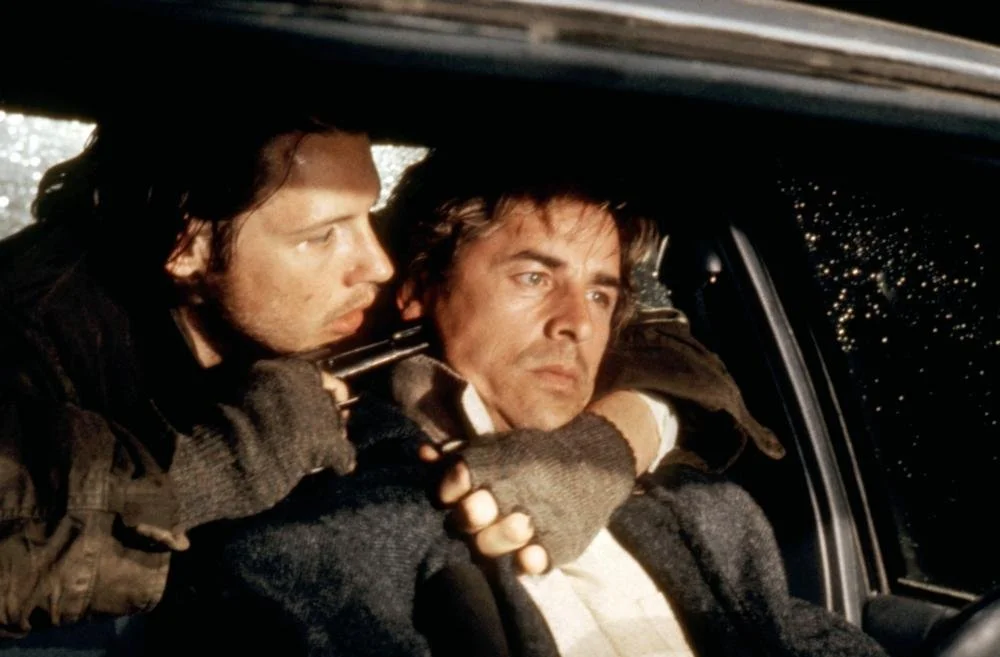
The film’s restraint ends up working in its favor. As I settled into it, I appreciated the way the performances balance corniness, headstrong resolve, and grounded realism without drifting into parody or self-importance (two things that 80’s films are ripe with). And admittedly, with a Miami Vice veteran at the helm, you brace yourself for impact. But the script keeps emotional beats short, and Beck has an impressive habit of reeling himself in, often replacing the aggression you expect from this kind of character with wry disapproval–dare I say a delightful snark?–instead. I found that oddly refreshing, even if there were moments where it risks being a little muted.
Watching it with its 1989 release date in mind, it’s hard not to notice where Dead Bang sits historically. For context, the plot spirals from a string of murders one evening in Los Angeles, including that of a Black shop owner and a nearby patrol officer, in quick succession. At first glance, the violence is unexceptional and arbitrary (at least by the standards set for late-night robberies). But investigative efforts led by Beck quickly reveal that the perpetrator is affiliated with a white supremacist organization fixated on “cleansing racial impurities,” and the case is busted wide open. Now, this is a period when the recruitment of Hollywood villains was turning inward, as the Cold War wrapped up and the Soviets stopped getting cast as the default bad guys. Domestic extremism filled that gap. Groups like Aryan Nations had become recognizable symbols of American neo-Nazism, and Dead Bang responds to that moment. It coincides with adjacent films like Wanted: Dead or Alive and Best Seller in its rebuke of Nazis, but approaches them in a way that felt different to me.
The Nazis here aren’t subtle or symbolic. They show up early, armed and dangerous, treated as a concrete local problem rather than an abstract one. I liked that the film doesn’t try to make them more interesting than they need to be. Their extremism is handled procedurally–surveillance, informants, raids, sudden bursts of violence–without lingering on speeches or psychology. They’re dangerous, but they’re not glorified, and that choice is deliberate.
That same detachment carries through the rest of the movie. Dead Bang looks like a late-’80s action film, but the bravado just isn’t there. At times, I found myself wishing for a bit more momentum, but that restraint also keeps the movie from tipping into fantasy. When action does erupt, it occurs less like a release and more like something that was always going to happen.
There’s no sense that Beck enjoys any of it–honestly, I don’t think Beck enjoys anything. Even his most decisive moments feel like obligations rather than triumphs. I wouldn’t describe the action as thrilling, exactly, but it works in a way that feels consistent with the character and the film’s overall mood.
What really stayed with me, though, was how little seems to rattle Beck emotionally. His personal life–a divorce, a restraining order, the general grind of disappointment–are heavier to him than the white supremacists he’s chasing. Compared to that kind of domestic failure, the larger ideological threat barely seems worth getting worked up over. Beck just keeps moving. He compartmentalizes everything with an ease that appears less heroic than practiced–and frankly, I have never related to an on-screen character more. I wasn’t watching an action hero so much as someone who has learned, maybe too well, how to keep aspects of his life from touching.
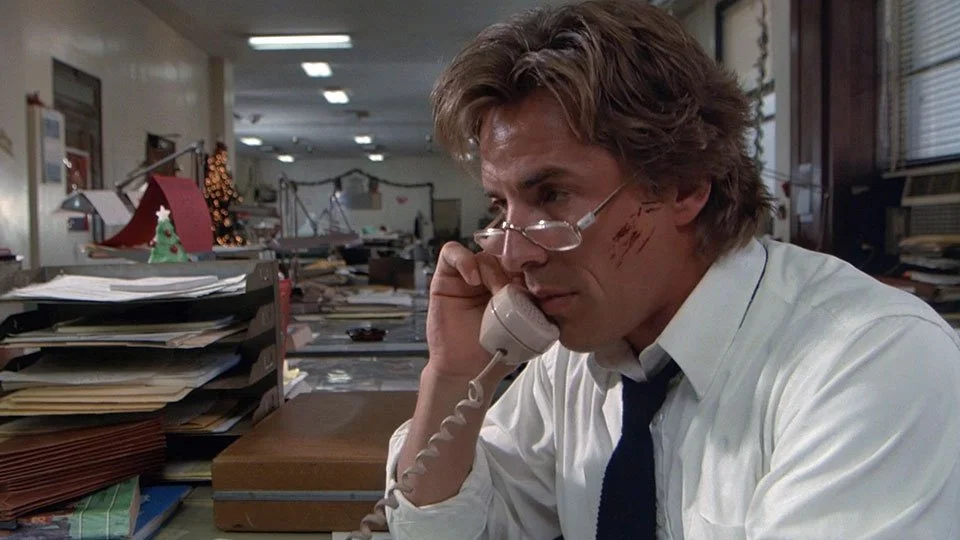
A moment between Beck and Linda (who is not only Beck’s potential love interest throughout the film, but also happens to be the former lover of the first victim) is a sticking point. Her sleeping with Beck to push him to “find the man who killed Gary” hits a nerve that has nothing to do with plot mechanics. When Beck snaps back with something like, “I was already doing that,” it lands with a very specific frustration–the feeling of being told to do the thing you’re already doing, just louder and with more emotional leverage. This is a frustration that anybody with a micro-managing boss or parent has experienced.
Speaking of Linda, can we acknowledge the boldness of her opening line to Beck, “First Christmas away from home?” (alluding to his very recent marital upheaval)? Talk about getting right into the nitty-gritty of your prospect’s baggage. Earlier in the film, too, the audience can similarly appreciate a convenience store manager’s cut-to-the-chase greeting of, “If you want a Slurpee, you're out of luck.” Clearly this guy has never worked in hospitality before–or by that same token, maybe has been working in hospitality for far too long. In any case, one wonders: in this town, what has happened to, “Hello, how are you?”
Anyway, one aspect of Dead Bang that I ended up enjoying more than expected was Bob Balaban’s minor role as parole officer Elliot Webley. Coming to the movie with Balaban’s gentler, often ironic roles in mind (Moonrise Kingdom, Waiting for Guffman), his presence initially felt like a tonal shift for the actor.
The character’s humor doesn’t come from incompetence or buffoonery; it comes from composure which is downright amusing. Where Beck bristles, Webley explains. Where Beck threatens, Webley counters. He speaks with the confidence of someone who genuinely believes that everything–including neo-Nazi violence–can be handled through procedure, language, mediation, and polite insistence. Where Beck is frayed and worn down, Webley is oddly chipper, organized, and keenly invested in the routines of the job (or cardio). He’s less concerned with big threats or ideology than with schedules, shopping errands, and whatever questionable poop-brown tracksuit he happened to pull on that day. He assumes a quirky, human presence that makes him memorable in a way the film seems happy to indulge. He is the embodiment of bureaucracy, offering a classic team-up with the lead. I found myself smiling during his scenes, not only because they were funny, but because they seemingly brought down the overall stakes of the movie. Whereas a typical solution for comic relief might be to jam the script with sardonic, sarcastic quips by a sassy police force, the role of Webley felt like a successful use of humor to form a full character.
Lastly, I would be remiss not to say what we’re all thinking: the script has a fondness for SAT-prep vocabulary. Words like “glib,” “aegis,” “auspice” and “capering” jumped off the screen and hit me like cold water, even in the context of the pretentious character’s speaking them. The only time I’ve encountered the word “glib” was doing the NYT Crossword.
By the end, I wasn’t so much impressed by Dead Bang as quietly stuck with it. It keeps hinting that it might turn into something louder or more cathartic, then never quite gets around to doing that. Instead, its events just sort of carry on. Beck survives, the system mostly functions, and nobody learns a big lesson. Beck still has his restraining order, and nothing indicates he took up Webley’s advice to go to AA, either. Your mileage may vary, but I appreciated the commitment to that low-grade endurance.
The film offers an exchange that captures that weariness perfectly:
“Who the hell are you to judge me?”
“I don’t know – who the hell do I have to be?”
Also: we need more Christmas blimps.
If you enjoyed this article, please consider becoming a patron of Hyperreal Film Journal for as low as $3 a month!
Zak is an Austin-based film enthusiast with a soft spot for genre movies and frequent flyer of Weird Wednesdays.