
Vicious: Horror 101
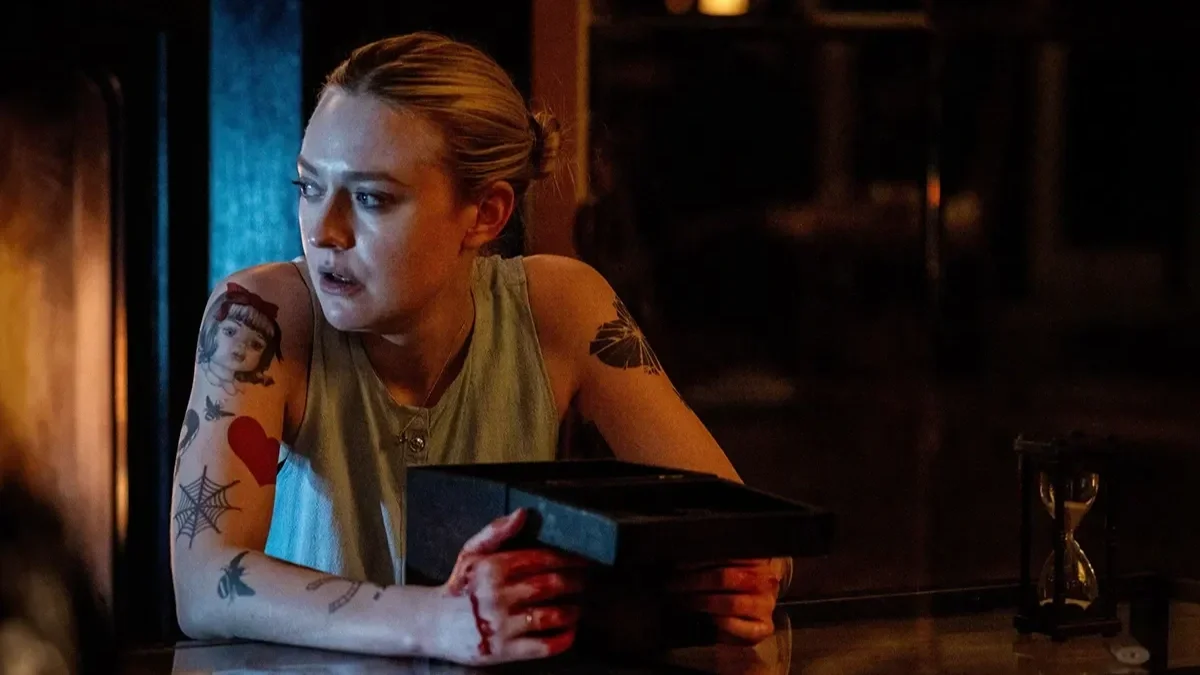
Outside of a typically strong performance by Dakota Fanning, there’s little to recommend in Vicious, writer-director Bryan Bertino’s latest horror flick (following The Strangers and The Dark and the Wicked, among others). The film takes place over the course of a single night, as Fanning’s Polly—a young woman whose troubles are evinced through a messy house, devastatingly bad sleeve tattoos and multiple unanswered voicemails on her phone—fights for her life against mysterious forces.
The film starts with two hallmarks of scary movies: an old woman with a box, arriving on Polly’s doorstep one winter night in a state of apparent confusion. Polly, concerned for the woman’s wellbeing, invites her in from the cold. But when the woman (Kathryn Hunter) tells Polly she’ll die by the end of the night and tries to give her the box, Polly throws them both back out on the street.
What follows is an increasingly muddled series of events that feel less like a cohesive plot and more like Bertino throwing horror tropes at the wall in the hopes one will stick. As the night deepens, a demonic presence starts tailing Polly around the house, impersonating her mother (nameless, voiced by Mary McComarck) and telling her she will in fact die unless she places three things—something she hates, something she needs, and something she loves—in the box, which has mysteriously reappeared in her house. Bertino uses this opportunity to wedge in some family and religious trauma via Polly’s dead dad and dead brother, both also impersonated by the malevolent forces—but added together with Polly’s drinking problem, career troubles, and difficult relationship with her mom and sister, it’s too much backstory with too little substance.
The horror itself lacks a punch, too. There’s some requisite jump scares via those demonic presences, but it doesn’t seem as though they can actually harm Polly, and an overbearing, plinking piano score does nothing to build the tension leading up to those scenes. That lack of tension permeates the entire movie outside of a few effective instances of self-inflicted gore.
Vicious is lucky to have Fanning, especially as it’s essentially a one-woman show. She brings a sense of interiority to her character that the script otherwise does not, whether she’s delivering vulnerable monologues or facing off against her own mirrored reflection. But as Bertino hits both us and Polly over the head with his heavy-handed themes of self-loathing and free will, even Fanning can’t save the movie from itself.
Alix is the editor-in-chief for Hyperreal Film Journal. You can find her on Letterboxd and IG at @alixfm.