
HFC @ HCAF ‘25: An Interview with Jake Binstock, Parker Rouse, and Andrew Caplan the Filmmakers behind The Wasps
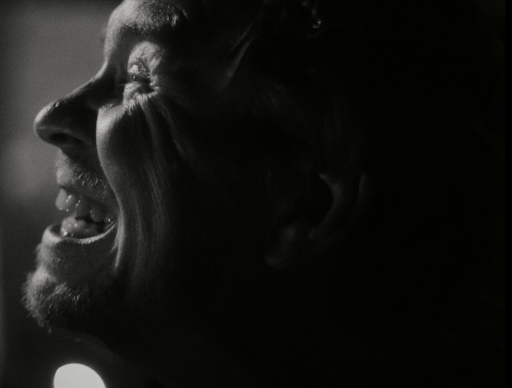
Today we sat down with Jake Binstock, Parker Rouse, and Andrew Caplan, the co-directors and producers of The Wasps. Shot in an Austin backyard, but set in ancient Athens, this adaptation of a 2000 year old Greek comedy tells the story of a son who is forced to parent his crazy, conservative father and the complications that arise when his drinking buddies come to rescue him. We talk about the power of adaptation in indie filmmaking, the preservation of comedy, and working with Richard Linklater.
The film screened at the Houston Cinema Arts Festival, which is where this interview was conducted. It is returning to the Austin Film Society on January 10th, and then back to Houston at the River Oaks Theater on a January date that is currently TBD.
The following conversation has been edited for length and clarity.
HFC: I always like to start with what was the genesis of this movie? What was that initial spark that got the script going?
JB: Sure, so we had been working on this other original script for a long time, and it just required a huge budget. That was the first project we got Linklater involved in, but the budget was way too ambitious for us to be able to secure. So, we were hustling that script for about a year and couldn't get the money. We went back to Rick and just kind of asked him, “What should we do? We can't get the money for this.” His advice was just, “all I can tell you is, do what I did, try to put together $40,000 from a couple relatives, and I'll help you out a little bit and do it that way.” When I first moved to Austin, for a long time, I was waiting to find work and was just reading all these ancient Greek plays. That was a thing that was lodged in the back of my head for a while, like, oh, it'd be really cool to kind of bring this to the screen someday. They're obviously period pieces, but after we had that conversation with Rick, Parker and I got together and the idea came up of taking a look at these plays. They're usually one location, fifteen actors, and it's not really in us to just not be incredibly over-ambitious. So that was an early spark, and we wanted to get back in touch with the sort of immaturity of our younger days. Eventually, we landed on The Wasps, and the characters just kind of jumped through the page. The ideas, the relationship dynamics, the generational divide, all that stuff, all those themes, really immediately just spoke to us, and then we just started running with it. Originally, it was going to be a two parter, a comedy and a tragedy. So we shot the comedy, but then once we were editing, it just sort of made sense to let the film speak for itself and just be a comedy rather than this two part, three hour piece.
PR: I think, sometimes, when you're trying to figure out what to do as a feature, you have lots of different ideas, and then it really is just like, “Okay, which one do we commit to?” Because we were saying back then, “If we do this, it is going to be the next year of our life.” That was three years ago.
What about like from a producing standpoint? When you see something that's adapted from Aristophanes, what does that look like?
AC: I was coming from a unique position, because I was fresh out of college and unemployed and I just accepted a full time job. Jake gives me a call on the phone, and he's like, “Hey, [do you] want to come to Austin for three months and make a movie with us?” I was like, “Yeah, actually, I'm not going to show up to work in two weeks, I'm gonna do this instead, because this is a once in a lifetime opportunity.” When I came on board, we didn't have any money, and there were a couple different versions of the movie that we could have made. Jake and Parker were okay with making a version where they were starring in and directing it, and it was a $0 budget. When I came on board, I was like, “Look, if I'm moving to Austin for three months, we're not fucking around, we're doing the whole thing.” The first time I read it [the script], it didn't fully click with me. I kept coming back to it and started to catch all those humorous little beats that are in there, kind of tucked away. Jake and Parker did a really good job of bringing out the humor and political relevance that's archaic, but still holds true.
I was interested in that idea of adaptation within comedy. You have old, ancient texts that can't really be changed. How do you find your modern sensibilities within those margins?
PR: Something that appealed to us about it was that some of the comedy felt really modern or translated really well. Maybe that's because some of the things that were funny then are still funny now, crude humor is just eternal, apparently. That was interesting to us, that it didn't need to be adapted that much. There were a lot of references that we condensed and took out because it was just too complicated. Then there were certain jokes that were really good jokes, and then there were other jokes that were so weird. Which were funny to us, but not in the same way
JB: The obscurity of a lot of the humor and the references that are completely lost to time were sort of funny in a very inside joke kind of way. That was something that was exciting for us to try to uphold while still bringing clarity to it. I also just watched Joel Coen’s Macbeth, so there was something that I really found fascinating about just sticking as close to the original language as possible. Obviously, we're not [speaking] in ancient Greek. It's kind of through the tradition of British translation throughout the 20th century. I think that sticking to the original story, having it take place there, rather than modernizing it, and trying to find that balance, allowed us to find the jokes that popped the most. Letting comedy be the guiding force.
That also speaks to the fact that it’s a period piece. Because it's a period piece, you want to chase authenticity, but comedy is often betraying the audience, subverting their expectations. Where do you find that line between period adaptation and comedic storytelling?
PR: It is a period piece, but we were also making it on a micro budget, so we knew there was going to be an element of staginess, where it wouldn't be 1,000% authentic, it would be like 75% authentic, and then the other 25% that added to the comedy. We could have a rubber dildo in there when they would have had a wooden dildo.
AC: Silicone.
PR: Excuse me, 100% silicone. There were a few anachronisms that we embraced, and we used a trash can lid as a shield and a few things. Weirdly, people never mentioned any of that stuff.
JB: Well, I think another thing too, is we casted it early. We treated the rehearsals like it was a play, so when we were rehearsing with the cast for three weeks, we were trying to also meld the dialogue to the voices of the actors. Certain actors in the film have more of a modern sensibility, so certain characters kind of became more modern and anachronistic, just to lend to the authenticity of the performance.
PR: We actually modernized a couple things. There's a lot of discussion in the play using the word “monarchist”, because we were working from early 20th century British translations.
JB: We updated “monarchist” to “facists”
As a producer [to Andrew], you are their first audience member, right? How do you help them both maintain their vision and also not sprawl out?
AC: I think one of the roles I played quite a bit throughout their editing process was them showing me a draft, and I'd just be like, “What the fuck does this even mean?” And I would really push that button as much as possible. They would concede some things and then stay strong on other things. I was pressure testing throughout the process. Ultimately, my job is to bring their vision to life, so I’m going to try and bring about the best product possible.
JB: I think that even applied in the writing process too. You know, we were doing everything at the same time. We were casting, building the set, raising the money, and we were also reworking the script. Andrew would be around during our script writing sessions and occasionally he would pop in and throw out an idea for a line, and it would stick sometimes. It wasn’t just in the editing process, but in pre-production and during production.
AC: Through that interaction, is kind of how the footnotes came about. I would be asking a question about some obscure reference, and I think eventually we were just like, “Why not just add footnotes into the actual movie itself for the audience?” A lot of the references that are being made are lost to time, and throughout the movie, you see these footnotes that kind of hit that on the head a bit.
You've mentioned a three month timeline for it, how do you maintain a sense of absurdity throughout that? And how do you find people that are willing to buy into that absurdity?
JB: I think it's the manic, energetic force of making a film. It's sort of just corralling people through pure passion. I think a lot of people who are a part of it didn't quite see it until the cameras were rolling.
PR: I think a lot of the actors, even after they were cast, were kind of looking at each other like, “What did we sign up for?” Then, when we did a table read with all the actors, we had our lead, Dale Dobson at the table read on Zoom. He's a really talented actor, and I think he just brought so much life and passion to the first cold read that all the other actors were looking around at each other being like, “Oh my God, this feels like a movie.” That's where it first came to life, and people understood the script a little more.
JB: I think also, it got more and more absurd as the process went on. There were versions earlier on where we were thinking about it as a more low key, more Italian/Pasolini/art house kind of thing. That is still in there, but once we started rolling, and this was a moment very early in the shoot, Parker and I looked at each other and we're like, “Let's just keep turning it up.” We just kept going bigger and bigger and bigger, and, while on the line of scrimmage during a production, everyone's going the same direction.
I know you guys all have experience in more short form visual mediums, music videos, short films, mosaics, right? How does that work help define the visual language of a longer form project, like a feature film?
JB: Honestly, we kind of just followed the material. You try to let your experience drift into the back of your subconscious and just go on instinct. It was a very intuitive and instinctive process. We weren't necessarily thinking about what we had done or where we were coming from, just what makes sense to this. We really wanted it to be in a void, unlike anything else and unlike even our own past work, and it really is pretty different from anything we had done up to that point.
PR: I think, because we were conceiving it as a counterpoint to the more serious second half of what was going to be a double feature, that made a little more sense to our previous work. It was this kind of postmodern idea of putting two opposite stories next to each other, so then the silliness of this was intended to counterpoint that more serious thing. That was nice because it allowed us to relax and take ourselves less seriously.
AC: I think to an extent, no matter the scale of the project, you kind of have to have horse blinders on. We all had these insane running to-do lists, and we were just focused on getting through the day. We just kept doing that and doing that until it was production, and then we did that during production, and then it was the same thing during post-production. It was kind of taking things in bite sized pieces one at a time. Because, I think if you look at a project like a feature film as a whole, and then you try to take that all in at once, you're gonna be too defeated to even start. If you think about what we went through, step by step during production, it's nauseating to think about the amount of work that we put into it. Literally, it was day-by-day, the three of us just grinding away until It was done. And you're doing that whether it's a short film or a feature. It's just that the timeline is shorter on a short form project.
You've talked about how the film changed a lot, did you find this to be a very malleable film? Like throughout the stage of production, was that the writing was one way, and then during the shooting, you were making a whole different thing, and then the editing, it was another film entirely?
JB: A film sort of has to evolve at every stage to keep that sort of beating heart, while still trying to honor the original initial seed. You want to write it as well as you can, and then bring in the actors, and then let them take it up another notch. Then when you're shooting, let the DP and the production designers and everyone else just sort of keep taking it up another level. The more people you bring in, the more voices you hear, the more ideas that come out.
PR: Also at the micro budget scale, there's so much out of your control. If you're not going to embrace the chaos and the change, you're going to end up with something that's not good. You’ve got to see what's working and go with that, because you don't have the choice to stick to exactly what you originally thought.
JB: Editing, too, is a big one, where you want to almost throw a bomb at the movie. But that's where stuff like the footnotes comes out, and the archival stock footage.
AC: I will say, also, it did require a sense of rigidity from you guys. The shot lists and the shooting schedule had to be pretty locked down, because the timeline that we were shooting on was so tight. There was no wiggle room. You guys had prepared to such an extent that there were certain things that had to be locked in. The preparation was extremely important to be able to shoot in the timeframe that we did.
I like the idea of North Star images. These images you have in your mind, either when you start writing the script, or when you come up with a concept, or when you read the script for the first time. Did you guys have any North Star images for this movie?
PR: [to Jake] I think one you had got cut from the movie.
JB: For me, it was a line. It was an introduction of a character where they pop out of a chimney and say, “I'm just a puff of smoke.” And that was when I was reading the play for the first time. That was a line that just immediately grabbed me where I'm like, “Oh, I see this character completely.” But I think another one for you [to Parker], is just the dildos crashing into each other as a character leaps out and makes this shape in the air. That was one early on that came out, it's not in the play, it's not in the text, it was just coming up with these visual ideas. I think the Wasps surrounding a character and dildos crashing into each other, was one I think that really stuck out. We were going to pull this off no matter what.
PR: It was also something we would have done when we were 15.
What about you? Did you have anything, maybe reading the script for the first time? You're like, reading it like, oh, I can see this perfectly.
AC: I think towards the start of the film, Procleon at the window gnawing through the net that's been thrown around the house. That was really visceral for me, just like imagining him at the window, chewing through a piece of rope was, was probably an image that that stuck out to me first time reading it.
PR: Another one we talked about that didn't make it in the film. When he [Procleon] tries to stab himself with a sword, but his sword gets tangled in his long gray beard. He didn't have a beard, and we didn't want to give him a fake beard.
I’ve also always been interested in the gross-out sentimentality that you mentioned. That idea that you can be sweet and caring about something, but also make fart and dildo jokes.
JB: We have to mention a hometown hero, John Waters.
What do you think this movie does to speak to not only the power of independent filmmaking, but using adaptation within independent filmmaking as well?
PR: I don't think that it’s that common. Sometimes, you see kind of modernizations of Shakespeare plays in independent films, like My Own Private Idaho or something. But I think it's a good resource in independent film, because we had these original scripts, but they were too ambitious to make. Then this ancient play is ready to go, and it’s a beautiful, strange story.
JB: You can also, as a first time filmmaker, feel confident that you're in the hands of another important and great artist. In our case, it was Aristophanes, we were in conversation with him. That felt like a really good person to be in conversation with, I think it gave us a boost. The material mattered because it had been in publication for 1000s of years.
PR: It's kind of a good stepping stone in a way too, to go like, “Okay, I know now that I can make a movie.” Then the next step is to take an original screenplay and make that into a movie.
Any last kind of things that you guys want to mention?
JB: We got some more screenings to come in January. We'll be back in Austin and Houston and hopefully taking it up the east and west coast. Just keep finding the audience.
Stay away from the middle.
JB: Totally
PR: January 10 at seven o'clock at the Austin Film Society.
If you enjoyed this article, please consider becoming a patron of Hyperreal Film Journal for as low as $3 a month!
Hello! My name is Eli and I am a film fanatic based out of Houston, Texas. I am currently working on becoming a filmmaker, while also working full time. Film is my hyper fixation turned passion. I simply adore the flicks! I love learning about the history of cinema and seeing how that history shapes what we watch today.
I talk about movies on my Instagram: @notelifischer, TikTok: @loads.of.lemons, and Letterboxd: @Loads_of_Lemons