
HCAF '25: The Wasps
A lot of cinema spawns from realizations. Maybe it’s a realization that if you light the left side of Ingrid Bergman’s face, her eyes become more captivating than any conceivable action scene– or that Parker Posey is her own gravitational force who can improve your movie tenfold. For Jake Binstock, Parker Rouse, and Andrew Caplan, it was two epiphanies: that 2,000-year-old Greek plays make good material for indie features, and that those ancient Greeks were actually pretty funny.
The Wasps is a true independent picture, a film that pulses with the vitality of indie cinema. An adaptation of an Aristophanes comedy of the same name, but shot entirely in an Austin backyard, The Wasps feels like a comedy that the sickos have been yearning for: a truly absurdist film that places comedy above all else.
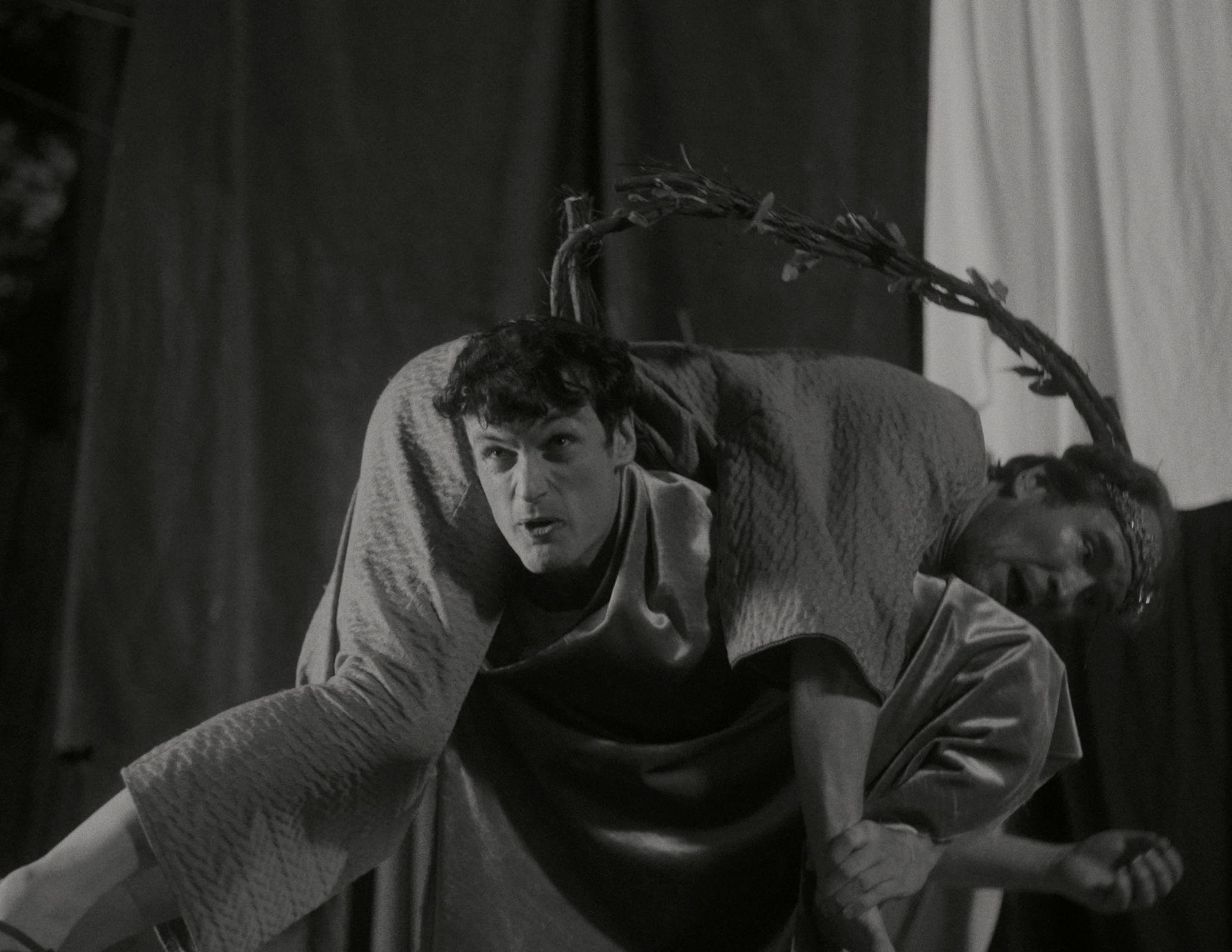
Every bit as charming as it is outlandish and thoughtful, this film is only possible because the filmmakers possess a true and unadulterated belief in the power of independent art. From walking around downtown Austin in togas, to turning down offers of potential film gear from cartels, to sweet-talking an apple juice magnate for money, everything inThe Wasps feels earned, tangible, and real. Admittedly, this is a funny thing to say about a film containing a chorus of men that sprout wasp wings and silicone dildos. But that’s what movies are: the results of months and years of hard work flashing by you at 24 frames a second. Film is a medium where you can believe just about anything that happens onscreen, as long as the filmmakers are doing their jobs right.
Most importantly, The Wasps is a film where a small group of artists echo the words of other artists from the past to create brand new interpretations and find new sensibilities, all in the pursuit of making you laugh. The Wasps isn’t singularly great because it’s a thoughtful and wackadoo comedy; it’s great because you can feel the filmmaking in every inch of every frame. It’s a representation of the power of perseverance, adaptation, comedy, and filmmaking.
The story, for those of you that care about that sort of thing, is a tale as old as time (in a literal sense, I suppose). Anticleon, son of Procleon, has to keep his father prisoner due to Procleon’s relentless addiction to serving on juries. Of course, this plan goes a bit haywire when Procleon’s drunk jury-mates show up to help him escape and resume his civic duty. After he escapes, songs are sung, tussles and rumbles ensue, and debates and belligerent drunk insults are exchanged. It all culminates in a naked flute boy and an orgy, the Ancient Greeks’ preferred way of partying. The whole time, themes of anti-authoritarian government, satire of judicial systems, exploitation of class, and familial relationships steeped in embarrassment swirl around. These ideas are ultimately the spine of the film. How do we support our embarrassing relatives? Is it a Sisyphean task? Where does love factor into expectations and how can we communicate through disagreements?
By far, the more strikingly immediate elements of the film are its black and white cinematography and Britishized/Greek dialogue. Period pieces exist almost exclusively as “window” films–peeks into worlds we cannot know. They utilize authenticity to create trust within the audience, to make sure they aren’t betrayed by their commitment to the experience. Comedy, on the other hand, is at its best when it actively subverts commitment. It makes the audience buy into the reality of a situation, only to find the most unexpected outcome in the pursuit of a laugh. The Wasps understands this dichotomy better than almost anything else playing in movie houses right now; its commitment to authenticity is present, yet always undercut by a silly gag.
The film offers genuine explanations of the politics of the time alongside footnotes that fill the screen to provide viewers with context. It presents a chorus and soliloquies, but the chorus has wire wasp wings and dildos between their legs. Every aspect of the film follows the simple rule to which all comedies should adhere: funny wins.
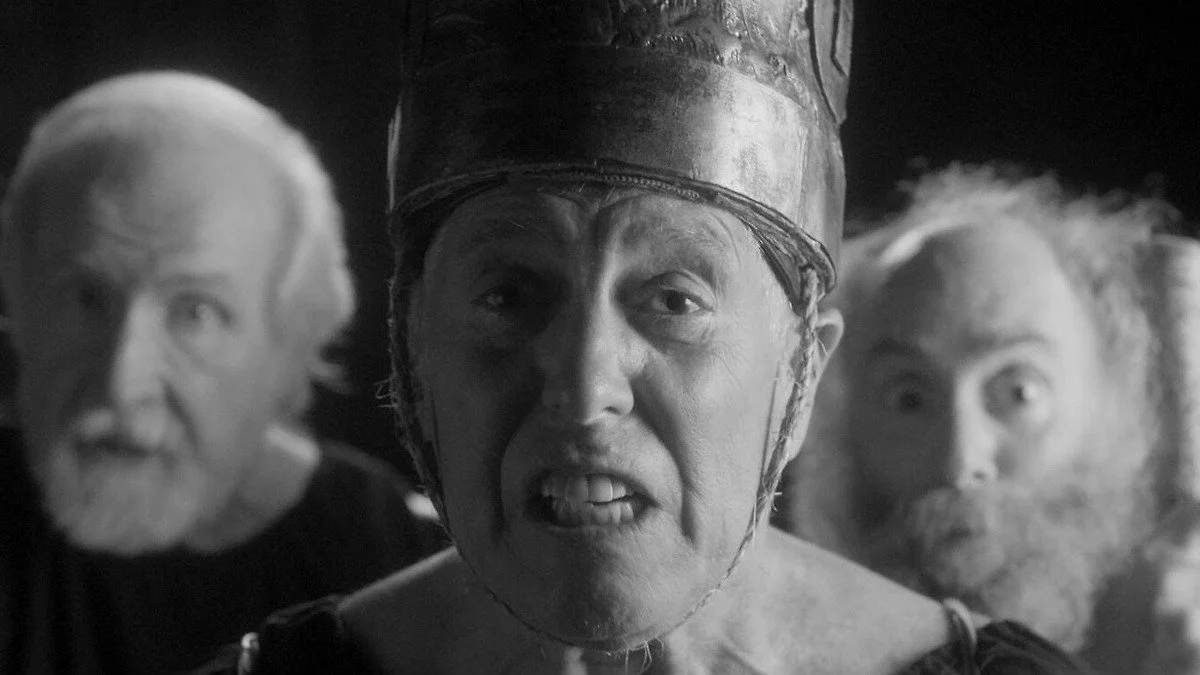
“Funny wins” isn’t always an easy rule to follow, especially when you’re working on a nothing budget. Sacrifices are an inevitability when you’re making pictures dance, and those sacrifices can take many different shapes. It’s only when you have filmmakers that are confident in themselves, as well as the material they are presenting, that sacrifices become helpful. Constraints can be beneficial to the filmmaking process, in the sense that they force creators to roll with the punches and try to optimize them in the best possible way. In the case of The Wasps, that means putting everyone in bedsheets instead of authentic togas or strapping a donkey head to large barrels on wheels. The ingenuity of not having enough creates the artifice.
Artifice is perhaps what The Wasps does better than anything else. Its sense of unreality doesn’t really exist without performance, which has been true for as long as performance has existed. With The Wasps, not only are we given pure and unadulterated commitment to character from everyone involved; it is that commitment that elevates the film. Everything mentioned previously–the comedic beats, the magic that results from art that exists under constraints–come together to make a good independent movie. But The Wasps isn’t just a good independent film, it’s a great one. It combines a deadly attention to detail, an understanding that the funniest situations are played completely straight, and terrific performances. It has a belief and trust in both its material and its audience, which allows viewers to buy in.
There is a real trick to independent filmmaking. You cannot simply make a movie like The Wasps, even though its elements appear approachable. It’s an adaptation, so the script is already written. It was filmed in a backyard. The props seem to be pieces of trash that are cobbled together, there are no big-name actors involved, and it was shot in ten days. That’s the real magic of movies, and of independent movies in particular: the fact that you can watch this film and think you could have made it. It effortlessly straddles the line between being obtainable and unachievable: a film that is so smart and sure of itself, it feels like a miracle that it is hilarious; that swings and dances with the voices of the past and present.
Comedy is meant for the big screen, despite what those TikTokkers are telling you. There is no other cinematic experience like sitting in a large auditorium, trading laughs with a bunch of strangers. Sometimes the laughs sync up; sometimes that guy behind you guffaws in a way you’ve never heard before and the movie suddenly gets even funnier. The Wasps is perfect for this popcorn laughter, jokes hitting right away, some stewing in your brain for a moment, nothing set up how you expect.
Maybe that’s the secret ingredient of The Wasps, the reason it resonates so differently with audiences: the film, in every strand of its DNA, is a risk. No movie with staying power was ever safe. Those moments of alienation are opportunities for solitude, where connections form. The Wasps has those moments in spades, which is abundantly clear from the first frame. And it’s because of those moments, because of the absurd risks the film takes, that you end up with Richard Linklater saying “what the fuck” when he walks out of your movie.
If you enjoyed this article, please consider becoming a patron of Hyperreal Film Journal for as low as $3 a month!
Hello! My name is Eli and I am a film fanatic based out of Houston, Texas. I am currently working on becoming a filmmaker, while also working full time. Film is my hyper fixation turned passion. I simply adore the flicks! I love learning about the history of cinema and seeing how that history shapes what we watch today.
I talk about movies on my Instagram: @notelifischer, TikTok: @loads.of.lemons, and Letterboxd: @Loads_of_Lemons