
Don't Think Too Much About It: The Monkey Review
Comedy is an odd beast—it’s taken for granted that what’s funny to one person may not necessarily be funny to another; what makes a good joke a good joke is hard to quantify. But is comedy alone in that realm? We all fear different things, all cry at different things. Emotions are subjective, so why is comedy given some cloudy mystique to differentiate from other genres? I’d argue that it comes down to an issue of vocabulary and an understanding of craft. We can talk about melodrama not being believable, of a horror movie monster being visibly unthreatening, of a romance offering unrealistic plotting or chemistry-free leads, but when a comedy doesn’t work for a person, what can they say beyond: “I didn’t laugh.”
Regarding Osgood Perkins’ feature film The Monkey, I didn’t laugh. But we can go deeper than that.
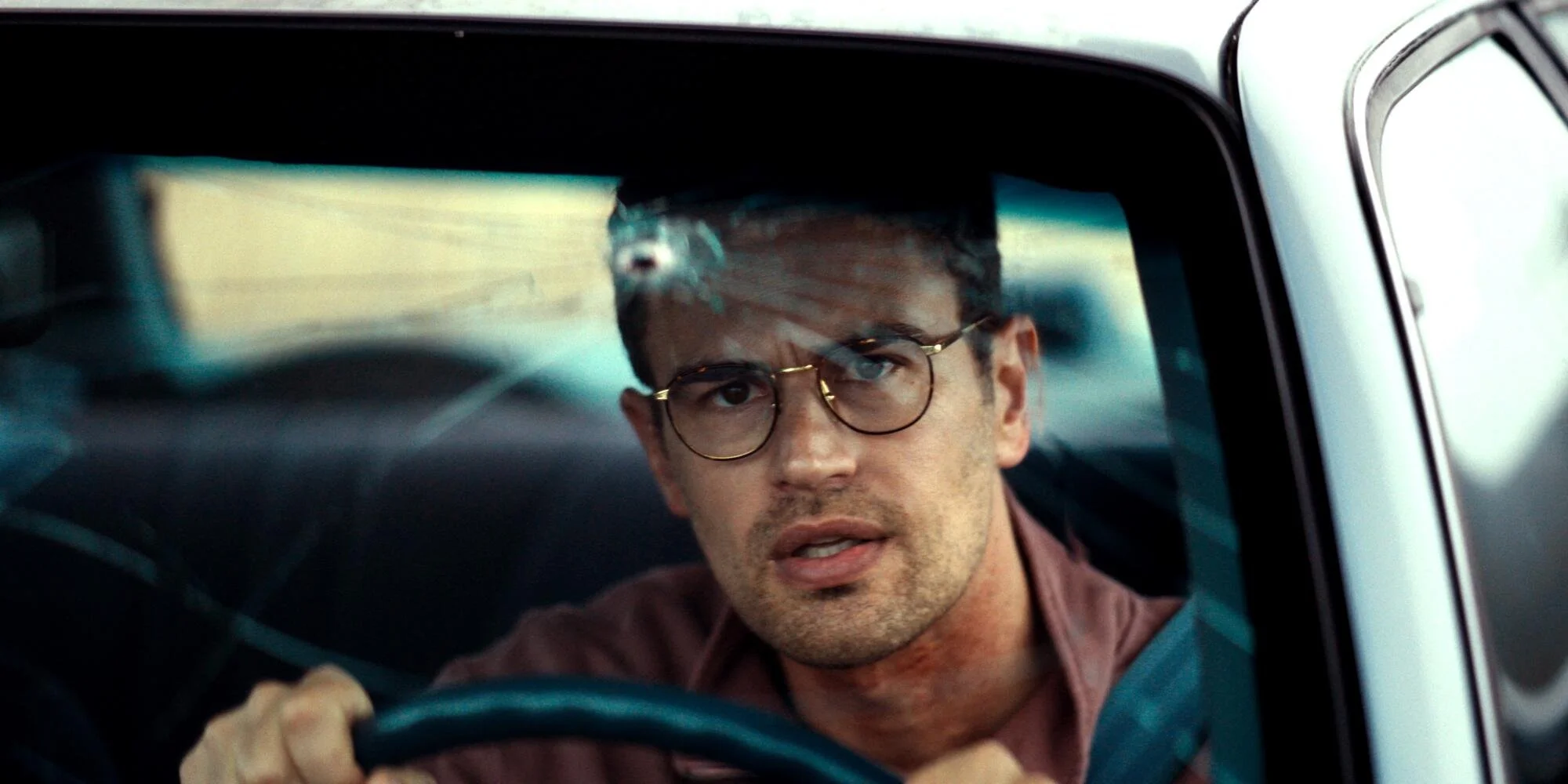
Adapting an incredibly thin Stephen King short story of the same name (it’s really just a Monkey’s Paw riff more than anything else), The Monkey sees Perkins take a tentative step away from austere horror and into the horror-comedy arena. I can’t really say that I thought his horror work was all that good to begin with: I found I Am The Pretty Thing That Lives In The House to be largely boring, Longlegs to be forced and reliant on people not already having seen Kiyoshi Kurosawa’s far-superior Cure, and The Blackcoat’s Daughter to have a fascinating last minute reveal that would have been a much more engaging focus for a movie than the film we actually got. The common thread with all these movies was a pretentious tone and haughty vibe: these were the kinds of films that people who “don’t like horror” would champion because they were heavy with implied meaning and light on scares. I was at least intrigued by the idea of a guy who seemed allergic to jokes letting loose and having fun in The Monkey.
I did not have fun. There is no meaningful build to any of the set pieces in the film and no visual flair to distract from how empty the punchlines are. People simply explode into blood-red mist like characters from the Fallout games when you have the “explode people” ability. The far-superior Final Destination franchise similarly treats people as quasi-disposable blood bags, but there is a steady buildup to the eventual death that teases and excites a viewer. There’s pleasure in waiting for the punchline of a joke that gets a little shaggy in the telling. In contrast, The Monkey screams the knock-knock punchline in your face before you can even finish asking “who’s there?”
Like the Deadpool franchise, the punchline of every joke seems to be an explosion of CGI blood and a man screaming “FUCK” in disbelief. Thankfully, I am no longer twelve years old, but regrettably, that means I have moved out of the target demographic for that joke. There is a lack of imagination to the way the kills are shot and presented—half the time it takes longer for your brain to even understand how the person has died than the film takes to introduce either the person or the soon-to-be-fatal object. Comedy requires pacing and anticipation, and by about 30 minutes in, the only thing I was anticipating was the credits.
So we have a horror-comedy that isn’t scary or funny. What’s left? Well, not much. The film’s emotional crux revolves around Hal (Theo James) and his twin brother Bill (also James) who have had very different emotional responses to their mom (and babysitter’s) sudden deaths as a result of a cursed monkey doll. Hal has lived his life terrified of making close (or any) relationships out of concern that the cursed monkey doll will resurface and kill anyone he’s close to. This, for some reason, has not stopped him from having both an ex-wife and a teenage son that he only sees once a year. Bill has largely disappeared from the world, blaming Hal for turning the key on the monkey’s back and inadvertently giving their mother an aneurysm.
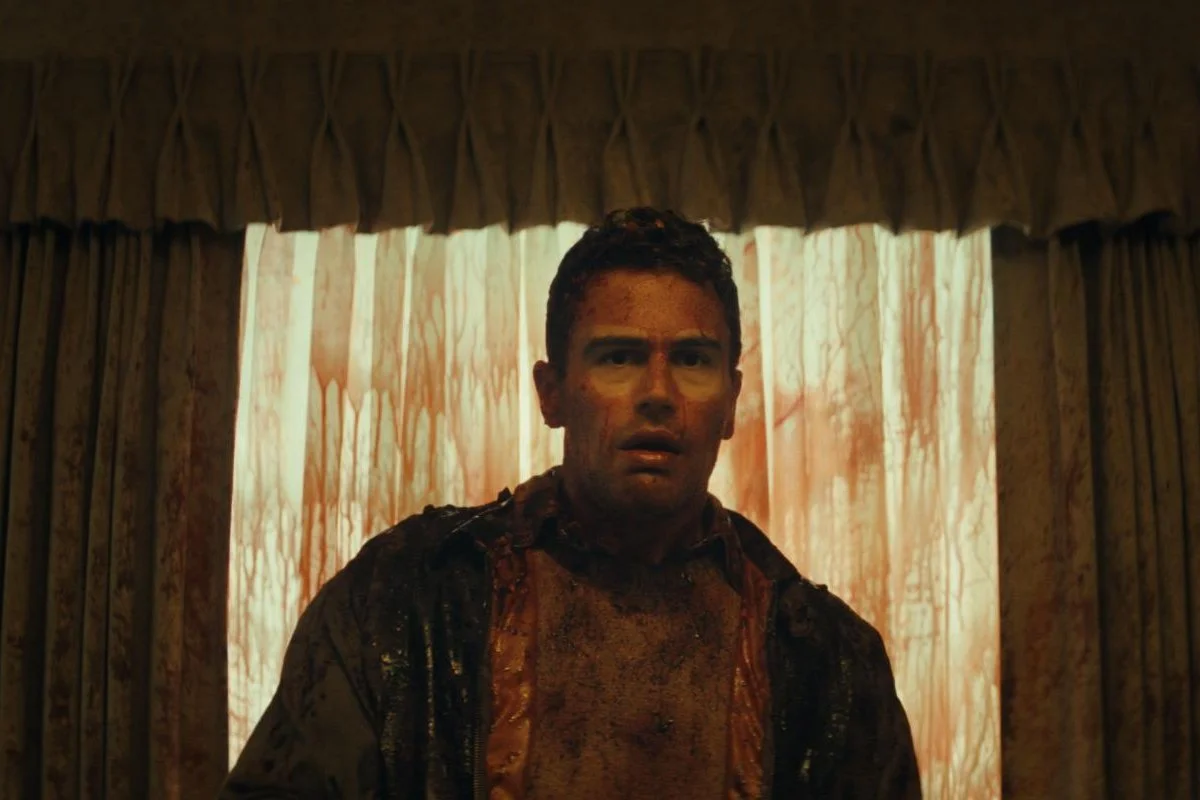
These characters are thinly sketched and James doesn’t do much other than handsomely sigh at the constant human explosions that surround him as the movie continues. His relationship with his ex-wife is nonexistent—she seems to be so much a stock “bitch wife” character that I’m genuinely confused why she’s even featured in the movie. How someone with Hal’s active terror against any personal connections (our introduction to adult Hal features voiceover that explicitly says that he doesn't even have a single friend) might have had both a wife and son at some point seems of little interest to Perkins. Hal’s teenage son Petey (Colin O’Brien) exists to pout and whine about his dad being a deadbeat, but O’Brien doesn’t put any venom into these scenes. It all feels like they’re going through the motions, as if Perkins is bored even pretending that the audience should care about these people.
Without scares, laughs, or emotion, I had to hunt for something, and I found it in the strangely autobiographical tint that the movie takes. The opening scene has James say in voiceover, “Not every son inherits horrors from his father, but I did.” Perkins famously feels a way about his father Anthony, his role in Psycho, and the toll that his struggle with his own sexuality took on his family. In The Monkey, Hal’s father Petey (briefly and blessedly played by Adam Scott) is largely absent, abandoning his family for unclear reasons and never appearing onscreen past the prologue. Multiple scenes in the movie feature visual cues riffing on the Bates Motel and the famous Psycho house, but to what end? The movie itself doesn’t engage with the themes of Psycho and without Perkins’ familial connection to the movie, these references would be even more pointless. What is a viewer meant to take away from these choices—especially when they seem like the only moments in the film that feature active choices from the director?
In the first act of the film, the boys’ babysitter is confusingly beheaded at a hibachi restaurant and the priest at the funeral urges the bereaved (and the audience), “Don’t think about it too much.” Fine, Osgood, I won’t.
If you enjoyed this article, please consider becoming a patron of Hyperreal Film Journal for as low as $3 a month!
Ziah is the founder and former editor-in-chief of the Hyperreal Film Journal. He can usually be found at Austin Film Society or biking around town.