
The Hand That Rocks the Cradle: Another incoherent remake for the streaming age
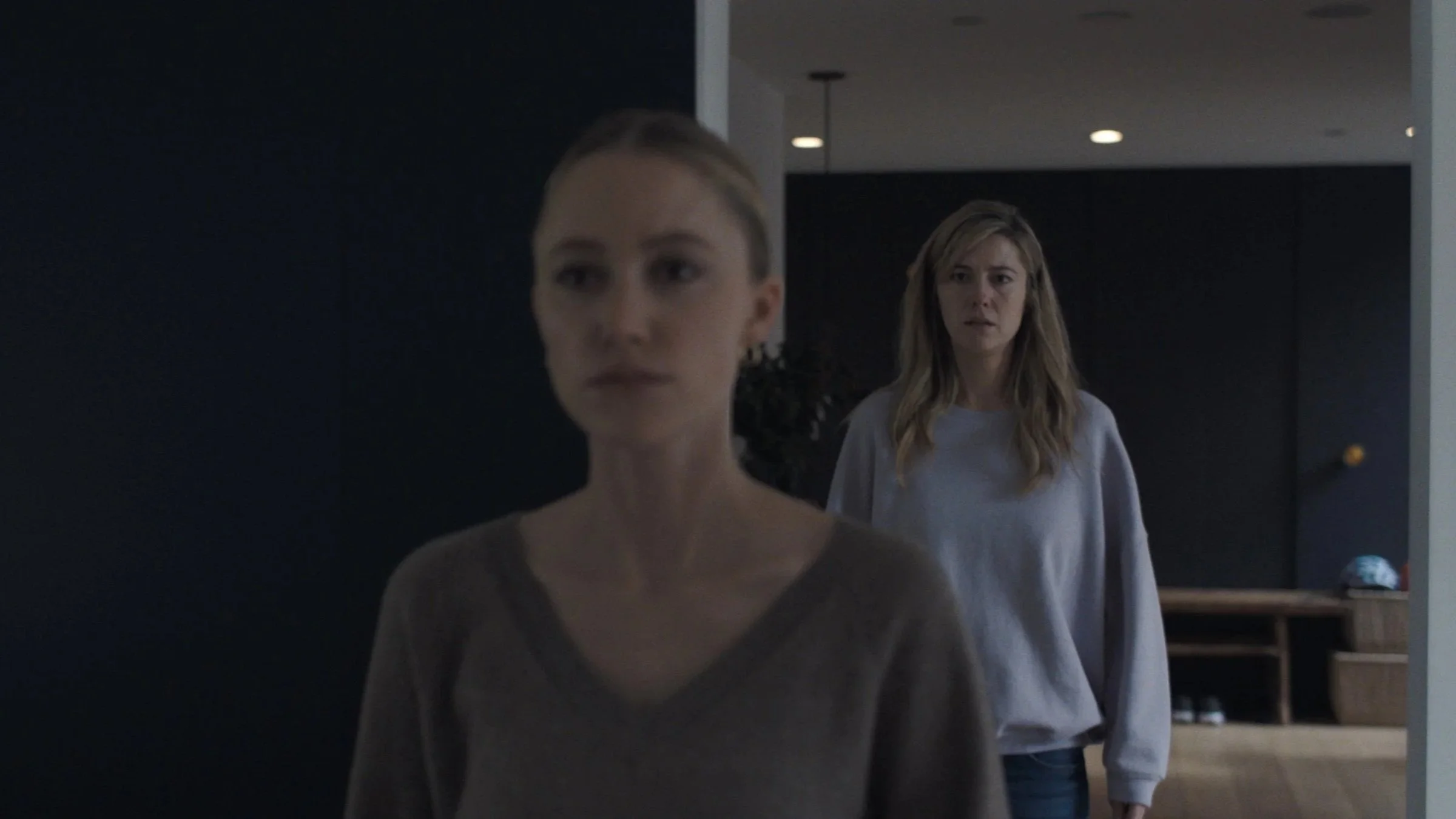
The original The Hand That Rocks the Cradle, released in 1992, has enough misogynistic plot twists to earn itself an entire Wikipedia subsection titled “Criticism from feminists.” Nearly a quarter of a century later, a much more neutered remake hit the Hulu-Disney+ conglomerate with significantly less commotion.
Screenwriter Micah Bloomberg (previously behind the erotic thriller Sanctuary) excises much of the original plot, creating a psychological thriller that has little to recommend itself beyond being less offensive than its predecessor. The bare outline stays the same: when our protagonist, Caitlyn Morales (Mary Elizabeth Winstead), hires Polly Murphy (Maika Monroe) as a nanny for her family, it seems like the perfect fit—until cracks start to show in Polly’s demeanor and Caitlyn grows paranoid that things aren’t what they seem.
As it’s the 21st century, the remake gives its main character the typical “can women have it all?” dilemma by making her a high-powered attorney struggling to balance her career with her role as a mother to 10-year-old Emma and baby Josie and wife to Miguel (Raúl Castillo). In this version, liberal politics also come into play with the contrast between Polly’s background—unemployed, formerly in foster care and currently living out of her beat-up car—and Caitlyn and Miguel’s stunning Los Angeles home, where the biggest problem in the neighborhood is the need to install a stop sign at a busy side street. These remain mere gestures at social commentary, though, never going deeper than basic observations about class (and race, with some off-handed references to Miguel’s Mexican heritage).
The thrills, too, stay surface-level, and aren’t helped by a plodding pace. Polly’s acts of malice in the Morales’ house range from gaslighting Caitlyn about giving her baby formula to inflicting the family with a bad case of food poisoning. But her exploits feel random and disconnected, rather than creating a natural build-up in tension as the movie goes on. And while Winstead does a fair job as a woman pushed to the edge, Monroe, who usually excels as the victim in this genre (see It Follows, Watcher and Longlegs) gives a flat performance as the villain, delivering lines meant to relay her character’s sociopathy that land more with a robotic dullness. Attempts at adding depth to the characters, like giving Caitlyn a history of dating women and an initial attraction to Polly, are abandoned before they go anywhere interesting.
Two-thirds of the way through the film, Bloomberg picks up the pace with an out-of-left-field plot development—but this, too, doesn’t pull through the rest of the film. If a remake must justify its own existence, The Hand That Rocks the Cradle fails, ending with a conclusion as incoherent and anticlimactic as the rest of the film.
Alix is the editor-in-chief for Hyperreal Film Journal. You can find her on Letterboxd and IG at @alixfm.