
The Testament of Ann Lee is an Ecstatic Triumph
The thing about growing up attending mass regularly is that there is a sweet rhythm to the routine that comes with it. Hymns and psalms become the soundtrack to mornings that set the pace for long breakfasts with family and preparations for the week, the motions of a regular Sunday becoming a prayer for the little things that give our lives grace. The rhythm of devotion is what drives The Testament of Ann Lee, the latest film from director Mona Fastvold. The film tells the story of the Shakers, a Christian sect that broke off from the Quakers in the 1700s, and their eventual leader, Ann Lee (Amanda Seyfried). What makes the Shakers stand apart from their antecedents is two-fold: they believe that absolute celibacy is the only way to get close to God, and the only way to worship is through ecstatic dance.
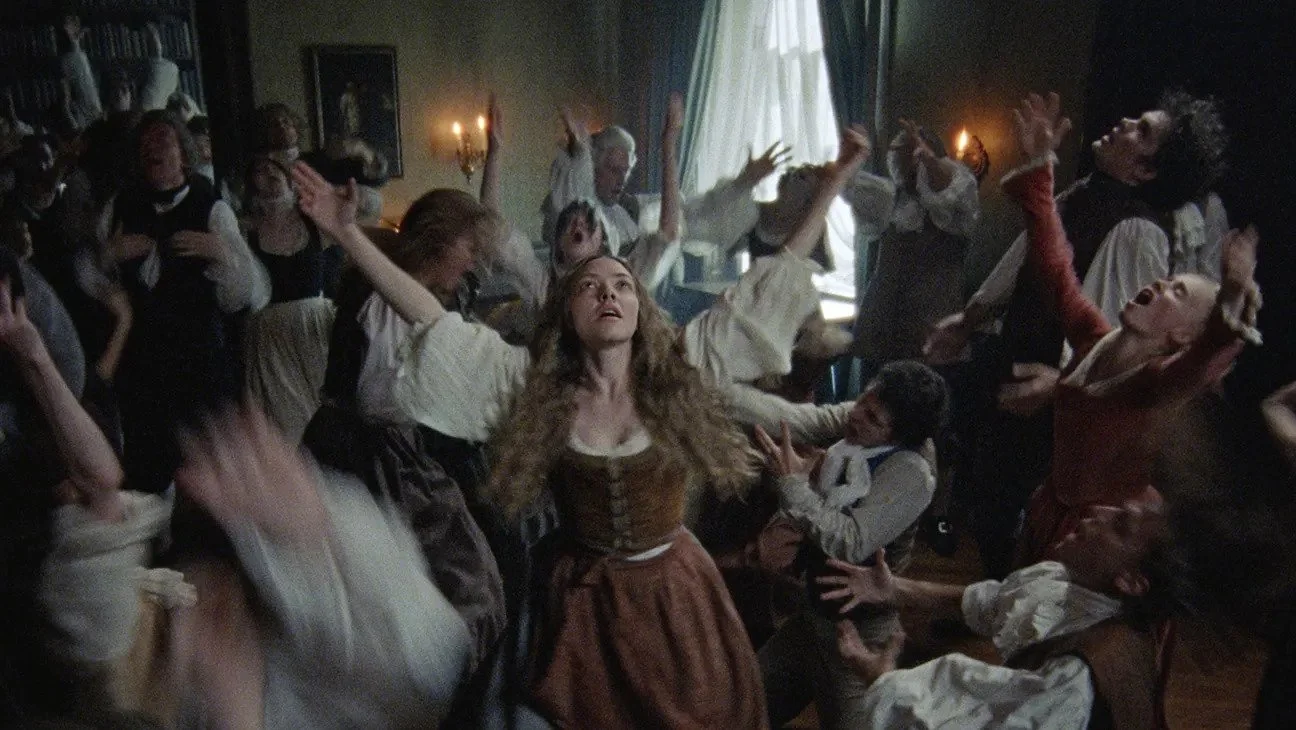
The period-piece musical follows Ann Lee’s life, from her childhood to her early beginnings discovering the progressive faction. This might sound like a lot for one movie to handle -- the idea of a musical and a somber period piece about a niche religion seems unwieldy on paper. Yet Testament handles itself deftly, weaving in musical numbers that highlight and expand on hymns of the time period. It’s buoyed by the kinetic and hypnotic choreography of the Shakers as they worship. The camera roams around the room in an early sequence after Ann’s first meeting with the Shakers, and we see the ecstatic physicality of the worshippers spill out onto the screen. The group becomes an intricate, interwoven puzzle of bodies, moving in sync, and creating a physical alchemy that demands to be seen. The rhythm of the editing in this sequence and across the film will keep it moving forward as we dance through time with Ann and her fellow Shakers.
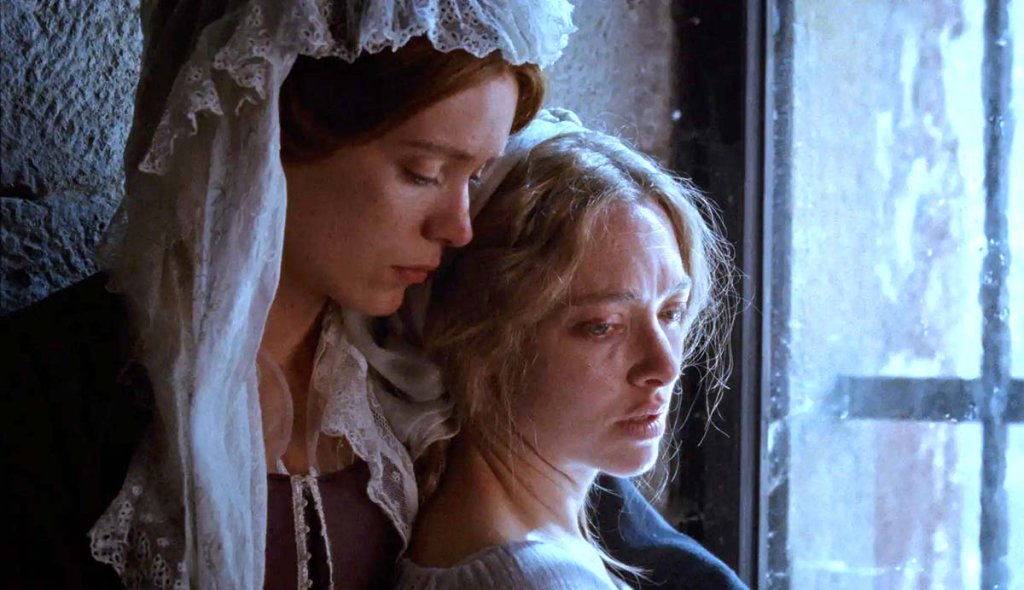
Indeed, Testament is as propulsive in its narrative as the march of time itself. This makes our journey through the seasons of Ann’s life feel more grounded and less judgmental than it would have been in the hands of a lesser film. Fastvold and editor Sofía Subercaseaux take the rhythm of the Shakers’ movements and intertwine it with her journey through four painful pregnancies that all ended in the death of her children, all the way through her revelation in a jail cell that transforms her into “Mother” Ann, the second (female) coming of Christ. As Ann becomes delirious from malnutrition, she grows a feathery down on her arms, levitates, and biblical visions come in and out of view. As she slips into this state of ecstasy, she sings a hymn, “I hunger and thirst/After true righteousness.” Her spiritual hunger has become more important to nourish than the physical. It will eventually drive her to evangelize about the Shaker movement in America, her fervor pushing her and us forward through the narrative.
Testament is a triumph. Taking what other filmmakers would have handled with little nuance, Fastvold and company make a real effort to share Ann’s story with empathy and care. She lets the ecstatic movements of the Shakers and their history speak for themselves. It’s a story about religious fervor, yes, but it’s about how we are all caught up in the arc of time. There is nowhere else to go but forward, with time pushing us along. It’s not surprising that the team behind this film was also behind another epic about the march of time, last year’s The Brutalist. Director Fastvold co-wrote the scripts for Testament and The Brutalist with her partner, Brady Corbet, and Daniel Blumberg returned to compose music for the Shaker hymns used in the film’s musical numbers.
Ann’s story is a much different kind of epic than László Toth’s was–she was a real figure, for one–but there is some connective tissue between the two. There is a similar propulsive drive, a similar interest in how time and trauma move us forward, whether we are ready for it or not, and a distinctly US American sensibility. Ann may start her work with the Shakers in England, but it’s when she comes to New York in the film’s second half that she finds her footing and puts everything she has into her sect. Like Toth, she endures so much throughout the film, but puts all of the emotional turmoil her experiences have caused her into her work. Instead of buildings, Ann is building a community that she wants to outlive her, but the throughline is the same: the desire to create something bigger than herself. Fastvold has certainly accomplished that in this film, a rhapsodic melody that everyone should hear.
If you enjoyed this article, please consider becoming a patron of Hyperreal Film Journal for as low as $3 a month!
Alejandra Martinez is a Tejana archivist, writer, and film lover in Austin, TX. She loves coffee, David Lynch, and tweeting about everything under the sun.
Twitter: @mtzxale.