
The Sheep Detectives: The CGI Sheep Movie Made Me Cry
I sat waiting for this film, full of dread. You must understand that this would be my fourth time participating in this cinema’s “Secret Movie” series, and every screening prior left me annoyed and unimpressed. It became clear that these movies were a secret (and heavily discounted) for a reason. I am also immune to the somewhat recent style of filmmaking that seeks to elicit a big and universal response by appealing to the median and presenting shallow experiences as profound. My friend assured me, “If this one is bad, we can just leave.” I have never walked out of a film in my life, but I braced myself because there is indeed a first time for everything. The lights dimmed, then a stark white background with Nicholas Braun holding a lamb illuminated the screen. I audibly groaned. Thankfully there were just four of us in this Sunday matinee screening, allowing me to be a little uninhibited. “You’re watching an early screening of The Sheep Detectives.” I gave an exasperated look to my friend.
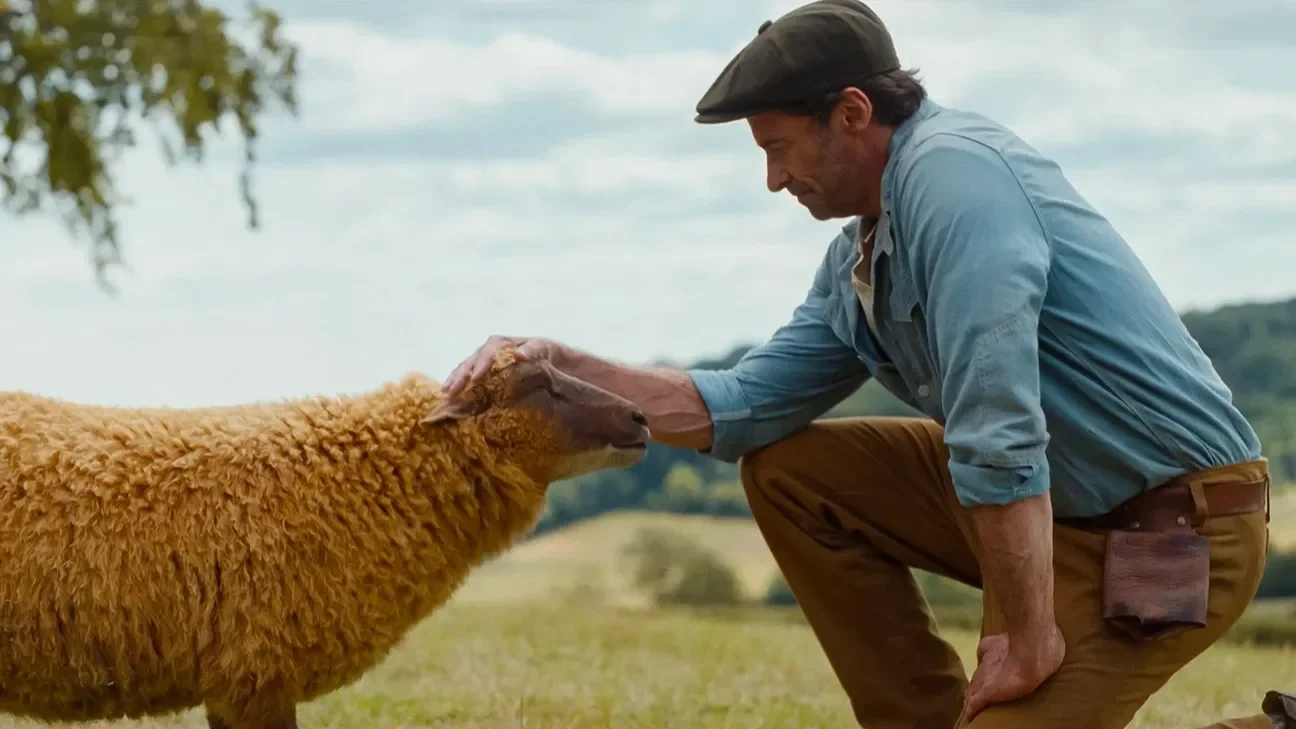
The movie unfolds pretty predictably at first. George (Hugh Jackman), a shepherd who spends his days tending his flock and his evenings reading murder mysteries to them, reaches an untimely death at his pasture. Upon their discovery of George’s body, the sheep are confronted with a foreign pain. For them, death is something that happens in stories, and sheep become clouds when they leave this mortal coil. This film relies heavily on colloquial knowledge of sheep: they roam in a flock, they are guided by groupthink, and easily herded. There is a duality to these leaden metaphors as they are used for many punchlines and can also be applied to the suspects, and humanity as a whole.
In typical murder mystery fashion, every character has a motive, and Tim Derry (Nicholas Braun) the town’s only police officer is tasked with solving it after his initial mishap (ruling the death as a heart attack and ruining the crime scene). Because of his incompetence and inexperience, the sheep decide to put their learned deductive skills to use. With Lily (Julia Louis-Dreyfus), the smartest sheep in the world, Mopple (Chris O’Dowd), the wisest sheep, and Sebastian (Bryan Cranston), the loner sheep as the lead detectives they set out to solve the murder and prevent all of the impending doom that will befall them without a proper shepherd.
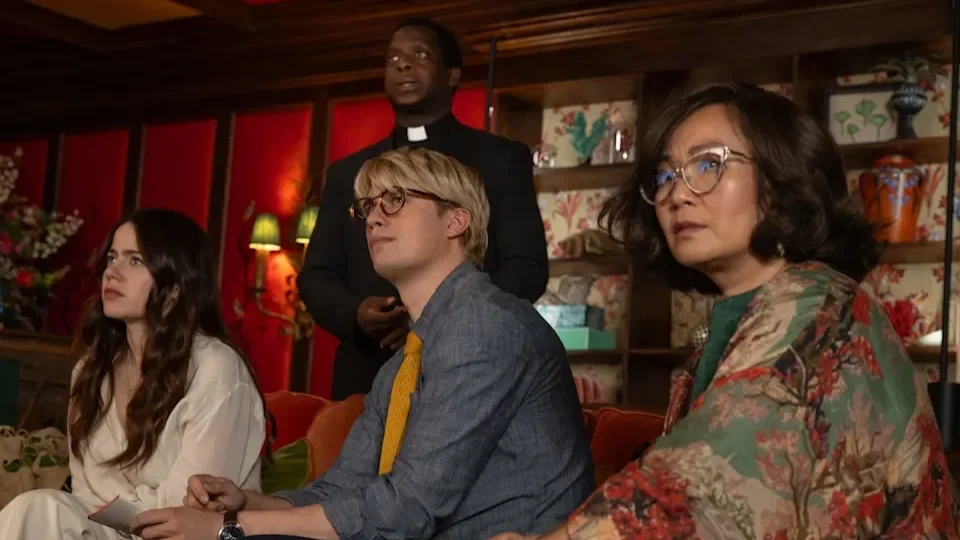
Without giving too much away (it is a murder mystery afterall), a misstep is that the human ensemble is underused and therefore the twists and turns of the murder mystery trope don’t materialize in a significant way. Most of the screentime is dedicated to the sheep solving the murder, and not exploring the interpersonal dynamics between suspects and the victim. Hong Chau is a treasure and no film is harmed by having more of her. This is also a missed opportunity because there is room to comment on the ethics of industrial farming, a looming threat to the sheep, using the butcher and rival shepherd characters. Another confounding aspect of this film was the choices in accent. The sheep mostly had American accents, despite the English countryside setting. This added yet another layer to the uncanny valley. For the human ensemble, many of them were not English and decided to do an approximation of an English accent.
Yet, the things that work about this film really work. It touches on so many aspects of the human experience. The sheep are presented as archetypes at the beginning of the film, and by the end they have broken their molds to solve the murder mystery. Lily, the smartest sheep in the world, realizes that she does not have all the answers. Mopple, the wisest sheep, learns the importance of speaking his mind and how his insight can be helpful and necessary. Sebastian, the loner, learns to work with the others and the strength in vulnerability. Moreover the transformations the herd experience allow them to accept the nameless winter lamb as their own, ending a compulsory tradition that has led to the eventual exile of countless sheep. It takes the strengths of every sheep in the herd to compensate for the weaknesses of the others, solve the mystery, and get justice for George. These resolutions are touching because we are the sheep. We belong to a collective. We often avoid pain in favor of short-term pleasure. We are also under threat of making bad decisions or living a terrible life under the leadership of a foolish or corrupt shepherd. There are too many parallels to name. Anyone would be able to identify with at least one of the sheep ensemble. When that flawed avatar undergoes a development or is accepted for the first time, it makes us hopeful that the same is possible for us. When their combined efforts lead to success, it makes us hopeful that our communities can overcome anything.
Moreover, grief and its stages are depicted sweetly. Everyone copes with George’s death differently, but they no longer avoid the pain. It is a process that requires bravery to work through pain and not around it. Life would be easier if we could just erase the moments that hurt us and mindlessly move through the world. The Sheep Detectives properly explores what you may lose in an effort to maintain this supinity.
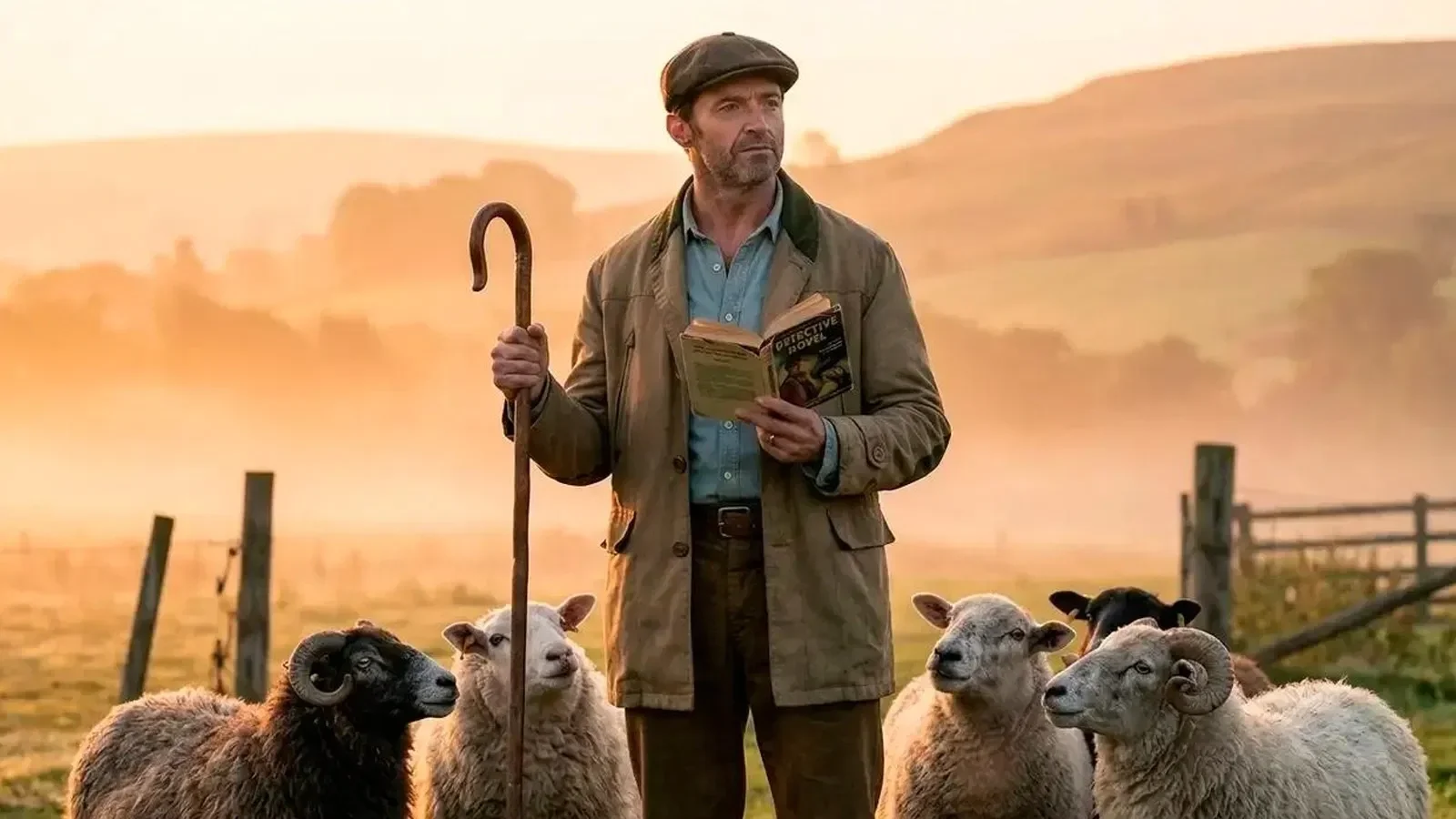
Make no mistake, The Sheep Detectives, as a film, is strange. It looks like it cost $2 to make and the CGI is uncanny. It also has that Netflixian sheen, where the color-grading and lighting is optimized for phone screens and not cinemas. However, using sheep as a metaphor forgroupthink versus individualism, commodification, and prejudice works. Obvious doesn’t mean contrived. The emotional beats that are designed to manipulate the viewer work in spite of itself. In fact, the uncanniness and strangeness refreshes the typical family comedy formula. To say I was charmed, would be an understatement. No less than three times, I found myself with tears in my eyes. Even now as I type this on a train traversing Ireland where I will hold a winter lamb myself, I feel my eyes misting.
If you enjoyed this article, please consider becoming a patron of Hyperreal Film Journal for as low as $3 a month!
Aja Nicely is a sagittarius, PhD candidate and number one media consumer. You can follow her on IG @maya_ajalou.