
Resident Evil: Review
A video game is functionally dependent on forward momentum. In order to progress the story, a player has to move the character forward, from Point A to Point B. Cutscenes exist to break that momentum, side-quests exist to distract from the rails the player's on, and a well-crafted game can successfully trick the players into thinking the world is bigger than it is and that the story is not dependent on continued activity.
Most video game movies don't bother with that—and why would they? Different mediums demand different approaches, and most movies that adapt video games take only the iconography or the setting or even just the names of the world and the characters before making a movie that feels like a movie. Sometimes, this can lead to beautifully meta-textual ruminations on characters trapped in an endless state of death and rebirth in a false reality (as with Hyperreal favorite Resident Evil: Retribution.) Other times, it just leads to half-assed fan service in a movie that functions as neither a good movie on its own or as something worth defending by fans of the source material (too many examples to name here.)

Zach Cregger's run at a new Resident Evil adaptation comes perhaps the closest to nailing what a movie might feel like as a complete adaptation of a game, for good and for ill. His take on the material (with a script co-written by Shay Hattan) eschews any of the named characters of the games to focus instead on Bryan (Austin Abrams), a medical courier delivering a high-priority package to Raccoon City in the middle of a blizzard. Bryan's stressed, poorly handling the news that his girlfriend is pregnant (awkwardly responding "well, uh, your body, your choice?"), even before he hits a sundress-wearing woman that sprints directly into his car.
The entire opening scene trades in the language of video game cutscenes: Bryan's unseen girlfriend on the phone laying out pertinent info for the players/viewers; the slow build of dread as we see Bryan drive on a poorly-visible road; the certainty that we are watching/playing a movie/game called Resident Evil, which means the crazed woman is a zombie and it won't take long for the action to start.
When the title card drops, it's after what feels almost identical to a tutorial level—Bryan using a sheriff's pistol to finally incapacitate the zombie, picking up the medical box, and heading toward the nearest farmhouse to seek help getting to raccoon city. Bryan's pressed start on the game. Even if he doesn't know it, the audience does.
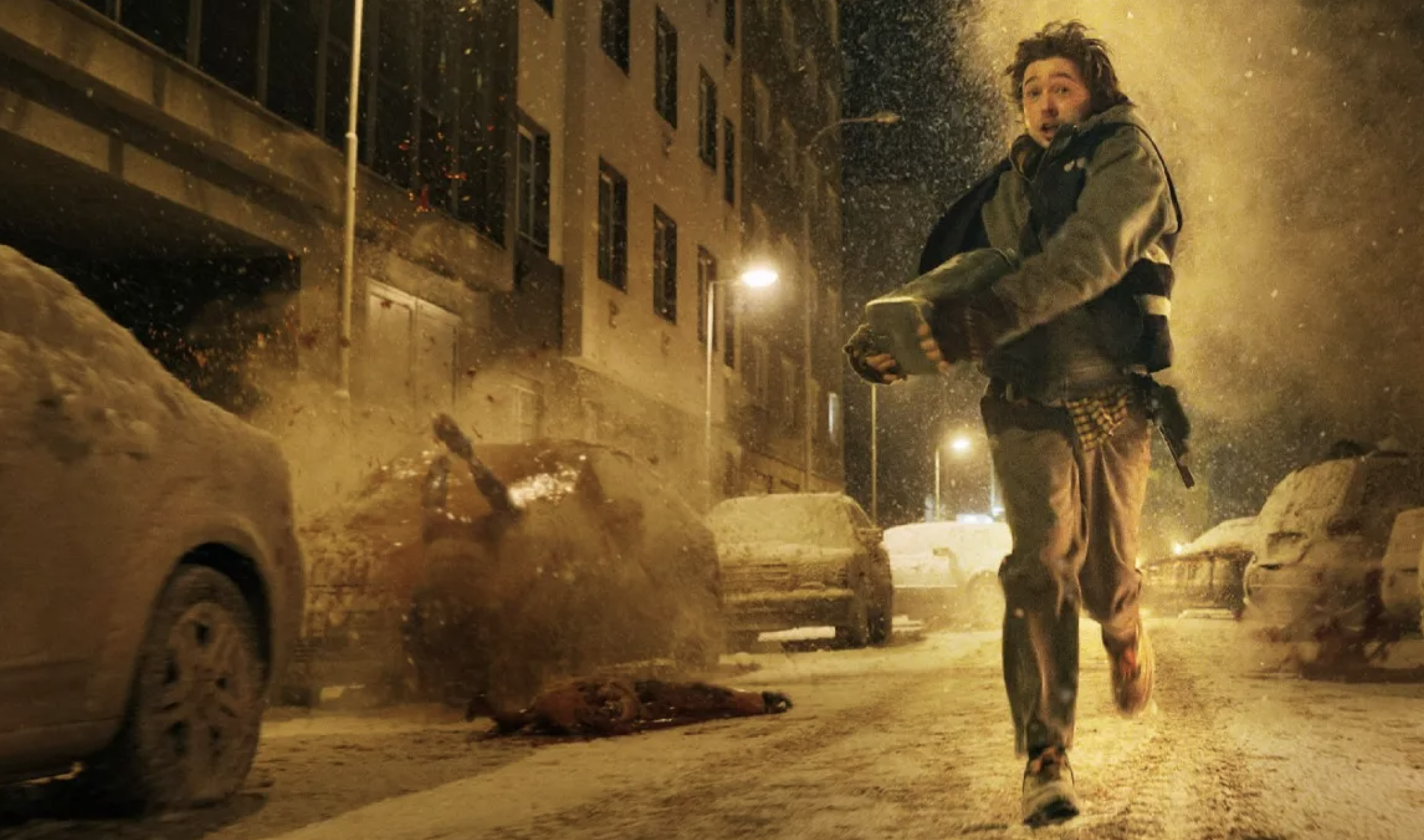
The pleasures of Cregger's version of the material is often found in the consistent rhythm of the set pieces. Bryan enters a new space, tension builds, a weapon/clue/key is acquired, and then a new variant of zombie is unleashed, catapulting him to the next area. His guns get better, but he never feels so capable or protected as to let up the tension. Like handing the controller to a friend who's not good at video games, Bryan is more hapless and stumbling than the average action hero.
A lion's share of the credit for making that work goes to Abrams; already the best part of Cregger's previous film Weapons (where he starred as the canny drug addict who stumbles into the missing children conspiracy), Abrams is more or less alone onscreen for the majority of the movie. Fear is spurred by isolation, and the movie, like the horror games it's adapting, knows that giving Bryan allies or companions would release some of the tension. That's a lot of pressure to put on a lone actor, but Abrams is a delight onscreen. Various ticks that would be annoying in the hands of a lesser actor, like constantly cursing about whatever new scary thing is chasing him or muttering dejectedly about his ruined shoes, somehow feel like a real human being going through an awful situation.
As a roller coaster thrill ride, Resident Evil is a blast. Coming from Whitest Kids U Know, Cregger is a dyed in the wool comedian, and he's at his best when giving into rough chuckles. When Bryan runs into a visibly infected little girl, her tentacled foot wrapped around an RV toilet, she gently demands "uppies" since she obviously can't walk. Bryan's response is a shuddering "yeah, right, makes sense." It's a nasty little punchline that only gets nastier from there, but those are the moments Cregger seems to thrive in.
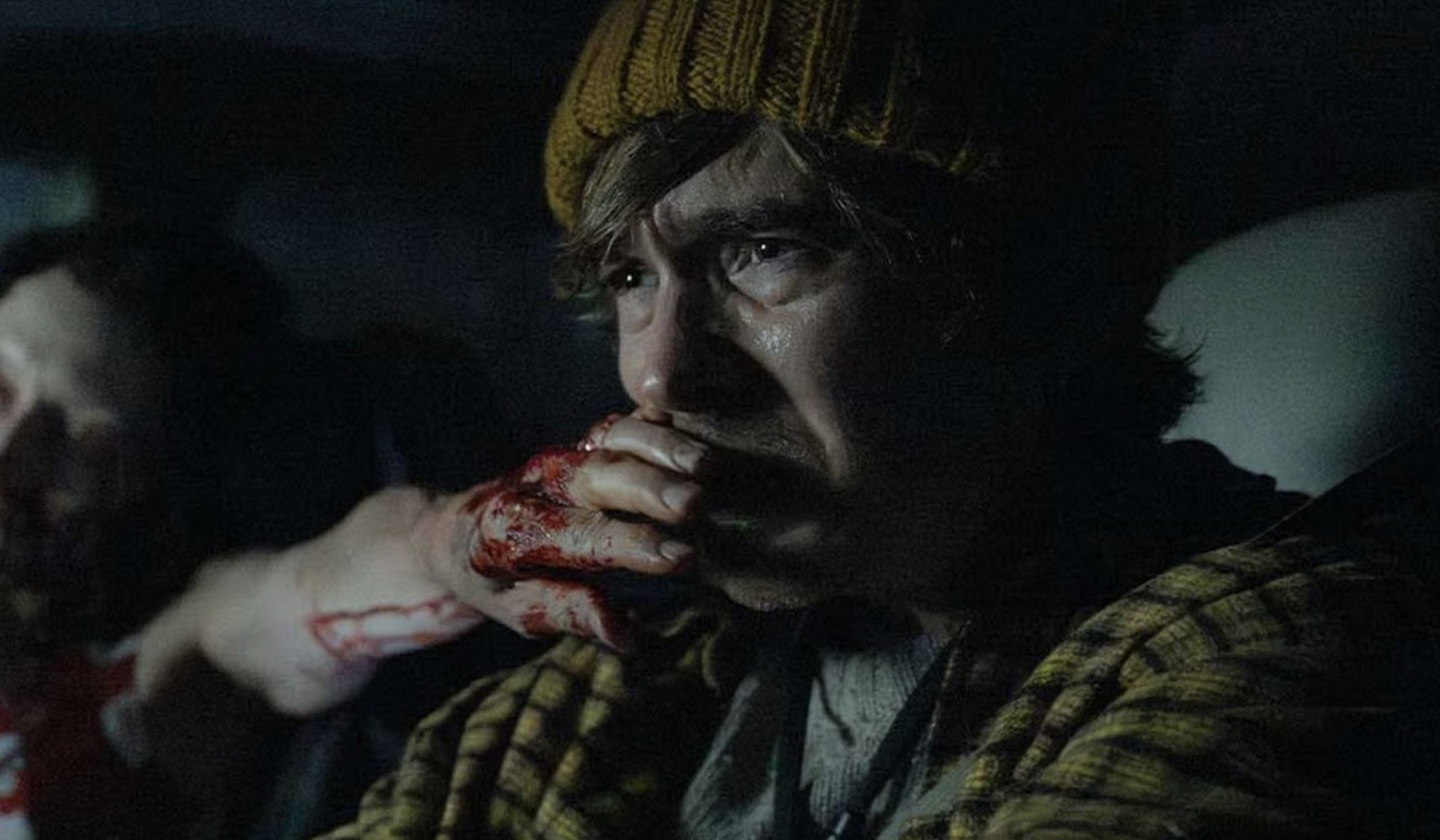
However, when the film tips its hand toward a deeper meaning, Cregger can't fully escape his own predilections. The underlying theme of the movie—Bryan's fear of fatherhood and family— is dealt with in turgid monologues that stall the momentum of the film in between set pieces. One could charitably ascribe these pacing-wrecking moments to adapting the pace of video game cutscenes, but that doesn't excuse it. Cregger simply seems to like the brazen action beats and mean-spirited comedy better than he does the themes that might get a different audience to praise him. Like he did when he haphazardly borrowed the nested point-of-view narrative framework of Magnolia for Weapons, it feels insincere compared to the parts of the film he seems to find so much more delight in.
Still, I appreciated the (almost) lack of pretensions that the movie offered. Resident Evil is a movie of gore and nasty jokes; the kind of movie a middle schooler might dream up after renting a Resident Evil game and returning it to the store before completing, existing in the dream state between a real piece of narrative and a shaggy dog side story. I hope that Cregger can lean into that energy in his future movies. I think he (and I) would have much more fun.
If you enjoyed this article, please consider becoming a patron of Hyperreal Film Journal for as low as $3 a month!
Ziah is the founder and former editor-in-chief of the Hyperreal Film Journal. He can usually be found at Austin Film Society or biking around town.