
Power Ballad: A Song Not Worth Listening to More Than Once
Power Ballad, director/writer John Carney’s eighth film and fifth set-in-the-present-day musical drama/dramedy, is a picture at angles to Carney’s past work. It’s more heightened than 2007’s Once, the film that made Carney’s career, but less fantastical than 2016’s delightful Sing Street. Its tale is tied into the music business, as 2013’s Begin Again was, but its perspective on the business is decidedly more jaundiced. And also like Begin Again, Power Ballad is not as successful as either Once or Sing Street. Carney takes an impressive swing with his two lead characters, both of whom are juicy, thorny roles that stars Paul Rudd (Mute) and Nick Jonas (Kingdom) do excellent work with. But, thanks to a caricatured supporting cast, a script with several key dramatic beats that seem to be outright missing, and music that’s consistently well-performed but doesn’t measure up to the world-shaking hit the script claims it is, Power Ballad settles as a B-side to its older siblings.
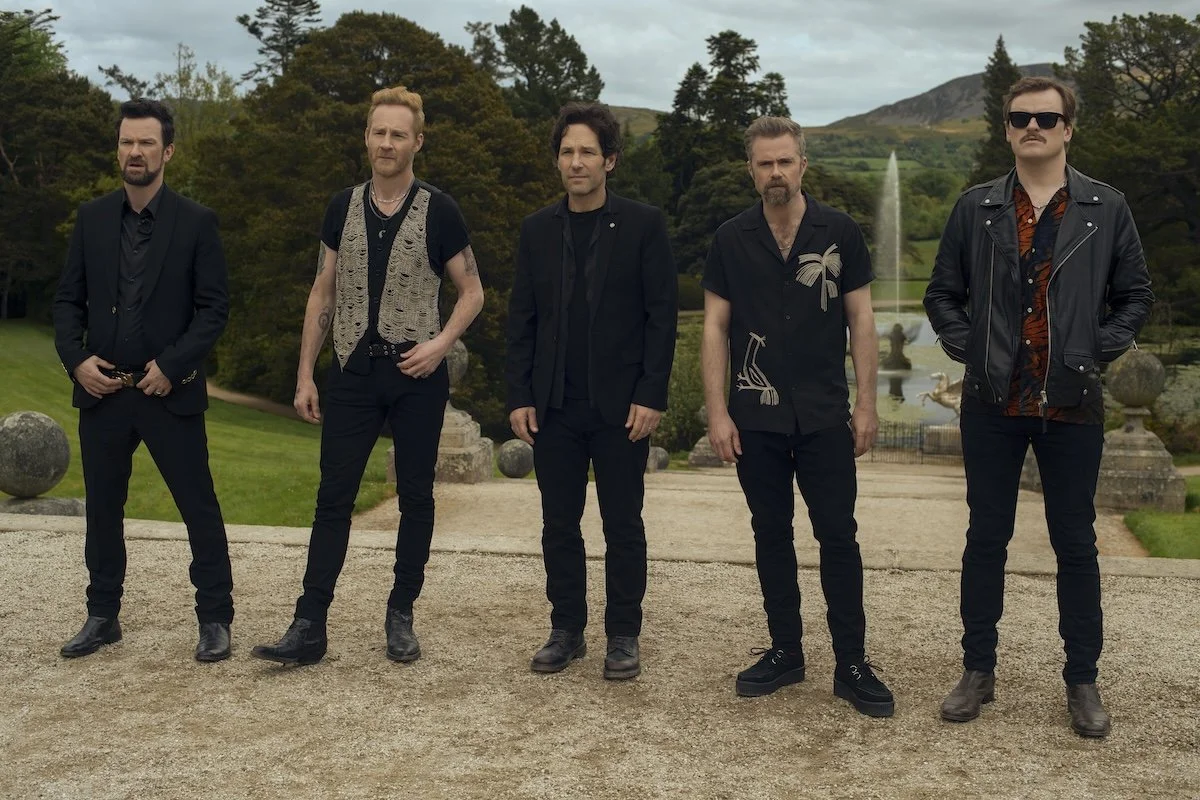
Rudd is Rick Power, a one-time could-have-been rock star who stepped off the tour when he fell in love with and married Rachel (Marcella Plunkett). Living in suburban Ireland, the Powers have raised their daughter Aja (Beth Fallon) in a comfortable, middle class life. Rick still has music in his life, working as the singer and guitarist for The Bride and Groove, a wedding band. He likes his bandmates, particularly lovable screw-up/best bud Sandy (Peter McDonald, The Batman), and he enjoys helping couples make their big days shine. But it still stings when the crowd will go wild for “The Power of Love” but head for the bar whenever he breaks out an original tune.
Jonas is Danny Wilson, a one-time teen heartthrob whose stardom is verging on the dreaded white dwarf territory. He’s a superb singer, a charismatic performer, and a mediocre-at-best songwriter to his longstanding frustration. Danny’s former bandmates have made names for themselves as solo artists, but when fans see him, they see their memories of him a decade earlier. Nothing he’s working on is clicking, no matter how he pushes. Still, Danny’s keeping at it, trying to compose even while attending a friend’s wedding in Ireland.
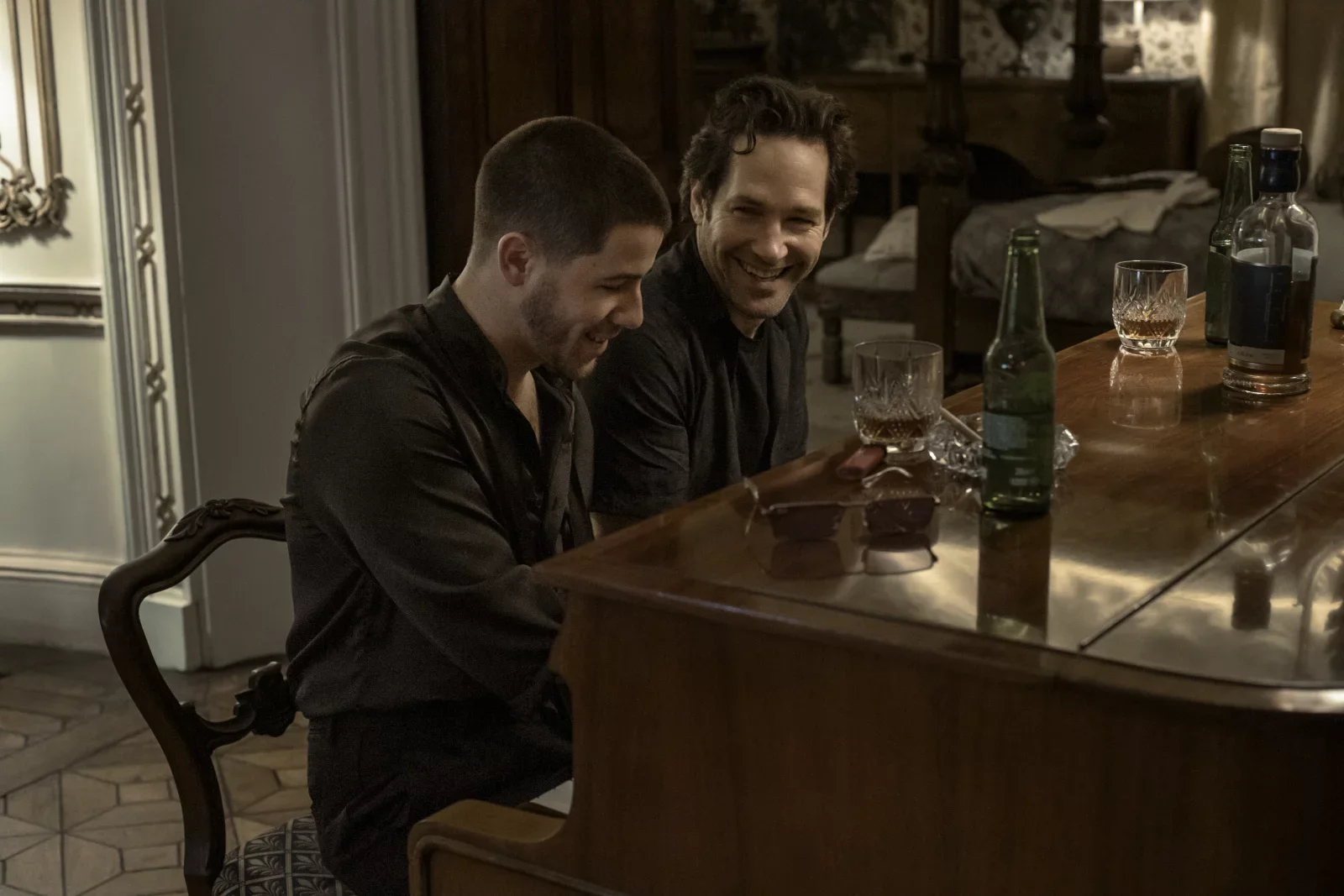
When Danny joins the Bride and Groove for a song as a gift to the bride, he and Rick impress each other with their musical talent. The duet leads to the two hanging out afterwards and genuinely hitting it off, trading song fragments back and forth and commiserating over the agonies and ecstacies of the creative process and the trade-offs they’ve made as musicians and men. It’s a great night, and like all nights, it ends. Rick goes home to his family. Danny flies back to Los Angeles. Rick’s disappointed that Aja thinks his taste in music is old-fashioned, but he can live with it. Danny’s desperate not to fall into the inescapable purgatory of the once-famous, and in a moment of weakness, claims a song that Rick shared with him as his own.
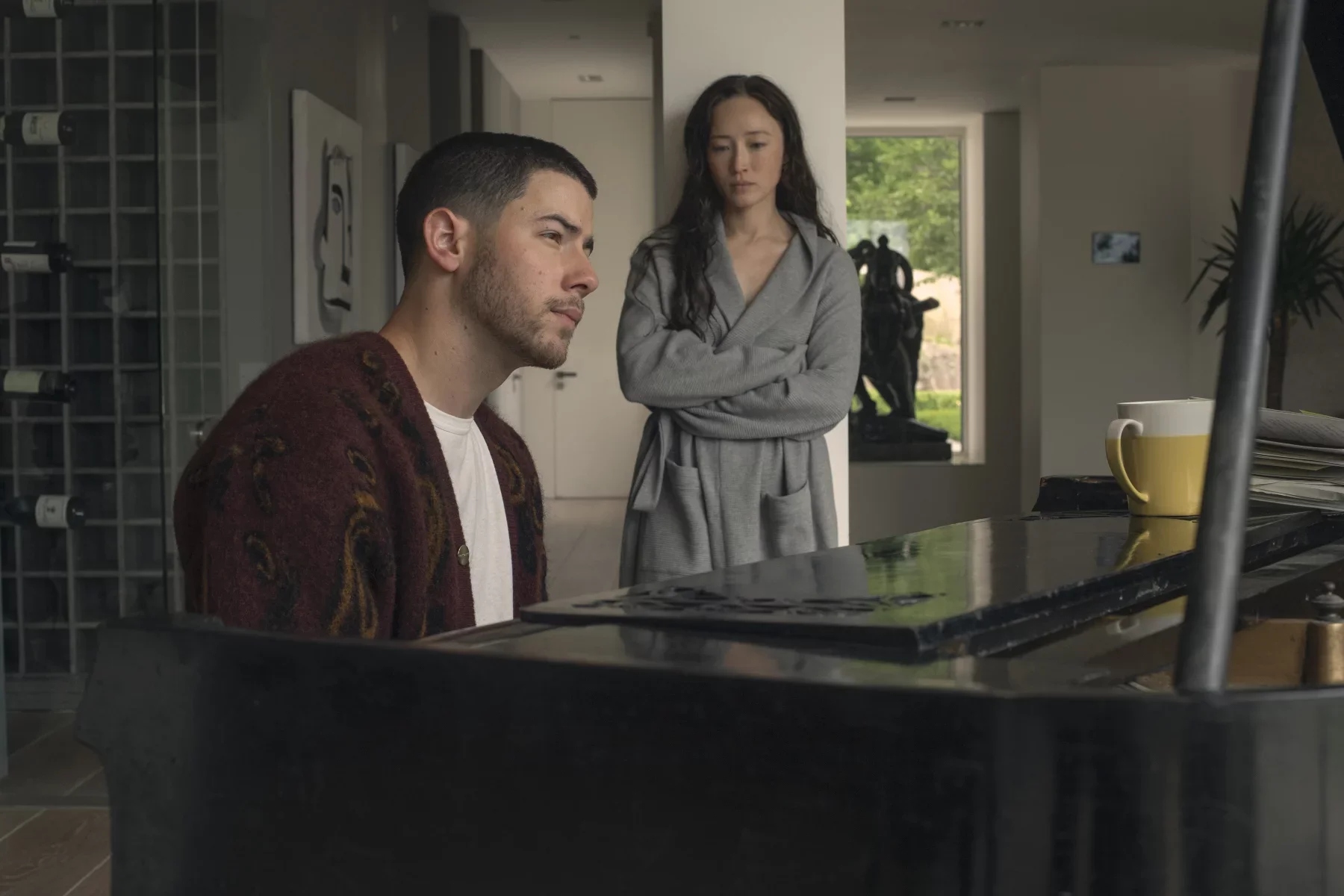
The song, “How to Write a Song (Without You),” explodes. It draws rave reviews, seizes ears the world over, and gets airtime anywhere and everywhere, including a mall where Rick happens to be buying some sneakers. He knows “How to Write a Song (Without You),” and not the way that everyone else on the planet knows it. He’s impressed with what Danny’s done with the piece, particularly its bridge, but he’d like his share of the writing credit. The money wouldn’t hurt either. The trouble is that Rick has no proof. He didn’t put down sheet music. He hasn’t shared it with his bandmates. If he recorded it anywhere, that recording has vanished into the ether. Danny isn’t saying anything, and is content to let his agent Mac (the great Jack Raynor) drop hammers on Rick until he backs off. As “How to Write a Song (Without You)” launches Danny into the ionosphere, Rick must grapple not only with the betrayal, but with the fact that he wrote a worldwide hit song, years after he’d contented himself with playing other folks’ music professionally.
Rudd and Jonas’ work is the best part of Power Ballad. Together, they build a fun platonic chemistry to Rick and Danny, two men with a shared passion and enough common experience that their differing approaches to songcraft let them see angles the other does not. Watching the two noodle and create together is genuinely delightful. It’s one of the reasons why Danny’s decision to steal Rick’s music hurts.
The other is that Danny, thanks to Jonas, isn’t exclusively a two-faced snake. He genuinely enjoyed performing with Rick and then finding a peer in him. He sincerely recognizes his fellow musician’s abilities, and, under different circumstances, probably would have been glad to share credit. But, due to a twizzler of ego, financial need, and long-craved validation, Danny proves himself weak. Jonas plays him not as a sneering mustache-twirler, but as someone who knows he’s done something despicable but tells himself that he’s getting too much out of the lie for honesty to be worth what it would cost. Danny’s a heel more than a villain, and Jonas makes his escalating poor choices consistently compelling.
Rudd likewise does fine work with Rick’s crisis. He’s been gravely wronged, and he’s right to be angry and frustrated. Where things get thorny is that, as much as Danny’s theft hurts, it’s also tremendously validating. Rick wrote the number one song in the world, a song that sells out Madison Square Garden, a song that people fall in love to. Even after years of being at peace with having chosen raising a family over pursuing fame, Rick finds his ego inflating at the same time that Danny’s newfound omnipresence stomps all over it. Rudd lets Rick respond poorly to an awful situation, to cross lines and act cruelly in ways that he has to work to make up for. The result is a welcomely thorny protagonist.
Would that the rest of Power Ballad’s ensemble had the same space to craft compelling, dimensional characters. Plunkett and Fallon’s Rachel and Aja are likable, but don’t get the space to act on their own. McDonald’s Sandy is so broad and goofy that even his moments of pathos feel out of sync with Rudd. Havana Rose Liu is wasted as Danny’s significant other, and while Raynor is endlessly charismatic and watchable, Mac is a stock agent.
More frustrating still is that Rudd and Jonas’ work is as strong as it is despite Power Ballad’s script taking a sharp downturn after the pivotal moment where Danny chooses to steal Rick’s song. Rick descends from “angry and hurt” to “possibly experiencing a severe mental health crisis” so abruptly that it feels jarring, and Danny’s assorted interpersonal relationships, one of his key motivators, are dealt with in montages. When the two reunite late in the film, Power Ballad’s script reclaims some of its specificity and grounding, but the success of Jonas and Rudd’s face-off only highlights the shaky construction of their solo arcs. This is not helped by an extended aside on Rudd’s side of the film involving a song from Once, the film that made Carney’s name. It’s a strange, weirdly sour piece of metafiction that’s too short to grow into something thoughtful and too long to overlook, and it takes away time that could have gone to Rick’s personal struggles or building out his supporting cast.
Lastly, there’s the music. Jonas is a literal pop star and Rudd’s a solid singer. The hits that the Bride and Groove play are energetically covered and enjoyable to listen to. But “How to Write a Song (Without You)” simply isn’t good enough to play the part it does. It’s a perfectly fine ballad, but it’s not a good enough song to set the world’s collective heart aflutter. Movies have been home to some of music’s all-time great ballads, and pop music generally for that matter. “How to Write a Song (Without You)” is framed like Whitney Houston’s version of “I Will Always Love You.” It is not “I Will Always Love You,” and Power Ballad does not succeed in selling it as such.
Rudd is charming, and Jonas is excellent. Power Ballad isn’t a bad film, but it doesn’t measure up to either the fine work of its leads or the best of Carney’s past work. It’s good for one go round.
If you enjoyed this article, please consider becoming a patron of Hyperreal Film Journal for as low as $3 a month!
Justin Harrison is an essayist and critic based in Austin, Texas. He moved there for school and aims to stay for as long as he can afford it. Depending on the day you ask him, his favorite film is either Army of Shadows, Bring Me the Head of Alfredo Garcia, The Brothers Bloom, Green Room, or something else entirely. He’s a sucker for crime stories. His work, which includes film criticism, comics criticism, and some recent work on video games, can be found HERE.