
Sundance '26: The Oldest Person in the World
Aging is something that has been on my mind a lot lately. The fragility and ephemerality of human life are what make it so special; the reality that we only get one shot at this life is both precious and terrifying. It makes sense, then, that the titleholders of The Oldest Person in the World are a point of intense, international fascination. Director Sam Green’s latest film, named after the Guinness World Record designation, follows several of the title holders of this ephemeral honor. Over the course of ten years, we meet the oldest people in the world (mostly women), who come from all walks of life and get to learn a bit about their lives and perspectives on aging and making it so far in the world. Director Green also becomes a character in his own documentary, tying his own struggles with mortality and aging into the central theme of the movie. At its best, The Oldest Person in the World is a fascinating dive into the inevitable mysteries of aging, but when Green lets his own struggles with mortality overshadow the greater thesis of the film, it can undercut the interesting work being done.
There are documentarians who make their presence in their films a hallmark: Michael Moore comes to mind, but the filmmakers whose work I’ve always found most effective are those who know how to get out of their subjects’ way. In The Oldest Person in the World, there are great moments where we get to observe some of the oldest people who’ve lived share their experiences in their homes. One moment in particular is when we meet Violet Mosse Brown, who at age 117, still remembers the Lord Byron poem she learned as a girl in Jamaica, where she lived out her whole life. The camera lingers as she shares the poem with a gravitas that can only be held by someone who has experienced so much life. “The monarch saw, and shook/And bade no more rejoice/All bloodless wax’d his look/And tremulous his voice.” Ms. Brown doesn’t miss a beat, and the words bounce off of the screen with a hypnotic rhythm. Then, Green undercuts it with narration.
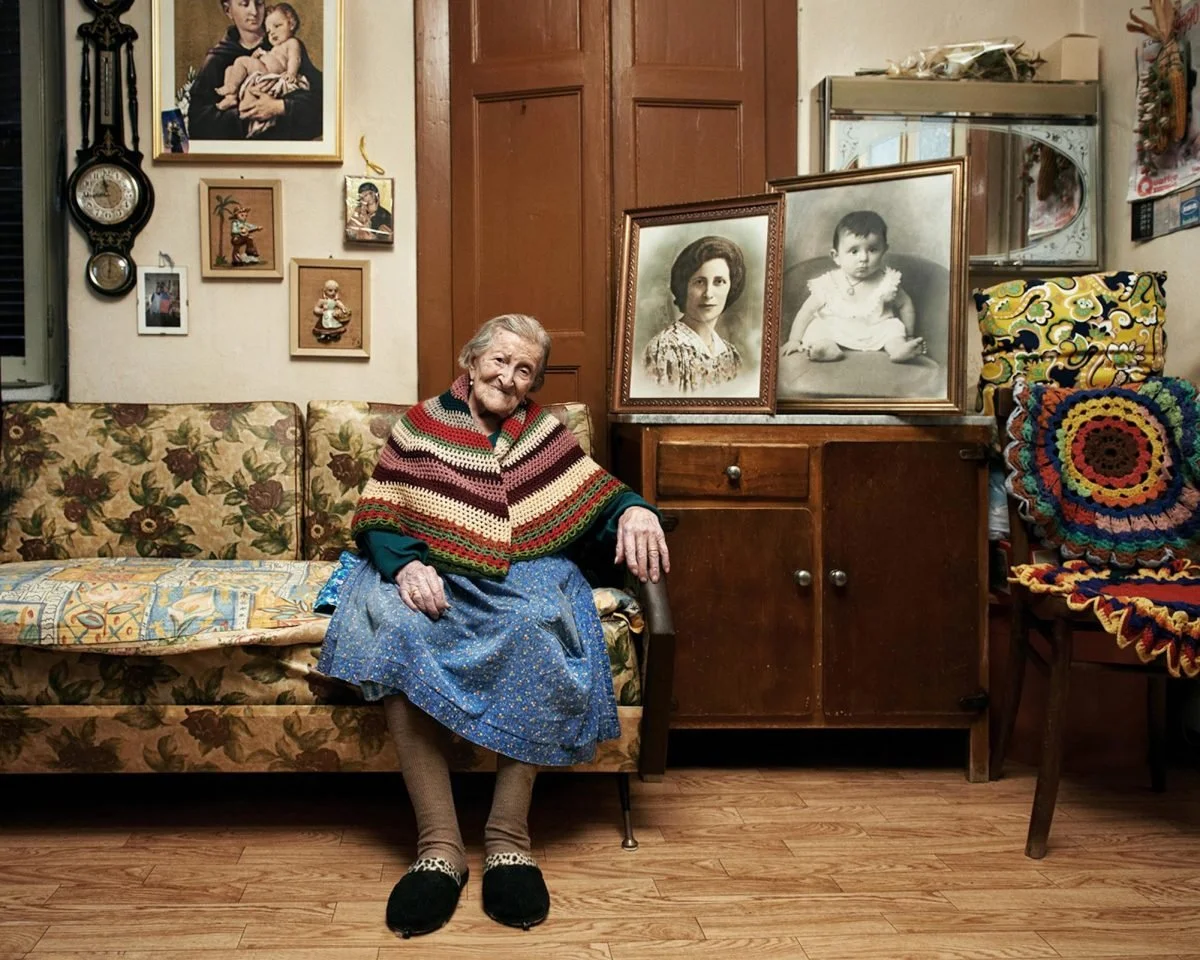
Green’s narration doesn’t add much to the film, and if anything shifts the focus away from the subjects at hand forcefully. One shot of Emma Morano in center frame early in the film hard cuts to one of Green, and the narration about his own challenges dealing with mortality overtake the film. It’s a clumsy edit that gets at the problems with the film at large. Green’s struggle with cancer is one that is tragic and an understandable reason to interrogate the one ending we all must face, but it threatens to tear the film in two. As we become invested in the life or perspective of an elder, Green inserts himself, cutting off any meaningful way to connect the lessons the women are teaching us throughout the film with his own inner monologue of sorts, derailing the seemingly universal project meant to bring us all perspective on aging with a single-minded preoccupation.
Roger Ebert once wrote that the more specific a story was, the more universal it can be. He is right, but the filmmaker has to have the right tools and structure in mind to get at the universal in the personal. Green’s asides and ruminations on his son’s growth and his own mortality feel apart from the film. The end result is a film that feels torn between being an anthropological study of the people who live longest, and a filmmaker’s personal struggle with his own life and mortality. There are lovely moments that are thanks to Green’s personal journey, namely one exchange with his son where they are discussing time and what it means to him. It’s bittersweet to see the progression of a child’s understanding of the scope and reach of time, a realization we all must go through as we age and come to terms with the temporary nature of human life. As I watched the film, and thought about my own relation to aging, whether it be through my loved ones or myself, I couldn’t help but feel like the profundity Green was reaching for would have been easier to find if he had the foresight to pick one focus of the documentary and go all out. Instead, there’s a pull between two threads: the lovely and vital observations of our elders, and the wrenching story of one man facing his mortality.
If you enjoyed this article, please consider becoming a patron of Hyperreal Film Journal for as low as $3 a month!
Alejandra Martinez is a Tejana archivist, writer, and film lover in Austin, TX. She loves coffee, David Lynch, and tweeting about everything under the sun.
Twitter: @mtzxale.