
Why Jon Bois' Documentaries Are Worth a Watch
I'm not particularly religious, but there are times that I find myself jealous of a possible higher power for its omniscience. I find myself wondering as I walk through an airport if anyone I know or used to know or forgot that I knew or even almost knew might have just left that same airport. How many times have I just missed a connection, nearly continued a story I didn't even know my life was helping to tell? That’s when I find myself jealous of a being that could see it all; every connection and near-miss and almost did, like points on a graph stretching back through human history—one giant sea of stars and a constellation too dense and complicated to ever be deciphered.
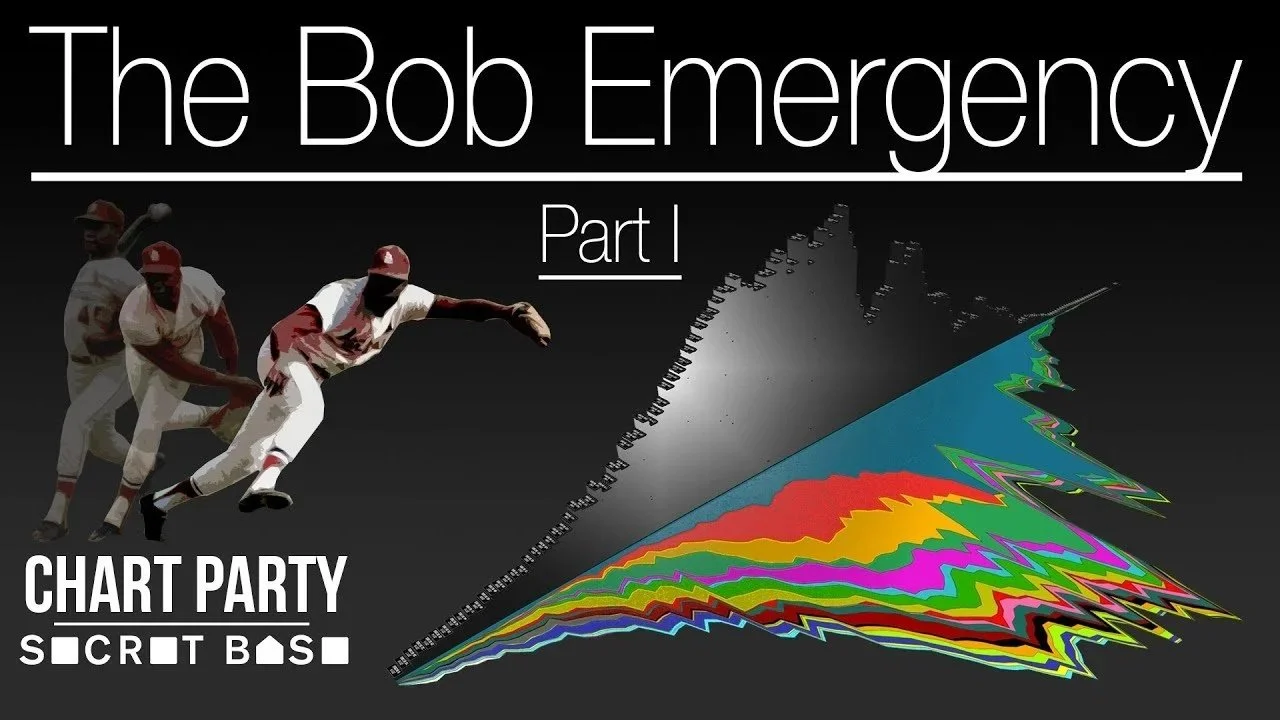
Jon Bois' documentaries often come close to scratching that itch for me. Through the use of charts, graphs, Google Earth satellite imagery, newspaper clippings, and the very occasional photo or brief footage, Bois and his collaborators stitch disparate lives into a grand narrative that means so much more than it seems.
In The Bob Emergency, Bois charts the rise and fall of professional athletes named "Bob." Not Bobby, Rob, Robby, Roberto, or any other variant: Just Bob. Dancing between sports, years, and athletes both legendary and forgotten, a seemingly inconsequential pattern coalesces into a grand narrative of triumph, defeat, legacy, and the hundreds of invisible ways we affect people without even knowing.
When discussing Bob Beamon's legendary long jump record break, Bois contextualizes exactly how unbelievable it was that a human being could even achieve such a thing, weaving in the horrible racial discrimination Beamon had to push through to even compete in the first place. One small step for man (before the jump), and one giant leap for mankind, his record representing such an incredible breakthrough that it's like Beamon broke through the laws of physics themselves. It's enough to make even the most fervent of sports haters catch their breath.

Then, on the other end of the spectrum, Bois spends a few scant minutes on Bob Cyclone, a boxer who began his career in 1952. He has no picture that Bois can find; he lost all 13 fights he appeared in (nine of them by knockout), and only a few scant mentions in local newspapers prove that he ever existed as an athlete at all. And yet, as Bois says in his narration: "He came back, night after night, to face his certain annihilation again and again. And we will never know why. But he was a Bob. He played a note in this symphony. He mattered."
There's something beautiful about a man forgotten by sports history resurrected as a footnote purely by coincidence—even the smallest thread part of the grand tapestry of life. We will never know the full breadth of our life and how it ripples out to others.
It's a theme that Bois returns to again and again, most cinematically explored in his other documentary, Section 1: the only thriller film made entirely of graphs, charts, and Google Earth. Bois lays out perhaps the only scenario in history where people's lives literally depended on the outcome of a football game. Stitching together witness reports, flight records, and his usual sports stats, we see how a mad man nearly killed dozens of people in a freak accident, only to be stopped by a ludicrous football game.
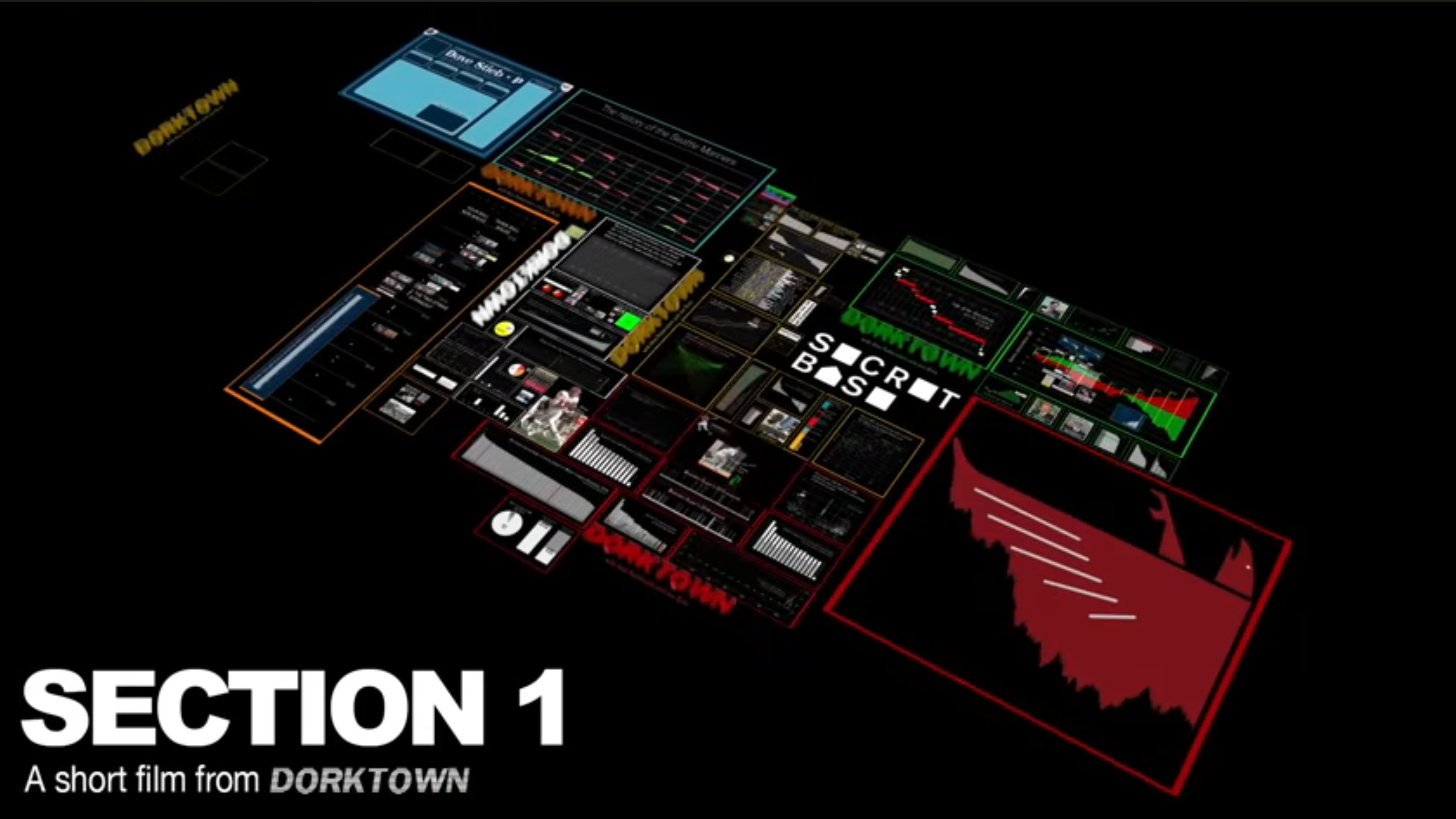
On December 19th 1976, at 2:00 p.m. EST, the Indianapolis Colts faced off against the Pittsburgh Steelers in a playoff game at Memorial Stadium. At 5:05 p.m. EST, a man flying a private aircraft crashed into the upper decks, less than 5 minutes after the game ended. For a city of Colts fans, only an absolute blowout by a terrifically terrible-at-the-time Steelers would save dozens of people's lives, only a game so completely, undeniably over long before the clock runs out would have led a stadium of fans to clear out early. It's a fundamentally US American tale: a man so full of hubris and arrogance that he thought he could own the sky, foreign policy that led to an act of (almost) domestic terror at home, checks and balances breaking down against the weight of an alcoholic lunatic, and the few dozen or so men whose battle on the field would, unknowingly, either kill or save dozens of strangers.
It's a story that could only be told in this fashion by a documentarian at once obsessed with the bird's eye view of a story and the weird quirks that make us human. Life as a series of coincidences expounding on one another like a fractal of absurdity. Sports documentaries have always been about more than the sport itself, but Bois' unique macro approach to sports and humanity itself makes his works unlike anything else existing today.
Come see the Texas Premiere of both of these documentaries at Hyperreal Film Club on March 2nd.
If you enjoyed this article, please consider becoming a patron of Hyperreal Film Journal for as low as $3 a month!
Ziah is the founder and former editor-in-chief of the Hyperreal Film Journal. He can usually be found at Austin Film Society or biking around town.