
JAMESFEST #2: Junior High School
One thing I’ve always respected about James is his omnivorous appetite for film in all of its many forms. He has seen a wider spread of films of all genres, lengths, qualities, countries of origin, et cet, than anyone I know personally, which is really saying something considering the film freaks I hang out with. What’s so remarkable about his annual film fest is not just the sheer depths to which he’ll dive to find utterly unique cinematic offerings, but how considerate he is toward the necessary ebb and flow of an audience’s focus. The event is meant to be free-flowing; attendees are encouraged to come and leave whenever and the films are organized by a rhythm that is largely inscrutable and intuitively fitting.
Following the Mormon musical Saturday’s Warrior, James programmed the 1978 made-for-TV 40 minute musical aptly titled Junior High School — a movie perhaps only notable for featuring a small appearance by American Idol host Paula Abdul. The plot follows Jerry (P. David Ebersole), a young boy entering his first day of junior high school as he tries to work up the courage to ask out a blonde girl he’s been crushing on all through summer to the party that Sherry (Abdul) is hosting. Various other musical segments interweave, et cetera, et cetera.
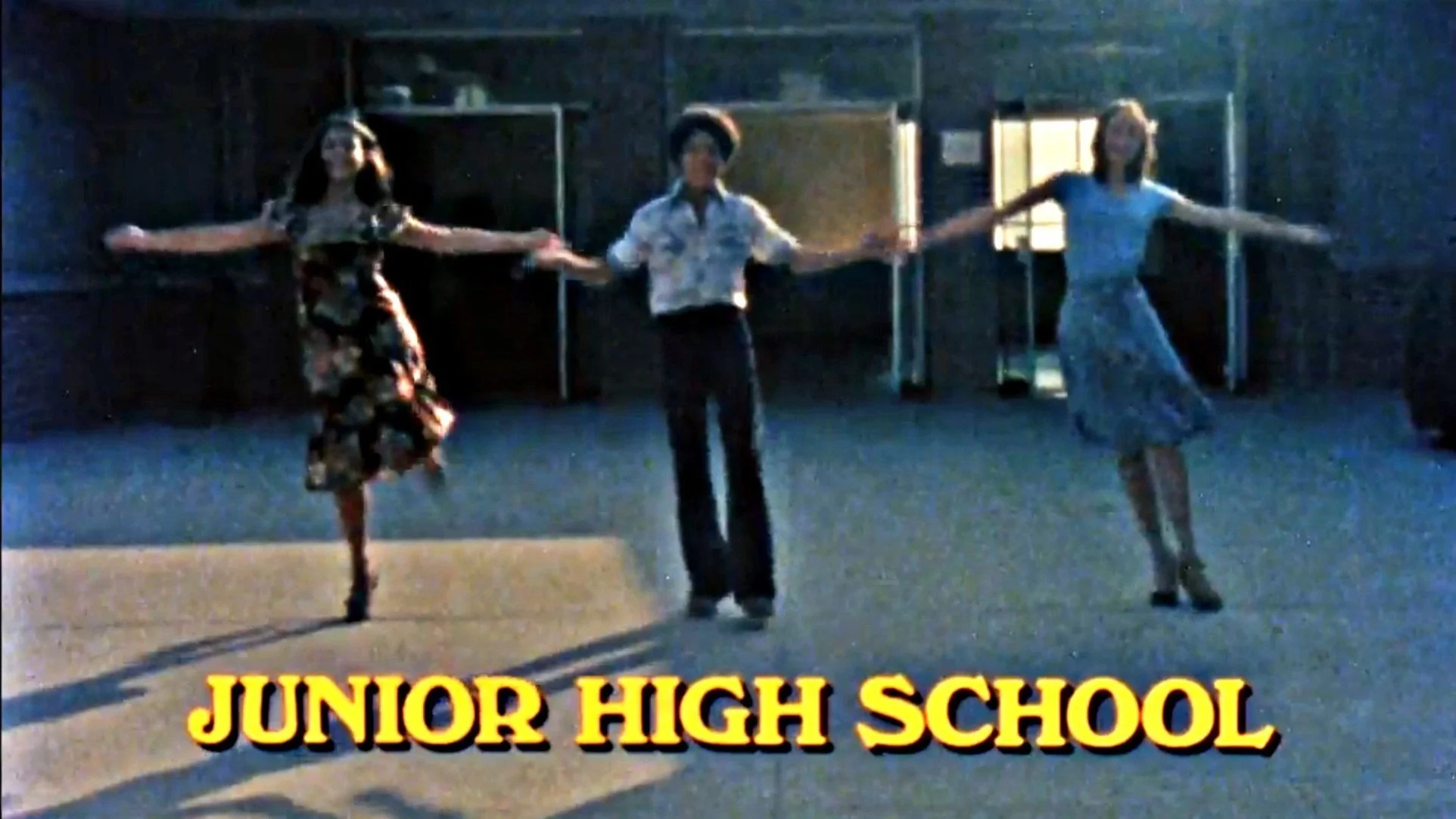
Shockingly, especially for a film about such a tried and true formula, this short musical is incredibly realistic as it depicts the horrors of junior high school. For anyone lucky enough to have forgotten, it’s a time when everyone is in that horrible phase between puberty and empathy, aware enough to feel bad but not yet conscious that other people might also feel bad. Everyone is angry, horny, lonely, and cruel, and this does reflect that reality, even while lightly sanitizing aspects of it enough to have made it on TV in the first place.
Rather than relying on the classic trope of a big sports bully, Jerry’s biggest problem is his own lack of self-confidence. He and his best friend Paul (Kirk Bennett, looking more like a 45-year-old man than most adults) are actively cruel and bullying toward a tiny, dweeby kid who bullies another unnamed child in his introduction. Characters are simply mad and mean for no particular reason, which is pretty true to that time period in my experience. And while I’m no expert on 1970s made-for-TV movies, the depiction of childhood on display felt much closer to more contemporary, less nostalgic works like Malcolm in the Middle or Eighth Grade than the Wonder Years-esque movie I expected.
I have a general aversion to live action works starring children that has only been strengthened with every horrible story to come out of the Hollywood machine and the rampant abuse found within—see the Nickelodeon horrors for one example. That said, while I think we would probably live in a better world if child actors were held to the same standards as other jobs, we live in this world, and we have to engage with a work on the level on which it’s made. To that end, this is a charming film, with the kids uniformly turning in surprisingly rich performances instead of cloying, ain’t-I-a-little-stinker vibes.
Paul’s musical number is about his inability to follow his own advice and the struggle he faces as an advocate for Jerry’s own success even while he can’t find any of his own. Jerry and his crush Lori (Karen Capelle) sing a duet about their burgeoning attraction that hinges on both of them being a bit confused by the development. They’re not falling in love, necessarily, but they’re on the cusp of puberty and drawn to who they’re drawn to—again, surprisingly clear-eyed. That said, none of the songs are particularly remarkable on a lyrical, musical, or choreographical level, and the truncated length means that the focus is neither on Jerry, Lori, and Paul entirely, nor does it rise to an actual ensemble. One song about three girls’ frustration and jealousy toward their classmates with bigger breasts comes out of nowhere (and also feels more than a bit skeevy considering that two adult men wrote the musical). I can’t really say that that particular experience was reflective of my middle school experience, but childhood is a land of contrasts.
Still, the film remains pleasantly low-stakes throughout, and at 40 minutes it’s hard to find too many faults with something made for easy watching. James always starts his film fests with all-ages programming for any cinephile parents who feel comfortable bringing their kids, and this and Saturday’s Warrior definitely fit the bill. As far as Junior High School’s effect on the culture, all I could find was that star Ebersole was one of the executive producers behind Room 237, the Shining documentary that argues that Stanley Kubrick shot the moon landing on a soundstage and then buried clues within the film. I suppose we can’t always control the things we become known for over the course of a life.
This is Part 2 of Jamesfest.
Previous: Saturday’s Warriors | Next: The Man in the Mirror
If you enjoyed this article, please consider becoming a patron of Hyperreal Film Journal for as low as $3 a month!
Ziah is the founder and former editor-in-chief of the Hyperreal Film Journal. He can usually be found at Austin Film Society or biking around town.