
Thank you Gregg Araki: I Want Your Sex Review
It’s been 12 years since the last Gregg Araki film, over 28 years since his Teenage Apocalypse Trilogy, and a week since I’ve thought about anything other than the latest sleezy, steamy, sexy piece of work that is I Want Your Sex.
In the early 90’s and the 2000’s Greg Araki made glittering, unabashed, nonconformist films that represented queer-life on screen like few other films did. During the height of the AIDS crisis his films celebrated self-discovery amidst the darkness of the time. He offered an unbridled reflection of life for young queer people and decades later his films still offer a cathartic spiritual experience rooted in harsh realities.
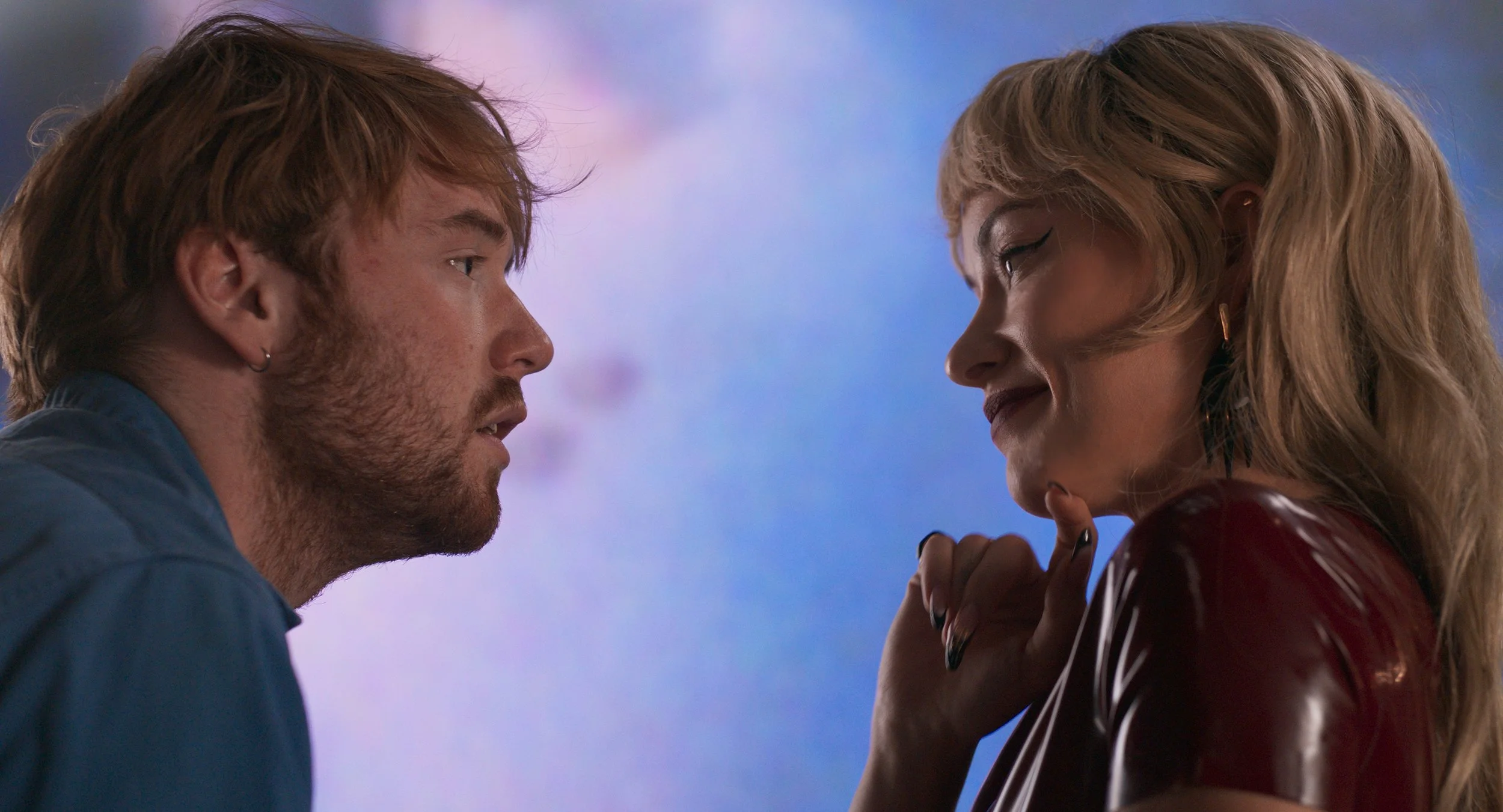
I came into the theater foaming to watch the latest in a line of torrid little films by Araki, a foundational icon of New Queer Cinema, creator of the iconic Teenage Apocalypse Trilogy, and one of my personal guiding lights. I came into the theater foaming to watch the latest in a line of torrid little films by Araki, a foundational icon of New Queer Cinema, creator of the iconic Teenage Apocalypse Trilogy, and one of my personal guiding lights. I wore a t-shirt inscribed “Another homo film by Greg Araki”, and I was ready to have the gay, shoegaze soaked, wet dream fuel of a movie experience I've come to expect. More than that I was ready to experience something raw, real, and shameless.After 12 years we’ve built much anticipation for the return of our psychosexual queer fantasy king, but after more than a decade it’s fair to have some doubt that the same magic can be replicated.
I first watched Nowhere when I was 18 and I fell in love for the same reason anyone would. When you’re young it's important to have someone implore you to be provocative. Not simply for the sake of being sexy, but to get permission to relish in the bliss, humility, and heartbreak that comes with following carnal desire. 28 years later, Araki invites Gen Z to do the same, but not before making fun of how we’ve seemed to have fallen into the same prudish fears as generations before. Our generation faces its own flavor of sexual horror and confusion brought on, in part, by growing up in an increasingly digital world, which has ushered in complex topics each of which working together to form a confused, embarrassed, socially anxious, sexually repressed, out of touch wanderer which is bluntly poked at throughout the film.
Olivia Wilde portrays a leather-wearing, whip-welding, contemporary artist and power figure, Erika Tracy, who can be embodied by her one simple phrase “sex is everything.” You can call it camp or you can call it a caricature. Cooper Hoffman plays Elliot, a young college graduate artist wannabe who’s greatest ambition is maybe starting a podcast. His life has no direction, his relationship with Minerva (Charli xcx) has become a wet noodle, and he shares an apartment with his closted friend Apple (Chase Sui Wonders). His life changes when he and Erika begin a sexual relationship while she prepares for her latest exhibit. His assignments range from chewing gum for a model vagina to wearing pink panties and taking a dildo up the ass. Their relationship dances the fine line between kinky and exploitative as she simultaneously puts Ellliot in uncomfortable situations and beckons him to pursue desire without fear or shame. Elliot seems to fall for her, bending to her will completely, and while Erika has little to no hesitation in using him as her boy toy, we can see Erika’s pursuit of Elliot has perhaps a spec of genuineness, a true interest in sexually liberating him.
Admittedly, I was taken aback at the use of some tired concepts, the workplace power dynamic role reversal for one. As kinky as it could be, it felt a little safe, a little too forced, and like it lacked some nuance. The satire of the contemporary artist who has no interest in the soul of art is telling and useful for the story, but it's been told before. Arguably this was one of the more polished, commercial, and accessible films in Araki’s repertoire, which in a film about self expression, softens the point ever so slightly. I realize it's insane to call this film tame, but stacked against his previous work it feels watered-down. I’ve become used to brazen abandonment of any need to sanitize or conform, and we’ve seen this same approach to illustrate sexual awakening play out just two years ago with Baby Girl…that’s for another time. This recycled dynamic made it hard to recognize this as an Araki film. What I’ve come to revel in about his films are how personal they are, how crude and indulgent the stories are. This felt like a lite version of past work, an oversanitization which skirts the theme of fearless pursuit of desire almost too much for me to fully buy into it…almost.
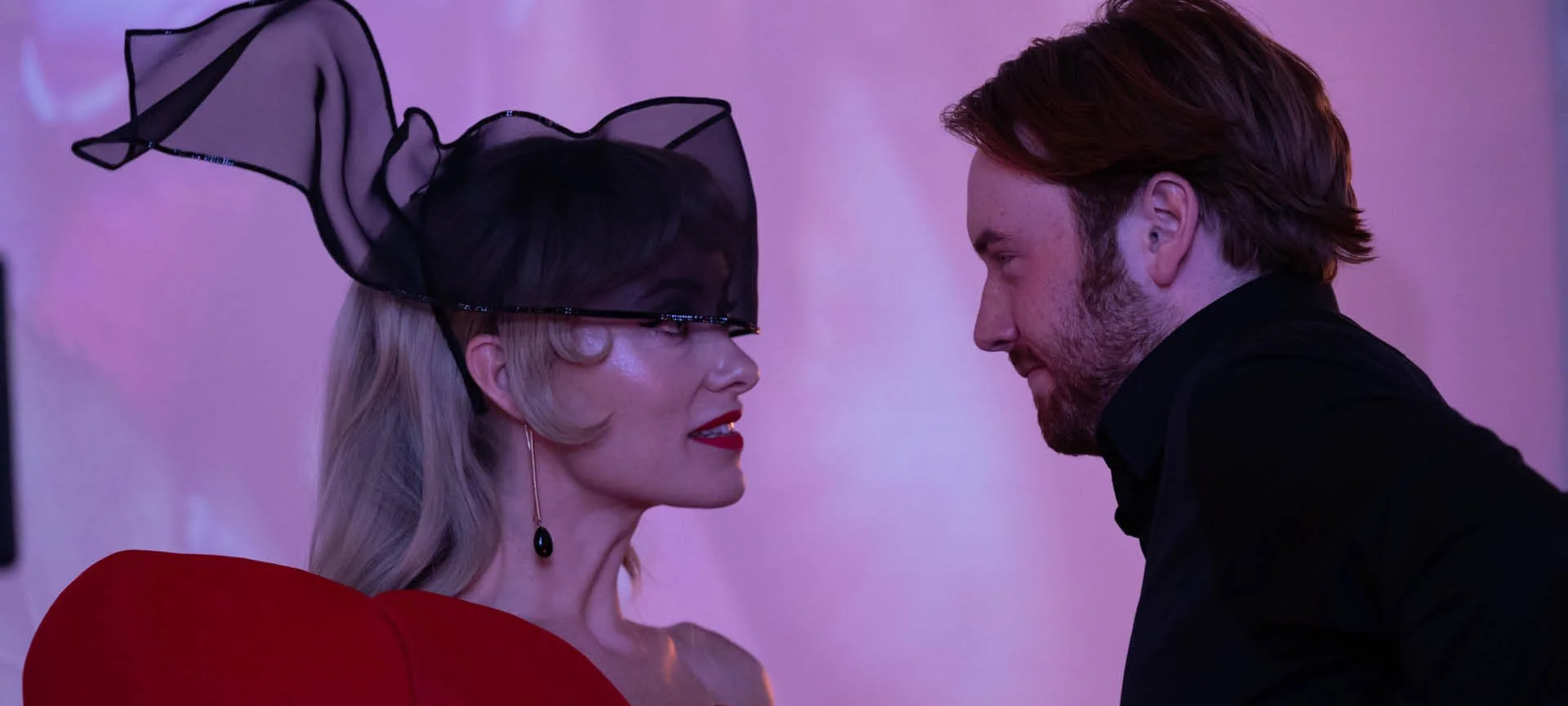
Functionally this dynamic wastes no time to blunt Araki’s point: Gen Z is a generation of sexual cowards who’ve lost freedom and ownership over their own desire, which he finds a way to say affectionately. Erika Tracy teases Elliot for being a product of his generation, afraid to want, afraid to be seen, afraid to fuck and relish in it, and you know what, point taken. I’ll admit I didn’t care for the film at first. What was meant to be a fun nudge at my generation I took personally. Had I too given up risk and desire and replaced it with fear and a general aversion to being truly seen?
To watch a Gregg Araki film is to swim in a dream of fully realized sexual liberation and have that dream confront the reality we live in. Sexual liberation isn’t achieved solely with our bodies but also with our minds and the refusal to dirty ourselves with the color of our true selves is a refusal to live entirely.
The overt conversation between a generation and the one before it is new for an Araki film. It’s not so much a reflection on simply his own experiences but a plea to a younger generation to surrender to the animal in our bodies, to risk, because through the humiliation and the pain, there is reward to be had for giving in. While feeling less uninhibited as past works do, we have to take this film in context. Unfortunately we’re at the point where I’m just grateful a film like this can still be made and have a decent release. In the context of now, this film offers a pleasure-saturated, unabashed experience which is the core of what we expect from any Araki film. It's still pop, loud, and in your face.
In the end I’m not sure what happened, but I do know James Duvall was there and I was confused so at least that felt full circle. Ultimately, this film was a fun poke with an encouraging conversation about the divides between generational perceptions and complex topics. Lust vs. obsession, desire vs. vulnerability, performance vs. authenticity and the looming danger we can feel exploring ourselves. Gregg Araki can make anything and I’ll still watch it because he reminds me sex is a concept, sex is a decision, sex is liberation, sex is confusion, sex is not just about sex, sex is dirty and not perfect and not perfect is good, be dirty, find joy. Thank you Gregg Araki.
If you enjoyed this article, please consider becoming a patron of Hyperreal Film Journal for as low as $3 a month!
Lola Garza was born in the RGV and recently moved to Austin from Denton, tx. They enjoy filmmaking, playwriting, and hope to do more of both really soon. Fingers crossed. You can find them on insta and the box @lcvelola :)