
FF '26: The Birthday Party
There’s nothing worse than finding yourself in the middle of a surprise party you’re not in the mood for. Double time when three mysterious men invade your isolated French homestead and take your family hostage. Such is the predicament that Nora (Hafsia Herzi) finds herself in when director/writer Léa Mysius’s THE BIRTHDAY PARTY kicks into gear.
A slick thriller that slowly squeezes the breath out of you, Mysius’ film runs with the simple setup of a family coming face-to-face with bad guys to deliver a tense, well-acted boiler. Adapting the 2020 novel by Laurent Mauvignier, Mysius takes time in establishing her family of protagonists: Nora, her husband Thomas (Bastien Bouillon), and their daughter Ida (Tawda El Gharchi). Along with their neighbor Cristina (Monica Bellucci), each of these characters begin the film adrift in the doldrums of domesticity. In these quieter moments, framed by Paul Guilahaume’s crisp cinematography, each performer uses their face to speak volumes about the valleys of regrets and lies forming between them. In this first act, one could swear Mysius is about to place viewers in the middle of a quietly devastating family drama.
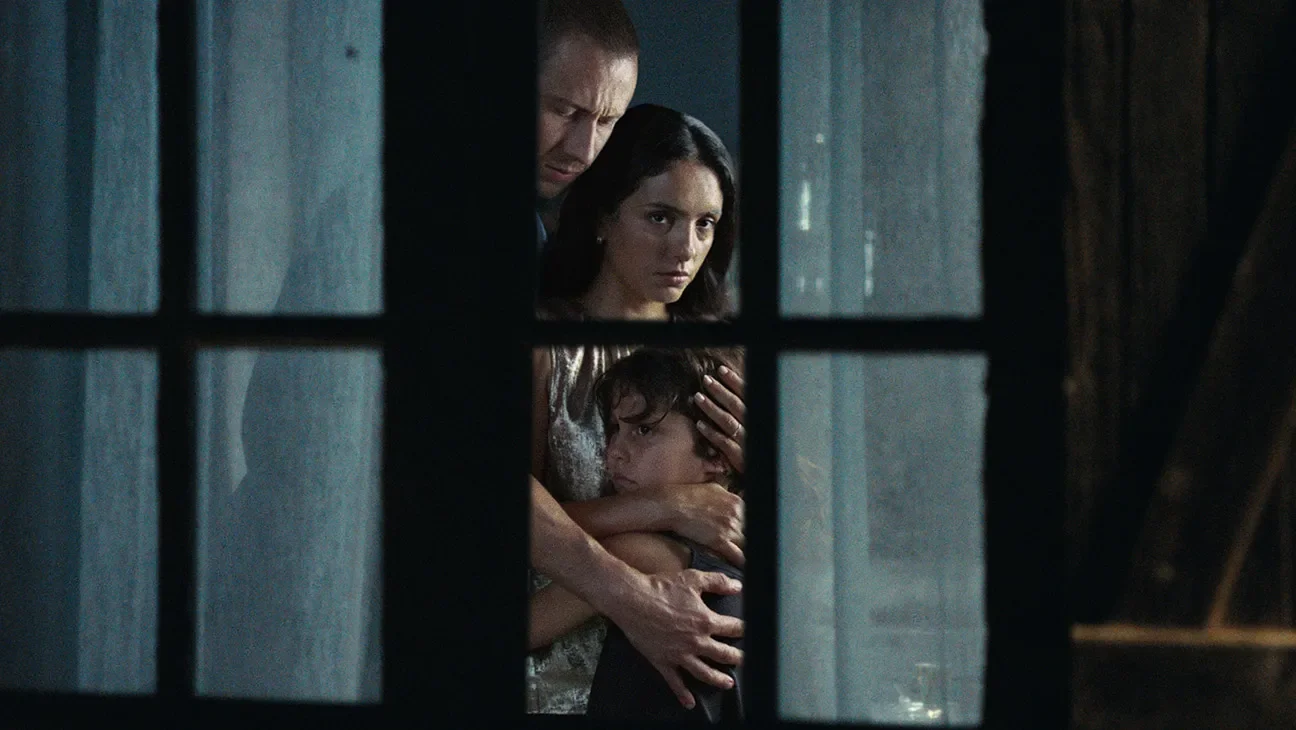
However, the arrival of three mysterious men soon sends the film into darker, more violent directions. Led by the charismatic and greasy Franck (Benoît Magimel), these men burst into the family’s orbit to unearth Nora’s complicated past. From there, Mysius sets up a battle of wills, truths, and deceits that shatter Thomas, and especially Ida’s perception of their matriarch.
While most of the actual violence is held for the final act, THE BIRTHDAY PARTY thrives in the tension that builds from the threat of bad things happening. Every move, glance, or piece of dialogue could be a character’s last, and Mysius keeps the audience on their toes on who’s safe and who’s next up on the chopping block. Guilahaume’s camera, which initially captured serene moments of early mornings and quiet afternoons, shifts to a dark night filled with cramped rooms and shadowy landscapes.
Carrying the tension is a stable of talented performers. Herzi, in particular, sells her character’s evolution from “sad mom” to a calculating and deceptive captive looking to protect her family. With big eyes taking in the chaotic night, El Gharchi makes an impressive screen partner to Herzi and Bouillon, capturing the fear and anger that bubbles in a child when they realize their parents aren’t who they say they are. She’s served well by a script that never resorts to making her character too precocious or vulnerable, instead giving her more agency to be as complicated as the adults around her.
The villains also fare well with Magimel’s leading goon giving off the appropriate air of quiet but determined menace. Whether it’s taunting Nora or offering fatherly warmth to Ida, Magimel captivates as a violent con adept at getting his way through calming words or violent actions. Paul Hamy and Alan Delhaye, as Franck’s partners-in-crime, also make their appearances count. Where Hamy controls the room with sleaziness and spite, Delhaye haunts the fringes, his character bubbling with regret and resentment that threatens to throw everyone’s plans into chaos.
In these performances, THE BIRTHDAY PARTY becomes a movie about the lies people tell each other to survive. Whether it’s between Cristina and her misadventures with Delhaye’s disturbed captor, Nora and Franck, or Nora’s own family, the characters and audience grapple with whether the truth is worth the violence it begets. That every character feels like a lived-in individual adds weight to the actions they take as push comes to shove and gunshots eventually ring out.
The violence that inevitably arrives is quick and chaotic, a shaky exhale that the film and the audience can finally let out after 100 minutes of unrelenting buildup. Mysius’s story loops back to the quiet, calm morning that the film began at. However, Nora and her family aren’t the same as we found them. The buried truths that threatened to break them finally came to light, but not without everlasting costs.
If you enjoyed this article, please consider becoming a patron of Hyperreal Film Journal for as low as $3 a month!
Hailing from Dallas, Texas, Justin Norris lives and breathes for one thing: movies. When not constantly telling people he’s “working” on a script, film review, or novel, he’s actually really trying to work on those things, guys, just trust him! Anyway, he’s also into casual reading, being an intense New York Jets fan, playing pickup basketball, and of course, catching a flick at the local theater.
To get more personal, follow the jabroni at:
Twitter: @DaRealZamboni
Instagram: justinnorris12
Letterboxd: DaRealZamboni
Medium: https://medium.com/@justinnorris12