
Hey, Man … It’s a Scene! A Curious Mix of People’s Oral History of DIY Austin
The oxymoron declares itself in the phrase “punk documentary”— a tension between the radical and unstructured nature of underground movements and the decidedly constructive (conservative, even) attempt to preserve knowledge about such a movement through narrative storytelling. Then again, the phrase “punk” is itself in contention. This project, collectively called A Curious Mix of People, was first a book by Richard Whymark, Greg Beets and Chepo Peña. This text opens with a quote from Austin musician Tim Kerr: “As soon as anybody starts interviewing me, and they start saying ‘punk rock,’ I stop them because it wasn’t punk. It was DIY.” Do-it-yourself, hardcore, punk— we are met with a medley of phrases thronging to describe the kind of music that may or may not be in question. The answer from the authors is a methodological commitment to oral history. Ideas, stories, flashes in the pan emerge from the collective storytelling of their subjects. It is a story told in their own words, their own idiom.
Moving beyond this initial book, published by the University of Texas Press, the collaborators have produced a three-part documentary series. Each of these installments (roughly 45-50 minutes in length) focuses on a particular venue of significance to Austin’s 90s underground scene: The Cavity, Blue Flamingo, and Emo’s. The episodes are named thusly. The website declares that these documentaries were “the main goal of the project to begin with.” The oral interviews are thorough and include a variety of participants in the 90s scene (as it were). Supplementary material is provided by archival audio and footage from the scene, notable figures, or musical performances. The wide-ranging vision of the creators is clear in the breadth and granularity of the material. The level of care and familiarity with the scene shown by the authors provides the necessary foundation for a project pulled together from such disparate sources.
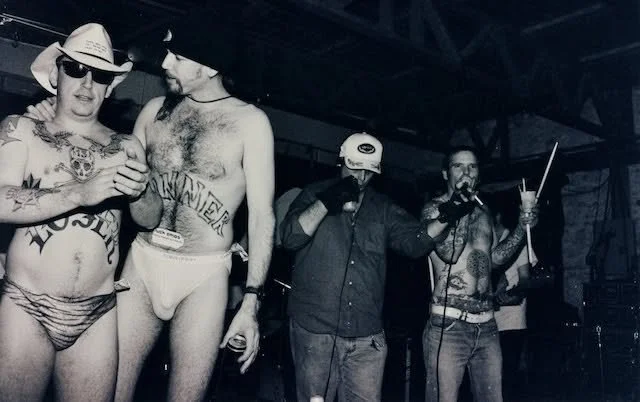
The translation of this project from written form (book, zines) to documentary films is a mixed success. While the intimacy of the various interviews distills the Austin attitude for the audience, the decision to hold forth these documentaries in a talking head style without host narration leaves the audience also grasping for context, significance, and direction. Strangely, the authors recognized this in the written version of the material: The UT Press book opens each chapter with a short vamp setting the scene before giving way to a stream of interview snippets that together form a flowing narrative. The omission of these introductory remarks for grounding and critical historical information are glaring in the documentary for the uninitiated viewer.
This interview-heavy method also reads much easier than it is seen. The first documentary installment, The Cavity, suffers most from this structural decision. The worst kind of story, famously, goes “remember when.” For a majority of the run time, we are hit with a continuous parade of “remember whens” from individuals we (as the audience) do not know, about places we have not been, and about music we do not understand the importance of. It is unclear whether one is meant to watch the documentary programming after having read the book or as a stand-alone project. The material takes it for granted that the audience should find these “shock jock” stories of wacky, zany, “punk” vignettes (brawls, interpersonal squabbles, and gross-out moments here qualifying) as inherently interesting. With a lack of clear narrative structure and undisciplined editing, the hour-long runtime turns the viewer into a captive and represents a prioritization of nostalgia over commentary and contemporary significance.
This said, the second and third installments improve considerably from the first. Titled Blue Flamingo and Emo’s, respectively, these episodes find characters, ideas, and themes to center the storytelling. The storyediting is less indulgent with the guests, cutting them off when the requisite information or emotion has been shared. With Blue Flamingo, one is immediately drawn to the character of Miss Laura — a six-foot-something trans black woman proprietor of said major Austin underground venue. Miss Laura’s voice is compelling in the archival audio and footage. Indeed, the phrase “a curious mix of people” is her invention. It is immediately clear how the personality of this individual coalesced the scene in ways it was unprepared for previously. After a series of digressions on different bands, labels, and individuals who came to the fore, we return to Miss Laura at the very end of the episode as a guiding star. One is left desiring to learn more about this singular personality and her ability to navigate between the various factions, cultures, ethnicities, genders, and other such fault lines in an unregulated 90s Austin.
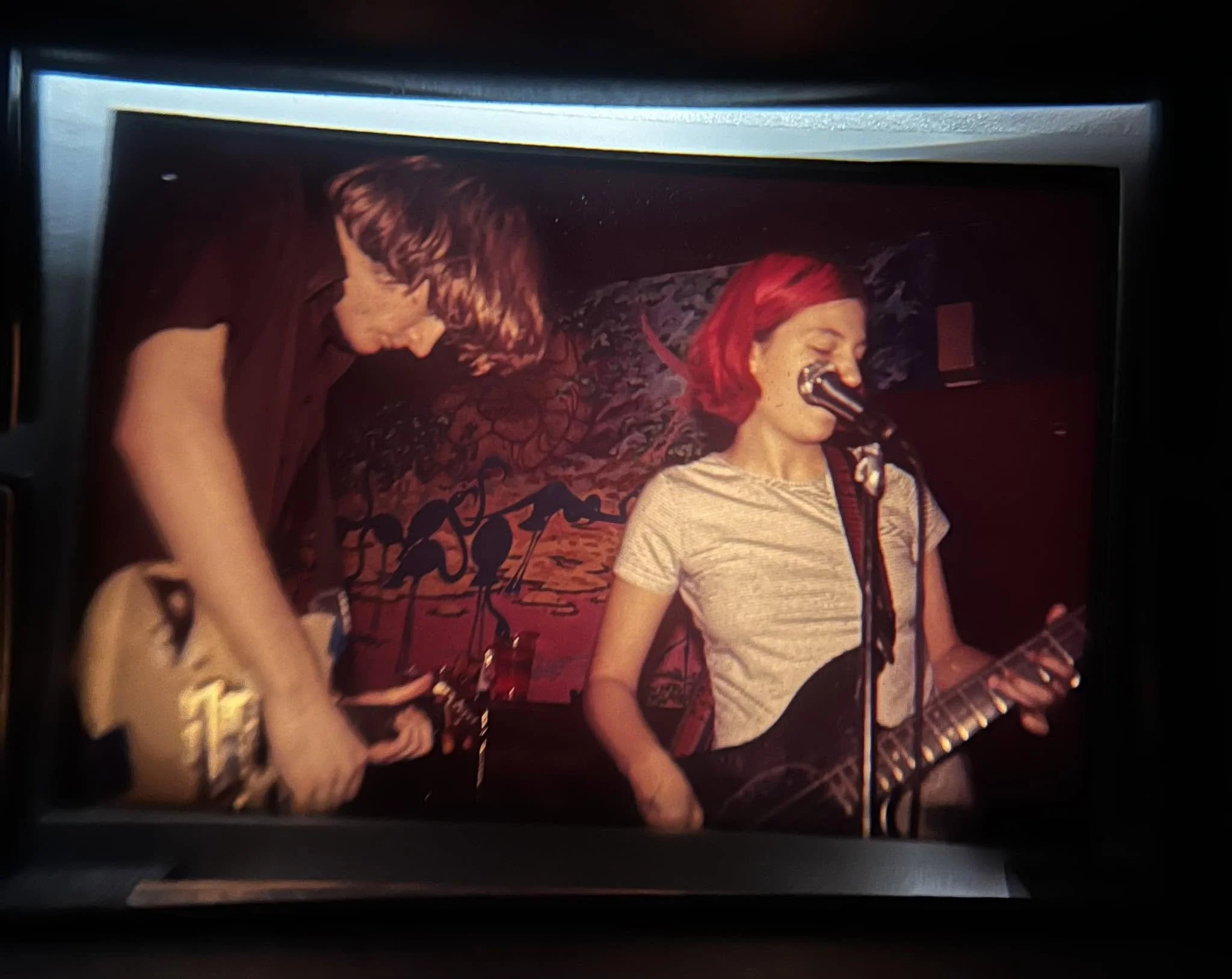
The final installment on Emo’s is similarly better organized around a few central characters and themes. We encounter a few more recognizable figures (Johnny Cash, no less) as we witness Emo’s go from an underground darling to a mutually beneficial “feud” with the band Fuck Emo’s to finally succumbing to corporate capture (as with much of Austin’s underground culture). In this way, the end of this installment not only successfully closes the chapter on Emo’s but also bookends the series with a recognition of Austin’s changing music economy. The power of the oral history methodology comes to the fore as we see the same characters walk through their experiences over the course of a decade culminating in the “fall from grace” of a culture that burned briefly and brightly. There is no need for a heavy-handed exposition on what the culture lost in the commercialization process. It is evident from the language and attitude of our subjects.
The oral history documentary is a delicate balancing act. On the one hand, it allows the subjects to speak in their own voice. It prioritizes their memories over the cold hand of archeological-sociological examination. That said, the oral-history-as-documentary is always presented through the sieve of the director’s vision in the editing room. One recognizes an increasing confidence and familiarity with The Edit from the directors in this project as the installments progress. What is lacking, in general, is an overarching narrative structure that allows the audience to recognize what the directors mean for us to gain from learning about this scene. Why was 90s Austin underground so special? What lessons does it have for us today? A heavier hand in this direction would have provided an emotional clarity and watchability for this program.
The achievement of the directors is no simple feat. They have presented a collection of intimate interviews about a scene that perhaps will never again get such a careful treatment. These are invaluable materials for historians (academic and unofficial) who want to understand what made Austin such a magical place in the 80s and 90s. A Curious Mix of People, at least, preserves one element of that story.
If you enjoyed this article, please consider becoming a patron of Hyperreal Film Journal for as low as $3 a month!
Akshaj is a writer-director from Dallas, TX. He's a lover of American popular music, New Queer Cinema, and global animation. Anything, really, to do with misfits, miscreants, and mise-en-scène.