
Back to the Future Is Not About Time Travel. It’s About How Your Family is What You Make It.
There are two kinds of people in this world: people who think Back to the Future is a perfect time-travel comedy, and people who have looked at the McFly family tree for longer than seven seconds and realized Hill Valley is one bad GED away from becoming a medieval village.
Everyone wants to talk about the DeLorean, the flux capacitor, the Libyans, the lightning strike, the hoverboard, the alternate 1985 casino nightmare, or whether Doc Brown should have been allowed within 500 feet of a high school parking lot. But the real engine of the trilogy is not plutonium, not garbage-powered Mr. Fusion, and not Huey Lewis pretending he has standards.
It is bloodline maintenance.
The entire franchise revolves around one central anxiety: what happens if your parents do not hook up correctly?
That is not subtext. That is the literal plot of the first movie. Marty McFly does not travel back to 1955 and accidentally invent rock and roll because the movie is interested in theoretical physics. He travels back and has to stay because his existence there in the universe demands that Lorraine Baines become romantically attached to George McFly in the exact correct way, at the exact correct moment, under the exact correct conditions, or else Marty and his siblings will dissolve out of a photograph like God is uninstalling them from Windows.
And yes, on paper, that is a charming sci-fi setup. But emotionally? It’s about a young man forced to become the romantic project manager for his own parents. That is not an adventure. That is generational HR.
The movie asks Marty to intervene in the primal scene of his family’s creation. He has to study his mother’s sexual preferences, manipulate his father’s confidence, stage a fake assault scenario, and make sure everyone ends up at the school dance horny enough to preserve the future but not so horny that the movie loses its PG rating.
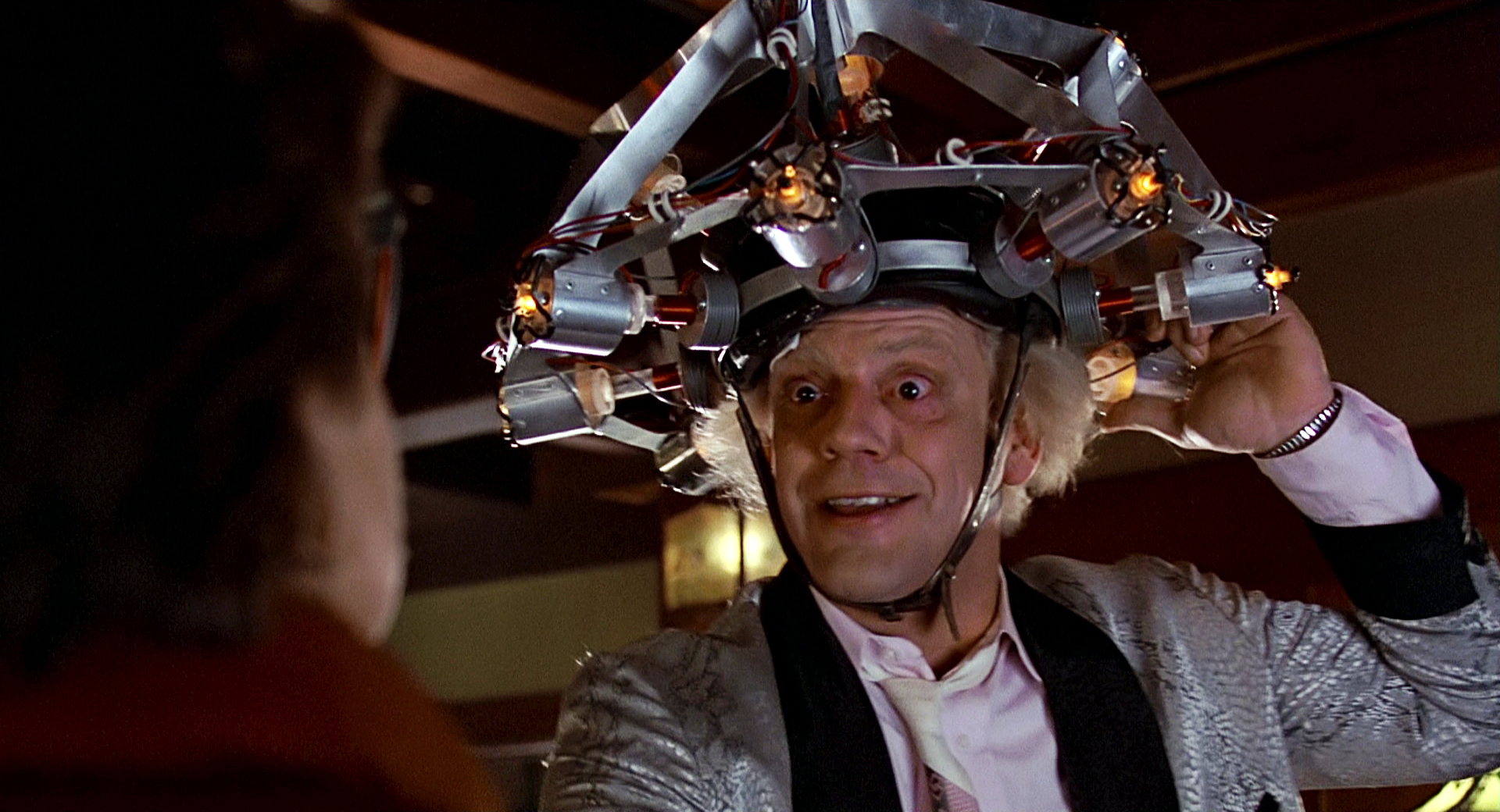
“I KNOW WHAT YOU’RE THINKING! I’M THE INVENTOR OF BIRTH CONTROL!”
This is where the franchise gets deeply, gloriously strange.
Because Marty is not just saving his existence. He is preserving a bloodline locked in a permanent loop of McFlys and Tannens circling each other across time like two raccoon families fighting over the same dumpster behind history. Every era has a McFly. Every era has a Tannen. They are always in the same town. They always find each other, antagonize each other, humiliate each other, and repeat the process with slightly different hats.
At some point, this stops feeling like coincidence and starts feeling like Hill Valley has one family tree and two surnames.
The Tannens do not behave like normal bullies. They behave like a hereditary curse with a face. Buford Mad Dog Tannen is there in the Old West. Griff Tannen is there in the future. Biff is there in the middle. The Tannens are not a family. They are a recurring software bug in the simulation. The McFlys, meanwhile, are always awkward, passive, nervous, and inexplicably positioned close enough to the Tannens for history to keep setting up the same conflict. Seamus McFly in 1885. George McFly in 1955. Marty McFly in 1985. Marty Jr. in 2015. The family does not evolve so much as respawn.
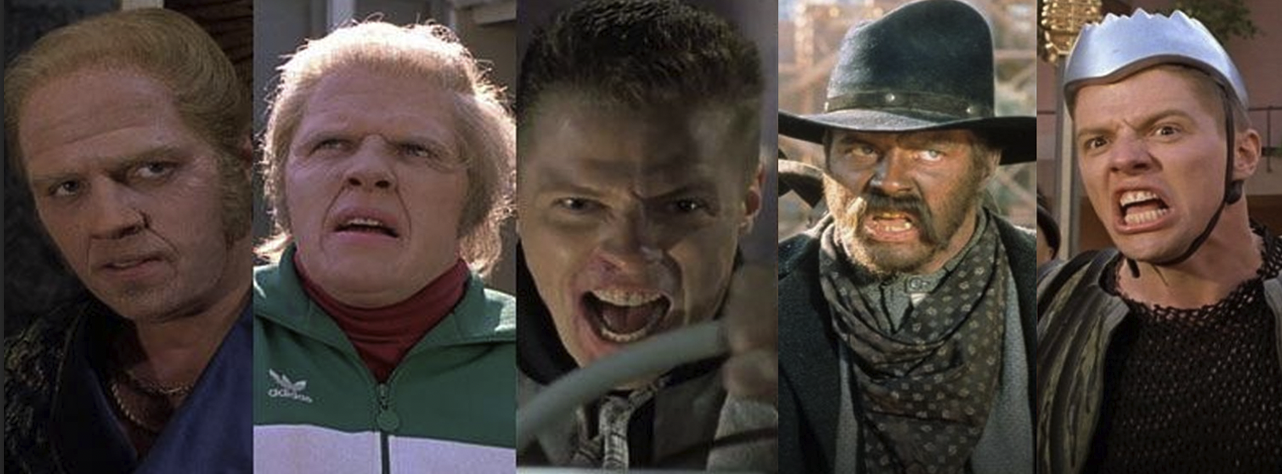
This is borderline Cronenberg level of creepy without the gore
And that is just the movies.
The cartoon makes it worse. Back to the Future: The Animated Series takes the already suspicious McFly-Tannen genealogy problem and turns it into a Saturday morning anthropology exhibit. The show has the freedom to go anywhere in time, through any historical door it wants, and what does it keep finding? The same faces. The same family types.
The animated series should have been where the franchise loosened up and became pure kid-friendly nonsense. Instead, it doubles down on the most unhinged implication of the films: time is not a river. Time is a county fair where every booth is staffed by one of your cousins named Ed and they tell their daughters they’re great kissers.
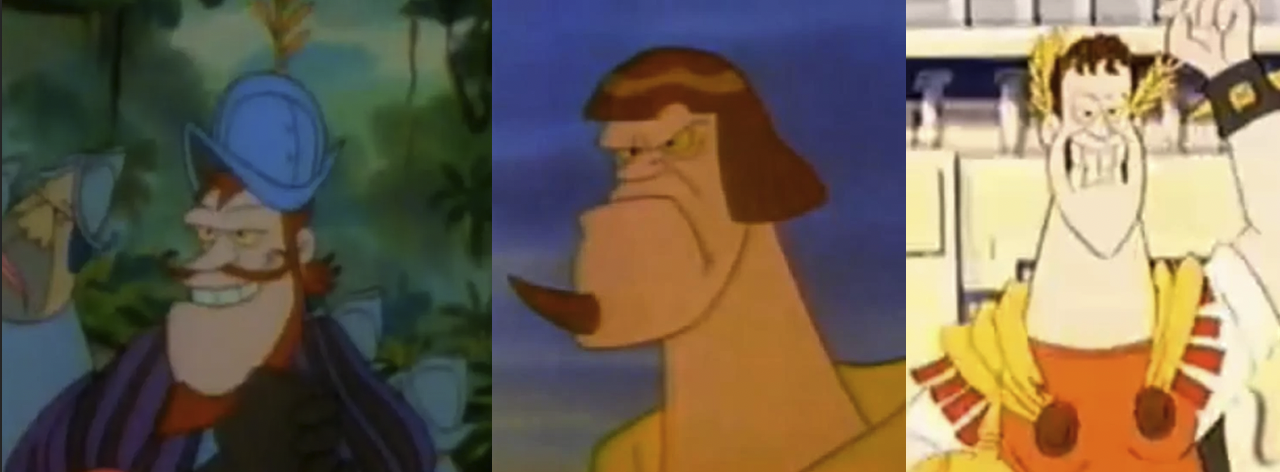
He sure as heck didn’t “get it from his momma.”
Every era is just Marty McFly wearing the hat of whatever century he accidentally wandered into. The same visual joke that history is apparently just a costume rack for the same twelve people: Michael J. Fox in a cowboy outfit, Michael J. Fox as a future loser, Michael J. Fox as his own son, Michael J. Fox as his own daughter, Michael J. Fox in a bonnet, Michael J. Fox as a cyberpunk failson, Michael J. Fox as a caveman if they felt like going that far, Michael J. Fox as a colonial twerp, Michael J. Fox as a medieval peasant, Michael J. Fox as whatever the nearest historical theme restaurant needs him to be. It stops being a family resemblance and starts becoming a medical condition.
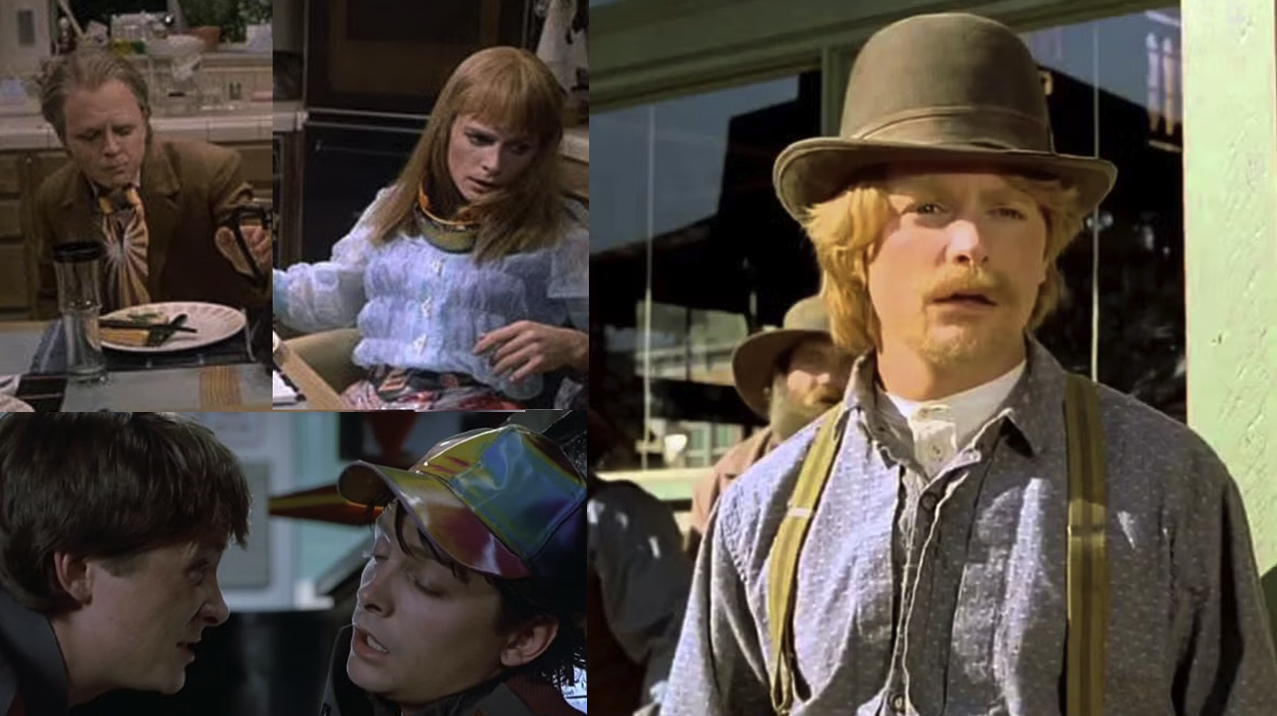
5 identical people across 4 generations is some Hapsburg level intimacy.
The cartoon does not escape the bloodline weirdness. It confirms it. Every era really is full of suspiciously familiar people who look like the same families have been trapped inside a snow globe since the invention of manure as a commodity.
Which raises an uncomfortable question: why are these people always together?
Hill Valley is not New York City. It is a small town where the same families keep breeding, beefing, and producing genetically familiar descendants who look exactly like previous generations except with worse fashion. By the time Part III reveals that Marty’s ancestor looks like Marty and that his Irish relatives are already weirdly involved in the same town’s foundational mythology, the trilogy has stopped being a time-travel story and become a warning label against marrying within county limits.
At a certain point, you have to stop asking whether Doc Brown invented time travel and start asking whether he is some kind of Appalachian Time Lord of inbreeding. Not a scientist. Not a genius. A hill-country Gallifreyan with plutonium access. A man who built a stainless-steel family-tree correction device and disguised it as a car.
Doc Brown acts like he created the DeLorean to explore the mysteries of the universe, but the practical use of the machine is almost entirely genealogical crisis management. Marty’s rambling use of it results in him having to prevent his mother from making out with him, restore his father’s mating confidence, stop Biff from turning into a casino dictator, and verify that the same two cursed families have been doing this same little dance since people were still getting shot over whiskey and manure. Doc did not invent time travel. He invented Ancestry.com with doors.
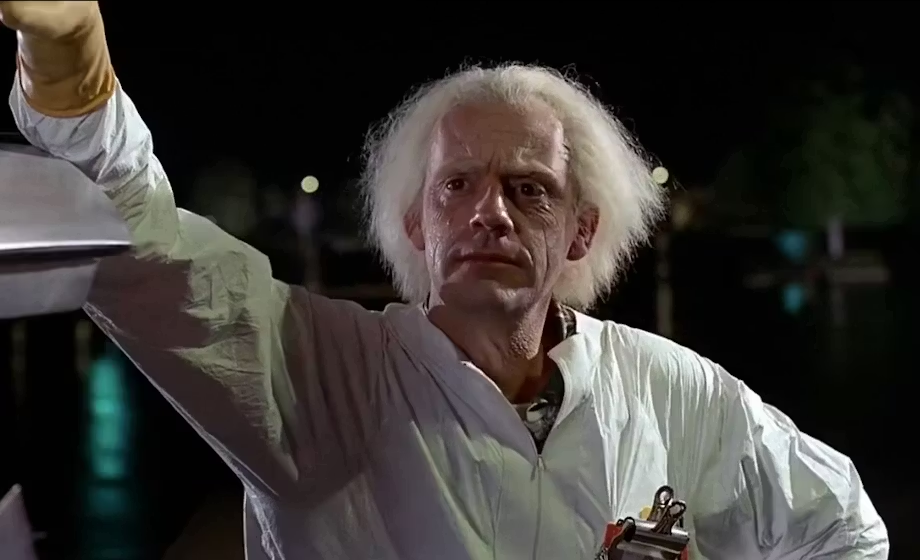
“You know Marty, I’m somewhat of a scientist myself.”
And then there is Lorraine.
Lorraine is the emotional grenade of the first movie. She meets Marty in 1955 and becomes attracted to him, not knowing he is her future son. The film plays this for awkward comedy, and it works because Lea Thompson threads the needle between innocent teenage crush and the clear sense that the writers knew exactly how cursed this was. The movie is not avoiding the incest implication. It is dancing around it with a lampshade on its head.
Marty spends much of the first film trying to stop his own mother from being romantically interested in him. That sentence alone should qualify Back to the Future as Southern Gothic science fiction.
The school dance becomes not just a romantic climax but a genetic checkpoint. The universe stands in the corner with a clipboard: not that boy, the other one, the weak one, yes, him, that’s your father. The first movie is about making sure your mother kisses the right nerd.

“I like what I see Mr. Hilfiger. Tommy is such a nerdy name.”
The second movie is about what happens when a violent meathead gets access to wealth, power, and unchecked entitlement, which is also called American history. Biff’s alternate 1985 is not simply what if Biff got rich. It is what if the Tannen line finally won. The whole world becomes tacky, predatory, casino-lit, and morally diseased because one bloodline got the cheat codes. It is not capitalism so much as dynastic trash.
Then Part III goes backward to the Old West and confirms the pattern. The McFly-Tannen conflict predates cars, high schools, skateboards, and rock and roll. Buford Tannen is proof that Biff was never the problem. Biff was just the 1985 update patch of a generational infection in the software. Heck, even the Strickland family turns out to be caught up in the breeding drama too. Just look at how Sheriff Strickland is identical to his offspring running the future high school.
This is what makes the trilogy accidentally brilliant. It gives us the fantasy of time travel but keeps revealing that history is not shaped by technology. It is shaped by family patterns, cowardice, trauma, social status, and whatever the hell is going on in Hill Valley’s marriage records.
Now we’re finding out that Doc also built a rolling 23andMe felony that lets one teenage boy audit his family’s breeding conditions.
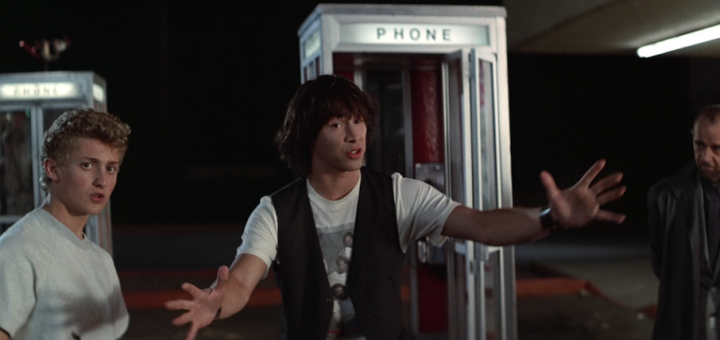
“Look dudes, we may not be in this movie but time travel doesn’t require plot holes and weird incest to work well.”
Marty does not save the future by defeating a villain. He saves it by making sure his parents reproduce correctly. That is insane. That is also cinema.
The same families keep showing up across every era, making the same mistakes, fighting the same fights, and trying not to accidentally make out with the wrong relative. The future may have flying cars. The past may have horses. But somewhere in the frame there is always a McFly-looking person, a Tannen-looking person, or a Brown-adjacent lunatic treating the space-time continuum like a family reunion with a starter motor that runs on absinthe.
The future may not be written, but the family tree is definitely suspicious. And if the family tree is suspicious, then Doc Brown is not a time-traveling scientist. He is the weird old wizard at the edge of the holler who knows which cousins are allowed to kiss, which ones must be redirected toward the dance floor, and which bloodline needs to be stopped before it invents casino fascism.
Back to the Future is not about time travel. It is about the universe looking at the McFly family tree, sighing deeply, and sending an Appalachian Time Lord in a DeLorean to make sure the branches do not touch.
If you enjoyed this article, please consider becoming a patron of Hyperreal Film Journal for as low as $3 a month!
Jesse is a retired Navy veteran and Texas State Alumnus with a Degree in Digital Media Innovation and minor in Theater. In a past life he was a red shirt on the Enterprise doing nuclear power and propulsion plant reactor operations and maintenance. He currently resides in Austin helping to repair physical media players and doing communications work with We Luv Video along with veterans advocacy work as Senior Vice Commander with a local DAV chapter. He has co-hosted The Texas Hemp Show and hosted Lonestar Collective which has won 2 statewide fan favorite awards for best online production in the hemp industry. If he’s not out catching a flick he’s possibly hanging out with his family or playing on guitar with his son.