
The Dink Doesn't Hit Hard Enough
I hate Pickle Ball. I hate the culture that's emerged around it—the tech bros with their carefully sculpted gym bodies, needlessly taking off their shirts to grunt and hoot and holler. I hate that what should be a completely normal, somewhat popular game has this constant needling, whiny energy to it. "Why can't you just try it? It's actually really fun and a great workout," its fans say. I hate that the game demands an opinion, and any disinterest in it is a signifier of an unwillingness to engage with what's popular. For every normal fan of the game I meet, I see 10 more tech bros telling me I need to "use AI or I'll get left behind" or that I "don't understand that it's actually incredibly physically demanding."
These people, the kinds who don't realize that their favorite game is just Badminton for dudes that dropped the f-slur in high school, don't represent everyone, but sports stereotypes are stereotypes for a reason. I say climbing, and you think of a type of person, don't you? And sports movies depend on that stereotypical shorthand. This is a genre built on cliche, hitting the expected beats in order to deliver on the story that people came to see. In The Dink, a new sports comedy now streaming on Apple+, I did not recognize any of the people onscreen as shorthand for anything but the easiest possible joke to capitalize on an SEO-friendly sport that's popular.
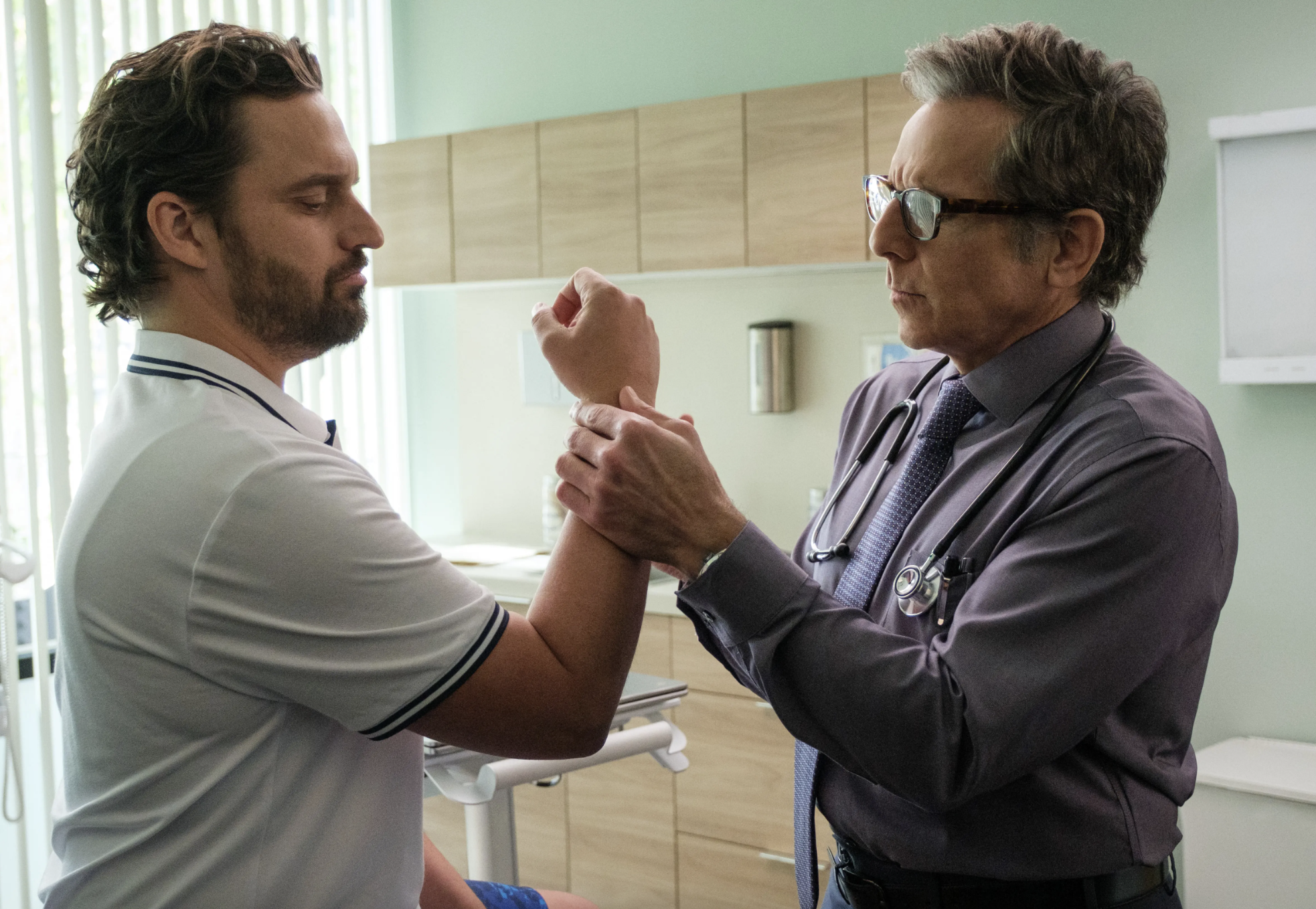
The film follows Jake Johnson as Dusty "The Hammer" Boyd, a former tennis prodigy who shattered his wrist decades earlier in a match with real-life tennis pro Andy Roddick. When the film begins, Dusty's working for his dad (an intimidating Ed Harris) at the local tennis club, a manchild stuck in the past in the grand tradition of most comedies of the last 20 years (see Step Brothers for just one example). In a somewhat convoluted series of events, Dusty has to play a "tennis duel" against Chip (Patton Oswalt), a member eager to expand the club's single Pickle Ball court to more of the club.
After Dusty breaks his wrist, he's forced to pick up Pickle Ball to recuperate where he learns that the grannies and confusingly gendered—one baffling and unfunny joke is about two similar-looking, queer-implied characters that grunt sexually and are either siblings or lovers—people that love the game aren't actually so lame after all. Granted, living in Austin, Texas, a current tech dystopia of automated cars and Meta glasses, might skew my perception, but I don't see a lot of Pickle Ball players that match The Dink's perception. Tennis, like golf, is a sport often defined by the wealthiest fans and players, but there are tennis courts everywhere and a cheap racket and balls aren't pricey. The "snobs vs. (elderly) slobs" narrative simply doesn't hold water with what I've seen—it feels more like a joke heard secondhand by the writer, rather than a story based in lived experience.
And that awkward friction carries through the film outside of the central sport as well. Remember Step Brothers? Mary Steenburgen likewise stars in The Dink as Candace, Dusty's elderly Pickle Ball partner and quasi love interest. The film's gradual build toward them having an emotional and romantic connection almost works, but the filmmakers want to have their cake and eat it too, making part of the joke that Dusty (and the audience) would find Candace attractive but ultimately swerving away from bringing them together. Her almost-flirtations exist more as a twist more than they do as actions that would come from a real person.
Part of that problem comes with Steenburgen herself, who delivers a largely wooden performance. She's been great in past roles, but here she seems out of her depth and confused at what the script needs from her; in one scene, she seems to stumble over one of her lines and the take is used in the film regardless. Andy Roddick's cameo in the film comes off just as wooden, and the choice to bring in a real-life tennis pro never quite feels sincere. He's not enough of an actor to pull off being the antagonist, but his role demands enough screentime that he's simply there, awkwardly waiting for his turn to say a line.
Director Josh Greenbaum delivered one of the best surrealist studio comedies of the last 10 years with Barb and Star go to Vista Del Mar, but that film had a daring edge to its narrative choices and comedy stylings. The Dink simply exists halfway between a sports movie and a comedy, never thrilling enough to be the former, never funny enough to be the latter. And writer Sean Clements has written for some of my favorite shows, from Curb Your Enthusiasm to Workaholics. I simply expected a higher quality of joke than decades-past-their-prime riffs like sexy grannies and suck-up sidekicks.
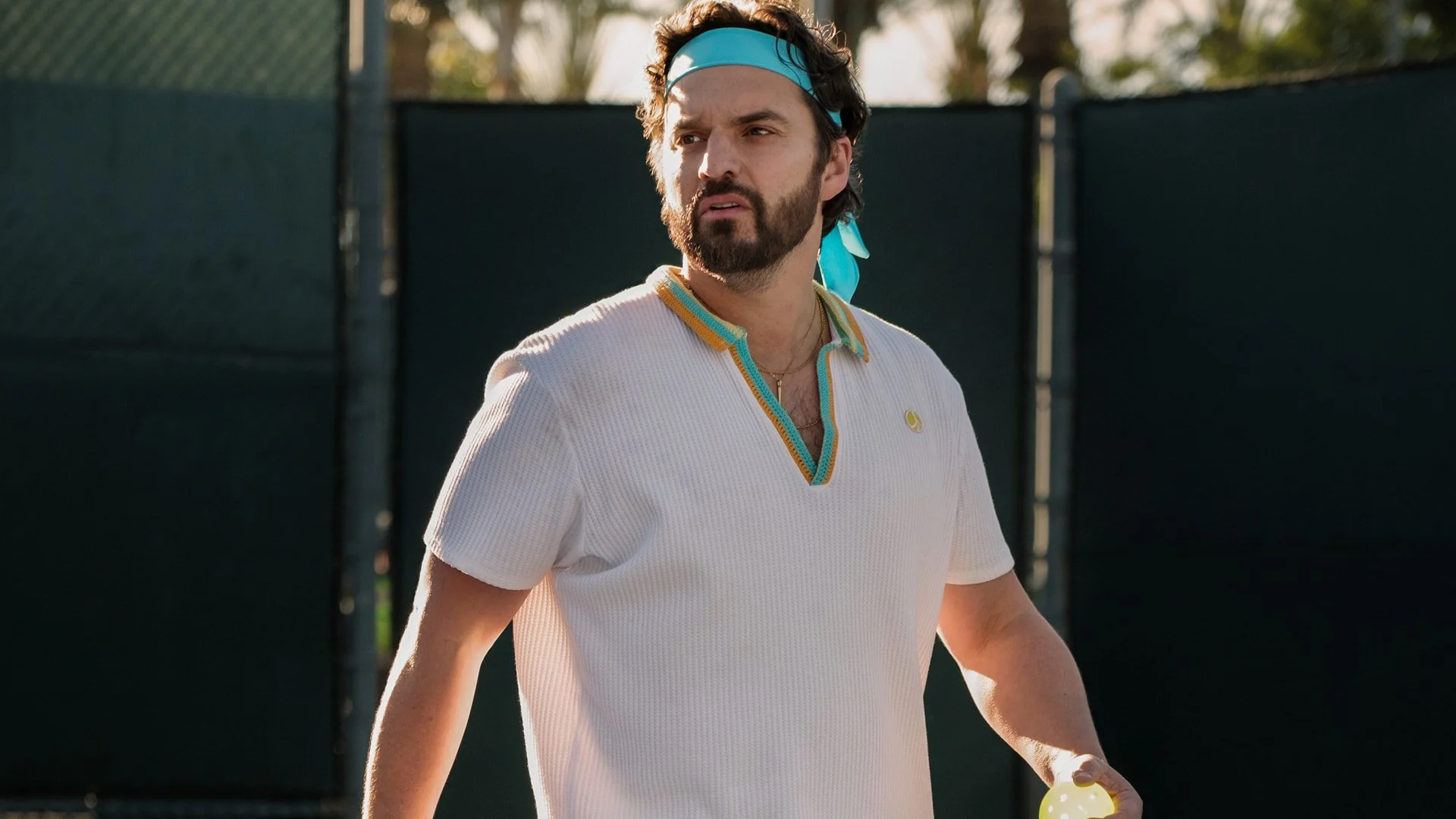
But if there is a bright spot to be found here, it's in Jake Johnson. The former star of New Girl and a slew of indie dramedies simply has "it," that ineffable star power that's easier to explain when talking about someone who lacks it. Even when playing an insufferable screaming manchild, you just like him, like seeing an old friend after years apart. His quest to prove himself worthy of his dad's love is as boilerplate as it comes, but Johnson brings so much sincere heart and charisma that it's almost enough to watch him shine. I just wish the movie itself was as good whenever he's not onscreen.
If you enjoyed this article, please consider becoming a patron of Hyperreal Film Journal for as low as $3 a month!
Ziah is the founder and former editor-in-chief of the Hyperreal Film Journal. He can usually be found at Austin Film Society or biking around town.