
SXSW ‘26: Interview with Ayden Mayeri, director of Summer 2000
In the summer of 2000, four preteen best friends living in the suburbs worked together to write and record a pop album under the name X-Cetra. When the girls first heard the album, they were mortified by it, tried to bury it, and moved on with their lives, never really talking about it again.
That was, until the year 2020, when the album mysteriously resurfaced online and gained a cult following by music fans across the globe.
Summer 2000: The X-Cetra Story documents one of X-Cetra’s members, director Ayden Mayeri’s journey as she reunites with the other members of the girl group in the wake of their new-found success to record new music together. The film is a beautiful rumination on the boundless potential of childhood creativity and the enduring nature of strong female friendships.
Hyperreal had the opportunity to sit down with Mayeri to talk about the film, the album, baby-boomers, and future plans for X-Cetra.
The following conversation has been edited for length and clarity.
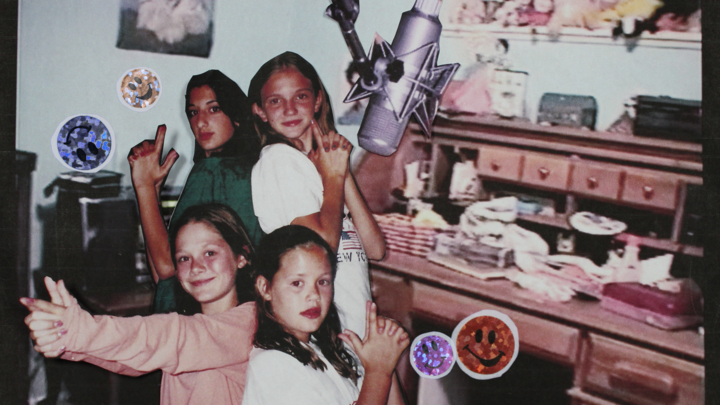
Credit: Dessie Jackson
When you decided to make a documentary about reuniting with the girls and doing an album reissue, did you have an idea of the direction it was going to go?
Well, that's what is crazy about documentaries. With a narrative scripted film, you write it, you shoot it, you edit it. With a doc, you shoot it and then you write it in the edit. So we had all this footage and we just started documenting stuff because this is such a crazy thing that happened.
My producing partner Barry, who's also an actor/director/writer, said, “We could do this ourselves. You could direct it.” I was like, “We’ve got to find a director,” and he said, “it could be you.” I was like, “What? Me?” So we talked to the girls and they all agreed, “Of course it should be you.”
So we said let's just do it. We didn't have a production company or financing or anything, and I bought an FX 3 camera and it was the SAG strike at the moment and nothing was happening. So we just started documenting and I didn't know what was going to happen.
It was really interesting once we had all the footage and we started recognizing all the themes that emerged from shooting. We realized that there was so much about creativity and how people lose touch with their own creativity as they get older. Isn't it funny how as a kid you do art all the time. You make stuff, you dance. Did you make stuff with your friends as a kid?
The amount of song and dance performances that all of our parents were forced to sit down and watch was staggering.
Yeah! Then you become an adult and go, “I have to be an adult now. I can't be creative anymore.” It's so devastating. So to have an excuse to get us back together, to be creative for the sake of it, not because we think we're incredibly talented musicians, but just to make stuff was really, really cool. I think what surprised me was that we were these prolific little filmmakers when we were 9, 10, 11, 12. I had a Sony Handycam. I would shoot feature films we made that were always like, a loser gets a makeover to become a popular girl. Turns out she's there to replace the popular girl and kill her. She's a secret gang member or something. We made all this stuff and I screened it for us in the doc. You can see the highlights of our best stuff.
We were actually pretty creative and talented. It was pretty good. Then you see us turn 13 and the lights start to dim in our eyes and we stopped being creative and we started getting so worried about what guys thought of us, what our peers thought of us. We were coming into that awareness of being perceived.
So when we started filming [Summer 2000], we were able to talk about stuff we've never said to each other about our friendships and all of that stuff. So that's when I was like, “Oh, that's what this is about.” I started filming it just because this is a crazy story, and what if we tried to make stuff again? Then it became so much deeper than that. It was unexpected.
That's what I thought was so interesting, because as much as this movie is about the album and what you made when you were kids and then coming together to make more music again, it was also just as much about the power of female friendship too. Was it cathartic to sit down with the girls again after 20 years?
So cathartic, because clearly I was carrying some stuff about losing my friendship with Mary over the years, and now we're best friends again. We were best friends as kids and there were things that I think everybody carries, unsaid things in friendship dynamics, especially from junior high and high school that you don't have the language to say at the time. You're not like, this made me feel this way, or I have trauma at home. You don't know why you're doing anything or how it makes you feel.
So how rare is it to have the opportunity to speak to those things with each other as adults? I feel like with most friendships, we just move on. To actually discuss what happened between us felt like this unburdening. It freed us up to become close again. It broke through the surface level things that happen as adults. It kind of changed the way I think about friendships now.
In the documentary, it seemed like it was really easy to get all the girls back together. Was there any difficulty in getting everyone to agree to it?
Everyone was like, “I'm down.” Janet has three sons under the age of 10 and she was like, “My kids will raise themselves. I'll be there. Let's rehearse.”
She made it happen. They're all so busy, they all live in different states. The fact that we got everyone's schedules aligned to get together in person, in our hometown and then again in Los Angeles, was a miracle. But it wasn't hard to convince anyone.
They were very on board, because especially when the album was rediscovered, I think we were all so tickled by it that we were like, “Let's see what happens. This is crazy. Let's take all these opportunities that will never happen, so might as well just keep saying yes to stuff.”
That's great. Like you said, everyone makes a bunch of stuff when they're a kid, but the fact that yours was rediscovered and enjoyed so widely is amazing. It's played for laughs in the movie that when you were 12, and you and your friends first heard the album, you were all so embarrassed by it. How do you feel about the album now?
Oh my god, that's such a good question, because even when it started getting noticed online in 2020 and we were like, people are listening to this, I was still really embarrassed. Mainly because it brought up all the old feelings, but also I still didn't really get that there was something special about it, our thing we made when we were kids. So I was like, why do people like this and what does this mean? And I remember I was shooting a movie called Spin Me Round in Italy, directed by Jeff Bena, who's a good friend of mine who's now passed away, but he listened to it. He was like, “I'm obsessed with this. I want to shoot a music video with you guys.” He was the first real person I know outside of my family and friends that was like, this is cool.
Even though people were really responding to it, I still felt weird until we went through this process of getting back together, writing a new song together, being creative together. I feel like I finally let go of the idea that it has to sound perfect and professional. We don't have to sound like Destiny's Child. It is okay. Then it also gave me permission to be like, yeah, maybe nothing needs to be perfect. It could just be something you enjoy doing. Why have I put so much on this?
I think that's why it's reached such a wide audience. It's so beautifully imperfect and it's so kind of strange, but in a really wonderful way. It's not really like anything I've ever heard. So when it’s like, “Oh! 12-year-old girls made this? That's the coolest thing I've ever heard in my life.”
It's so cool. How many guys in the nineties who could play guitar were given record deals? Then girls were also making stuff, they were like, well, that's little girl stuff. It felt like such a revelation to have an adult take us seriously and have Robin say, “We're going to make an album.”
Now to have a record label as cool as Numero Group say, “We want to release this album for real.” The fact that you want to talk to me, the fact that SXSW is playing our movie, I am still in awe that anyone is putting this much support and value on little girls’ art and adult women's art because it is so crazy out there and it is so rare to have that kind of support. I think it's a beautiful thing.
In the film, someone online refers to your music as “haunted child music.” Why do you think X-Cetra’s original music, and even some of your new songs, have such a somber/angsty tone to them?
When you become an adult, you forget that kids have really deep feelings, but when adults talk to kids, they act like they're dumb. It's so condescending, because I remember being 10 to 20 and I had big complicated feelings, really complicated journals, we're writing songs, everyone was writing poetry and it was so intense. I guess maybe it's entering adolescence and the fear of the unknown and also the battlefield that is junior high and high school and fitting in and all of that. It felt so scary but, parallel with it, it was so fun, right? It's like two things happening at once.
So that's why I've always felt like X-Cetra is fun with some darkness. It’s Spice Girls or Destiny's Child. Yet, we're also Fiona Apple and The Craft. We liked dark messed up witchy stuff and angry stuff too, because that's girlhood. It's all there at once. I think we are focused on joy and fun, but it's also really nice to be able to express ourselves through music, tap into a little bit of anger or sadness, because we're pretty lighthearted people, but we needed an outlet for some of the other feelings.
Where did the name X-Cetra come from?
I have these snippets of memories of me and Jessica on a road trip sitting in the backseat of my parents' car, writing out different iterations of name ideas, and the four of us girls brainstorming. I truly don't remember where it came from. I think at the time, bands with “X”s in the name were kind of cool. It's funny, I read my junior high diary, that is featured in the movie, and I started getting self-conscious about the name and I was like, “I've been thinking we should change our name to Chic, “S-H-I-Q-U-E”, because that was also a big thing at the time.
Kind of French?
Yeah, kind of French, I guess. I don't know where any of it came from, honestly.
Are there future plans for X-Cetra? Where does it go from here?
We wrote two new songs in the doc, and we liked it so much that we decided we want to write a new album. I don't know how long it's going to be, but we are going to make a new album that we're going to release. SXSW asked if we wanted to perform, but the truth is we're all in different states and we could just barely get it together to be here for this weekend. We don't have anything rehearsed. We were like, “That can't be our first performance in 25 years. Something that's like a mess.”
Also, this is not the first time we've been asked to perform. It keeps happening. So I think we're going to start working on something that maybe next year we could, maybe when we release our album, we could actually perform with it.
In the movie, you say that you would want to go back in time to your younger self and tell her that she's special, which I think is beautiful. If you could go back in time, is there anything else you'd want to say to your younger self, any kind of advice you'd give to her or the other members of X-Cetra?
That's such a sweet question. I think certainly to just know that the main thing is that you are special and you can do anything that you believe you can do or that you want to do. There's also something I've been thinking about lately. There are so many things you can't spare young people from, but they're just going to have to experience. You go through bad things, you go through good things. I do think whatever you practice, you'll get good at. So if you spend time in drama or partying or a lot of the stuff I was involved with in college and high school, that kind of became my life for a while.
I wasn't being creative. I was practicing things that were kind of unfulfilling. Now it’s like, if I work on friendships or writing or making a movie one step at a time every day, even though it seems like it's not going to be done in forever, I'll eventually be good at it and I'll have something. Or even the way you talk to yourself. If you're constantly like, “I'm stupid, this is bad,” it's like, well, then you will feel stupid and bad all the time. If you tell yourself that you're good and you believe in yourself and you're proud of yourself, you will start feeling that way. I just think that words and visualization [are important]. I know it sounds like “woo woo,” and it seems so obvious, but it's really hard to practice and to do.
For a while, I had to tell myself that every morning I would meditate and visualize my dream world just because the world was so dark and I was trying to get out of that. Then I would tell myself I was proud of myself every day, which feels really dorky, but only you can do that. It's kind of the parenting you need, or connecting with that younger part of yourself. That there is a part of yourself that needs to hear that and nobody else can do it for you.
In the movie, you talk about how when you were a kid, you did have a lot of parental support, and about how the matriarchs of the family really stepped up to help support X-Cetra and help you realize this album when you were little girls.
Amazing women are the best, and because I was an only child, my mom was like, “have the girls over whenever.” We had a big group of friends, 12 of us that were sleeping over, and then we added more and more that would sleep over at my house every weekend. And we're just eating snacks out of my fridge, and we had a video camera and [my mom] was like, “I don't want to be precious about this camera. What am I going to use it for? You kids use it.” She would take us on location to scout movies and be like, “go for it.” My mom is an artist, but she's a psychologist professionally. So she just really was so supportive in that way. I didn't realize that most kids don't have that. It's a real gift. I feel very lucky.
Also then there's things that I think, especially in that era, parents didn't even know how to tell kids what to do, like how you talk to yourself, and they didn't know how to do either. Honestly, I don't think any of us knew how to do that until a couple years ago.
Children of baby boomers. Yeah, we had different experiences.
Yeah. Don't get me started about it, yeah. I think a lot of boomers, not all boomers, definitely not my mom, but a lot of boomers have a really hard time feeling their feelings because they were raised by people that were told to get over it. So the idea that you would stop and give yourself space to process something is really a hard concept for that generation.
What music do you listen to now?
I think the reason I love X-Cetra so much is that what we ended up doing was kind of genre-less, and I find myself just being much more of a song person than an album or a genre person. I'm kind of all over the place. I love hip hop. I also love classic rock. It didn’t work out, but we were supposed to introduce these J-pop bands at the Tokyo Calling Showcase at SXSW and there's this one band who's cool, Japanese metal, young, and amazing. So I love all kinds of international sounds, and I just am not a super sophisticated listener, I'm kind of open to whatever.
If you enjoyed this article, please consider becoming a patron of Hyperreal Film Journal for as low as $3 a month!
Hannah Dubbe lives with her cat in Austin, TX. When she’s not watching movies, she’s running. Movies change lives.